Upon hearing the news about me about to get married, some people started asking me all sorts of questions, like: “What kind of venue do you have in mind?” or “What kind of wedding dress would you like to wear?” or “What flowers would you like to have?” or “What would you like for your wedding gift?

To which I replied with, “Hmm, actually… I haven’t thought about it.”

And it’s true. However, strangely, for some reason, I feel a little bit guilty about it. I guess I just don’t want people to think that I don’t care about the wedding. Because I do care. Though I have to admit that I do not put that much weight on the ‘ceremonial’ part.

***

When my fiancé asked about what kind of wedding celebration I’d like to have, I said I have no particular idea. For me, a small and simple gathering with families and friends should do. What’s important is that we are legally and officially married. And, that’s it. Which surprises some people–especially those who know that I was once a pre-wedding photographer and a themed-wedding designer.

I have to say that I love beautiful wedding ceremonies or themed-wedding celebrations (they are so magical–especially the forest-themed wedding!), and I still love designing such an experience, but not for my own wedding.

I feel like I just want to have a basic and simple one–more of a low-key kind of approach (although my fiancé wants to throw a small post-wedding party in Amsterdam). I don’t know why. Maybe because I am an introvert and a private person who naturally feels out of place in the middle of parties; not to mention the awkwardness of having ‘me’ as the spotlight of the party!

So, here’s the thing: the wedding is less than 2 months away, and I still have no idea about my dress, my bouquet, or my wedding ring.

***

The ins and outs of engagement/wedding rings is something quite foreign to me. I see them merely as a symbol.

I remember this story I read in a forum years ago, about a woman and her fiancé, who wanted to get married. Because both of them are still struggling with daily necessities, they bought her wedding ring at a flea market–a vintage ring that costs nothing; but she liked it and she was happy. She said it was more than enough as a ‘symbol’ of their love and their intention to get married.

A friend of a friend made a ring-shaped tattoo on his and his partner’s ring finger. For them, it’s more practical than wearing a wedding ring. At least you don’t need to worry about losing it or having it slipped out of your fingers when washing dishes. If ‘diamond is forever‘, so is a tattoo.

Somehow, I like these kinds of stories. It never fails to fill me with such a warm and fuzzy feeling. I think it’s because I am attracted to people who embrace symbols as one should: nothing but a symbol–a reminder, a sign–that we give meanings to symbols; not the other way around. Thus, when some people were commenting on how small my engagement ring was (maybe they were joking, right?), I just laughed.

***

A few weeks ago, my fiancé took me to OOGST, the goldsmith studio where he got my engagement ring–the one he selected to propose. The goldsmith studio is run by Ellen Philippine and Lotte Porrio, lovely, warm, and friendly artists whose love of their artwork is clearly visible. In their beautiful studio, they design pieces of jewelry made with recycled gold and conflict-free diamonds.

“What kind of wedding ring would you like to have?” my fiancé asked.

“There is another ring? But, there’s already this one,” I pointed at my engagement ring. At the time, I didn’t know that you can get a different ring as a wedding ring (how many rings should I wear?).

So my fiancé and I had a discussion about it–and we’re still thinking if we need to get a wedding ring or not. However, even if we decided to get one, instead of purchasing a new pair of rings, we’re thinking of melting the ring of my late mother and the ring of my fiancé’s grandfather, then recycle them to make a pair of simple wedding bands for the two us. We think the recycling process can also be seen as a symbol for the ‘melting’ of the two families. A lovely sentiment, isn’t it?

***

The next thing to tackle (apart from the venues and F&B) for our small wedding celebration is, of course, the wedding invitation. Based on my experience, I know that wedding invitations can be one of the most expensive things in your wedding budget (to design, to print, to deliver)–especially if you have a large number of guests.

I understand that many cultures still put a lot of weight in having a printed wedding invitation that is (preferably) hand-delivered by the soon-to-be bride or groom. However, I also realized that most people do not keep wedding invitations they received; and sooner or later–sadly, these beautiful invitations will be thrown away.

After weighing the pros and cons, my fiancé and I finally decided that we won’t be printing a physical wedding invitation and going paperless instead. We cross our fingers that our friends and families would tolerate our decision, and we started designing our wedding invitations with Paperless Post.

Paperless Post

The website offers both paperless and printed pre-designed wedding invitations (they are so beautiful and the designs from Rifle Paper Co. are so cute!). Some designs are free, but some premium ones worth some coins (you can buy coins to purchase and send your invitation).

What I love the most about the paperless part is the fact that you can export your guest list, schedule the sending of your invitations, track the sent invitations (and notify you if the invitations have been opened by the recipient–or not), manage the RSVP, send reminders, and many more!

At first, I was thinking of using the lovely designs from Rifle Paper Co. (I have some of their notebooks!), Oscar de la Renta, or Kate Spade NY (yes, they designed some wedding invitations there!). However, since there are some limitations in customizing a pre-designed layout and there is an option on the website to upload your own design, my fiancé urged me to design the invitation myself.

“Why don’t you make some illustrations, so we can make it more personal?” he asked.

Surely, I procrastinated for about 2 weeks or so, and only yesterday I decided to wrap it up. Finally, I decided to go with a casual-modern look for the invitation design (something we both like) with an illustration of the two of us.

***

Here’s the thing: I never thought that I would get married.

I mean, not that I don’t want to get married, but when I hit 30, I kind of dropped my idea of a (traditional) marriage. Maybe it’s a defense mechanism–because I live in a culture where people are expected to get married (in the national identity card, the marital status column can only be filled with “married” or “not married yet“) and women are expected to get married when they are in their twenties.

So, when I hit 30, then 31, then 32, and so on and so forth, and still being single, it always raises some questions (and eyebrows. and sometimes, unsolicited ‘advice’).

Maybe that’s why I decided to drop the idea of getting married.

I remember that there was this one point in my life when I asked myself: What if I never get married? What will happen then?

I really gave it a serious thought. I listed down all the possibilities of this ‘alternate universe’ where I am living by myself, forever single.

I think about living alone, maybe with my pets and pots of plants. I think about my job, my friends, my social life, my passion projects, my single apartment somewhere. I think about traveling alone. About cooking for one.

And as I was thinking about it, I realized that it’s not bad. It’s actually not bad at all. Staying single is something I know I can live with. And being alone–to some extent–is something I am naturally inclined to as an introvert. So, there, in my thirties, I decided that I will be okay even if I will be single forever. I know I will be fine and will still be able to have fun nonetheless.

And then, here I am. Organizing my simple wedding and designing my wedding invitation.

But maybe it’s good, though. To go through that thinking process and knowing that I can be single or engaged, or married, and it doesn’t define my level of happiness or worthiness, nor it defines who I am as a person, and what I am capable of.

hanny
WANT TO SHARE WITH SOMEONE WHO NEED THIS?

When someone asks me what I usually do when I am sad or angry, I would say: “Cleaning the bathroom while crying my eyes out!”

It was a joke. Well, actually, half a joke.

I do find comfort in cleaning, decluttering, or tidying up anything I could think of (not only the bathroom!), especially when I am sad or angry.

I have no idea why I am actually drawn to these activities when I am feeling down. Maybe because the act of cleaning and decluttering provides me a false sense of control (I got this!). Or because it gives me the opportunity to still be sad (or angry) in a (more) positive way.

Or maybe, the act of throwing broken (or forgotten) things out–reminds me of how I can actually let go of things that no longer serve me and my growth in life. Maybe, the vigorous regimen of brushing, scrubbing, and wiping dusty surfaces that follow makes me feel as if I were cleansing myself, emotionally (tears–my organic & natural cleansing agent). Maybe, the painstaking effort in organizing my stuff and tidying up my space is supposed to tell me that it can be done. That now, I can also reorganize my priorities and tidy-up my life (or, more frequently, heart).

I guess, cleaning, decluttering, and tidying up has been my go-to ritual to deal with my (hurt) feelings and my (chaotic) state of being.

***

At a conference I participated in a few years ago, I heard this idea about how we can change our internal state by changing our external environment.

The underlying premise is simple: it’s easier to change things externally than internally; however, when you change your external environment–this change can also affect your internal state.

OK, let’s take an example. Imagine yourself, going about your daily lives. One day, you’re going around in your most comfortable outfit (for me this means sleeveless blouse/shirt, jeans, and sneakers), and on another day, you’re going around doing more or less the same stuff–in a really neat or delicate outfit (maybe an evening gown, or a formal suit). Can you get a sense of how you might act, think, or feel differently–just because you’re wearing a different outfit?

Or imagine yourself working from a plain white cubicle, then working at a cafe with lovely jazz music in the background, and then working from a noisy pub. Do you think there’s a shift in your mental/emotional state as you’re changing your workstation from one place to the next?

That is more or less the premise behind the ‘outside-in’ idea. When we have no idea how to change our internal state of being, change our external environment to get closer to the feeling we’d like to feel.

If we want to feel happy, or healthy (or wealthy, creative, confident, anything, really) but we don’t know how to get there ‘internally’, change our external environment. Change the way we dress, the way we speak, the way we spend our time, our morning routine, our social circle, our daily habits, to feel that way. What kind of outfit change could make us feel a bit more creative? What kind of morning routine could make us feel a bit healthier? What kind of people we could surround ourselves with that could make us feel a bit happier?

In this case, cleaning, decluttering, and tidying-up has become my ‘outside-in’ way of changing my internal state by mirroring it through my external environment. When I am sad or angry or feeling down in general, I can’t think of ways to clean, declutter, or tidy up my mental/emotional state. And so, I clean, declutter, and tidy up the bathroom, the bedroom, my drawers… until I feel something shifting inside of me.

***

The absence of broken things and piles of rubbish makes me feel like a big burden has just been lifted out of my shoulders. Empty spaces, racks, or drawers, makes me feel like I can breathe deeply and effortlessly. Gleaming surfaces makes me feel light and in control.

As everything is being placed neatly, right where they are supposed to be placed, I feel as if I am also experiencing that. Everything eventually falls into place, and I am back to where I am supposed to be.

PS: In my next post, I will write about organizing my simple wedding in Amsterdam, and why I choose Paperless Post for my wedding invitation.

hanny
WANT TO SHARE WITH SOMEONE WHO NEED THIS?

NOTE: From time to time, I turn to you (yes, all of you) when I have no idea about what to write on this blog. Feel free to drop an email or DM me on Instagram if you have any ideas/questions for the blog!

Q: How to leave a toxic relationship?

Disclaimer: I am only sharing my personal take/experience related to this issue. I am not an expert, so please do not consider this post as your final answer. Take it with a grain of salt, do your own research, and reach out to an expert/authority figure if you need professional help to get out of a toxic relationship.

A: I guess I would answer this question with another question: “What makes you stay in that toxic relationship?”

I believe that to know how to leave a toxic relationship, we need to know why we’re staying there in the first place.

However, before going further, let’s make sure that we’re on the same page. Here’s an excerpt from a TIME article about toxic relationships:

Dr. Lillian Glass, a California-based communication and psychology expert, says that a toxic relationship is consistently unpleasant and draining for the people in it, to the point that negative moments outweigh and outnumber the positive ones.

Dr. Kristen Fuller, a California-based family medicine physician who specializes in mental health, adds that toxic relationships are mentally, emotionally and possibly even physically damaging to one or both participants. And these relationships don’t have to be romantic: Glass says friendly, familial and professional relationships can all be toxic as well.

With that being said, logically, we know that we need to get out of a toxic relationship. That’s crystal clear. The problem is, we don’t always feel like we’re capable of getting ourselves out of that relationship, for many different reasons (one can be more complicated than another).

However, most of the time, it’s fear. We are afraid to leave.

What do you get out of that relationship?

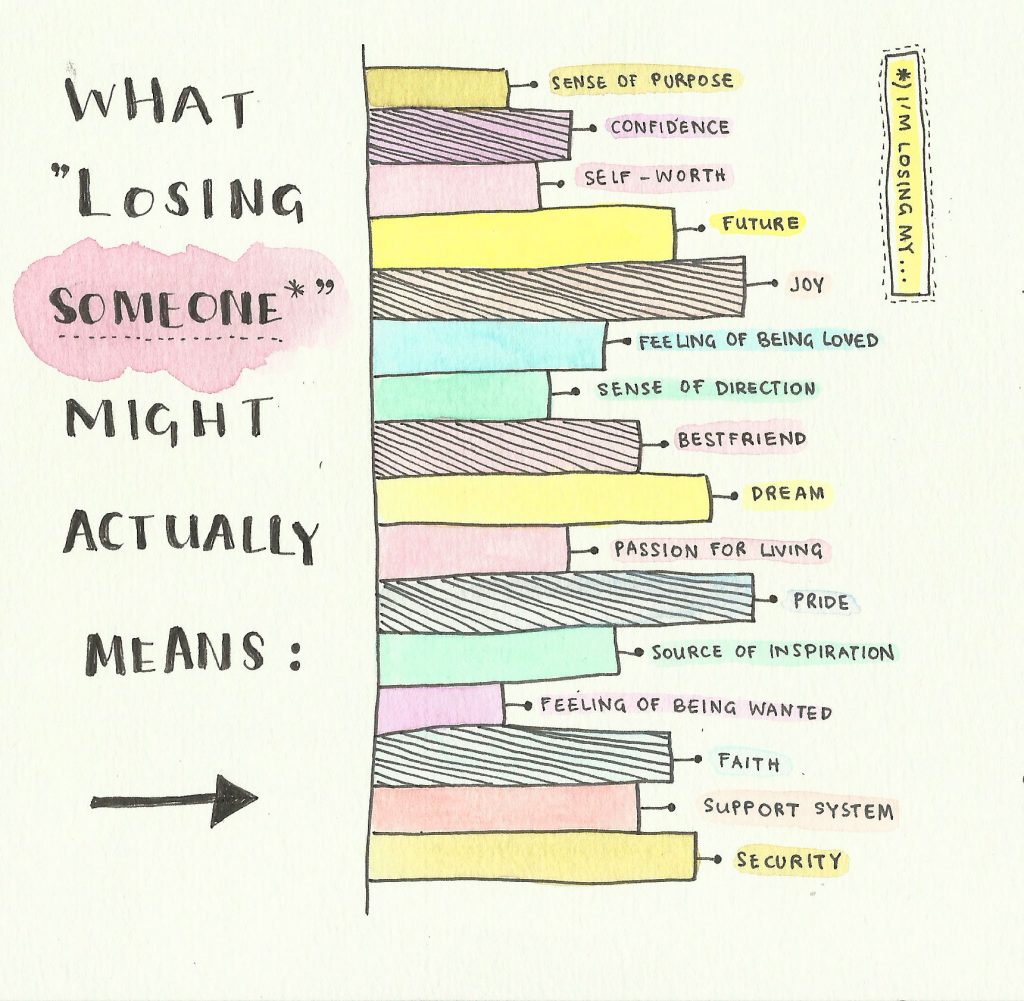
We’re afraid of leaving that relationship because we believe that despite being toxic, we get something out of that relationship. Maybe we get the feeling of being loved, assurance, friendship, comfort, a sense of familiarity, security, or financial support. The fear is about missing these things in our lives if we decided to leave the toxic relationship.

Now, the question is, how can you get those things you (think) you need outside of this relationship? How can you give yourself those things? Are there other people that can provide you with those things and who are they? How can you get them to help you?

Make plans on how you can get those things that you need (or want) outside of your toxic relationship. Get it from other people, or get it from yourself. Once you know that you can have the things you need outside of your toxic relationship, you’ll gain the confidence you need to leave. You won’t be afraid to leave anymore because you know that what you need (or want) can still be obtained outside of that toxic relationship.

This is what I did to leave a toxic relationship I was once in.

Do you think this toxic relationship poses a serious threat to your life, either physically, emotionally, or mentally?

If yes, immediately reach out to a psychologist, a psychiatrist, a social worker/activist, or an authority figure you respect. If that sounds like too much of a stretch, reach out to a friend or family member you trust. Yes, it can be hard, but do it. Save yourself. Your life matters. Love and respect yourself by seeking help to get out of the relationship as soon as possible.

Cutting ties.

While you’re in the process of getting out of a toxic relationship, when possible, I find it best to totally cut ties with the other person. Do not stay with them, be with them, talk to them, or meet them. For me, this is important to prevent me from swaying or changing my minds (oh, maybe s/he’ll change. oh, this time s/he promised. oh, s/he said sorry).

It will be more difficult and more challenging to get out of the toxic relationship if we are frequently in touch with the other person. Their pull can still be so strong, and we’re risking ourselves to get sucked back into that relationship again.

However, if it’s impossible to totally cut ties with the other person at the moment, try reducing your time/interaction with him/her. Surround yourself with people that make you feel good. Sign yourself up to join various activities that you love. In the meantime, reach out to the people you trust and make plans about how you can distance yourself from this person.

But, I love him/her. I want to help him/her.

I know that this, sometimes, becomes our excuse to go back into a toxic relationship (I was guilty of this!). However, we need to know that we can’t love them if we can’t love ourselves. And we can’t help them when we have terribly wounded ourselves. The best thing to do is to love ourselves first by healing our wounds and nursing ourselves back to health. Once we’re completely healed and strong, once we’ve gained our confidence that we can be completely OK outside of that toxic relationship, then we can decide if we want to ‘help’ the other person, or if we want to get connected/interact with them again.

I hope this helps!

hanny
WANT TO SHARE WITH SOMEONE WHO NEED THIS?

NOTE: From time to time, I turn to you (yes, all of you) when I have no idea about what to write on this blog. Feel free to drop an email or DM me on Instagram if you have any ideas/questions for the blog! This post is to answer a question from @gendutsantiago

Q: How to be consistent with journaling?

A: I think the first step would be to answer these 2 questions:

  1. Why do you think you need to journal?
  2. Why do you think you need to be consistent with it?

I actually keep several ‘journals’ and I journal in them for different reasons.

MY JOURNALS & WHAT I USE THEM FOR

I have a private journal that serves as a diary, to write down my deepest thoughts and feelings whenever I feel the need to unload those things from my chest (or my brain).

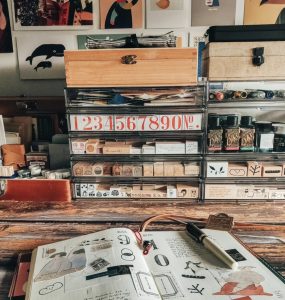
I also have a decorated journal which I adorned with stickers, stamps, and collages–the one I shared online via my Instagram or YouTube channel. I work on this journal whenever I feel the need to wind down by doing something creative with my hands.

I have my messy ‘work journal‘ that mimics the functionality of a bullet journal, and I have it next to me whenever I am working. It’s my go-to journal to track the progress, to-dos, payments, and other stuff related to the clients I’m working with or the personal projects I’m working on. It also serves as a medium for me to think ‘on-paper’ about other work-related stuff, like generating ideas for communications training, drawing an outline of a proposal (or a new book), recording meeting results, or planning my moves for the next 3 months.

A journal I updated on a daily basis is my daily highlight journal.

It simply records what I do on a particular day: waking up (at what time), how do I feel upon waking up, where do I go, what am I working on, who do I meet, what do I buy (if any), what do I have for lunch and dinner, what book I am reading, what time I go to sleep. Just mundane things that I summarize in 1-2 word(s)/line(s): Wake up late. Coffee. Silent time. Re-read The Four Agreements. Shower. Editing works. Reorganize my drawer.

Sure, sometimes there are big things: like being proposed, signing a new project, or traveling to someplace nice; but on most days, just simple things.

I have been writing in this journal since the middle of last year, and I am enjoying it so much! As I am working on this journal, I can review how my day goes (do I like it? do I need to do something else tomorrow?) and as I am flipping back through my previous days, I can see how each day is actually unique.

I guess we tend to compress our weeks, months, or years into a few ‘big’ moments, life-changing experiences, or amazing encounters. But recording my days on a daily basis helps me to cherish and remember each day as its own. The practice also allows me to be mindful of how my day unfolds.

MY THOUGHTS ON ‘BEING CONSISTENT’

I think if we understand why we do certain things and can see the value they bring into our lives, we’ll find more reasons (and motivations) to be consistent.

Sure, we can force ourselves to be consistent and be disciplined about keeping up with our practice (like journaling, for instance), but what’s the point of doing so if we don’t gain any benefit from that practice? However, if we can feel the benefit of any practice, we have all the reasons to be consistent with it, because we can feel its positive impact on our lives.

With that being said, I also need to let you know that I think, ‘being consistent’ is not equal to ‘doing things on a daily basis’.

Sometimes I missed updating my daily highlight journal when I’m traveling or on a road trip, but I immediately record those 2 or 3 days I have skipped when I have the time. Thus I can always catch up. I work on my other journals only when I feel the need or the urge to do so. Sometimes I fill them up every day for a month, and some other times I do not touch them for a week, a month, 2 months.

But it doesn’t matter, because I know I’ll come back to them when I need them.

THE PRACTICE OF JOURNALING FEEDS MY SOUL

It helps me to let things go (and let some things in), to detach myself from my noisy and chaotic monkey mind, to reflect on my life, to remember the things I thought I have forgotten, to discover something new about myself, to record my fleeting thoughts and feelings (and mood swings), to spark my creativity, to have fun.

Thus, I am still coming back to my journaling practice whenever I feel the calling to do it.

Do you think this counts as ‘being consistent’?

Photo by Hannah Olinger on Unsplash
hanny
WANT TO SHARE WITH SOMEONE WHO NEED THIS?

NOTE: From time to time, I turn to you (yes, all of you) when I have no idea about what to write on this blog. Feel free to drop an email or DM me on Instagram if you have any ideas/questions for the blog! This post is to answer a question from @_ryuniarti.

lonely
|ˈləʊnli|
adjective (lonelier, loneliest)
1 sad because one has no friends or company: lonely old people whose families do not care for them.
• without companions; solitary: passing long lonely hours looking on to the street.
2 (of a place) unfrequented and remote: a lonely country lane.

Q: Have you ever felt lonely?

A: Yes, and actually, quite often.

What’s strange is that I rarely feel lonely when I am alone (which may sound like a contradiction). I feel lonely mostly in the presence of other people: like in a crowd or a big group; but sometimes also one-on-one.

Being an only child, I am used to being alone and I grow up enjoying the solitude it brings. I have the confidence of someone who can always entertain herself and get herself engaged either physically or mentally. It is being around people that make me feel out of place; especially when there’s a lack of meaningful interactions.

For these reasons, I feel lonely during such circumstances when people are compelled to make small talk or exchange pleasantries just for the sake of politeness. And feel the loneliest when I am talking to my closest ones—knowing that (for some reasons) we put our guards up and choose our words carefully instead of being real.

hanny
WANT TO SHARE WITH SOMEONE WHO NEED THIS?

When I was young, I used to get ‘trapped’ in the prince-charming mindset: that there will come a man with all the qualities and criteria I have ever dreamed of to love me and to make me happy.

But here are the flaws in that:

  1. We put the effort in ‘finding’ the ‘right’ man who meets our criteria.
  2. The man who meets our criteria may or may not be interested in us.
  3. The man who meets our criteria and ends up being in a relationship with us may not bring us the love and happiness we thought he would!

I think the biggest flaws is that the prince-charming mindset focuses on finding or searching for ‘the right man’, an external factor that is out of our control.

When I started to do more sessions in writing/journaling for self-discovery, I found a better way to approach this. I asked myself 2 things:

  1. how would the ideal relationship I want to experience look/feel like? (detailing the qualities, feelings, and activities I’d like to experience in the relationship itself–NOT about the man)
  2. how can I improve myself so I can offer that kind of relationship to the people I love/care about?

Doing this shifted my focus from ‘searching for the right man’ to ‘creating the feeling/qualities I’d like to experience in a relationship’. It made me feel more like an active participant rather than a passive one, and in a way, more empowered.

What about you? Have you ever experienced something similar? Have you ever met a man that seems to meet your ‘criteria’ but the relationship doesn’t flourish? Or what is your take about the issue?

love,

hanny
WANT TO SHARE WITH SOMEONE WHO NEED THIS?
Hanny illustrator
Hi. I'm HANNY
I am an Indonesian writer/artist/illustrator and stationery web shop owner (Cafe Analog) based in Amsterdam, the Netherlands. I love facilitating writing/creative workshops and retreats, especially when they are tied to self-exploration and self-expression. In Indonesian, 'beradadisini' means being here. So, here I am, documenting life—one word at a time.

hanny

TAKE WHAT YOU NEED
VISIT THE SHOP