Blog (1)

I WAS 17, typing away from my desktop computer in my room from 7 pm to 3 am, non-stop. The fan was blowing to keep the CPU from overheating. We didn’t have an air conditioning unit back then. I typed letters I would never send, grammatically incorrect short stories in English, angry poems, sad poems, almost-love poems, teenage novellas, and many unfinished novels I kept on revising.

I was 17. I was lonely and sad.

I felt unwanted, unattractive, and unaccepted in a world that didn’t really belong to me. I ran into my books (they make me laugh, they make me cry, but they never hurt me) and my writings (my most genuine company). But books, with stories written by someone else, were like the world I didn’t belong. They were out of my control. Writing, however, was the opposite.

And that was how, when I was 17, I learned about the balance of life.

I wrote about things I’d like to experience. About things, I couldn’t (or too afraid to) experience in real life. In the afternoon, he was a popular guy with a popular girlfriend, and I was the best friend who silently loved him. In the evening, I wrote about how the popular guy fell in love with his best friend, eventually. Realizing that she was the ‘perfect match’ all along. Finding out that his popular girlfriend had been cheating on him all along. But the best friend was already in love with a more popular guy who had been kind to her all along—who had silently loved her all along.

It was only in these stories that I became cute and beautiful, cool and confident, rebellious and couldn’t care less of what other people think of me.

But the morning always came, and I had to go to school.

***

I HATED high school because I wanted to learn, not being lectured.

I wondered if high school would be better if I chose social major instead of natural science. Unfortunately, at the time, I hadn’t had the courage to choose anything for myself. So I tried to skip as many classes as I could, legally: being too active in the student body so I needed to visit other schools and attended school meetings, signing up for debate team and English-speaking club so I needed to spend many days competing in different schools or campuses, offering myself to help the choir team if they didn’t have enough people to sing that day… anything, as long as I didn’t have to be in class.

In the afternoon, my math teacher called me stupid numerous times, scolded me because I often missed his class during the month of the debate championship. In the evening, I wrote about a math teacher who looked down on his student and bullied her all the time. At the end of the semester, the student won numerous awards in various poetry-reading competitions and she made the school famous.

The day I found the Internet in college, I started reading about stars and supernovas, black holes and mutations, literary critics and the beatniks, Freud and Jung. I couldn’t stop asking more and more questions about the things that had always intrigued me, because it seemed as if the search engine had the answers for them all.

And then I found out about blogging. Where I could just write and threw my words away to the world, for some complete strangers to stumble upon them accidentally. It was the days of Blogspot and Livejournal and Friendster blogs. WordPress came last.

The blogs were my ways of both reaching out and reaching in. And I never stopped ever since.

***

MY FRIEND once told me that my blog is reserved for those who are heartbroken.

Maybe because in the old days, I wrote about sad things. I was sad. I didn’t know happiness back then. It was such an abstract concept. Sadness fuelled my writing in such a way that got me somewhat addicted to it. I couldn’t write when I was happy. So I made myself sad, sometimes subconsciously, other times consciously.

But I was tired of being sad. The idea of a troubled and angry writer didn’t excite me anymore.

I used to daydream about being broke and living in a rundown flat without electricity; about working as a waitress in a small jazz club and writing under the candle light at night. I used to romanticise the idea about being a struggling miserable writer. It sounded like an indie movie.

Then Rory Gilmore came along. She made me thought about how I, secretly, have always wanted to be happy. And so I braced myself to cross over. To be happy; even if it meant I had to lose my writings.

It was true that I couldn’t really write for quite some time, but then I started learning to write as a happy person. I learned about it all over again. When I came to think about it, the blog was all about that: about me, learning to write—and about me, learning to understand myself.

***

I AM 33.

I remembered how in my early 20s I found my childhood friend and got reconnected with her when we stumbled upon each other’s blog. About when in my mid-20s, I giddily launched an idea for a social movement with my best friend in the blog, and kind people shared the post to the point that we got more support than we thought possible—that 8 years later, the movement is still running.

About how people I didn’t know reached out to me (or I reached out to them) from the blog, and we poured our hearts out as if we had known each other for years, and then we became friends.

I remembered how in my late 20s I got hosted in New Delhi, India, by an Indian blogger who knew me through the blog.

About how I shrieked and jumped around the room in happiness when my Santorini blogpost got featured by WordPress for the very first time—a few days before my birthday. About how I still shrieked and jumped around the room when some of them got featured again in different years: The Answer, My Saturday with Mishka, Why I’m Keeping My 100-List & The Things I’ve Crossed Off in 2015, and recently, The Short History of Instant Noodles.

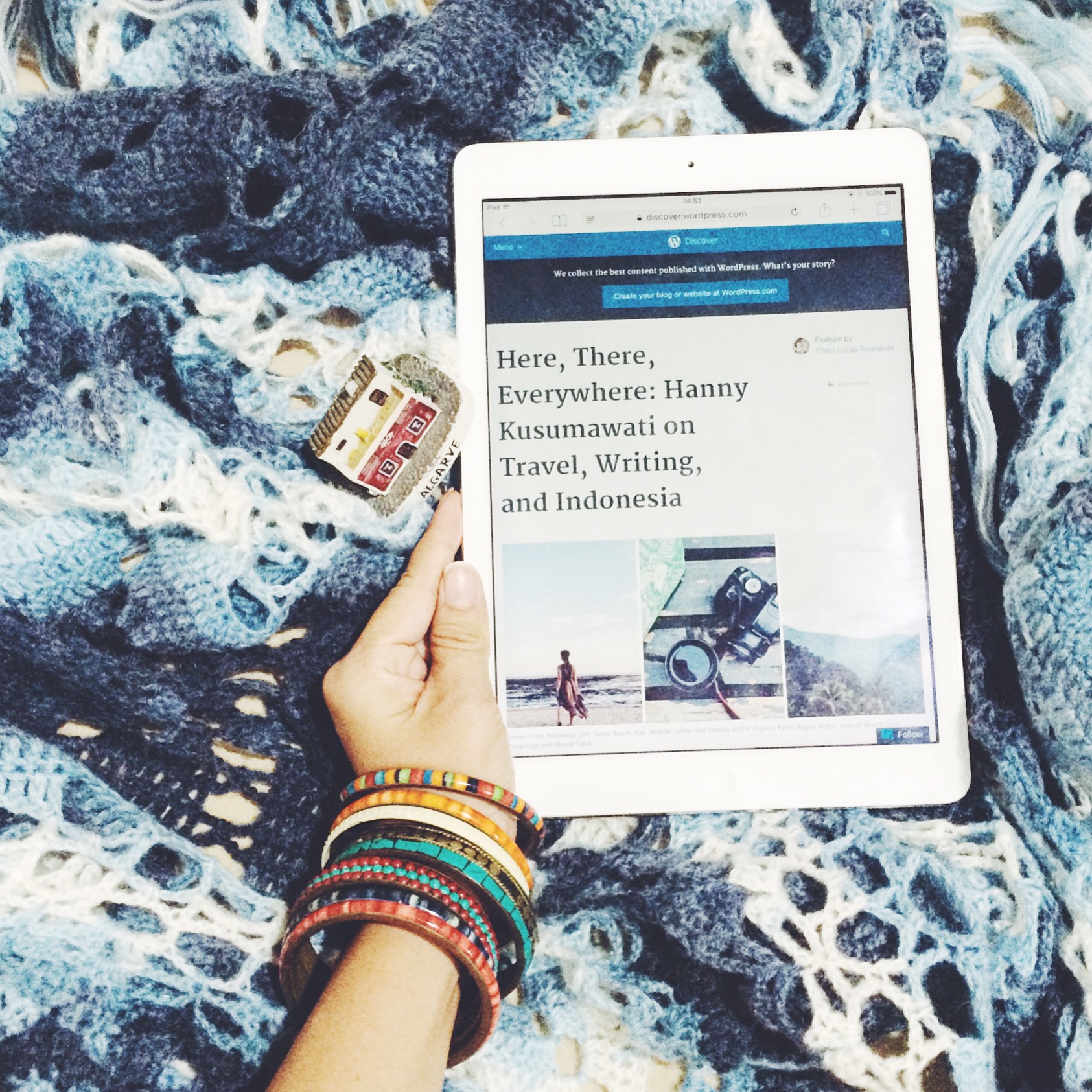
I remembered when a month before my 33rd birthday, an editor from WordPress, Cheri Lucas, contacted me and asked if she could make a profile about my blog in the Discover section of WordPress.
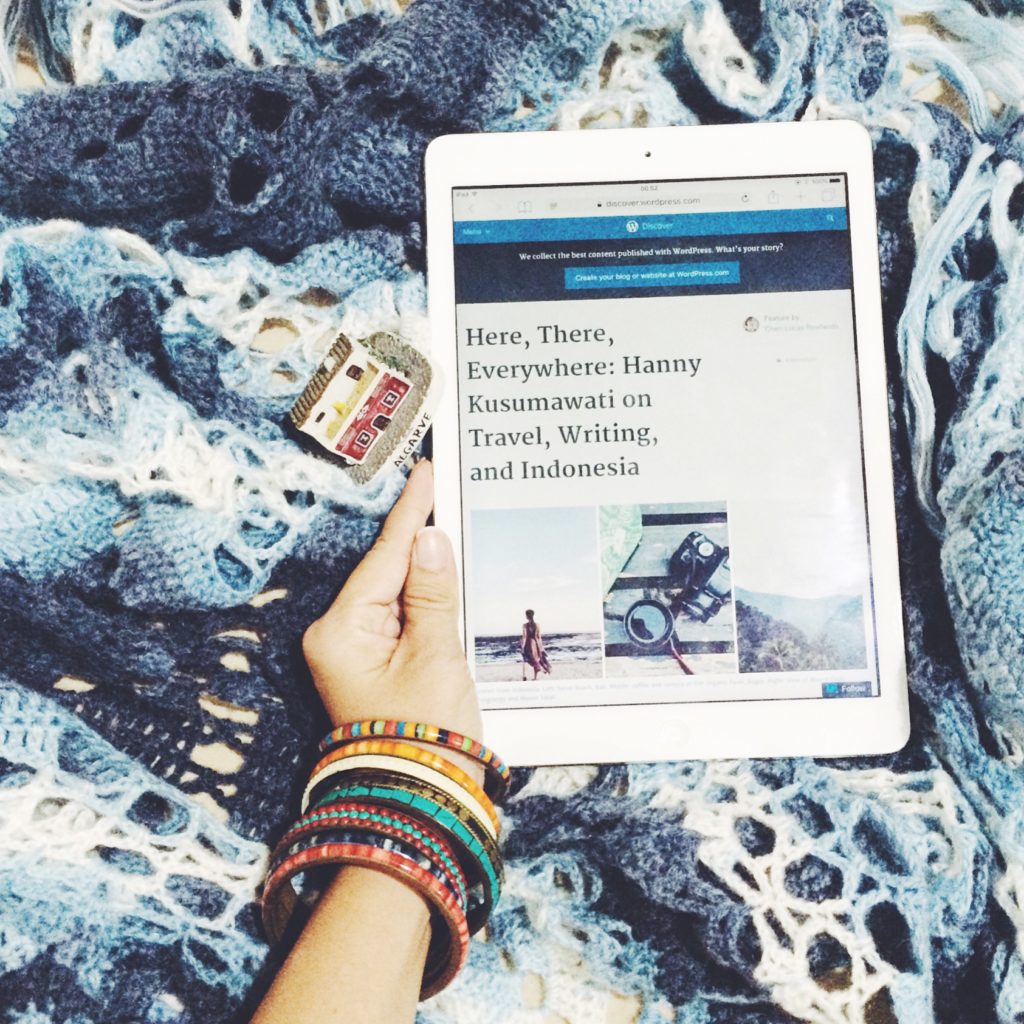
Processed with VSCO with f2 presetI remembered how, in some of my lowest days, I found comments or messages from people I didn’t know in or through the blog; saying that they had gone through the things I went through, saying that they could relate to my stories, saying that they enjoyed being around and read along, and then my days became instantly better.

***

THE blog has been running for 10 years.

I didn’t remember it at first. WordPress reminded me when I woke up this morning. It’s been quite a journey.

Some of my friends decided to create a new blog after a few years. Some said that the old blog didn’t suit them anymore. That some of the things they posted years ago embarrassed them. I understood what they mean. I did feel a certain level of embarrassment when I flipped through my first few blog posts here, but I decided to keep them around.

Because they simply reminded me of who I was. About how my writings grew with me.

I once read that we tend not to notice how far we’ve come until we looked back to where we were 3 years ago, 7 years ago, 15 years ago, 25 years ago. For this reason, sometimes, I look back. It keeps me humble when I read my old posts once again and be reminded of where I came from. It keeps me optimistic to know how far I’ve come. It keeps me wondering about what I would see when I look back to this moment 10 years from now.

It reminds me that no matter how much I’ve been broken, I am still here.
hanny
WANT TO SHARE WITH SOMEONE WHO NEED THIS?
DISCLAIMER: Tulisan berikut ini adalah sebuah advertorial. Saya bersedia menuliskannya karena percaya dengan tujuan baik yang layak disebarkan. Tulisan ini dibuat secara independen—tanpa suntingan dari pihak sponsor. I hope you’ll enjoy this one. A story about a smile.

Peace begins with a smile. – Mother Teresa

Banyak kenangan manis dalam hidup saya diawali dengan sebuah lengkungan sederhana. Bentuknya seperti sebuah mangkuk: mangkuk yang mewadahi perjumpaan-perjumpaan pertama dengan mereka yang kemudian menjadi kekasih (atau mantan kekasih), mengawali persahabatan dengan sesama pejalan di negeri-negeri asing, membuka percakapan-percakapan yang biasanya baru akan berakhir selepas tengah malam, juga meninggalkan jejak-jejak singkat—yang bertahun-tahun kemudian masih lekat untuk diingat.

***

Malam itu, kami berada di Medeu—area seluncur es berskala Olimpiade di daerah pegunungan Almaty, Kazakhstan.

Orang-orang lokal lalu-lalang dengan santai—bercakap ramai seraya membawa-bawa berbagai perlengkapan piknik: vodka, gelas-gelas dalam tas belanjaan, bahkan pipa-pipa untuk mengisap sisha. Kuda-kuda berderap, membuat saya sempat berhenti sejenak dan memandangi mereka dengan takjub. Tak seperti kuda-kuda yang biasa saya lihat menarik delman, kuda-kuda di Medeu begitu tinggi, begitu besar, begitu tegap. Saya sampai perlu mendongak untuk melihat wajah mereka.

Saya sebenarnya berada di Almaty untuk menjadi pembicara dalam sebuah konferensi. Tetapi, ketika mengetahui bahwa saya akan memperpanjang masa tinggal di Almaty, Zhamilya—salah satu pengurus konferensi tersebut, mengajak saya untuk mengunjungi Medeu di malam hari. Ia menjemput saya di penginapan bersama kekasihnya, Alex. Dan setelah sekitar satu jam berkenalan, Alex tiba-tiba saja bertanya mengenai lengkungan sederhana yang nampaknya ia perhatikan terus saja melintas di wajah saya.

“Apakah semua orang Indonesia suka tersenyum—atau hanya kamu yang seperti itu?”

Mau tak mau, saya tertawa. Bukan karena pertanyaan itu, tetapi karena Alex menanyakannya dalam rentang waktu yang begitu singkat sejak kami pertama bertemu. Apakah mungkin, dalam rentang waktu tersebut, saya sudah terlalu banyak tersenyum?

Oh, I’d like to think that most Indonesians are like that,” saya menjawab. “Sepertinya senyuman sudah menjadi bagian dari masyarakat kami. Sesuatu yang sangat natural.”

Well, mungkin saya hanya lebih jarang melihat orang tersenyum di sini,” ujar Alex kemudian. “Dan karenanya, wajah-wajah penuh senyum menjadi hal yang tak lumrah.”

Meskipun Alex sempat menetap selama beberapa waktu di Almaty, ia sendiri adalah warga Amerika Serikat. Saya tak tahu seberapa sering orang-orang tersenyum di Amerika, namun saya sedikit-banyak mengerti apa yang Alex maksudkan mengenai Almaty.

Jangan salah, ini bukan berarti orang-orang di Almaty tidak bisa tersenyum!

Saya melihat banyak senyum selama konferensi berlangsung: dari para pengurus acara, anak-anak mahasiswa yang secara sukarela menjadi penerjemah, bahkan dari beberapa peserta yang hadir. Namun, sepertinya budaya yang berbeda membuat senyum tak beredar ‘seluas’ di Indonesia.

Kita mungkin lebih ‘mudah’ tersenyum pada orang asing, ketika menerima kembalian dari pengemudi taksi, ketika memesan secangkir kopi, ketika masuk ke sebuah kantor dan melihat resepsionis duduk di meja depan, ketika petugas keamanan mengecek tas-tas kita saat melewati detektor metal, ketika disenggol seseorang secara tak sengaja dan mendengarnya meminta maaf…

“Saya tak tahu mengapa kamu ingin sekali pergi ke Rusia. Di Rusia, orang-orang akan mengira kamu gila, karena kamu tidak bisa berhenti tersenyum.”

Pernah, teman saya yang lain berkata.

Namanya Alex juga. Ia meninggalkan kota tepi lautnya di Vladivostok, Rusia, untuk bekerja menjadi instruktur selam di Labuan Bajo. Sesekali, ia mengirimkan tulisan dan foto-foto perjalanannya di Indonesia untuk dimuat di majalah-majalah berbahasa Rusia.

“Masa, sih, orang Rusia tidak pernah tersenyum?” saya tak percaya.

“Tentu saja mereka tersenyum,” Alex membalas. “Tapi, tak seperti di sini, di sana orang-orang tersenyum hanya jika mereka punya alasan kuat untuk itu. Tak semudah itu buat kami untuk tersenyum begitu saja. Meskipun demikian, hanya karena kami tidak tersenyum bukan berarti kami marah, ya.”

Ketika Alex mengatakan hal ini, perihal senyum-tersenyum di Almaty—yang merupakan salah satu negara pecahan Uni Soviet—kemudian membuat saya terkikik geli.

Saat berada di Almaty, saya tinggal di sebuah penginapan yang terletak di pusat kota. Di sebelah penginapan itu, terletak sebuah restoran—The Noodles namanya.

noodles

Setiap pagi, sebelum konferensi dimulai, saya dan beberapa pembicara lainnya biasa mampir di sana untuk minum kopi. Dan setiap sore, setelah konferensi berakhir, The Noodles menjadi tempat yang kami sambangi untuk membeli sepotong pizza atau tempat pelarian untuk makan es krim di malam hari ketika kami tak bisa tidur.

Jadi, tentunya, beberapa kali setiap hari, saya mendorong pintu The Noodles dan tersenyum pada pramusaji yang bertugas saat itu: “Selamat pagi! Selamat siang! Selamat sore!”

Belakangan, ketika konferensi berakhir dan saya sempat jatuh sakit selama beberapa hari, The Noodles menjadi tempat yang saya datangi setiap waktu—karena jaraknya hanya beberapa langkah dari hotel.

Praktis, beberapa kali sehari saya akan duduk di meja sudut di The Noodles, dengan tablet parasetamol yang dibelikan kawan saya Sean, tablet isap untuk sakit tenggorokan dari kawan saya Bota, dan novel remaja Julia Hoban yang sesungguhnya agak depresif, Willow. Dengan demam tinggi, hidung mampet, dan tenggorokan yang sakit, saya masih saja mendorong pintu The Noodles setiap harinya dan tersenyum: “Selamat pagi! Selamat siang! Selamat sore!”

Rasanya tersenyum sudah menjadi hal yang begitu lumrah, begitu pantas, begitu otomatis.

Selama beberapa hari itu pulalah, senyum saya tak pernah berbalas.

Pramusaji-pramusaji di The Noodles bekerja dengan efektif dan efisien. Mereka tak salah mengantarkan pesanan, juga selalu sigap melihat tamu mana yang akan membutuhkan bantuan—namun satu hal yang mulai membuat saya penasaran saat itu, adalah mengapa mereka tak mau membalas senyum saya—yang saya rasa sudah cukup sumringah.

Di hari terakhir saya di Almaty, hari ke-12, saya mampir di The Noodles demi secangkir kopi. Yang bertugas saat itu adalah seorang pramusaji perempuan yang sudah seringkali saya lihat. Saya yakin, ia juga pasti sudah mengenali saya yang setiap hari mampir ke sini. Untuk kali terakhir, saya pun melemparkan sebuah lengkungan sederhana padanya. Tersenyum lebar sambil berkata, “Selamat pagi!”

Saya tak mengharapkan apapun saat itu, sampai kemudian saya melihat ada lengkungan sederhana muncul di wajah sang pramusaji. Ia berkata, “Selamat pagi!” dan tersenyum!

Rasanya ada sesuatu yang membuncah dalam dada saya. Ia tersenyum! Ia tersenyum! Saya ingin menari-nari gembira. Sepertinya demam membuat saya terlalu emosional, karena saya kemudian menyadari betapa mata saya berkaca-kaca! Akhirnya senyum saya berbalas! Akhirnya, senyum saya… berbalas!

Ah, seindah itukah rasanya ketika kita, sebagai manusia, akhirnya dapat berbagi senyum?

***

Terkadang saya berpikir, mungkinkah di Indonesia saya memang sudah begitu terbiasa dengan senyuman yang dilemparkan begitu saja di mana-mana? Dari para penjaga toilet di mall, ibu-ibu di warung makan, penjual sate di trotoar, penjaja bakpao di pintu tol, pedagang buah di pasar basah, bahkan anak-anak yang mengamen di pinggir jalan…

Apakah saya memang sudah begitu terbiasa sehingga saya lupa betapa indahnya perasaan yang bisa muncul dari sebuah senyuman?

Dan lupa juga—atau bahkan tak bisa sungguh-sungguh memahami rasanya—ketika manusia, tak bisa tersenyum?

Bukan, saya tak bermaksud bicara tentang saat-saat ketika kita sedih, marah, atau berduka, hingga untuk sesaat kita tak bisa tersenyum.

What if you want to flash a smile, but you just can’t?

Saya baru tahu bahwa 1 dari 700 anak di Indonesia mengalaminya. Dan setiap tahunnya, ada lebih dari 9.000 anak Indonesia yang tak bisa tersenyum. Bukan karena mereka tak mau—tapi benar-benar karena tak bisa.

Mereka adalah anak-anak yang terlahir dengan bibir sumbing.

Sampai sekarang, tak ada yang tahu pasti mengapa ada anak-anak yang terlahir dengan bibir sumbing. Naila, misalnya, yang terlahir dari pasangan pedagang sayur, Didin dan Sakinah, di Kabupaten Lebak, Banten. Sakinah, sang Ibu, mengatakan bahwa beberapa anggota keluarganya memang terlahir berbibir sumbing—walaupun hingga saat ini masih belum ada kesimpulan mengenai penyebab pasti kondisi tersebut.

Melihat anaknya terlahir berbibir sumbing, Sakinah sempat merasa sedih. Bukan hanya karena ia tak bisa melihat buah hatinya tersenyum, tapi juga karena alasan-alasan lain yang sebelum ini masih luput dari perhatian saya.

Anak-anak berbibir sumbing akan mengalami persoalan dalam makan dan minum, kesakitan di rongga hidung, juga kesulitan saat belajar berkomunikasi. Semakin lama operasi bibir sumbing ditunda, semakin besar hal-hal tersebut memengaruhi tumbuh-kembang mereka. Padahal, tak semua orang tua punya biaya yang cukup untuk lekas mengoperasi anak mereka sebelum menginjak usia 1 tahun.

Jika kita percaya bahwa senyum adalah ibadah—dan salah satu bentuk ekspresi jiwa manusia yang paling tulus, apakah kita bersedia membagikan senyuman bagi anak-anak Indonesia yang saat ini masih belum dapat merasakan indahnya berbagi senyum?

@BERADADISINI

Sebuah organisasi nirlaba, SmileTrain, telah mencoba melakukan hal ini—satu senyum setiap kali.

Bermitra dengan ahli bedah plastik dan rumah sakit di berbagai negara di dunia, mereka memberikan operasi gratis bagi anak-anak berbibir sumbing. Hanya dibutuhkan waktu 45 menit agar anak-anak ini dapat tersenyum kembali. Organisasi ini pula yang telah memungkinkan operasi gratis untuk adik Naila di Banten, sehingga gadis mungil ini dapat tersenyum kembali, dan menikmati tumbuh-kembang yang lebih baik.

Bulan ini, saya ingin mengajakmu berbagi senyum dengan anak-anak Indonesia—atau bahkan anak-anak di seluruh dunia.

SmileTrain selalu membuka kesempatan untukmu yang hendak mendanai operasi bibir sumbing di sini. Kamu juga bisa membaca berbagai cerita mengenai orang-orang di seluruh dunia yang telah terbebas dari bibir sumbing di sini.

Atau, kamu juga dapat berdonasi lewat senyumanmu di sini. Untuk setiap foto dirimu yang sedang tersenyum dengan menggunakan hashtag #berbagisenyum, Listerine®—bekerja sama dengan SmileTrain, akan meneruskan senyumanmu; membawanya ke wajah anak-anak Indonesia berbibir sumbing agar mereka juga dapat membagi senyumnya denganmu.

Karena jika senyum adalah pembuka bagi banyak kenangan manis dalam hidup kita, bukankah kenangan manis akan selalu lebih indah ketika dibagi?

www.berbagisenyum.co.id
#berbagisenyum
@ListerineID

*)Listerine® juga memiliki varian Listerine Zero, yang bebas alkohol.


hanny
WANT TO SHARE WITH SOMEONE WHO NEED THIS?

I can listen to you talking about your grand adventures for hours. About the foreign cities, you have visited. About Bosnia and Kosovo and Albania. About the exotic beaches and fellow travelers you meet at the seaside bar. About the things you see and the things you think about as you see those things. About the museums and the park and the rivers and the rooftop bars glimmering with lights.

I can live out of a backpack and walk beside you to explore the vast possibility the world has to offer. We’ll photograph each other with the stunning background from the countries we are in, upload it to Facebook and Instagram, and snap some pictures of our morning coffee and croissant, our afternoon’s garlic naan and tandoori chicken, our evening sangria. We’ll make friends with people from all walks of life and listen to their stories before going out together for a dance.

I can also listen to you talking about nothing for hours. About how you run for another 8 kilometers today, or 9 kilometers the other day. About how you clean some pots and pans or fix a loose hinge on the door. About how your client meetings go and the things you have on your to-do list for the rest of the day. About how you’re about to go to the nearest supermarket to buy a pack of cookies.

I can stay at home for months, with you ordering some interesting Kindle titles we have listed down on our wish-list so we can just read all day. We’ll be reading to each other every morning before we start our day and every evening before we end our day, one chapter each. We’re going to read someone else’s travel stories and journeying with them from wherever we are: the bed, the terrace, the kitchen.

We’ll have coffee in the morning and cook pasta in the evening–spaghetti carbonara or penne with smoked salmon and cream. You’ll be doing nothing, just sipping beer while watching another MotoGP race on a TV set in a small restaurant downtown; because we do not own a TV set. I’ll text you from the comfort of our kitchen desk that is full of art papers and watercolors, with the list of groceries to buy on your way home: some corn chips, please xx.

We’ll be doing nothing: just waking up in the morning and having breakfast, doing the laundry, going out for work and having lunch, finishing up some left-over work and playing squash, having dinner somewhere and heading out for salsa, reading books and watching old movies, whispering secrets, and trading childhood stories.

We’ll be doing everything: from traveling the world to experiencing new adventures, learning a new language, and dropping by at someone’s kitchen for a crash-course in cooking local delicacies, starting an exciting project together, and making all sorts of meaningful connections…

We’ll see sunrise and sunsets and the twinkling stars from our balcony again and again and again. We’ll see sunrise and sunsets and the twinkling stars from places far from home again and again and again. I’ll see you here and there and everywhere, again, and again, and again…

And still, I want to do nothing & everything with you.

hanny
WANT TO SHARE WITH SOMEONE WHO NEED THIS?

There were times in my life when I didn’t feel connected to my writings. I called these times the dark state.

These were the times when I decided to be lazy. When I felt as if I had nothing left (or interesting enough, at least) to write about.  These were the times when I diligently work on other things and honed my skills in different types of creative pursuits. Surely, writing was not the only one?

Next, came a tidal wave of days, weeks, or even months when I was completely unmotivated and uninspired. I had no drive to write a sentence, let alone a short story. My mind stopped producing ideas, plots, characters, or conversations.

During the dark state, I didn’t even know whether I still wanted to pursue this life of writing. These were the times when I told myself that maybe I should have just given up writing altogether.

But of course, I didn’t.

Because those of us who have always think of ourselves as writers, know that we will always write. Even when we’re in our dark state, when we are not writing, we will keep thinking about writing (or about why we are not writing)—imagining our glory days in the future when we’ll be typing 200 words per minute as this brilliant idea for a short story, an essay, or a novel exploding around our head like a spectacular fireworks show on New Year’s Eve.

prose (3)

Every now and then, I needed to be reminded on how to keep my passion for writing alive, on how to fall in love once again with the craft, on how good it feels when I was so absorbed in a new project I forgot to eat, shower, or check how many instant messages have cramped my phone.

Whenever I got caught in a dark state, I tried to ‘jumpstart’ myself by doing some of the things below—if not all of them:

1. Read some books about writing

9 Ways to Make You, Motivated, and Inspired to Write Again.

There are books about technical parts of writing, such as ones on how to write a novel in certain days, how to structure a story, how to create a memorable character, how to make a plot twist, and many more. These are not the kind of books I enjoy during my dark state.

I’d prefer to read books about the love of writing itself—or the creative processes behind it. Of course, you can also find some technical parts such as settings, characters, or dialogues come up in these favourite dark state books of mine, but they are not explained in a technical how-to manner.

2. Follow some fellow writers’ blog on the Internet

Screen Shot 2016-04-21 at 10.48.54 AM

I like writers who blog, and on top of that: those who blog regularly. Some writers use their blogs to hone their skills, to share their thoughts (and worries), to store valuable resources, or simply to record memories, quotes, sentences, or scenes that may work for other types of writings, at other times.

I have followed several writers on the Internet these past few years. However, lately, I only go back to these blogs—mostly, because in my opinion, they are not trying to ‘write the perfect piece’ for their blog. To me, it feels as if they’re just writing effortlessly (although maybe they are actually working hard to produce each post).

The pieces are mostly short, clear, and concise. Reading through, I do not feel an invisible weight on my shoulder or a feeling as if I have to ‘catch-up‘.

  • Alexandra Franzen, mostly on copywriting, non-fiction, and writing for the Net
  • Jeff Goins, on thoughts, resources, tips, and challenges in writing books, e-books, and articles
  • Nick Miller, on fiction and creative process (Nick happens to be one of my favourite writers of all time)
  • Austin Kleon, on creativity and creative life
  • James Altucher, on life, thoughts, and musings on self-development
  • Allie Brosh, on doodling and looking at life from a funny lens
  • John Green, on writing, writing process, and the life over the Internet
  • Dani Shapiro, on life and writing life
  • Tim Ferris, on writing, productivity, and showing up for your work
  • Jerry Jenkins, on writing a novel

3. Read books/writings from the writers you admire, or from the genres you want to write about

Screen Shot 2016-04-21 at 2.56.01 PM

This is one of my favourite ‘shortcuts’ to get out of my dark state. Reading just a ‘random’ book or a new book doesn’t always have the same effect.

I’d prefer to read a book I’ve read more than once for various reasons: maybe because the book is really good, the story is really twisted, the premise is mind-blowing, the technique is excellent, the sentences are compact and effective, or because the way it is written has never failed to make me hate myself for not writing this book at the first place. There has to be something about the book that hooked me, hard.

For me, these kind of books are the best to be read during a dark state, and below, you could find my dark state reading list:

Fiction:

Non-fiction:

4. Read, watch, or listen to interviews or talks about a writer’s creative process that are available on the Internet

Listen to an interview with a writer.

I had a selfish motive when I first came up with Behind the Pages, a special section in this blog dedicated to interviewing Indonesian writers (in English) about their writings, writing life, and creative process. Basically about things that happened behind-the-pages.

Watching, reading, or listening to interviews about a writer’s creative process helps me to rekindle my passion towards my writings, since I can clearly see parts of myself through their experiences and relate with their struggles. And don’t you think reading about someone’s creative process somehow makes us want to be ‘creative’?

Here are some of my favourites:

5. Watch movies about writers; or that are related to writing

Screen Shot 2016-04-21 at 3.05.27 PM

Sometimes, we’re just too lazy to read. In a dark state, most of the times, we’d like to do something more… passive. Watching movies (in bed) serves this purpose very well.

  • My Left Foot: The Story of Christy Brown, about an Irish writer and painter who had cerebral palsy and was able to write or type only with the toes of his left foot.
  • Sylvia, about the ups and downs in poet Sylvia Plath’s relationships with Ted Hughes, as well as her hunger to ‘create’ meaningful works
  • Finding Forrester, about a young writer Jamal Wallace who befriends a reclusive writer, William Forrester
  • Barfly, about a troubled writer spending his nights drinking and fighting, based on the life of successful poet Charles Bukowski
  • Adaptation, about a sciptwriter who is trying to adapt Susan Orlean’ work The Orchid Thief; a work I read as an assignment during my narrative journalism course.
  • Kill Your Darlings, about the ‘brotherhood’ of the beat poets Allen Ginsberg, Jack Kerouac and William Burroughs.
  • Freedom Writers, about a teacher who uses ‘writing’ to inspire a class of at-risk students
  • Bright Star, about the love story between poet John Keats and Fanny Brawne
  • Reprise, about two competing friends—both are writers—struggling with life, love, and the choices they make in life

6. Enrol in a writing course or take up a writing challenge

Screen Shot 2016-04-21 at 3.06.56 PMA bit of pressure is good. When you’re in a dark state and do not want to write, you can benefit from being forced to write.

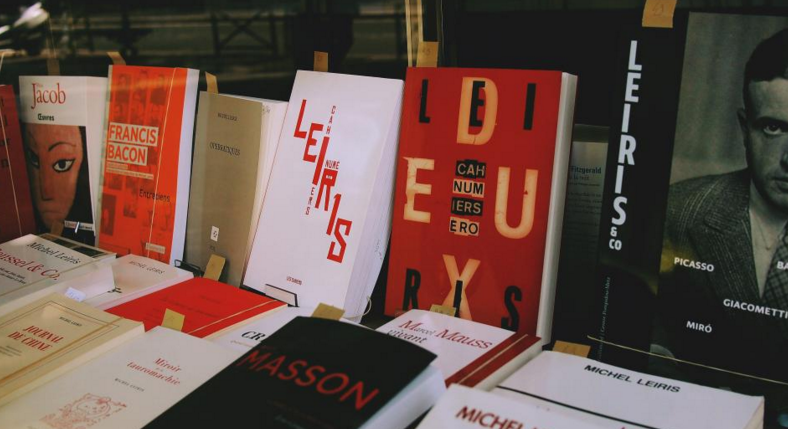
Either by enrolling yourself in an online writing course (in which you’d need to submit your homework on a scheduled time), or announcing publicly that you’ll take up something like a 30-day writing challenge, what you need is to put yourself, your writings, and your commitment on the spotlight. And the peer pressure will force you to write again.

You can also learn about some writing-related topics online, in which you’ll find yourself jotting down some notes. Who knows, maybe the things you’ve just learned about could trigger the story inside of you to come out!

Some courses and writing challenges to get you going:

Wait, wait, what about NaNoWriMo—you may asked. Well, not for the dark state. In such times, a bit of pressure is good, but a lot of pressure is bad. With NaNoWriMo, there’s just too much pressure. When I’m in a dark state, I don’t feel like writing—let alone writing a novel, in a month.

7. Attend writing-related events, book clubs, or writing sessions. Surround yourself with fellow writers

Screen Shot 2016-04-21 at 3.09.30 PM

When you surround yourself with fellow writers (or fellow readers), most of the times, you’ll be talking about books, stories, or other writers whose works you’ve just read. What are you reading or do you have a book to recommend, would be the natural course of an ice-breaker.

Arrange a meet-up with your fellow writers.

Reserve 1-2 hours in the weekend to stay somewhere and write anything non-stop. No pressure to show or share whatever you’ve written to the rest of the group. Surrounding yourself with the right people and the right environment would be enough to stir up something dormant inside your soul.

8. Go to your favourite bookstore and spend a minimum of 2 hours examining books you like and, most importantly, books you do not like

Screen Shot 2016-04-21 at 2.58.46 PM

Go slowly from one shelve to the next. Browse all the books in the best-selling sections and all the books in the most hidden corners. Flip the pages, read the opening lines, scrutinise the blurbs, study the cover. Which books you’d be happy to receive as a gift? Which books you wouldn’t want to read?

Hold on. Do not skip the books you do not like. Pick them up in a cynical and critical manner. This is badly written, you may think. Or what a lousy title. Or too many typos. Or the cover is a disaster. Surely, you can do something better than this, right? You know how to write better, how to pick a nice title, how to catch typos before they go in print, and you have a better sense of style to design at least a decent cover. Right?

If you’re asked to improve this book (that you dislike so much), how would you write or package it differently? There’s always a critic and an editor inside of us. In a dark state, even the two are absent—because we do not write anything for them to rip off. It’s the right time to provoke and unleash the beast.

9. Have your do-nothing day

Screen Shot 2016-04-21 at 3.04.29 PM

Pick a day (or a minimum of 12 hours) when you can go somewhere or stay at home. You can stay at a hostel or rent a nice hotel room. But you need to be alone, undisturbed. Turn off your phone. No wi-fi. No gadgets.

You can go out and wander around, you can enter shops but you are not allowed to buy anything. You can go to a restaurant or cook your own dish, but you need to eat alone. And no, you cannot bake. You can only cook to feed yourself. You are not allowed to talk to anyone, but you can talk to strangers. Okay, you can get yourself cups of coffee (or tea).

You can play musical instruments, alone. Or do some sports, alone. You are not allowed to read. Or watch movies. Or listen to music. Or play video games. You cannot immerse yourself in other crafts and hobbies (no painting, drawing, doodling, sewing, knitting, gardening, taking pictures, or the like).

At some point, you will want to write. You’ll feel the itch to go to your computer and type something, or to grab a piece of paper and create a snowflake-method outline. Your mind will be full of chatters and ideas, characters and plots, as well as dialogues and sentences to begin or end a story.

Because when you have nothing to do, nothing to do at all, you’ll be reminded of the reasons why you pick up writing at the first place. About why, as a writer, you just need to write. It has been the one thing your 10-year-old self has always wanted to do—the little girl who would cry her eyes out if she only knew that the grown-up you would betray her: by giving up that love of writing.

hanny
WANT TO SHARE WITH SOMEONE WHO NEED THIS?

How do you find story ideas for your travel write-ups? How to write about a place from another angle instead of reporting about what you do on a day-to-day basis? I’ve been asked this question quite often in various occasions, so I thought I could share about it through this post:

1. Follow your curiosity

You are not a cat, so hopefully, you won’t get killed (and even cats have 9 lives!). Have you ever looked at something, heard something, or read about something, and felt curious about a certain thing afterwards? Curiosity is human. We like to ‘sniff around’. We want to know what is happening, we want to know more, we want to know what will happen next. Our mind is full of chatters and questions–even about the most trivial things. The next time you are curious about something, follow it like a detective.

There was this one time around 3 years ago when I watched a TV series, Miss Advised. One of the characters used Craigslist–a listing site, to find herself a date. I was curious whether there were also people posting dating profiles on Craigslist in Indonesia. So I went in. And there were loads of people looking for ‘dates’ on Craigslist, in Jakarta–even just reading their ‘creative’ ads had given me a few hours of uninterrupted fun. Then I asked myself, do people really answer these ads? Does it really work? And so I replied to one of the ads and set myself up for a blind date. The story of the blind date–I’ll keep that for another time!

Stories that may come up: stories about exploration, about your effort in following ‘clues’, about uncovering something, about the challenges in getting the information you need, etc.

2. Keep asking ‘why’ and talk to people

When we travel, there may be many occasions when we realised that we know nothing about something: the way people dress, how they treat each other, their eating habit, the way they treat guests, their local beliefs, about why it seemed like every students in Kazakhstan were always asking me about how many languages do I speak, or about why we would see some old people in Paris walking down the street or sitting in front of a restaurant–talking to themselves.

Of course, we can always shrug our shoulders and let these things pass; or we can always try to understand these ‘unfamiliar’ things by asking people. I talked to a guy working in a villa in Bali, and it turns into this.

Stories that may come up: a feature story about someone you meet/talk to, a conversation with this person, the way he/she left some memories or give valuable life-lessons that are relevant to you, a story about that person and his/her life experience, etc.

3. Observe keenly

Did you still remember the things you see, hear, smell, taste, feel, and think from one of your traveling journeys? Maybe we remember what we saw–more or less, because we took pictures, but most of the times, we forgot the rest. But these small details are like seeds. When we plant, water, and nurture them, when they are ripe, they can burst into stories. To keep a journal on the things you see, hear, smell, taste, feel, and think on your journeys is a great way to keep these seeds. For instance, what is the headline of the local newspaper at the day of your visit?

I overheard a conversation at Musee d’Orsay one time, between a father and his son, and it made its way into this post. I played around with a memory of a city in this post. I wrote down the things I felt as I walked around the small alleys of Santorini, and it became this. I’m not saying they are good stories–but they are short drafts and snippets of what can actually come up from keen observations.

Stories that may come up: a reflection on life based on an overhead dialogue, how a dialogue you overheard reminds you of something–or enlightened you about something, about capturing a spirit of a city or an environment through the local’s conversations, etc.

4. Break your habit

If you’re always staying at a hostel, try a nice hotel when you have enough money. If you’re always staying in a hotel, try an Airbnb space. If you are always following a map, try ditching it. If you are always traveling with friends, try traveling alone. If you’ve never bought souvenirs, buy one. If you’ve always bought souvenirs, buy none. Try to do new things when you travel and break your usual habit. It will feel odd and uncomfortable–two sure signs that you’re about to experience something new. And when we experience something new, we are being introduced to a new story.

From trying out Tinder, having a picnic date with a stranger, dancing with a bunch of policemen, staying with a transgender host, hopping on into a stranger’s car at 4 am in the morning, eating horse meat, to hanging out with a bunch of high school students, each one is a story in itself!

Stories that may come up: challenges you need to face when you’re dealing with unfamiliar territories, the internal conflict of doing things you are unsure about, the way you see a place differently because you change your habit, etc.

5. Try to see things from a neutral ‘place’

Are you opposing arranged marriage? Do you think couples should get married because they love each other–not because of their compatibility towards one another? Do you think it’s shallow for a girl to not want to go to college–and opt for an arranged marriage instead? When we travel, we may see, hear, or experience things that are not in-line with our beliefs or our views of the world. It is easy for us to pass judgement instantly; but things are not always what it seems.

I always thought bitterly about India and its arranged marriage tradition; until I tried to be more open about this and started chatting with an Indian woman–who happily chose an arranged marriage rather than a college life; and with a car-rental driver–who said confidently, that of course–he would choose a compatible husband for her daughter through an arranged marriage! I may still disagree to some extent, but opening up myself to see things from a neutral ‘place’ made me able to understand the underlying reasons behind; and to accept the fact that there are couples who really fall in love after their arranged marriage!

Stories that may come up: unveiling the reasons behind why people act or think a certain way, background about a city/country’s cultural or political history that affects the way they interact or behave with each other, busting myths or breaking the stereotypes about a certain place, etc.

So, are you ready to find your (story) ideas?

hanny
WANT TO SHARE WITH SOMEONE WHO NEED THIS?

“Jo! So, tell me what’s around!”

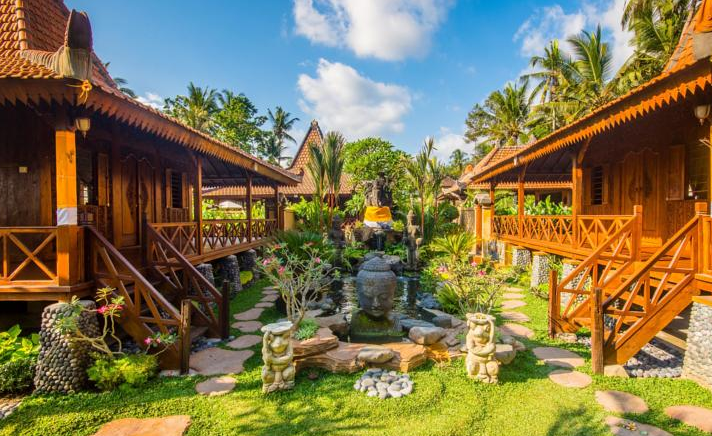
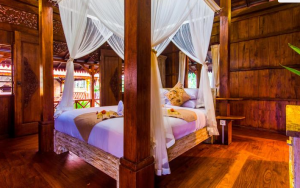
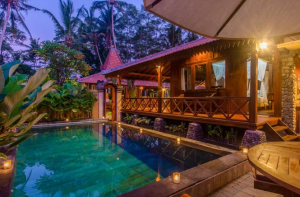
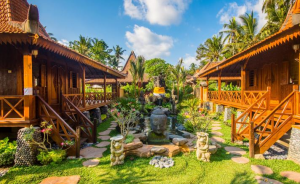
It was a cloudy morning in LodTunduh village. I was sipping my coffee at the breakfast table. The villa where I stayed, Villa Lestaru, belongs to the family of a friend. It consisted of 3 lovely bungalows with private pool, located in the middle of a rice field and a small forest. Amazingly, amidst being ‘off-the-beaten-path’, they have the fastest wi-fi connection I’ve ever found in and around Ubud so far.

After checking in the other night, I tried to Google the things I could see or do around LodTunduh, but it seemed useless. I couldn’t get anything. My search always led me to see or do something in Ubud, instead of LodTunduh. So, I decided to ditch Google and went to Jo instead.

Jo, who worked in the villa where I stayed, is a friendly guy with a big smile. During the times I stayed there, he seemed to be doing everything from driving guests around to taking orders for breakfast. Jo was born in LodTunduh and had been staying in this little village ever since.

Surely he knows the best spots around here?

Deciphering Lodtunduh Village.

Jo looked at me quizzically when I asked him about ‘interesting’ stuff in LodTunduh. “Well, there isn’t much but paddy fields,” he shrugged his shoulders. “However, there are many things in Ubud, the palace, the market…”

“But Jo,” I cut him midair. “What’s in Lodtunduh? I know what’s in Ubud, because I’ve been spending so much time there. But what’s around here? In this village? Is there anything interesting to visit, to see, to experience?”

Jo seemed perplexed. He bit his lower lip. And started thinking. Hard. “Here? Well, just the village,” he scratched his head. “Not much, really.”

I started to feel as if my enthusiasm level suddenly dropped to zero. But I was not ready to give up. Located only 10-15 minutes away from Ubud central by bike, LodTunduh is a charming little village that–I believe–hid its own gem.

Some people, including myself, choose to stay in this area when visiting Ubud. Not only because the area is quieter and less-packed with tourists, but also because a lot of villas, inns, bungalows, and homestays in LodTunduh are offering beautiful rooms with much lower price than the ones in Ubud Central. If you can ride a bike, the distance from Ubud won’t bother you at all.

Have you ever played ‘tourist’ in your hometown?

I had been visiting or passing LodTunduh village a few times before, and I remembered passing a huge sign for Luwak (Civet) Coffee Agrotourism site by the street. Coffee that comes from part-digested coffee cherries eaten and defecated by palm civet is what they called Luwak Coffee, or Kopi Luwak.

“What about that Luwak Coffee Agrotourism nearby?” I probed Jo.
Jo’s eyes lit up. “Oh, yes! Yes, you can walk around that agrotourism site and drink coffee. And not far from there, there is this beautiful restaurant that serves crispy duck, it’s called Bebek Teba Sari!”

I smiled. My enthusiasm level went back up a notch. We’re getting there, Jo. We’re getting there.

“So, what else apart from the duck? Where can I get good food around here?”

“Well, I guess, that’s it. The duck. There aren’t so many restaurants here, because LodTunduh is only opening itself for tourism not long ago–so, we don’t have as many restaurants around. LodTunduh is more of a farming village. People are farmers. Now, some of them are becoming tour guides and drivers, or work in hotels, but most are still farmers. So, not so many options for food, but Ubud has many restaurants!” Jo smiled a winning smile.

And then I got it.

I believed that Jo actually knew so many ‘interesting’ things to see, eat, or experience around LodTunduh. But I guess, my interpretation of ‘interesting’ is simply different from his.

Jo was born in LodTunduh. He had been seeing the same views: places, fields, and temples around this village his whole life. Nothing is ‘interesting’ for him, because he grows up with them all. He has become so used to it–he couldn’t really see (yet) his village from the eyes of a curious traveler (or tourist, I don’t mind that word) like me.

Are we all partially-blind when it comes to our own hometown? Well, if we have never played tourist in our hometown, I think that could be the case.

I used to be partially-blind about my hometown in Bogor, too. I only started to see it as a town with more ‘hidden gems’ than the obvious Botanical Garden and the overpacked Puncak Pass mountain-side when I started giving free tours for Couchsurfers & travellers who were visiting. Suddenly, I was interested in everything: about the spotted deers in the Presidential Palace’s garden, the culinary street around Suryakencana and Air Mancur, the hidden Pulo Geulis temple…

I could see it clearly now. If I’d like to know more about LodTunduh, I just needed to ask Jo the right questions.

What to see, eat, and do around LodTunduh–according to Jo.

Screen Shot 2016-02-29 at 11.09.36 PM

“Jo, where is the best place for you to get some food around LodTunduh? Places that you think serve the best food?”

“Well, there are some small warungs (small shop/stalls) that serve delicious food,” Jo answered. “I like Warung Ibu Ida that serves nasi campur (mixed rice) and there is also a nice warung that serves babi guling (suckling pig). But I don’t remember the name,” Jo laughed. “I always eat there and I know the place, but I just don’t know the name, I never noticed.”

“Where are they located?”
“Near the market.”
“Which market?” I asked, a bit confused. I never noticed any market around LodTunduh before.

And then Jo enlightened me.

There was a junction in LodTunduh, and in one of its corner, you can find a mini-market called Puri Kawan. Each morning, from 4 am to 8 am, the streets in front and along Puri Kawan will turn into a local market. The locals go there to sell and buy groceries: vegetables, spices, meat, fish–and we can also find many local delicacies sold there for breakfast.

The warungs that serve nasi campur and babi guling with local taste can also be found along this street. If you came after 8 am, the ‘local market’ would have disappeared without trace–and all you could find is the junction and Puri Kawan mini market.

“Jo! This is awesome!” I clapped my hands enthusiastically while jotting down all the information he gave me. “This is exactly what I’m looking for! Now, tell me, if I go around LodTunduh from here, what are the things I can see? It doesn’t have to be a tourist attraction or a restaurant, just tell me, if you go around the village from here, what would you pass?”

Jo thought about this for a while. And then he started out with Pura Bija, or Bija Temple. It was located right at the mouth of the alley leading up the street from the villa where I stayed. Jo told me that Bija Temple and 2 other big temples around LodTunduh are not ‘touristic’ temples. You cannot just enter these temples without permission–they are still closely restricted only for prayers and ceremonies.

The temples are only open for public during odalan–or the ‘birthday’ of that temple,” said Jo. “Different temples have different birthdays. I can find out when is the odalan for the temples, but even if there’s no odalan, I can also help you to get permission should you like to enter the temples. Pura Bija, that is closest to this villa, is a temple for Aryan caste.”

“Then you can drive around and see the rice fields,” Jo continued. “Just go to the market and drive South. You’ll see loads of rice fields with the farmers working, sun-drying their grains… all activities are still conducted traditionally. Like I said before, most people here are farmers. But if you go around, you can also see little shops selling paintings.”

“Farming is still the villagers’ main occupation, but most of them know art by heart, and in their spare time, they create art you can see in many galleries around here,” Jo explained. “There is a place called Silungan, only around 150 meters away. You can learn how to paint there–abstract paintings or caricatures. If you want to learn carving, I can also take you to some little shops. They don’t put up signs for classes or anything, because they are just local people who knows how to paint or carve. But we can go to one of them and ask them if they can give you a private class.”

The more I listened to Jo talking, the more I was amazed by the hidden gems LodTunduh has to offer. And Jo himself had transformed from someone who said ‘there-isn’t-much-to-see-around-here’ to a guy with tons of valuable information, local insights, and precious contacts.

He also knew a pottery place nearby where you can buy pretty ceramics like mugs, bowls, and plates. If you’d like to have your own set of Balinese traditional costume (the colorful Balinese kebaya), you can tailor-made it at some small tailors along the junction. For one set (the top and the cloth you wear like sarong), you need only to pay around IDR100,000,- or USD 8! This one really blew my mind, as I personally love Balinese kebaya!

Screen Shot 2016-02-29 at 10.58.46 PM.png

From LodTunduh to the North, East, South, and West.

“Tell me, Jo, what can I see if I drive North, East, South, and West from here?”

“If you continue to drive West, you’ll see the Luwak Coffee Agrotourism, loads of local warungs and the morning market, you can drop by at Ibu Ida’s warung for nasi campur and the other warung for suckling pigs. There is the duck restaurant, and if you continue to drive West, you can see Taman Ayun Sangeh and end up in Canggu,” said Jo. “While to the East, you’ll pass stretches of inns, homestays, bungalows, and villas. Further East, you’ll pass the Tegenengan waterfalls, and the Elephant Cave.”

I drew this practical information in my mind, making a ‘compass’ of my own with LodTunduh at its center. It seemed easier now to navigate everywhere from LodTunduh. I was thinking that if I could spend 4 days here, I could just spend a day to drive West, a day to drive East, a day to drive South, and a day to drive North… and there would so many things I could see already!

To the South, you can see all the art galleries, the rice fields and the traditional mills, then more inns, villas, and bungalows. You can also end up in Canggu going this way,” said Jo. “To the North, is to the direction of Ubud. You can find more Coffee Agrotourism places, Kengetan bridge and the river below it where people threw away the ashes from the cremation ceremony, and there are also many temples along the way, oh, and you can go to a restaurant called Warung 9 at the border between LodTunduh and Ubud.”

Warung 9, later on, turned out to be the highlight of my culinary trip in and around Ubud. They have another branch now in Jalan Suweta–a street next to Ubud Palace, called 9 Angels. The concept is brilliant.

Decorated eclectically, the warung serves buffet of vegetarian food. You serve yourself from the buffet and grab your own plates and spoon and fork. There are baskets of tropical fruits and a blender, so if you’d like to make a smoothie, suit yourself.

Screen Shot 2016-02-29 at 11.02.50 PM

Afterwards, you pay what you eat by donation. Left your money inside a glass jar. There is no cashier whatsoever. The place operates based on trust and kindness. If you have more money, leave more money inside the jar–you may help feed those who do not have enough money who came to eat here! When you’re done, wash your own plates, and leave the place with your tummy and heart, full.

And on my last day in LodTunduh, lazying around by the pool under the drizzles, I realised that I am indeed, full: of delicious food, of Jo’s ‘local traveler’s map‘, and of another amazing experience of discovering a new place–seeing the way it opens itself up to me through the many kind souls I’ve met along the way.

For LodTunduh, I would say:
Thank you, Jo!

Where to stay in LodTunduh to meet Jo:
Villa Lestaru
Jalan Lodtunduh, Gang Pura Bija, 80571
Ubud, Indonesia
*Guests can enjoy airport pick up service, free use of 2 bicycles for each room, and scheduled shuttle service to central Ubud.
Where to get crispy duck & betutu in LodTunduh:
Bebek Teba Sari
Jl. Raya Kengetan – Lodtunduh,
Ubud, Gianyar, Bali, Indonesia
Where to experience a full tummy and a full heart in LodTunduh:
Warung 9
Jl. Lodtunduh
Ubud, Bali, Indonesia
+62 817-776-768
hanny
WANT TO SHARE WITH SOMEONE WHO NEED THIS?

I think it’s fair to say that this one is not going to be a quick read, so if you’re in a hurry, you may want to revisit this post later on. But if you’re ready, let’s roll!

“So, what’s your New Year’s resolution?”

You might have heard this–or being exposed to this question. Especially now that we’ve gone through our first few weeks in the new year. You may scoffed at that question. Or you may simply be reminded of your own New Year’s resolution. The one you made on New Year’s Eve.

I was one of those people who did both (scoffed at the question, but actually wrote down my New Year’s resolution). I no longer scoff at that question now, but I still–to some extent, write down my New Year’s resolution in a slightly different manner (after reading The Desire Map by Danielle LaPorte).

But we’ll get back to that later.

My point is, I have written down my New Year’s resolution probably since I was 12. And I didn’t really feel like it was (ever) ‘working’–whatever ‘working’ is supposed to mean in this context. I was simply scribbling mine ecstatically; and in the following year realised that, hey, I didn’t achieve those thingsbut who cares?

So I forgot about it and moved on with life.
But that was when I didn’t know any better.

Now, before we continue…

Let’s do this experiment just for the fun of it. I want you to write 5 things you’d like to do, achieve, or have this year. In other words, your New Year’s resolution. You can write down whatever you like. If you can think of 10 or 30 things, just pick 5. If you can only think of 1 thing, try to add more until you get 5, just to stretch your mind a bit.

Probably you’ve written down stuff like getting healthier. Losing weight. Getting married. Having a new car. Traveling to exotic places. Quitting your job. Being fluent in Italian. Spending more time volunteering. Learning how to become a professional chef. Whatever they might be, just write them down freely now.

Done? OK. Keep that note with you for a while (it will come in handy later!)

In the mean time, I think these could be the 3 most plausible reasons on why my (or your) New Year’s resolution doesn’t work.

1. We don’t really want those things. We only think that we should want them.

Probably we don’t really want a new job. We don’t really want to pay a down payment for a house. Maybe we are not really into traveling, and actually prefer to stay at home, doing our hobbies or spending time with our families.

But we sometimes write down the things we don’t really want, simply because our circle of friends or families (or societies) believe that we should want those things. Because our parents think of those things as the epitome of success. Or because our friends told us that quitting our job to travel is the coolest thing to do–ever! Or because society believes that it’s indeed very respectable to climb the corporate ladder.

2. The things we desire may be fun to have, experienced, or achieved, but actually they are not really important for our lives.

When we created our New Year’s resolution, we may wrote down so many things we wanted to have, experience, or achieve. Now, from all those things, how many of them are truly important?  Or let me rephrase: if we can’t have, experience, or achieve them, how would our lives be affected?

If our lives would still be (relatively) fine even when we couldn’t get those things we want to have, experience, or achieve, it means those things are not that important to us. And it is exactly because we don’t think of them as that important, we don’t have enough drive, inspiration, or motivation to go for it.

3. We don’t really know why we want certain things.

There were times when I looked back to my previous New Year’s resolutions, and felt like I needed to pat myself kindly. Have we ever looked at our New Year’s resolution and asked ourselves why we actually want those things?

Why do we want to have a girlfriend? Or why do we want to get married this year? Or why do we want to quit our job? Or why do we want that new phone? Or why do we want to lose weight? Or why do we want to make more money?

When we are asking these questions–and be honest with ourselves while answering them, we will be able to understand what it is that we truly want. Why we want the things we want. Keep asking why until you’re lost for words.

For instance, if we’d like to lose weight, keep asking ourselves about why we actually want to lose weight.

  • Maybe it’s because we think we would feel more confident being in our skin
  • Maybe it’s because we want to feel lighter when we’re exercising, thus we can feel more comfortable doing it
  • Maybe it’s because we’ll be in a dangerous medical condition if we’re not losing weight, thus we are afraid that we’ll get seriously ill
  • Maybe it’s because we think losing weight will make us look more attractive, hence, we’ll have better possibilities of finding a romantic partner, and in the end we can finally feel loved and enough

The underlying reasons behind why we want the things we want could actually give us more clarity on the things we really desire.

Having a boyfriend, for instance, had made its appearance numerous times (if not every year) in my New Year’s resolutions (not this year, though!).

But why do I want to have a boyfriend?
Because it will make me feel

OK. Stop right there!

Now I want you to just go back to those 5 things in your New Year’s resolution you’ve prepared a while ago.

After asking yourself why you want each of the things you want, look closely at each one of them, and ask yourself, how would it make me feel if I actually achieved, experienced, or get these things I want?

  • Probably by owning a house, you would feel proud, powerful, or accomplished.
  • Probably by losing weight, you would feel confident, attractive, or healthy.
  • Probably by traveling around the world, you would feel excited, adventurous, or liberated.
  • Probably by quitting your job, you would feel courageous or spontaneous.
  • Probably by elevating your career, you would feel energetic or productive.
  • Probably by getting married you would feel secure or loved.

Anything.

Just explore the range of feelings you’d feel if you get all the things in your New Year’s resolution. You may have the same feeling keeps popping-up and repeating itself. For instance, having a house, getting married, and elevating your career… all three makes you feel secure. It’s okay.

Now I want you to examine all those feelings and group the similar feelings together. Choose 5 (or less) frequent or recurring feelings that appear on your note. At this stage, you should have a list of 5 or less feelings instead of 5 things on your New Year’s resolution.

A year ago (and up to this day), that’s how my New Year’s resolution looked like.

A list of feelings.

What I do next, is simply asking myself, what can I possibly do (in my everyday life) to give myself all those feelings?

Let’s say I want to feel ‘loved‘. For me, (as we’re all experiencing love in different ways), I could evoke the feeling (that more or less resembles the feeling of) ‘being loved‘ by:

  • sending a sweet text message to myself (really!),
  • gifting myself small gifts (a new notebook, a flower, a short weekend-getaway),
  • treating myself for a nice meal or a nice cup of coffee,
  • meeting my friends and laugh with them,
  • standing in front of a mirror, smile at myself and say, I-love-you or You’re-beautiful
  • hugging my dog…

and many more.

Just some small, simple, (and maybe kind of silly) things that I can do for myself to feel (or at least get close to) the feeling I want to feel.

And after that?

I started doing these things to other people, too. I send sweet text messages to my friends, gift a colleague small things, treat someone for a nice cup of coffee, say yes to my friend’s invitation to meet up, tell a friend that I love & appreciate her… and anything that comes to mind.

How does it change me?

I have to say that now I have more clarity in understanding the reason behind why I want the things that I want. I no longer stressing myself out or wasting my time to chase the shadows, because now I know the underlying motives on why I desire something.

I also started to be more in-the-now. I feel like I don’t have to wait for something big to happen before I could feel or experience what I want to feel. I feel much lighter knowing that I can achieve my New Year’s resolution–now that I design it that way.

I only need to do these little things every now and then and feel the feeling I want to feel!

Furthermore, I am not solely concentrating on myself or being totally absorbed in what I want to feel, but I also start thinking about how other people can feel the good things I want to feel.

In a nutshell, creating my New Year’s resolution this way feels like a better fit for me these days. I don’t know if this resonates with you, too–but feel free to try, and let me know if it (somehow) changes you!

Love,

*) on another note, I like this post Your Goals are Overrated (another take on New Year’s resolution issue) & 7 Strange Questions that Help You Find Your Life Purpose by Mark Manson. So maybe you want to read it next!
hanny
WANT TO SHARE WITH SOMEONE WHO NEED THIS?

Our retrouvailles marked the end of summer in your city. The city I came to love despite its constant windy chills and random rain showers: in summer.

We remembered the couch—with plush pillows and soft blankets thrown carelessly over its surface; something that reminded us of the chaotic beauty of a studio of an artist. We spent so many times snuggling there; our excuses were the cold, the wind, the rain, and the little time we had. We were surrounded by bookshelf, spice rack, Amy Winehouse, and the faint hum of the world outside: the trams, the bikes, the planes, the still sound of the canals, the rustles of the leaves at the park nearby.

I came to love the park much more than I ever did when I was there—and I never thought that this was possible, since I had always loved parks with all my heart. When we were outdoors, we spent most of our times riding or walking through it on our way home or on our way to the museums; as it provided us with a lovely shortcut from the busy streets where bicycles whizzed by in incredible speed. We had a picnic when the sun was up: reading books, sharing a generous portion of French sausages and seaweed burgers, sitting leisurely overlooking the lake while talking about our future plans and the end of summer that would also mark the end of our time together.

Probably it was this: the realisation that the clock was ticking (or maybe it was the cold), that made us clutched to each other ever-so-tightly as we zigzagged on your bicycle under the city’s rainy evenings, humming some random songs that came to mind while the street lamps shone their damp lights on us like dim stars hanging low. Or kissed abruptly at the park; behind the supermarket alleys; at the coffee shop; in a bookstore; in front of a closed shop—its roof invested by spiders—as we sheltered ourselves from the hard rain;  or by the street-side of the museum complex—where a couple interrupted us to ask whether they were close to Louis Vuitton store.

***

We had cold mornings, cold afternoons, and cold evenings altogether—and I had no intention to go out on those days. I found solace on the couch, reading your 25th Hour, my feet stretched out on the coffee table, my upper body got buried underneath the soft blanket, while you were working all day and stopping every now and then only to make cappuccino, buy groceries for breakfast, prepare lunch, open a bottle of wine, cook dinner, or hug me in random intervals.

On the rare occasions when you managed to convince me to go out, we would savour food with fragrant smells of spices from faraway places before retreating to a beer place for some warmth and random conversations about everything we could think about. We would leave when it was late, and most of the times it had grown colder outside; and I would flinched as the chill hit my face when you opened the door.

When a girl told a guy that it-was-cold, she was simply asking to be hugged.

And you would give me a hug and rubbing my upper arms for a bit of extra heat as we ran to the bicycle, laughing and looking forward to the promises of warmth: that we needed only to brace ourselves against this cold for a little longer and home would welcome us in just a little while.

***

My initial memory of your place was the bookshelf.

I sinned from judging people based on the books they read, and as you prepared some drinks for me that afternoon, I stood in front of your bookshelf and browsed the titles lining up there only to find out that I had also read most of the books you had.

When you showed me the terrace—overlooking the artsy neighbourhood—I noticed a string of Tibetan prayer flags on the porch of one of your neighbours.

That evening we found ourselves enjoying a live Nepali classical music concert in a small cafe on a hipstery street. People had beers in their hands, nodding their heads to the beat of the tabla, and some were clapping their hands. Soon after, in the dark, we danced to the last song being played with a bunch of friendly Nepalis who had lived in your city for quite some time. We were all just a bunch of shadows moving in unison: people from faraway places with stories of romance and heartbreaks altogether. As the music wafted in the air, around us, the boundaries between friends and strangers disappear.

We jumped and clapped and swayed. And laughed—not because there was something particularly funny, but because we were simply happy. Probably that was the best kind of laughter after all.

***

There were things I didn’t tell you after we parted in front of the supermarket at the end of that cold summer, when we said goodbye as abruptly as we kissed the previous days:

About how I had prepared myself to forget—not because I wanted to, but because sometimes forgetting is better than remembering; the way sometimes the anticipation of disappointment is a much safer option than the anticipation of hope.

About how I dragged my suitcase across the park to be at the other side of the city, and it was raining, and cold, and I was clutching to my phone for directions—but the screen got wet every five seconds or so, after a while I gave it up and pocketed it, couldn’t care less about finding the shortest route to get to where I should be.

About how the park was full of life despite the weather and about how when I got too tired of circling around with my blue suitcase, I sat on a park bench—the raindrops were falling over the hood of my parka jacket—and cupped my hands on my cheeks; both felt oddly cold.

About how I just sat there and for quite a while I thought I could smell the wet soil, the lake, the leaves, the grass, and the grey clouds above. And about how the thought of a warm bed, a cup of Chocomel, and Chinese takeout finally got me going.

***

Distance was a funny thing. We might have thought about it silently as we had our banana smoothie in the morning or our rooibos tea in the evening—though we didn’t really want to go further into it.

I have always believed that distance is not measured in length. It is measured in faith.

And the farthest distance is one that is not crossed. But it was you; not me; that had decided to cross the distance that day, and I was thankful that you did, that you braved it out, that you tried. Because if I was not afraid, I, too, would.


*** This piece was published in Postall magazine, vol. 01, Relationships, Mexico (2021).

hanny
WANT TO SHARE WITH SOMEONE WHO NEED THIS?

From picnic-dating to ‘flying’ a fighter jet, I crossed 6 more things off of my list this year.

In 2012, I published my 100-lista random list of 100 things I’d like to do or experience in life. Some of the things I listed down there had been on my wish-list since I was still a teenage girl, while some others had been jotted down quite recently. I revisit my 100-list every year-end to see how far I’ve come, how many things I’ve crossed off, and what are the next things I can pursue.

I also feel like I’ve changed a bit (or even a lot) throughout the years, and it’s only natural that the things that once excited me didn’t excite me any longer–or vice versa. So, each year, apart from leaving the crossed-off list intact, I also examine the rest of my list to see if I want to alter one wish for another.

Why I’m Keeping My 100-List.

I keep my 100-list because these random (and somewhat silly) things reminded me of how, as a child, I looked at the world every single day with wonder and amazement. Of how I imagined a future of my own, without thinking about what’s possible or what’s impossible. Of how I believed that wishes–no matter how odd, could actually come true.

Climbing a tree, for instance, is something I’ve always wanted to do since I was a little girl, and until today, I still haven’t crossed it off of my list. It is indeed such a childish and simple wish. However, seeing this particular wish has never failed to remind me of that childhood thirst: to wonder, to dream, to imagine, to experience something new, to venture to the unknown. (updated: I did it, I have crossed it off my list)!

The 6 Things I Crossed Off of My List in 2015:

Until today, I have crossed 42 things off of my list (58 more to go!), and these are some of the things I managed to cross off of my list in 2015 (in no particular order):

ONE: Learning how to ‘fly’ a fighter jet/helicopter.

I received a message from my ex-colleague one day: “Do you want to learn how to fly a fighter jet?” I didn’t even know why she had to ask! I have always been fascinated by helicopters and fighter jets even before I watched Top Gun, so when Eurofighter Typhoon set up a fighter-jet simulator at a military exhibition and invited an innocent civilian like me to try it out, of course, I said YES!

The fighter-jet simulator was actually there to be tested out by Indonesian Airforce’s fighter pilots, but on one sunny afternoon, I jumped into the simulator happily to learn how to fly a fighter jet. When we were about to start, the instructor asked me, “Have you ever flown this before?” and I replied with, “Oh yes, all the time!”

We looked at each other for a moment until he realized the absurdity of his question and we burst into laughter. And yes, it wasn’t easy to fly a fighter jet. I was so proud for being able to have a smooth take-off and get the jet balanced, but when I had to shoot other planes and check the altitude and everything else… *facepalm*

TWO: Learning how to give Thai massage.

I have always wanted to know how to give a proper massage. I think it would be lovely to help my loved ones relax after a long day by giving him/her a massage. In the end, it wasn’t really a Thai massage; but I took a 2-day massage class where the masseuses have combined Thai, Swedish, and Balinese traditional massage into a technique of their own.

“It’s important to know the right technique to do the massage,” said my instructor. “For instance, your body position must be correct, or else, after giving a massage, you’ll get back pain or shoulder pain. This is not the way to go. Yes, we are taking care of others, but we need to take care of ourselves first and foremost, too. Self-care is important.”

That message about self-care was so profound.

My instructor has worked there–as a masseuse, for more than 8 years. “I used to be a gardener at the owner’s house,” he told me as we went out for lunch together that day. “I mowed the lawn and threw away the garbage, those kinds of things. Until one day the owner called me and taught me how to do the basic massage, so I could massage him when he was tired. I started learning how to give a proper massage, and soon after, when some of his friends came over to the house, he would also ask me to give them a massage. They liked it, and along the way, I learned some more techniques and massage more people. When I had finished my training, I was recruited as a masseuse at the owner’s massage place, until today. Now I have learned English as well, to communicate better with the customers.”

THREE: Picnic-dating by the beach or in the park.

I almost did this at the end of 2014, when I was in Paris and a guy from Bordeaux asked me to have a picnic date with him by the Seine. “I’ll bring the wine,” he said. And he did. And we did have a picnic by the river. But I was there with my other two friends. So I hesitated for a while about crossing this one off from my list, and I decided not to cross it–yet.

But I finally experienced my picnic-dating–in the park, not the beach–and it was in Vondelpark, Amsterdam. We went to Albert Heijn for some freshly-squeezed orange juice and a bag of Doritos; and I sat on the passenger’s seat of my date’s bicycle, clutching his waist as he rode it skilfully to the park. Turned out there was a culinary fair at Vondelpark that day, so we treated ourselves to some grilled sausages and seaweed burger before retreating to sit on a low-raised stone wall overlooking the pond, reading books.

What? Reading books? If that doesn’t sound like a romantic date to you, trust me: that for a bookworm such as myself, reading books with your date is always counted as a romantic thing to do!

FOUR: Learning Latin dances.

I love to dance. And I always think that Latin dances are sexy–the music and the beat are so dynamic, and the dancers are always looking so passionate and confident. I had trained myself some moves via YouTube videos every now and then, but I knew I wouldn’t be able to really ‘dance’ that way. So the last time I was in Bali, I took 2-hour private salsa lessons.

My teacher is a Balinese salsa dancer, Made Lasia. He was so good at explaining and demonstrating the steps–and I was surprised to know that in the first half of an hour I could dance salsa already!

Of course, I am still a beginner. Sometimes I still lost count of my steps as I dance, or couldn’t really grasp what my partner was trying to say when he lifted up my hand a certain way. But I’m learning! *baila, baila*

FIVE: Traveling across Indonesia and visiting all the big islands.

Finally! This is something I have always wanted to cross out of my list–and the opportunity came to me in mid-2015, when I got an assignment to cover the stories of various nonprofit organizations from Nias to Ambon, from Muna Island to Pontianak. I traveled non-stop for 3 months while working on interview transcripts and writing feature stories all the way, and it was really tiring. At the end of the trip, I didn’t feel like I want to go traveling again for at least 3 months (but, of course, I travel again in less than a month).

I have to admit, though, that I didn’t have that much time to go ‘sightseeing’ during my 3-month all-around Indonesia trip. So, we may need to erase the images about a relaxing time by the beach or a leisurely hike by the mountains. The schedule was so packed, and I spent my whole days following the activists on their field duty, but I didn’t regret it at all. In fact, it was a money-can’t-buy experience altogether; as I was exposed to inspiring stories and courageous people throughout–and it made me believe that Indonesia is going to be alright.

In some remote islands, villages, or forests all over the archipelago, there are actually some amazing people doing amazing things for their community. For their country. And this gives me hope.

SIX: Sleeping in the outdoors, underneath the sky.

Sawendui is the highlight of my traveling journey in 2015. To reach this hidden paradise, I needed to fly from Jakarta to Biak and then hopped into Saireri Paradise Foundation’s speedboat that would take me to Sawendui village in around 2.5 or 3.5 hours, depending upon the mercy of the sea.

There’s only one wooden hut by the beach in Sawendui–it’s a basic hut where the staffs of Saireri Paradise Foundation gather with the Sawendui people every day; either to have a briefing, a meeting, a communal lunch, or to throw an all-night-long musical fiesta. The foundation has worked together with the locals in Sawendui for some time to conserve Paradise birds and turtles around the area.

Yes, there are rooms inside the wooden hut and bathrooms, too. But the staff (one from Sumatera and the other one from Sulawesi) preferred to sleep in the outdoors–either by the beach or in the forest, and they didn’t understand why one would want to use the bathroom if one could jump into the pristine river inside the forest–that can be reached in 30 steps from the main hut.

I spent the days in Sawendui with my friend, Windy–and we did experience the lovely feeling of sleeping by the river inside a forest; to be woken up by sunshine and the cries of the birds and to fall asleep while listening to the serene crackle of the branches from the fire where the staff and the locals grilled some chicken, corns, and bananas close to midnight.

There was this one time when we came with the locals and the staff at night on their turtle patrol. We walked through the pitch-dark forest and then along the beach, the wave sounded so furious yet majestic, and the moon was our only source of light. When we were tired after walking for 2 hours, we decided to wait for the locals-on-patrol by the beach, and just slept there until they finished their patrol. The log is our pillow, the sand is our mattress, the sky is our roof. It was the closest moment I have with nature: and it felt so humbling to know that I am only a tiny dot in this Universe of Creation.

***

What about you? Do you have your 100-list, too? Are there some dreams or wishes from your childhood that are still close to your heart today?

hanny
WANT TO SHARE WITH SOMEONE WHO NEED THIS?
Hanny illustrator
Hi. I'm HANNY
I am an Indonesian writer/artist/illustrator and stationery web shop owner (Cafe Analog) based in Amsterdam, the Netherlands. I love facilitating writing/creative workshops and retreats, especially when they are tied to self-exploration and self-expression. In Indonesian, 'beradadisini' means being here. So, here I am, documenting life—one word at a time.

hanny

TAKE WHAT YOU NEED
VISIT THE SHOP