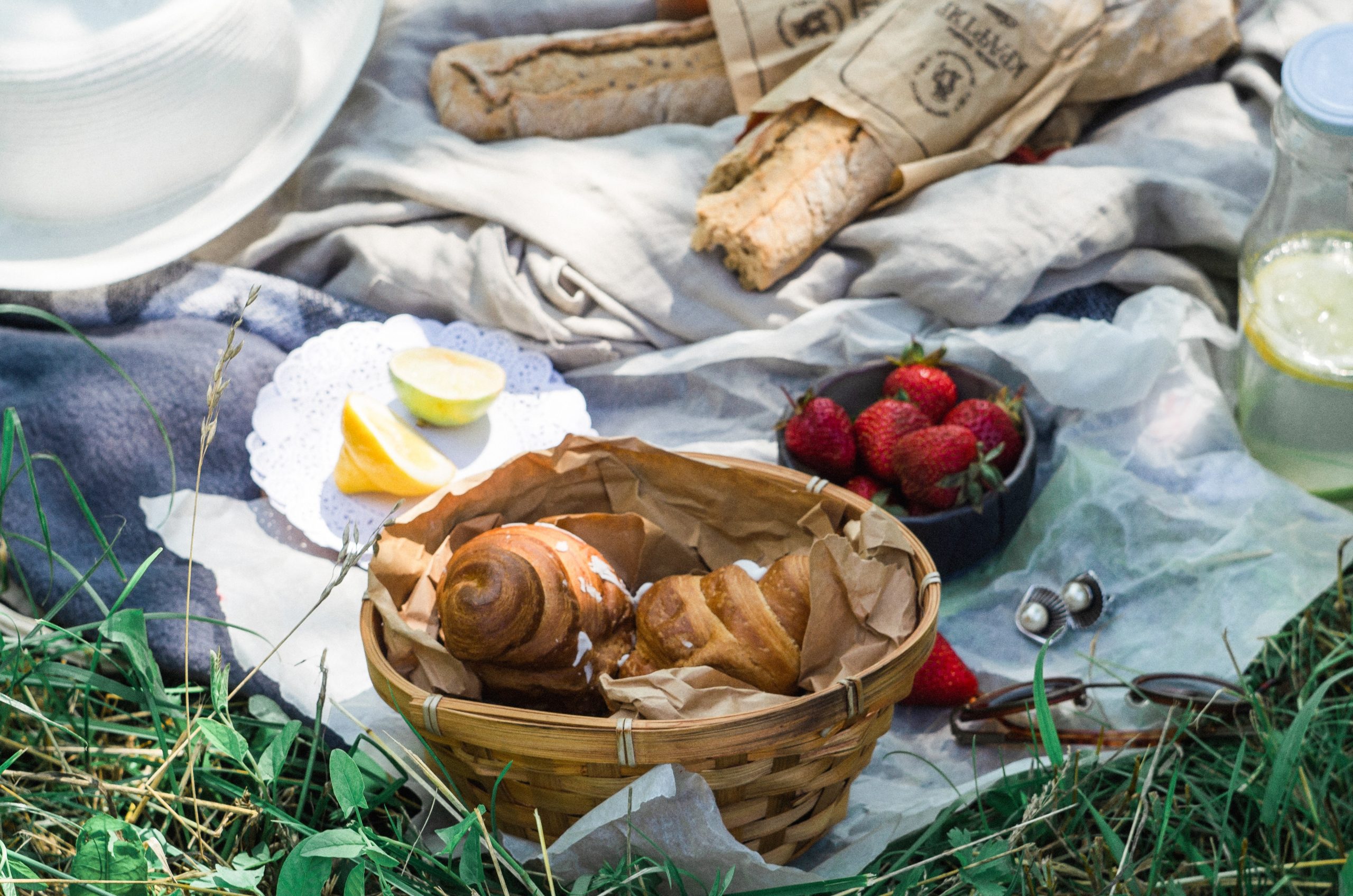
On his 41st birthday, the sun retreated for a while. The windows were open and the cool breeze whisked our bread dough into the oven.

A bowl of summer pasta salad, a bite of tiramisu for breakfast, leftover rice and egg whites, fried.

I spent my time in the studio: reading, journaling, and enjoying the wind caressing my skin. Thunders rumbled in the distance and the sky dripped tiny drops of water on the terrace.

The evening whispered past the empty boats, the bridges, the road closures. The canal hosted bowls and bowls of food: baked potatoes, bruschetta, tortilla chips with tomato dips, Greek salad. We toasted for another year, the smooth crema di limoncello and cans of 0% Radler.

Things were so loud on the surface but underneath them all, the deeper you went, the more silent they became. Wasted words were muffled by things left unsaid. Aggression and criticism were set aside for an honest confession: I am scared, I am afraid, I am worried.

Sometimes I wonder why people say things at all.
I am okay with silence.
Silence is not awkward.
It’s honest.
You don’t have to fill the air.
The air is amazing the way it is.

I felt like the summer is over, and it was okay. Today I woke up to a cloudy sky and it reminded me of a celebration of an ending. I welcomed the weather and smiled. What a beautiful day.

Photo by Tanya Prodan on Unsplash
hanny
WANT TO SHARE WITH SOMEONE WHO NEED THIS?

I can’t believe it’s been almost 3 months since my self-isolation started.

1st MONTH

The first month was the month when I was trying to figure things out. There were still loads of worries and fears about what could happen and how it would affect my families and loved ones. I wrote in my journals almost every day, trying to understand what was happening inside of me and give things a bit of perspective. I stopped checking the news or updates surrounding the pandemic because I realized it didn’t do me any good.

I fell back into my meditation and journaling practice and did some light yoga or qi gong every now and then, to help me feel a bit more grounded. I did what I could, but then I also needed to accept the fact that I couldn’t do everything, help everyone, or control what was happening, and this was okay.

2nd MONTH

The second month was the month when I started to reconnect with friends, jumped into online meetings and calls. I knew I wasn’t fully ‘out there‘, yet. Some people were very productive during these times, and I sometimes felt like I didn’t do enough.

However, I tried to listen to my body and spent most of my time reading or learning without guilt-tripping myself. I felt like it was time for me to go inward instead of outward. Maybe I needed this month to refill myself, recover, and recharge?

3rd MONTH

The third month, the month of May, was the one where I felt most grounded. I felt the urge inside of me to move (both physically and mentally). I picked up on both client and personal projects, planned some stuff for the rest of the year, facilitated online courses and IG lives, and revisited some old projects with friends that got postponed or delayed.

And here are some of my favorites in May:

Books

  • Save The Cat!® Writes A Novel by Jessica Brody and Novelsmithing by David Sheppard. I think they are in my all-time top-3 books about the technical aspects of writing novels (especially when we talk about structures) alongside Story Genius by Lisa Cron. If you’ve been writing fiction for quite some time and have learned about the basics of story structure, character, plot, dialogue, etc., these books will give you more than the basics. Instead of telling you where you need to go, they give you a map and guide you on how to get there. They give you the blueprints for your story that you can really follow, step by step.
  • Ask The Passengers and Please Ignore Vera Dietz by A.S. King. I have a soft spot for young adult novels, but I have never read about A.S. King until I watched Ariel Bisett‘s recommendation on YouTube. I have been binging on her novels these days, and I love every single one I’ve read, but these two are definitely my favorites so far.

Movies/Series

  • Parasite. A movie that has been recommended by so many people, including my brother-in-law, and finally I could watch it on Viu. It started out light and funny but ended up so dark so fast. I don’t want to spill more details, but I think it’s really a movie that will make us rethink the way we interact with others. I love movies where you can see a reflection of yourself in each of its characters.
  • Unforgettable. A movie I watched on Viu, about a radio DJ that received a letter and song request from a listener, that brought him back to one summer when he was still a teenager, at a small beach town where he spent his time with his group of friends. This is such a simple, heart-warming story, but also a tear-jerker. I cried. A lot.
  • Another Child. Another one from Viu. About a teenager who found out that her father was having an affair with the mother of one of her school mates. It was such a touching story about a teenager that got caught in the middle of her parents’ drama and how she ‘found’ herself (and a friend) in the process.
  • Money Heist. A Netflix sensation my husband and I watched for days on end. The last time we did this kind of marathon was when we watched Stranger Things. Our friends already warned us that we should start watching Money Heist during the weeks when we didn’t have much to do because it was addictive. And it was! I wouldn’t think of myself as someone who would enjoy watching a heist movie, but Money Heist was addictive not only for the heist itself, but also for the drama and the character arches! I also watched the documentary at the end of Season 2, about how it went from a local series to a worldwide sensation; and listening to the team and the cast talking about it only convinced me about how much they love this production. It was truly a passion project.

Courses

Apps

  • Duolingo. I’ve been using this app for quite some time, but picking it up again during isolation to self-taught myself Italian, and a little bit of Dutch.
  • Blinkist. It’s an app that will give you a summary/key takeaways from popular books in around 15 minutes. I like to speed up the audio to 1.25x, so it’s around 10 minutes per book for me. Blinkist is an app to find out what the hype about a certain book is all about, get some nuggets from books you’ve heard about but haven’t had a chance to read, or to decide if a particular book piques your interest enough to be bought and read in its entirety. I like to listen to some books on personal development, creativity, and motivation & inspiration in the morning.
  • Gramedia Digital. I was late to notice that the biggest Indonesian publisher & bookstore chain has a premium package of IDR89,000,- per month; and you can read unlimited e-books under their collections. It’s a bargain for me, especially when I realized how many books they have under their Literature & Fiction collection!
  • FunRun 3. I’ve been playing this multiplayer racing game with my husband every day during our downtime. It’s a great way to bond and do some activities together, now that we can’t really go out much. Sure, we’ve been watching series/movies together, but playing games together (sometimes against one another) feels more active and fun!

What are some of your favorite books, movies, courses, or apps this month?

Do you find yourself having more time to read or chill, or on the contrary, you are even more swamped with work and other daily chores? (I know some of my friends find themselves much busier than the pre-pandemic time!)

Wherever you are and however you spend your time during these times, I hope you are well.

I hope you stay healthy, loving, and kind.

hugs,

hanny
WANT TO SHARE WITH SOMEONE WHO NEED THIS?

What would you pack to go on an inner journey; wandering to the deepest part of yourself you’ve long forgotten, a strange terrain and unfamiliar territory you don’t even know existed; crossing that bridge between memories and things buried underneath—a magical place from where your soul is calling you; have always been calling you?

“There is no greater agony than bearing an untold story inside you.”
—Maya Angelou


INTUITIVE JOURNALING FOR SELF-DISCOVERY

During my university days, I bumped into WILD MIND by Natalie Goldberg, a book about writing for writers. Little did I know that this book would change my life.

It is from this book that I got introduced to free-writing, a technique to beat procrastination and inner critic by performing a timed writing practice and just write as fast you can, without stopping, without thinking, without editing.

This technique allowed me (as an aspiring writer back then) to fill notebooks upon notebooks with dialogues, characters, story ideas, descriptions, settings, anything. All in all, these notebooks have become my endless source of writing inspiration.

Since I have a habit of writing journals (since I was 6 years old), I decided to experiment by using the same technique to document my days, thoughts, and experiences. I would grab my journal and write as fast as I could (usually in bed), and poured whatever thoughts that crossed my mind until I was tired.

It wasn’t until 11 years later when I found myself studying and practicing meditation, that I connected the dots.

One day, I gathered all my journals from the last 11 years and read them again: all those pages filled with tears and laughter, angry scribbles, and joyful handwriting. Amidst all those chaotic scrawls, I found messages, words, or sentences that jumped out of the pages because they sounded so ‘foreign’. Not in a bad way, but in a way that surprised me. “Did I write this? How was it possible that I came upon such knowledge, such wisdom, such revelation?”

Rereading my journal pages throughout the years allowed me to discover something new about myself. It gave me the ability to connect the dots: why I have certain fears, why I hate my body, why I have certain beliefs about money or success, why I have a significant amount of self-doubt, why I do not want to show my weaknesses, why I have the tendency to be a people pleaser.

The insights I got about myself and my life from reading those journal pages were breathtaking!

From this moment on, I started experimenting and combining the things I’ve learned about meditation, mindfulness, and self-development with Natalie Goldberg’s free writing technique. I used this combined technique to fill my journal pages: to find out more about myself, to make decisions, to find some root causes of my problems or beliefs, or at times, simply to clear my mind. I called the practice “intuitive journaling” because I believe that when we’re so deep in our writing or journaling practice, our intuition can speak to/through us.

Intuitive journaling helps you to explore your inner wisdom and intuition through writing and journaling. The aim is simply to peel the layers of your own lives and listening to the messages it delivers.
— Hanny

A few years ago, I started sharing this practice with my close circle of friends, and through my social media accounts. Invitations to facilitate semi-private workshops followed right after, where I led participants through an intuitive journaling practice.

Major life (and location) changes that happened last year, however, made it difficult for me to set a fixed schedule on when I would be able to facilitate another intuitive journaling workshop. Thus, this year, I decided to bring these workshops online. I will share the tips, techniques, prompts, practice, stories, and sessions about intuitive journaling so you can do it yourself, from wherever you are, whenever you feel the need to do it.

WHAT WE’LL NEED

  1. A space to write; ideally where you won’t be interrupted. A pen or pencil or any other writing tools that you like, will allow you to handwrite really fast.
  2. A journal/book is recommended, but a piece of paper is okay, too. You do not want a notebook that is too expensive or too precious, because you’ll handwrite in it fast and the results will be chaotic. Well, it’s going to look like a mess (a beautiful mess nonetheless); but you can rewrite some insights or passages you’d like to keep in a nicer notebook later.
  3. A kitchen timer or anything that can function as a timer. A mobile phone can come in handy as it has an alarm clock and a timer, but make sure it won’t be a distraction.
  4. A bottle of water, or tea, or juice. For some reason, intuitive journaling sessions will make you thirsty.
  5. A willingness to follow the steps and rules throughout your intuitive journaling session, an open heart, and an open mind.

THE STEPS
EMBRACE OUR SPACE

We can do intuitive journaling wherever we are. We only need to make sure that we can embrace the space we’re in, fully.

This space can be a physical space: our room, the coffee shop, the bus stop, or an office cubicle. Embrace our physical space, by sending gratitude towards the place and appreciating its beauty, no matter how small. Even places that seem ugly or disorderly on the surface are beautiful. If we find it hard to see or feel the beauty of our physical space, we can add some things we consider beautiful to this space: a picture of a loved one, a favorite candle, a faint scent of our go-to essential oil blend, or a green house plant. Appreciate how these things complement our physical space.

This space can also be a mental space. It can be connected to our thoughts, our feelings, or our emotions. Embrace whatever thoughts, feelings, or emotions we are having. Respect these thoughts, feelings, and emotions by accepting them as they are, without trying to judge, label, or push them away. Thank them because they are helping us to understand ourselves more and they help us grow.

“Your space includes your physical, mental, and spiritual space.”
— Hanny

This space also includes a spiritual space: a space for power much greater than ourselves, for our spiritual or religious beliefs, and our inner guidance and intuition. Embrace this space by allowing them to protect and assist us throughout the process, for instance by saying a prayer, chanting sutras, or meditating.

___
SET OUR INTENTION

The next step is to set our intention for our intuitive journaling session.

We can set our intention by saying, “I set my intention for this intuitive journaling session to … “; followed by our intention.

However, it is best to be open when setting our intention instead of trying to push our agenda.

For instance, instead of saying, “I set my intention for this intuitive journaling session to show me why X would be the right career path for me.”, it is better to stay open by saying, “I set my intention for this intuitive journaling session to show me what I need to know about this career path,” or “I set my intention for this intuitive journaling session to discover the things I need to know about this career path.”

“Be open when setting your intention. You do not want to push your agenda.”
— Hanny

Instead of saying, “I set my intention for this intuitive journaling session to show me how I can get into a relationship with X.”, it is better to say, “I set my intention for this intuitive journaling session to show me how to move forward,” or “I set my intention for this intuitive journaling session to show me what I desire from a relationship,” or “I set my intention for this intuitive journaling session to show me what would I do if I love and respect myself.”

By being open with our intention, we are allowing ourselves to loosen our grip and flow. When we’re not sure how to set our intention, we can always say, “I set my intention for this intuitive journaling session to show me the things I need to know at this particular moment in life.”

___
WRITE OUR THOUGHTS

Set our timer to 5 minutes.

For 5 minutes, watch and follow our thoughts and write them down as fast as we can. Write them down as they are, as strange as they are, as random as they are, as weird as they are, as chaotic as they are.

Our task is simply to watch and record these thoughts by writing them down. We do not label them, judge them, analyze them, or question them. We allow them to appear, we notice them, and we write them down.

Think of it as a writing meditation. In meditation practice, we learn to watch our thoughts. The practice is not about emptying our thoughts and making it sterile from any thoughts, but it’s more about watching our thoughts as they come, notice their presence, and let them go.

For 5 minutes, follow our thoughts, no matter what comes up, and pluck these thoughts from our minds and write them down in our journal.

“Follow your thoughts as they wander, pen on paper. Follow them wherever.”
— Hanny

The key is to do this practice by writing as fast as we can, without lifting our pen from the paper. Write without pausing, without stopping, without erasing, without hesitating. Move our hands as fast as our thoughts; as they will keep coming and going, and changing, and reappearing.

We may write something like, “I don’t know what to say, I’m hungry, I don’t want to go to work tomorrow, oh, I have to pay my insurance, damn, what is that on the table, why my mind is like this…” Go on. It’s good. Keep writing them down until the time is up.

___
START OUR INTUITIVE JOURNALING SESSION

Set our timer to 5, 7, 9, or 11 minutes.

We can start our intuitive journaling session by asking an open question related to our situation, or by using some journaling prompts: “Why it is so difficult for me to move on?” or “How can I feel more confident?” or “Why I keep repeating the same pattern in my relationship?” are some sample of questions we can ask to begin our session. When we do not have any particular question, we can select a journaling prompt that speaks to our hearts. Search for “journaling prompts” on this blog to spark some ideas.

Once we have a question or a prompt to work with, we can start our intuitive journaling session. With the question or the prompt in mind, start writing as fast as we can, following the first pop of thoughts, words, or sentences in our mind.

“Ask the question and let your intuition and inner wisdom guide you. Trust the process and stay open.”
— Hanny

Be discipline to simply follow wherever our mind goes, the way we did during our writing meditation practice. When we feel as if we’ve strayed too far, glance at the question or the prompt for a second, then start writing again by following whatever crossed your mind.

Keep our hands moving as fast as our thoughts. Follow that urge to write certain words or sentences even if we think it’s not true, ridiculous, or makes no sense. Surrender to the way our thought and our hand moves. Let things flow and trust our process until the time is up.


When we’re pausing, stopping, or hesitating, we won’t be having an optimal intuitive journaling session.

___
CREATE OUR MANTRA

When our session is finished, express our gratitude. Thank ourselves for taking this time to get in touch with our inner selves. Then, scan our handwriting on the page quickly, and highlight any words or sentences that ‘jumps’ out of the pages, that instantly catch our attention.

Do not think too much when performing this task. As always, trust our intuition. Do not meticulously hover around one sentence for a long period of time, or consciously trying to choose a sentence that we think will sound great; or smart.

Just follow our instinct and highlight the first few words that stir something inside of us.

If we find a message that speaks to us and lifts us up, for instance Just go for it, or follow your heart, or don’t worry too much. We can rewrite it on a post-it note or set it as our phone wallpaper, to act as a mantra: a reminder.

Keep or repeat the mantra to ourselves as much as we like, or meditate with it until we feel the message resonating in our hearts. When it’s time, appreciate your gratitude for this message, and let it go.

“Certain words and sentences would jump out of the pages of your notebook: your mantra.”
— Hanny

If the things that catch our attention are something that weighs us down or makes us feel tense, for instance, I am so afraid of X or I am not sure I can do this or I hate X, it’s okay, too. Accept that these are the things that have absorbed our attention at the moment.

What we can do next is rewriting these sentences by framing them into an open-neutral question instead. For instance, What would I do if I am not afraid of X, or What is possible if I am sure that I can do this, or What can I do to be better at this?, or How would my life change if I do not hate X?

We do not need to answer this question. This question can be our mantra, too.

***

Now that you’ve learned the steps of intuitive journaling, if it resonates with you somehow, I would be happy if you give it try. Feel free to reach out and let me know about your experience. Is it difficult or challenging? How do you feel? Do you stop writing midair? What do you find exciting? What surprise you? What do you discover or learn about yourself, your mind, and your memories?

In the next few days, I will be back with more intuitive journaling tips, techniques, and prompts, so you can practice during your downtime or creative hour. Oh, I will also share some journaling prompts via my Instagram stories; so feel free to connect if you’re on the platform!

For the time being, happy journaling!

________________________________

DISCLAIMER: The content of this post is intended solely as an alternative creative practice and creative expression for those who love writing and journaling, and interested in the topic of self-discovery. The entire contents of this post are based upon my personal opinion and life experience. They are not intended to replace any diagnosis, therapy, or treatment from any qualified health care professionals, and they are not intended as medical, behavioral, psychological, or therapeutic advice of any kind. You acknowledge that you take full responsibility for your health, life, and wellbeing, and for all decisions made by you, now or in the future.
hanny
WANT TO SHARE WITH SOMEONE WHO NEED THIS?

As an air sign, during times of disquietudes, I really need to keep myself grounded. It’s important for me to develop some personal grounding practices on a daily basis. ⁠

I realized that if I allow myself to fall into the rabbit hole of scrolling through various news outlets and reading commentaries about the current situation, I could get easily carried away in the ‘fight-or-flight’ response. ⁠

However, at times like these, I find it necessary to have a ‘faith-and-flow’ attitude towards life. To keep believing in humans and their capacity for loving and showing kindness towards one another (and towards other living beings!)—and to keep flowing with the changes instead of resisting.⁠

Surely, it’s easier said than done. And it’s exactly why I spend more time these days on grounding myself: from meditating, cleaning my space, folding my clothes, brewing rosella tea, doing qi gong and yoga exercise, listening to calming music (love Tibetan singing bowls), gazing at the swaying trees—following their movements, and of course, journaling.

When my mind is foggy and heavy, I pour everything down on paper to have some necessary release. It feels so natural and familiar to me, like seeing an old friend, like coming home to a place inside of me that has always been there all along.⁠

***

A few days ago, a friend of my husband dropped by with his motorbike to deliver his homemade ragù bolognese; before returning to his semi-isolation. Having to spend more time at home, he decided to stock up his fridge and cook more meals. He’s good with pasta sauce (and his carbonara is amazing) and I still remembered the day (before the pandemic) when he threw a successful gnocco fritto party.

In the evening, my husband and I boiled some pasta and heated the ragù. Sitting cross-legged on the floor of our bedroom, we ate our spaghetti bolognese with gratefulness. It was so delicious!

Suddenly, it dawned on me that maybe this was what it means to be present as who you are; even during times of crisis.

***

I could still recall the day when the pandemic started to escalate here in Indonesia, and I sensed a wave of worries and anxieties flushed over me from all the circulating news and rumors on the Internet. Then I stumbled upon a friend’s Instagram account, where she posted herself doing the dancing challenge to a cheerful song in TikTok.

I watched her dancing cheerfully; smiling and making funny expressions. She was having fun, I could tell. I could even feel her energy filling me with joy, and as she swung her arms and jumped and jerked, I noticed a smile on my face, and slowly, as I was feeling more pumped and excited, I finally felt like I came back to my senses. The feeling of hope started to fill me in, and I went to the shower, ready to start the day.

My meditation teacher started to provide more online guided meditation classes; from once a day to 4 times a day now. Another friend sent me stupid jokes and funny pictures from all over the Internet; another one kept updating me and her Instagram followers on various acts of kindness we can do during these tough times and which social initiatives we could support and send donations to. The sister-in-law of the Ibu who owns the house where we live, sent fresh towels for us the other day, and she folded the towels into a cute little elephant, with eyes made of leaves cut into small circles and a frangipani flower stuck on its trunk.

***

So, this is what I see: I see people trying to do what they can and lift each other’s up by being even more present as themselves, as who they are, in whatever they do.

Those who love to dance, dance. Those who can sing from the balcony, sing. Those who love to cook, cook. Those who fall in love, fall in love. Those who love to decorate, decorate. Those who love to get directly involved in the field, get involved. Those who love to donate to charities and social initiatives, donate. Those who love life, give life.

The underlying idea, I believe, is knowing that we can be present in these challenging times as who we are, honestly. To give as who we are and to give from Love. To know that there’s no act of Love that is too small, too unsubstantial, or too unimportant, even when it can seem small, unsubstantial, or unimportant.

So, today, take good care of yourself, the people you love.
When you can, be kind and be present as who you are.
Share the Love with the people around you.

I always think of Love as a wave of energy that touches others and creates a ripple that spread out further and further. We’ll never know where it began: how many lives it has touched, how many souls it has lifted up, how much hope it has infused in someone’s desperate times.

Let’s create those ripples.

hanny
WANT TO SHARE WITH SOMEONE WHO NEED THIS?
sky full of stars

The morning sunlight that spilled through the curtain bathed my bed in its early glow. I opened my eyes to the chirping of the birds and the rustling of the leaves faraway. Nobody worked in the rice fields today. Nobody started their motorbikes’ engines. Nobody shouted from the neighboring village. The world and its familiar noise disappeared.

At first, I thought: “How silent it was!”

But soon, the silence was filled with the hum of the refrigerator, the song of the cicadas, the buzzing of the bees flying around the bougainvilleas… and I could hear a bird (that perched itself on the branch of the frangipani tree) flapping its wings.

It was the Day of Silence for the Hindu Balinese. Nyepi; retreating from the hustle and bustle of the busy world. And the whole island was resting. Everybody stayed home. Everything was closed (even the airport!). Internet and phone signals were shut down. Lights were turned off.

I sipped my coffee downstairs, surrounded by the Ibu’s orchids, listening to mantras from my headphones while journaling my thoughts for the day. This was the first day since the Covid-19 outbreak that I didn’t start my morning by checking my phone for the latest updates. Today, the world was limited only to the one in front of me: the rice fields, the garden, the orchids, the terrace. I didn’t (and couldn’t) know anything past this.

***

I spent the rest of the day reading Ali Wong’s Dear Girls and Katherine Marsh’s Nowhere Boy, napping, doing yoga (for creativity), preparing lunch (rice) and dinner (pasta), meditating, and finally, at night, after showering, I went out to the upstairs balcony with my husband to gaze at the stars.

As all the lights stayed off across the island, the sky was now full of these glimmering specks and twinkling dust. From the rice field, the fireflies came into view, flickering.

It was magical.

At that moment, I felt so connected to everything above and beyond our world, our Universe. After weeks of uncertainties, of going about my days while trying to navigate my fears and worries, last night I finally felt fine.

It dawned on me that the stars had always been there. The sky I could see from the upstairs balcony had always looked THAT magical. I just didn’t notice it on regular days because the lights that surrounded me dimmed the radiance of the stars.

But it was always the same sky; with the same amount of stars.

***

Sometimes, to see the stars, we need to turn off the lights and be in the dark for a while. Maybe, that is what we’re experiencing at the moment. I wish, in this situation, I can choose to see not only the darkness but also the stars.

I hope you are, too.

hanny
WANT TO SHARE WITH SOMEONE WHO NEED THIS?

Hey, Lovelies!

Happy #2020! The first thing I do on the 1st of January (apart from finishing left-over food from our NY dinner celebration) is to set up my bullet journal (Bujo) for the year! If you’re not familiar with bullet journaling, I would suggest you watch this video, or better, read the book The Bullet Journal Method by Ryder Carrol.

Personally, I love the book more than the videos, simply because the book gives a better overview of this method (as the subtitle suggested) to “track the past, order the present, and design the future”. I got a lot of nuggets and inspiration from the book to put my life in order, so I would recommend you to read it, even if you’re not going to use the bullet journal method itself.

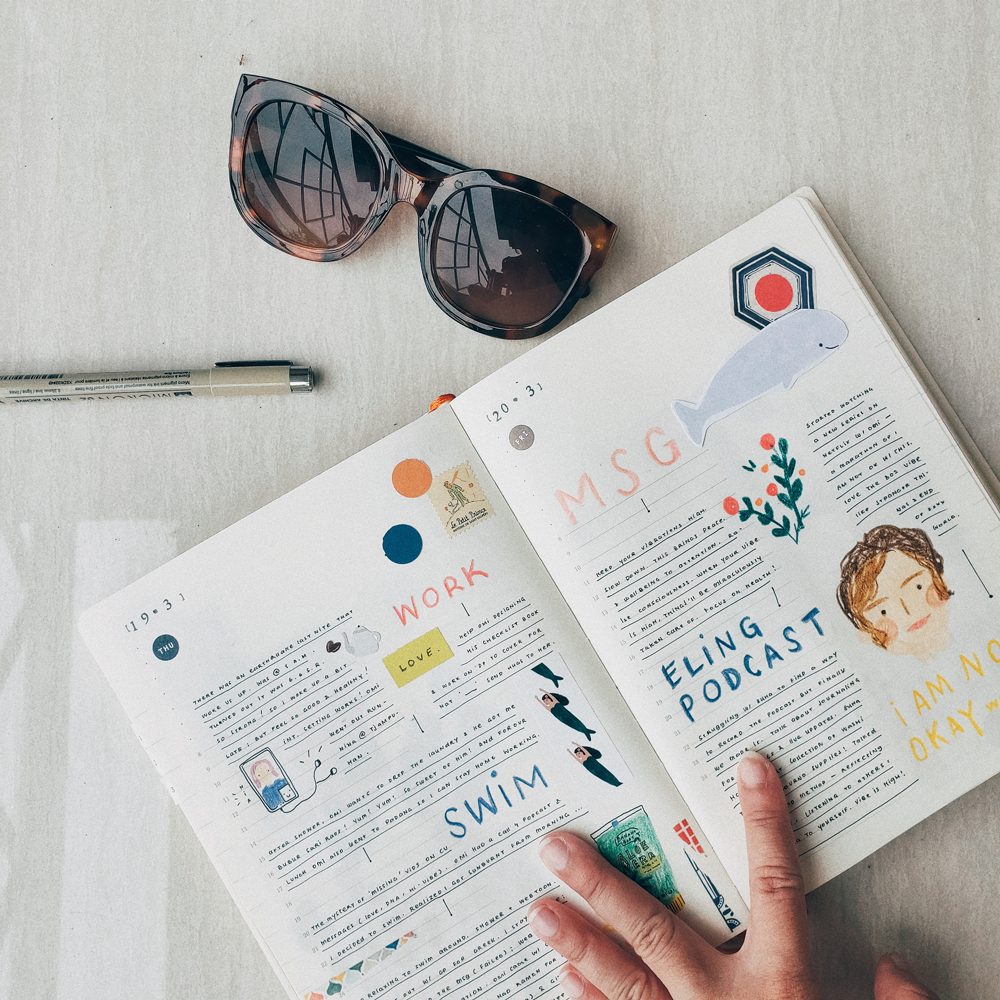
As usual, this year, I am using my bullet journal mostly for things related to work/project/self-improvement. I don’t use it as a daily/personal journal (the way some people do), because I write and journal a lot (maybe too much!), so I have a separate journal to pour my heart out.

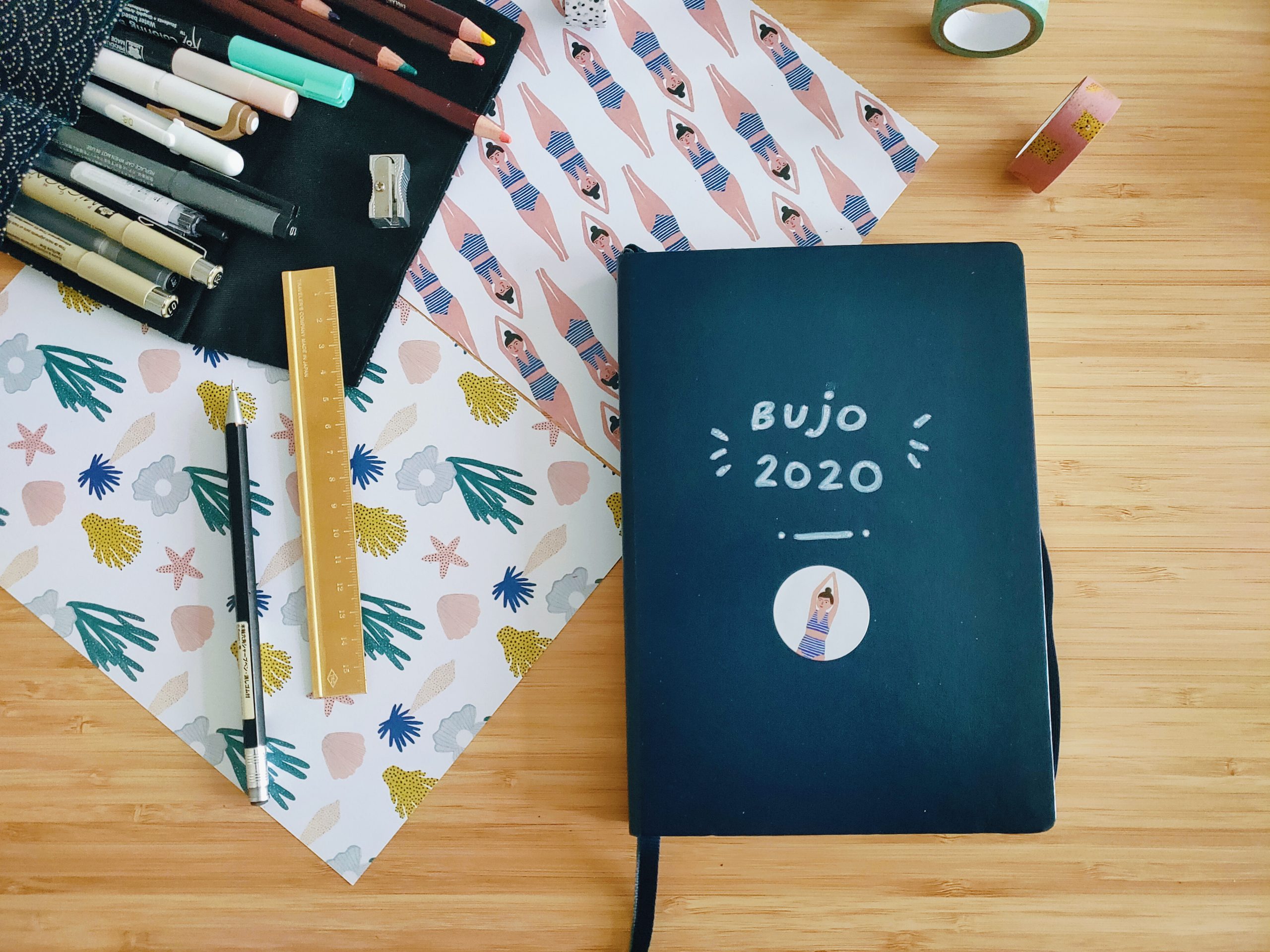
My previous bullet journals have always been so minimalist and straight-to-the-point, but this year I decided to have a playful one, with splashes of colors and illustrations I draw myself. I want to plan and have fun and draw a lot, thus, this is how I set up my Bujo 2020:

The Bullet Journal Notebook

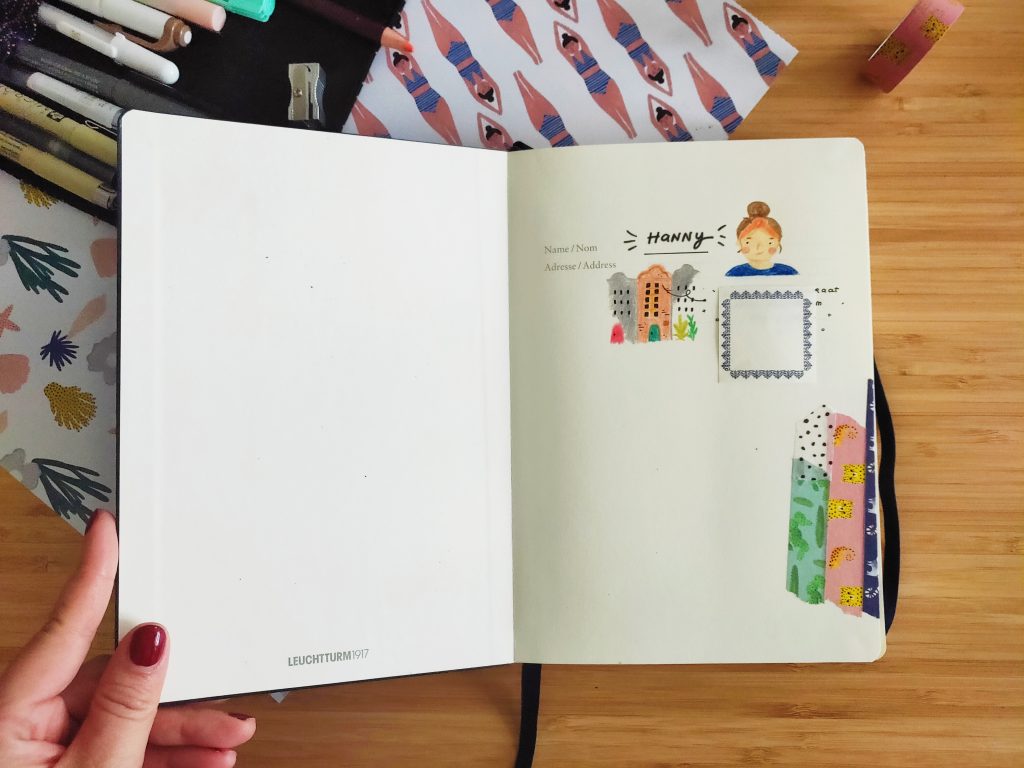
For my 2020 bullet journal, I am using the Leuchtturm 1917 Hardcover A5 Dotted in Navy Blue, with 249 numbered pages.

I love the paper quality and the number of pages in this notebook (serve me well for the whole year). Plus, it comes with two bookmarks (one blue, one striped); so I can refer quickly to 2 sections in my bullet journal.

In this post, I will refer to how I set up my bullet journal using this particular notebook (and how I divided the pages), but feel free to use any notebooks you have to host your bullet journal! If you have a random empty notebook lying around, use that instead! You can even make your own cute dangling bookmark to go with it—see the instructions here.

I decorated the cover with a sticker from Flow Magazine’s Book for Paper Lovers (most of the stickers/note papers used inside this bullet journal comes from that book) and write ‘Bujo 2020’ with a white marker.

Contact Info Page

Next, I drew myself (and my house), then wrote down my name and address on the contact page. I also slapped down some washi tapes I got from HEMA (4 washi tapes for 3 euros!)—that I’ll be using to decorate/flag/page-mark this bullet journal.

Index Page

The Leuchtturm notebook I’m using comes with 3 index pages, so you can create a table of content of your own bullet journal. It helps you to find certain things/topics in your bullet journal easier.

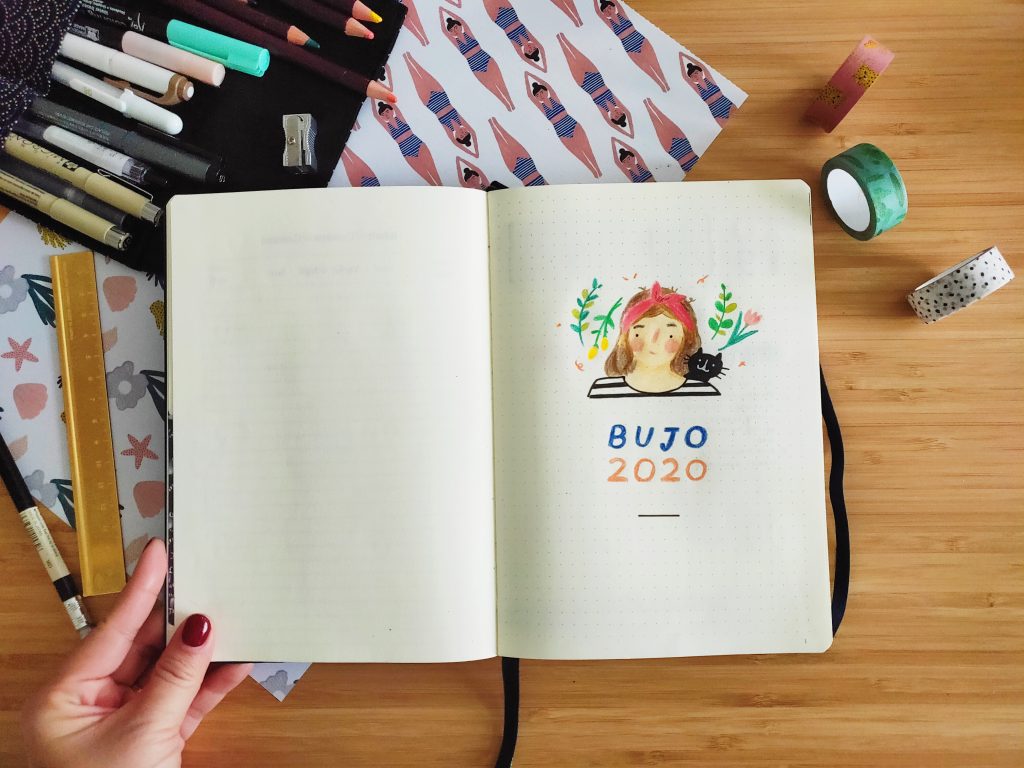
Page 1. Inside Cover Page

I just drew myself (along with my best friend Nia in her cat form!) and write ‘Bujo 2020’ with colored pencils.

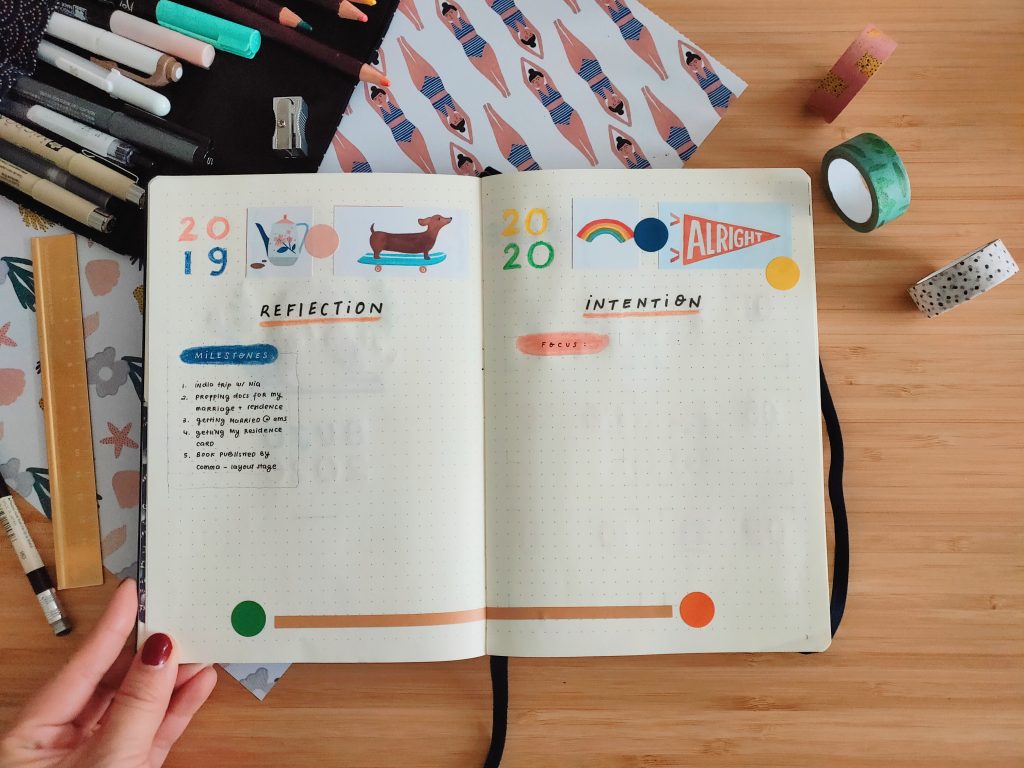
Page 2-3. 2019 Reflection + 2020 Intention

For my 2019 Reflection, I started out by writing some milestones from the previous year. Next, I’ll write down some stuff from 2019, including:

  • things I’m grateful for
  • things I’ve learned
  • people I’m thankful for
  • things that went well

I will also write some thoughts about how I would ‘summarize’ 2019. What do I like/dislike about it, what are some of the challenges I’m facing, and what are some of the things I could improve.

For my 2020 Intention, I will start by writing down some areas of life I’d like to focus on (i.e. strengthening my spiritual practice, experimenting with various ways of self-expression, etc.). I will also write down about my ‘ideal’ 2020 here. What are the things I’d like to experience, people I’d like to meet, achievements I’d like to accomplish? How do I want this year to turn out?

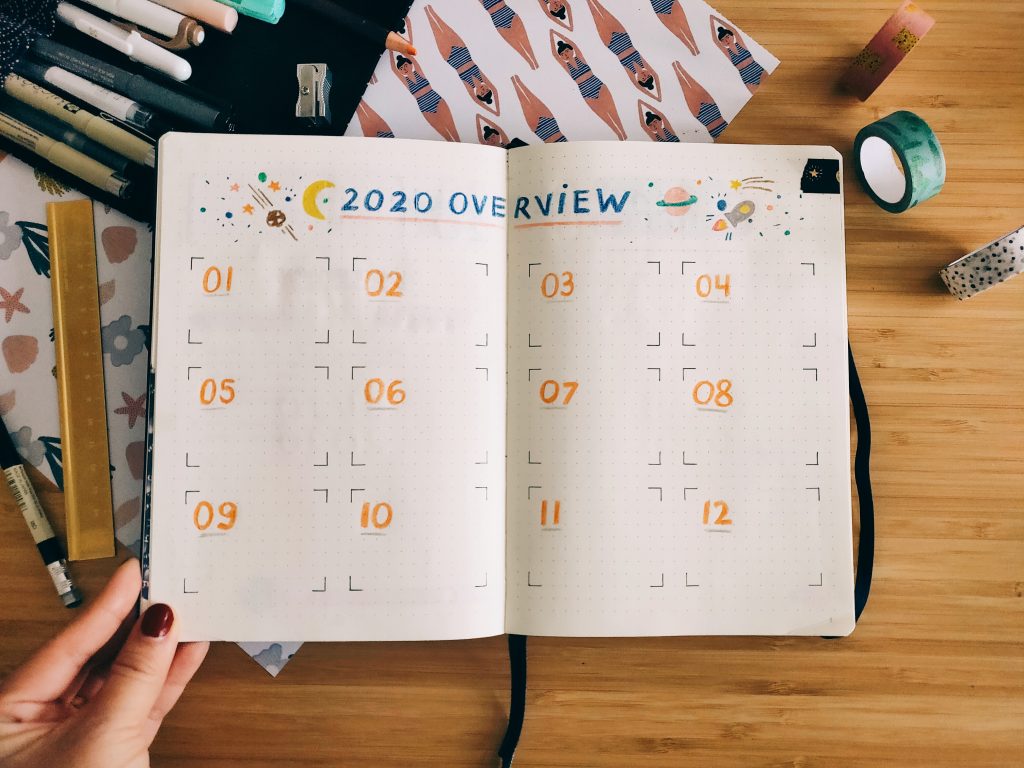
Page 4-5. 2020 Overview

At the end of each month, I will write 3-5 milestones or highlight from that particular month here. The idea is to look back at this page at the end of 2020 and being able to see my year at a glance.

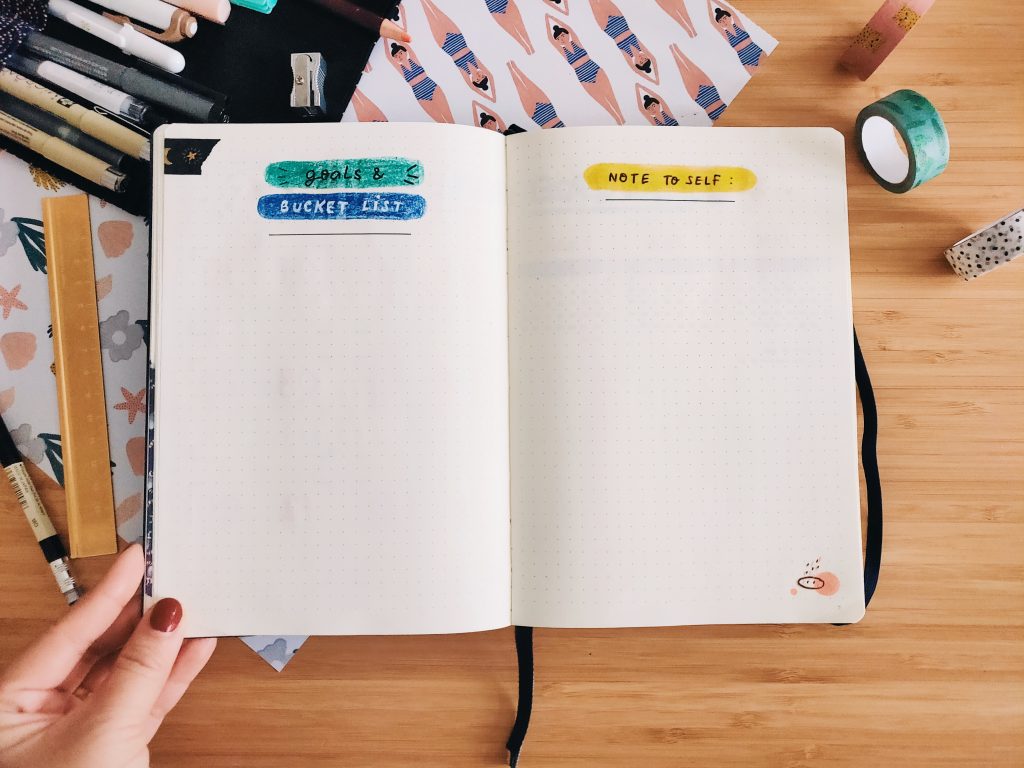
Page 6-7. Goals & Bucket List + Note to Self

For my goals & bucket list, I will write my goals for 2020 here, along with some things I’d like to have/experience. You can read this post to find out how I set up my yearly goals—and this post I wrote about why (most of the time) our New Year resolutions don’t work.

The note-to-self page will be filled with quotes & affirmations, as well as empowering words from myself, for myself. When I am in doubt or in need of encouragement, I can flip into this page and cheer up a little. I think of it as my tiny self-help page; a quick fix to brighten up my days and lift up my mood.

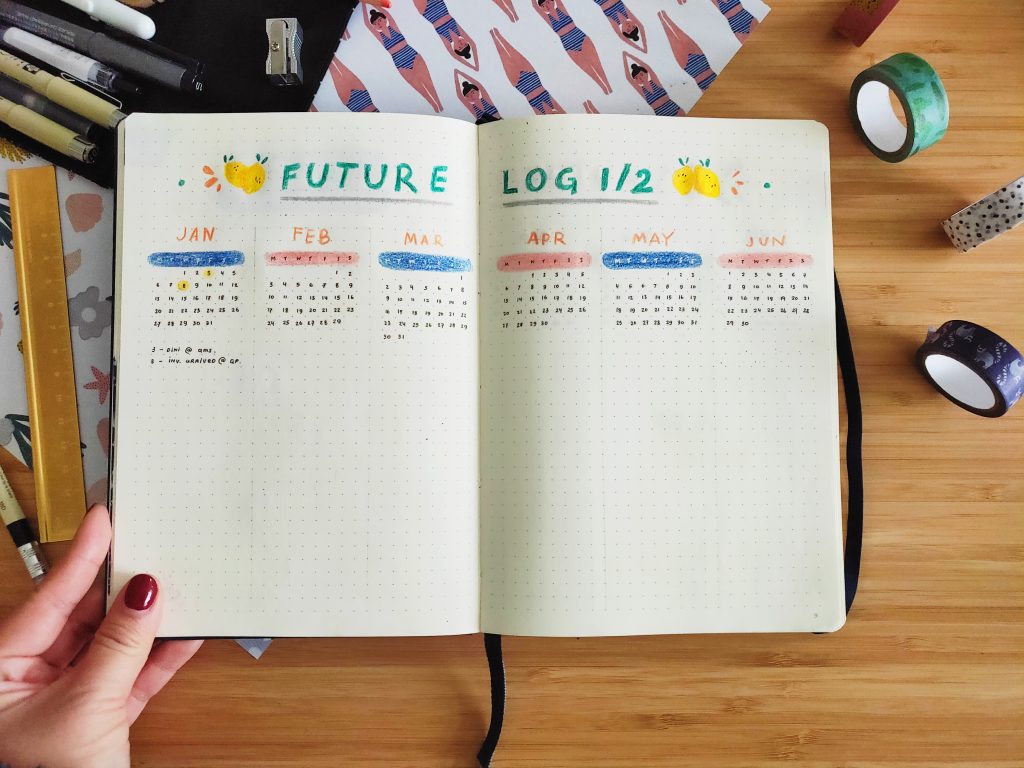
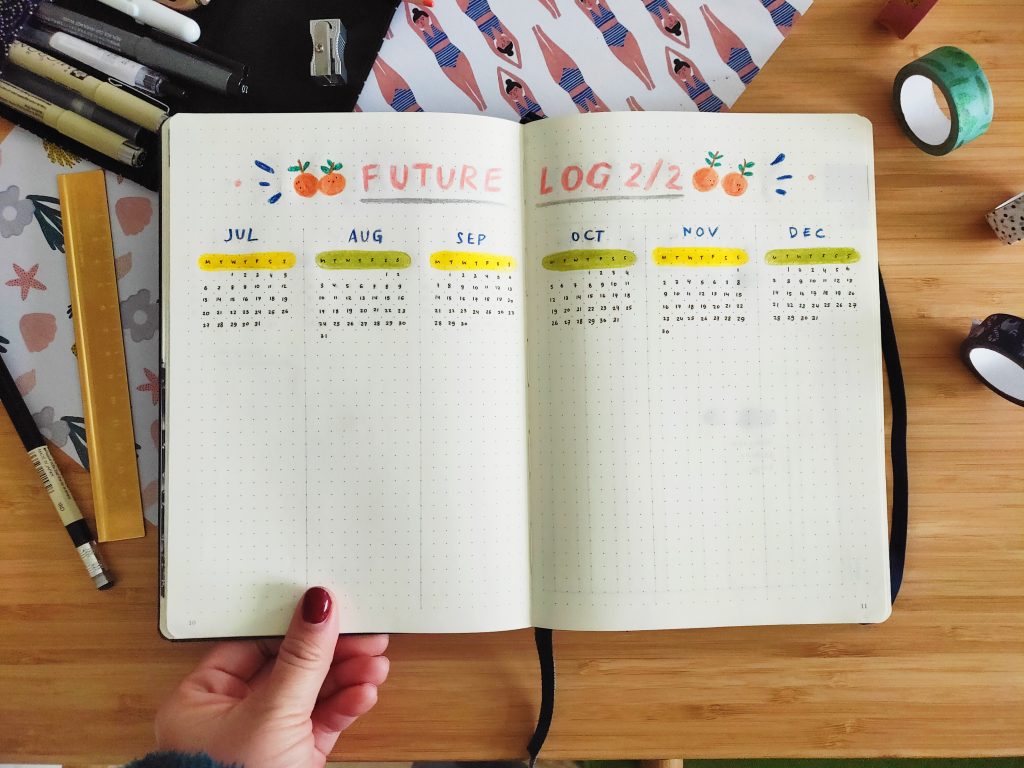
Page 8-11. Future Log

Here, you can find the tiny calendar of every month in 2020. I left the bottom part empty to write down some of the things that come up; as well as some tentative schedules/appointments. The things on these pages may happen or may not happen. They are not set in stones. It’s just my way to have a peek into the future and see what is waiting for me. For instance, I’d like to finish the first draft of my new book in May 2020, so I may write it down underneath the month of May in pencil.

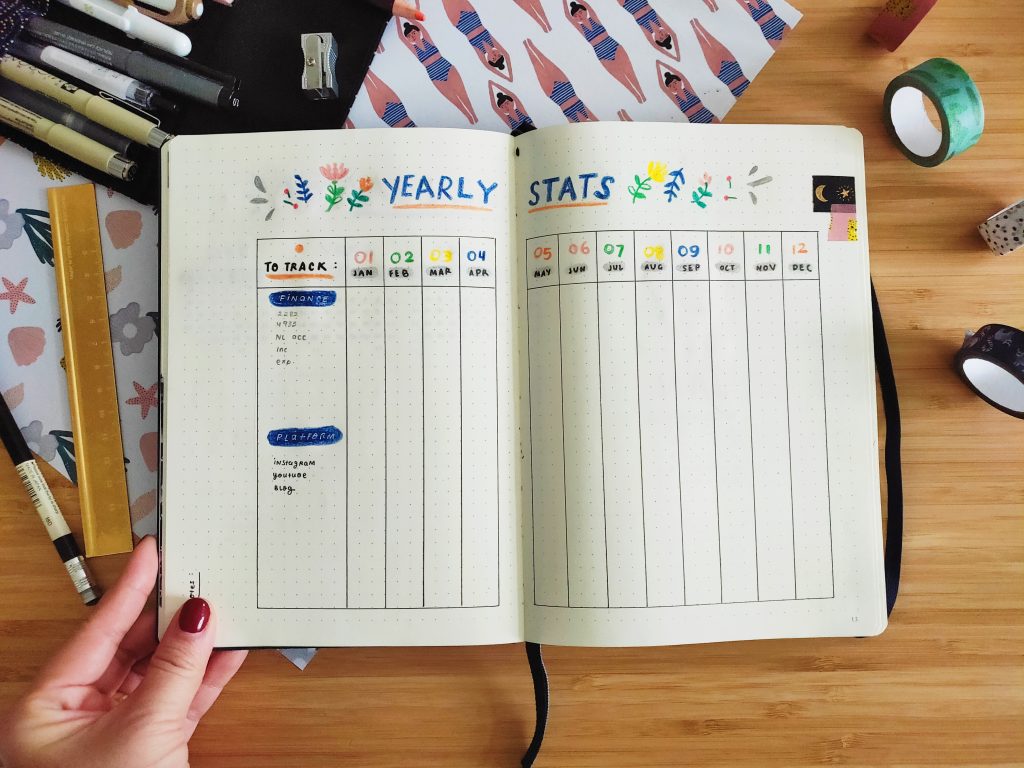
Page 12-13. Yearly Stats

There are some things I’d like to track each month this year, so I make this spread to track them and see them all in one go. At the moment, I see two main areas I’d like to keep a close eye on: my finance and my platforms. I’d like to write down the latest stats of these two things by the end of every month and as the year progress, I can also see how things grow (or plummet!) from one month to the next.

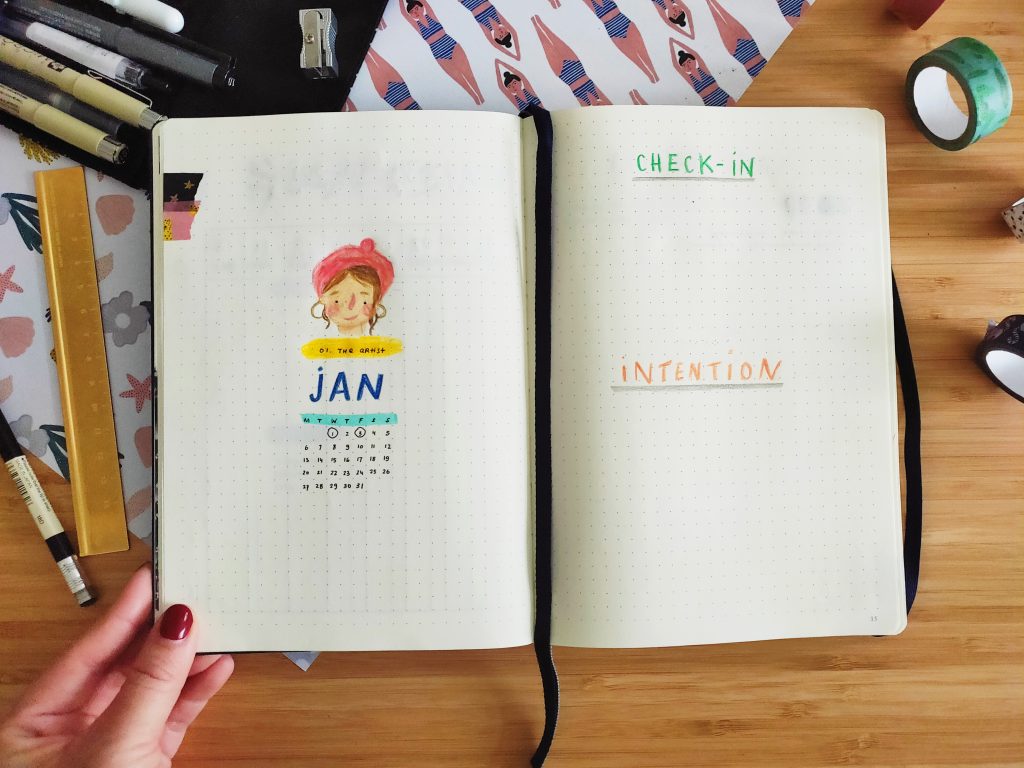
Page 14-15. January Monthly Persona + Monthly Check-in & Intention

On page 14, I drew myself as ‘an artist’. Throughout the year, I want to draw myself as different personas, the ‘imaginary’ me who are living a different lifeline or having different professions. ‘The Artist’ is my monthly persona for January.

I read about this alter ego/persona exercise in the book The Alter Ego Effect: How to Change Yourself in 10 Seconds or Less by Todd Herman, as well as in Julia Cameron’s Sound of Paper. The idea is to imagine yourself having an alter ego or a different persona that you’d like to channel, having the kind of life you’d like to experience, with certain characters, personalities, or qualities you’d like to embody.

The goal is basically to ‘get out of your head’ and try to imagine another possible version of you; to open yourself up to the possibilities of being you in a different light. If you watch Netflix’s Sense8, think of it as something similar to that!

A lot of us use our weaknesses to make excuses to do/not to do something, but what if we leave who we are, and ask what our alter ego would do instead? For me, this month, I’ll think of the daily routines, strengths, quirks, or qualities of ‘The Artist’ version of myself, and experience living this month from that perspective.

On page 15, I will do my January check-in; writing about my state of being entering this month of January. How do I feel, what am I happy/unhappy about, what excites/worries me, etc. And then I will write my January intention: how I would like this month to turn out? What are the things I’d like to happen this month so I can feel fulfilled?

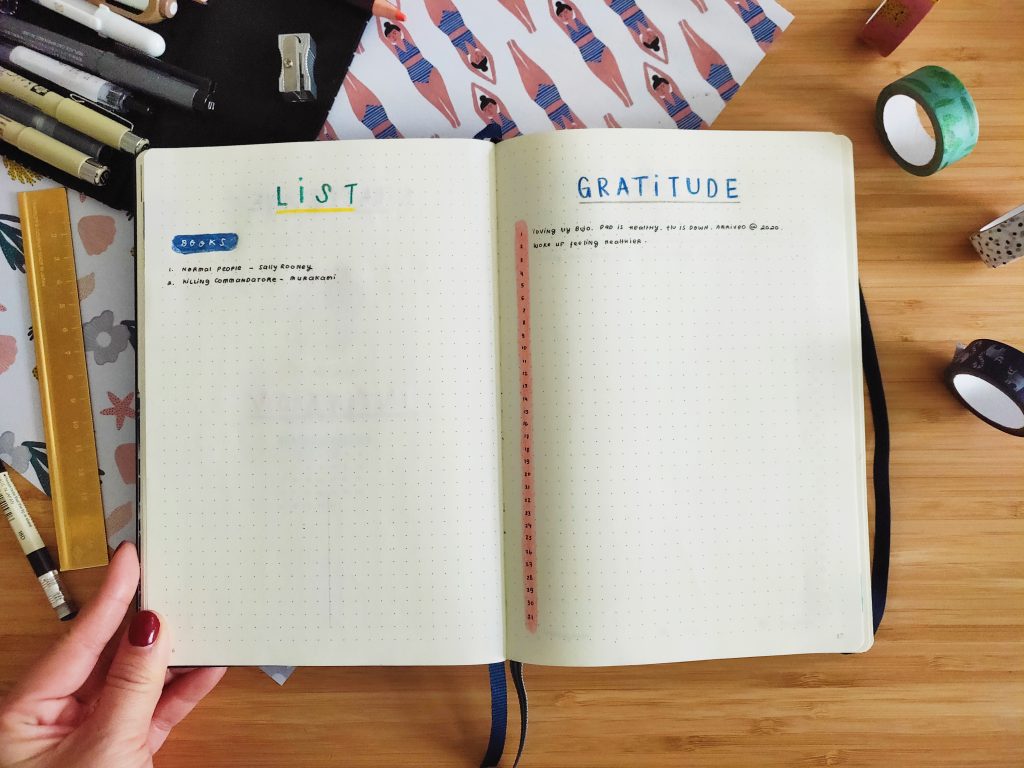
Page 16-17. January Monthly List + Gratitude

On my monthly List page, I will write down the books I read this month; some podcasts I listen to or some courses I followed on Skillshare or Domestika. If I watch a really good movie/documentary, I may note the title down as well.

On the Gratitude page, I write down the dates of each day in January, and every day, I will write some of the things I’m grateful for. I have been keeping my gratitude practice close to heart. It’s a very simple thing to do, but it has helped me to stay humble and grounded.

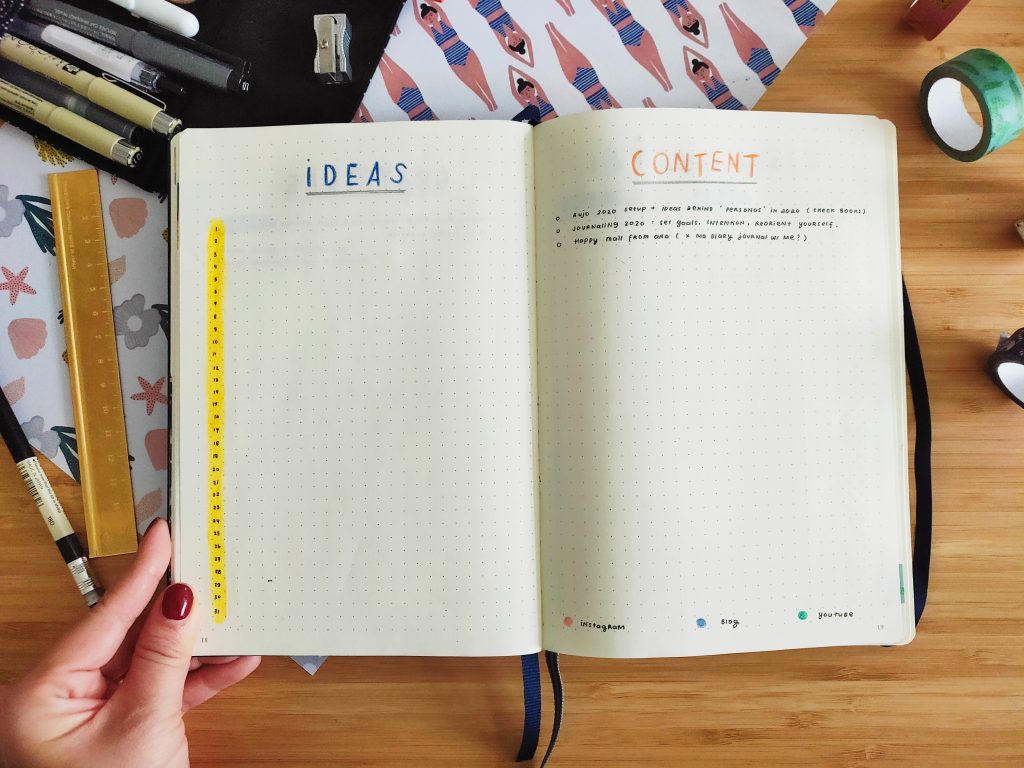
Page 18-19. January Monthly Ideas & Content Ideas

I have such a busy mind, and I get daily sparks of inspiration and ideas that will be forgotten if I don’t write them down. So on my Ideas page, I write the number of each day in January to note some random ideas that cross my mind that day (I may or may not execute the idea; it’s just nice to look back at all those random bursts of ideas!).

Next to it is my Content page, where I will write down some random content ideas or topics I have in mind. I color-code it with pink for Instagram, blue for Blog, and green for YouTube, so I know where I publish/share a particular content (if I decide to work on it).

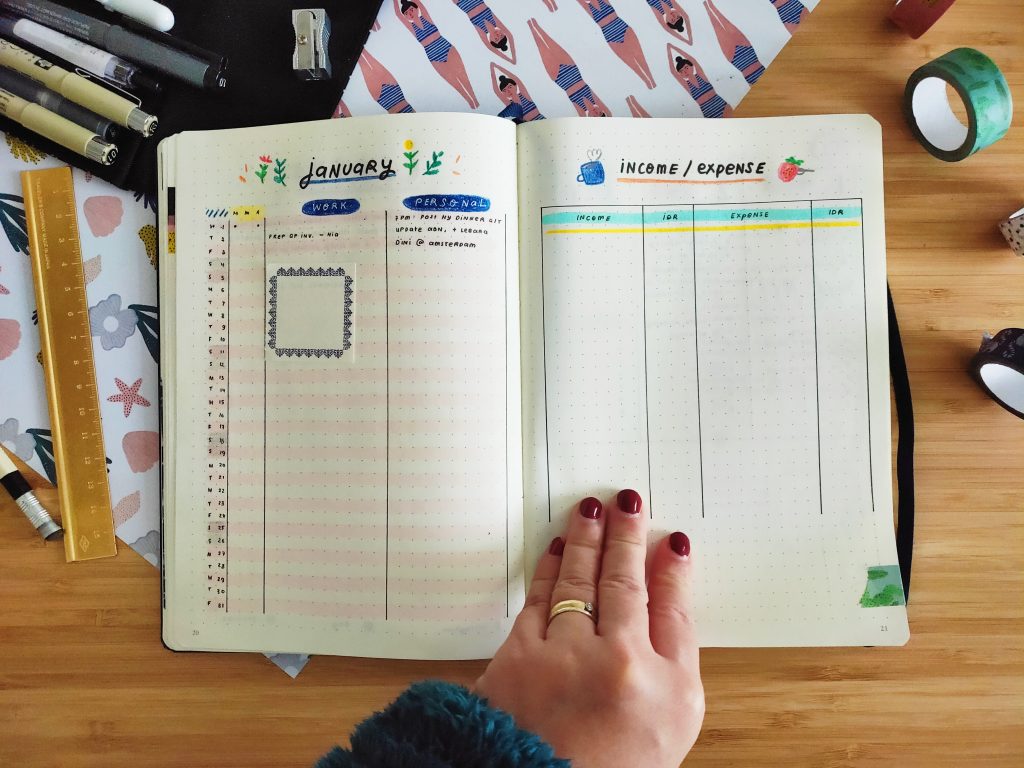
Page 20-21. January Tracker & Planner + Income/Expense

On page 20, I have my January Tracker & Planner. Next to the day/date, I have a column with 3 habits I’d like to track this month: meditation, movement, and art practice. I know it’s tempting to build and track loads of good habits at the beginning of the year, but I always find it too overwhelming. I decided that I will concentrate on a maximum of 3 things/habits to track per month. In the next two columns, I have my Work Planner and Personal Planner, where I list down work/project deadlines and work/personal appointments.

On page 21, I have my Income/Expense tracker; and it’s pretty straightforward. Just a simple table to keep me accountable for my finance!

Page 22. January Weekly/Daily Planner

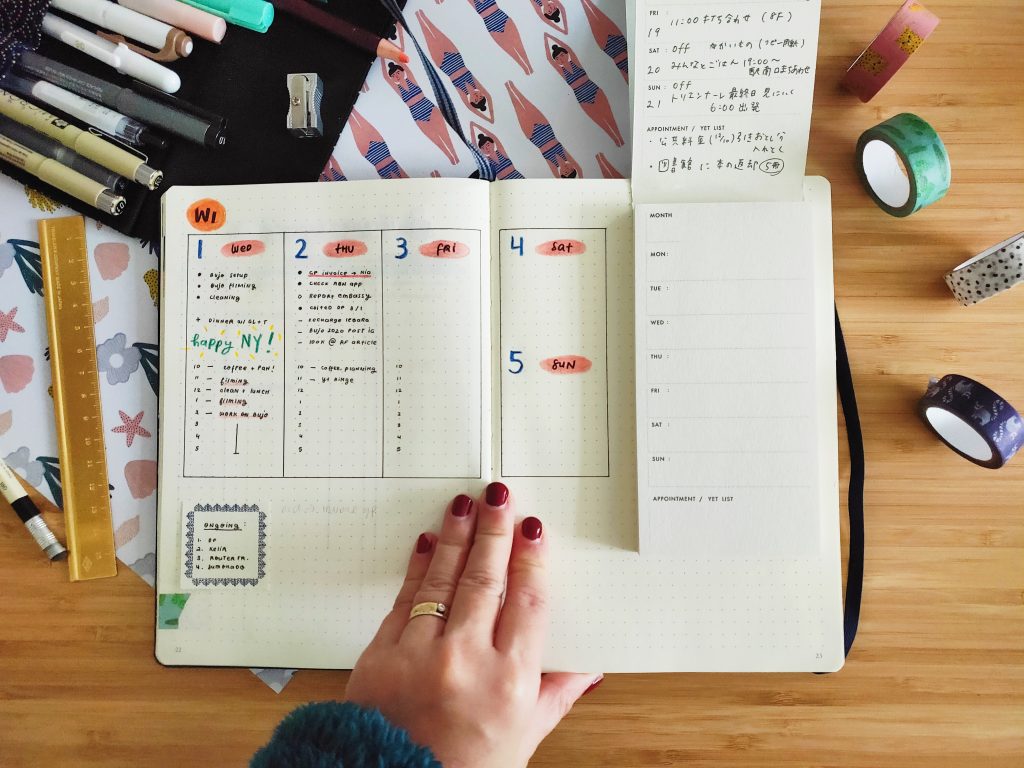
This is my Weekly/Daily Planner where everything happens as I go about my days: I log my plans, deadlines, appointments, to-do lists, weekly intentions, ongoing projects, notes… basically anything I need to write down to stay on track and organized. I usually fill up 2 pages every week. If I need more pages to jot down things, I can just tape a scrap paper or a memo paper on this page with washi tape.

For each day, I also write down my ‘effective working hours’ from 10 am to 5 pm, to track and evaluate what I am doing during these (supposed to be) productive hours.

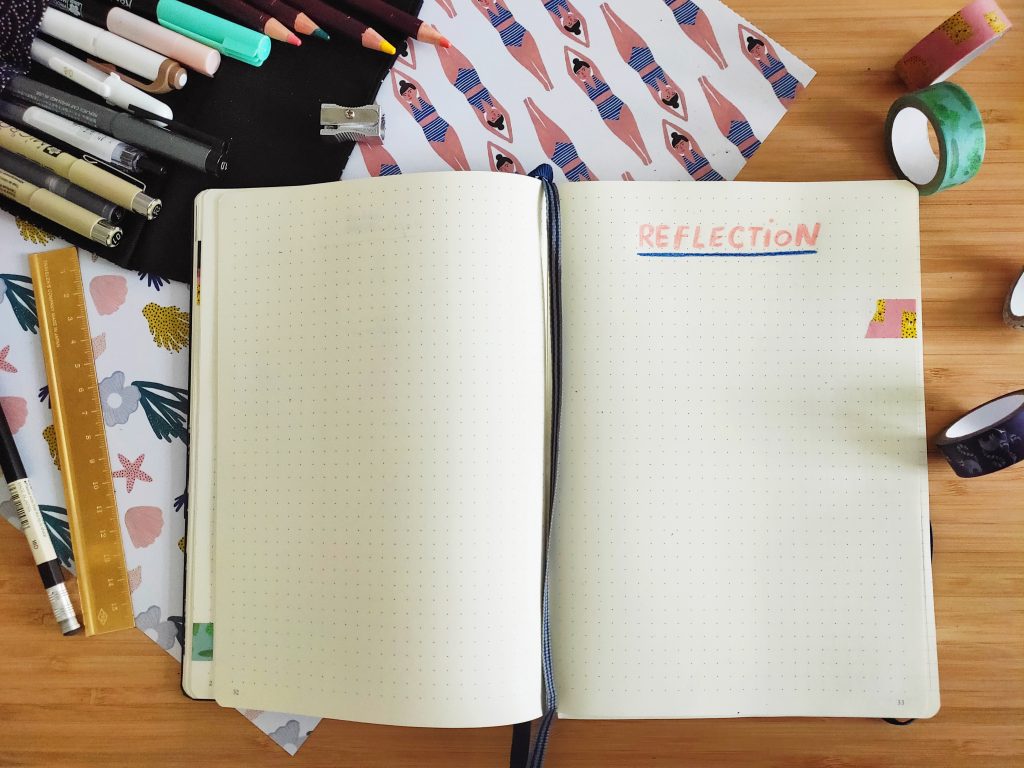
Page 33. January Reflection

I left enough pages for my whole weekly/daily planner in January plus some empty pages for notes and braindumps, until page 33 where I will write down my Monthly Reflection at the end of the month. I will write some highlights/achievements from the month along with how I feel about the month in general. Am I happy about it? Am I proud of myself? What went well and what can be improved?

The template is repeated for each month throughout the year 2020, and I have divided my notebook into equal page counts, so it will last until the end of the year (plus some extra pages for random notes): Page 34 – February, Page 54 – March, Page 72 – April, Page 90 – May, Page 108 – June, Page 126 – July, Page 144 – August, Page 162 – September, Page 180 – October, Page 198 – November, Page 216 – December, Page 234 – Reflection of 2020, Page 235-249 – Random Notes.

Do you bullet journal? Do you have a planner? Do you use any other system to stay on track and organize your day? Let me know in the comments, I would love to hear from you.

hanny
WANT TO SHARE WITH SOMEONE WHO NEED THIS?
The Accidental Creative

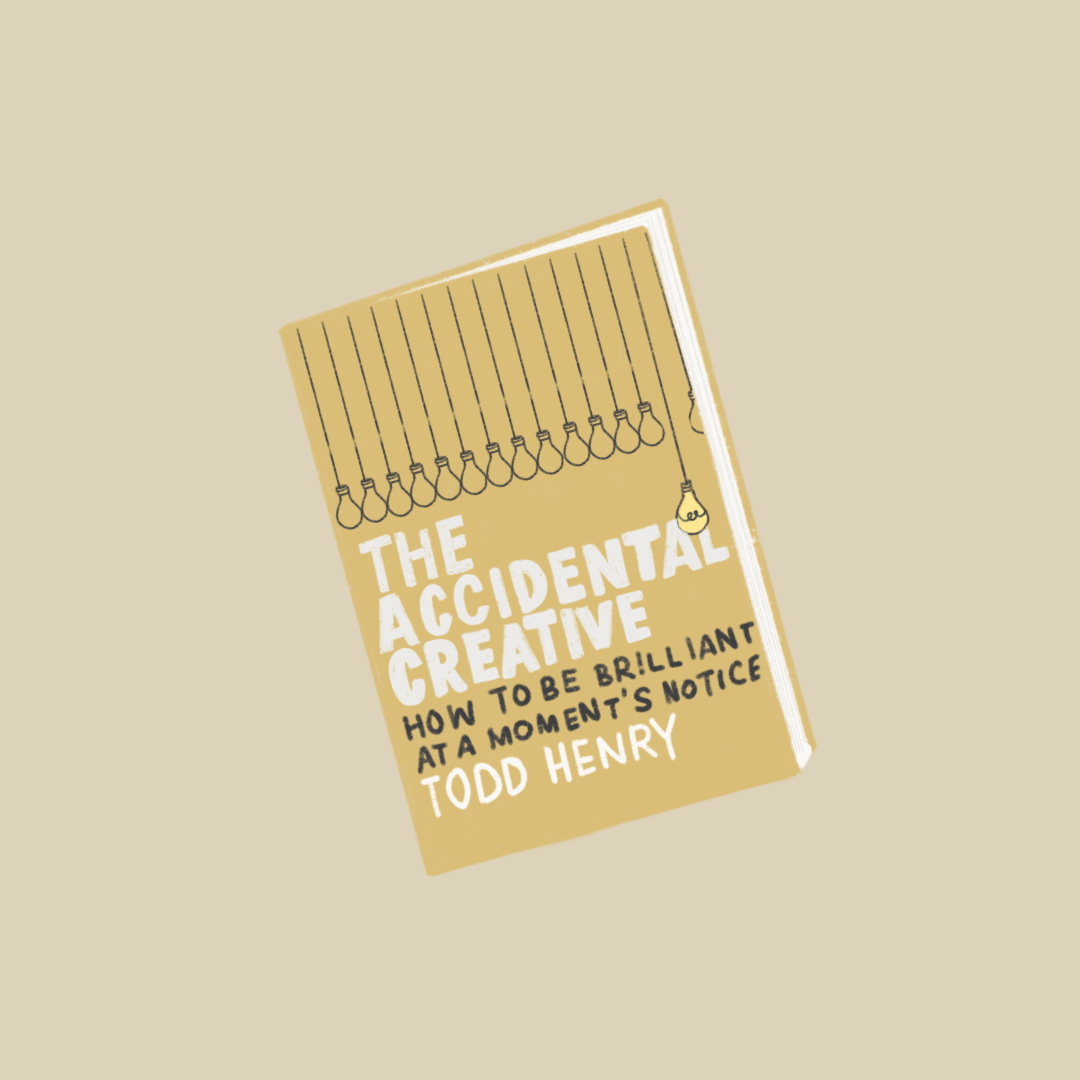
I started this morning by sipping a cup of coffee over my Kindle, reading The Accidental Creative by Todd Henry.

The book plays around with the idea of these 3 main qualities people in creative businesses need to have to establish a rhythm that supports their creative process.

Basically, to optimally and creatively function, creative people need to be:

BRILLIANT + HEALTHY + PROLIFIC

Being all three, we can produce great creative work consistently, in a sustainable way.

However, Henry said that most creatives are characterized by 2 strong qualities + 1 weak quality, providing them with a creativity loophole to fill in.

Which one is your creativity loophole, that needs improvement?

Loophole 1.

You are PROLIFIC + BRILLIANT

– but not HEALTHY

You are having great ideas all the time, flooded by creative juices, you submit your works on time, even you can stretch yourself to work for more than 15 hours a day. But what will happen?

Exactly.

After a while, you’ll experience a terrible burnout. It sucks your energy, it makes you stressed out. You’re risking your long-term creativity for short-term productivity.

Loophole 2.

You are HEALTHY + BRILLIANT

– but not PROLIFIC

You have great ideas and your creative juice is flowing, you feel as if you’re having a great work-life balance, you are not stressed out nor burned out, but you just can’t seem to do the things you have always wanted to do or finish the things you have started.

This makes you an unreliable creative.

You produce works only when you feel like it, instead of producing good work consistently. Or you are spending too much time procrastinating, questioning, doubting, and the ship just never sails.

(This is my loophole!)

Loophole 3.

You are HEALTHY + PROLIFIC

– but not BRILLIANT

You feel as if you’re having a great work-life balance, you are not stressed out nor burned out, and you submit all works on time, you finish what you start, you do the things you need to do, but you are not producing things you can really be proud of.

It isn’t something that stands out, not of really good quality. It is just a tad unimpressive and mediocre. It feels like you’re having the energy to do what you need to do instead of what you can really do.

It is easy for people to forget or replace us when they are not impressed with our work.

So, which one is your creative loophole?

hanny
WANT TO SHARE WITH SOMEONE WHO NEED THIS?
John Irving

In We Wanted to Be WritersJohn Irving said that he wrote a novel by writing the last line first.

“I work my way backward from the end of the novel,” he says, “which is the first thing I know, to what the first chapter should be. By the time I write the first sentence, I have a virtual road map of the whole novel—either in notes or in my head.”

Have you ever felt lost when you’re about to begin writing prose, a story, an essay, a novel? And have you ever thought of beginning writing with your last line instead of your first line?

I feel as if this is something that would not only work for writing but would work nicely in life as well.

Instead of being stressed about how to start, where to go, what to do first, I sometimes sit silently for a while and just focusing my mind on what I would want to see at the end of all this

Where do I want to see myself at the end of this year?

How would my to-do list look like if I managed to finish all my projects?

What would be the feeling I get from seeing my room clean and decluttered?

What if we can start writing our last line and working backward?

Because as it is in life, sometimes it’s easier for us to see the threads connecting those random incidents in our past from a higher place where we’re standing now: one month later, one year later, three years later. 

And suddenly everything seems like falling into place, eventually.

hanny
WANT TO SHARE WITH SOMEONE WHO NEED THIS?

In my writing workshops (either fiction or non-fiction), I always highlight the importance of writing practice to the participants–and encourage them to make a reasonable schedule they can follow to do this practice. I don’t require them to do their writing practice every day, but there is supposed to be a little bit of structure around it.

Think of writing practice as an exercise; just like working out.

You exercise and work out not only because you’re a professional athlete or want to participate in a competition. You don’t have to be great in sports to exercise. You don’t have to break a record or achieve something amazing when you’re exercising.

You exercise because you know it is good for your body, it will train your muscles, and although you may not like the process as much, you know you’ll feel good and accomplished afterward.

You don’t have to exercise every day to benefit from it, but you know if you don’t exercise at all, it won’t serve you good in the long run. The best is to have a certain schedule that can work for you–either once a week, twice a week, or maybe three times a week; for 20 minutes, 30 minutes, or maybe an hour. You don’t want to exercise too much or push yourself too hard as well; because you can injure yourself. Or you may get fed up with exercising altogether.

When you have skipped exercising for a while, it’s going to feel a bit harder to get back in the game. You may get tired quickly and your muscles are going to be really sore. You may find that you are not as strong, as flexible, or as fit as you used to be. But it’s okay, that’s why you’re back exercising, right?

Similarly, writing practice is like that.

***

But, what should you do during your writing practice? What can you write about?

Well, technically, you can focus your writing practice on some areas you think you’re having difficulties with. If we go back to the exercising-and-working-out analogy–if you know or feel that your legs are weak, you may want to do some exercise to make your legs stronger.

However, these are the 3 things I usually concentrate on during my writing practice:

1. CHARACTER

I love watching people and I can do this for hours.

If you’re in a mall, in a cafe, in a waiting room, in a coffee shop–pick some people as your ‘characters’ and describe them in detail: what are they wearing, what do they look like, do they have any obvious physical traits, how do they carry themselves, how do they speak, how do they call the waiter, do they hesitate before paying at the counter?

Notice even the smallest details about these people. Just write down your observations as facts, without judgments.

When you’re done, it’s time for your imagination to take over. If you have to guess, what do you think will be their backstories? What are their vices and virtues? What do you think they do for a living? Are they married or single? What do they aspire to be? What are some of their biggest challenges in life? If they have a dark secret, what would it be?

When you’re finished, examine your guesses and compare these wild speculations with your detailed description of the ‘characters’. Can you see why you are led to conclude or speculate a certain backstory for a certain character?

2. SETTING

Wherever you are, try describing that place. Make sure that you only write facts from your observations. Notice everything: shape, color, smell, shadows, sounds.

When you’re done, now try to write about this place from a point of view of someone who has just gone through a heartbreak; someone who just got fired; someone who has just won a lottery; someone who is in love; someone that is about to die. Or, how would a chef, a lawyer, or a celebrity describe this place?

How would they ‘see’ the same setting differently based on who they are or what they’re struggling with?

3. DIALOGUE

Listen to (well, eavesdrop) a conversation; and write the conversations down the way they are being spoken. If you can’t write that fast, use abbreviations. Above all, I would suggest not to observe the people who are speaking but concentrate on writing down their conversations only.

After a few minutes, stop and leave–until you can no longer hear these conversations or see who is speaking.

Read the dialogue and based on the word selections, the umm and err, the dialects, the jargon; what can you guess about speaker number 1 and speaker number 2? Who are they? What can you tell about their origin, upbringing, education, profession? If you cannot see them and can only read the way they speak, can you guess what they look like?

What can this conversation reveal about their personality? Based on the dynamics of the conversation, how do you think one feels about the other? Is there a feeling of mutual trust, jealousy or rivalry, or maybe you can tell that one truly admires the other? How can you make this guess or come up with this conclusion? Which dynamics in the conversation give you the hint?

***

I like to focus on these 3 things during my writing practice because I think they are quite essential. Either you’re writing fiction and non-fiction, you can always benefit from knowing how to build your character, your setting, and your dialogue.

If you have done this exercise several times, I am sure you will get a better understanding of how to distinguish a character, setting, and dialogue that works.

Happy practicing!

hanny
WANT TO SHARE WITH SOMEONE WHO NEED THIS?
Hanny illustrator
Hi. I'm HANNY
I am an Indonesian writer/artist/illustrator and stationery web shop owner (Cafe Analog) based in Amsterdam, the Netherlands. I love facilitating writing/creative workshops and retreats, especially when they are tied to self-exploration and self-expression. In Indonesian, 'beradadisini' means being here. So, here I am, documenting life—one word at a time.

hanny

TAKE WHAT YOU NEED
VISIT THE SHOP