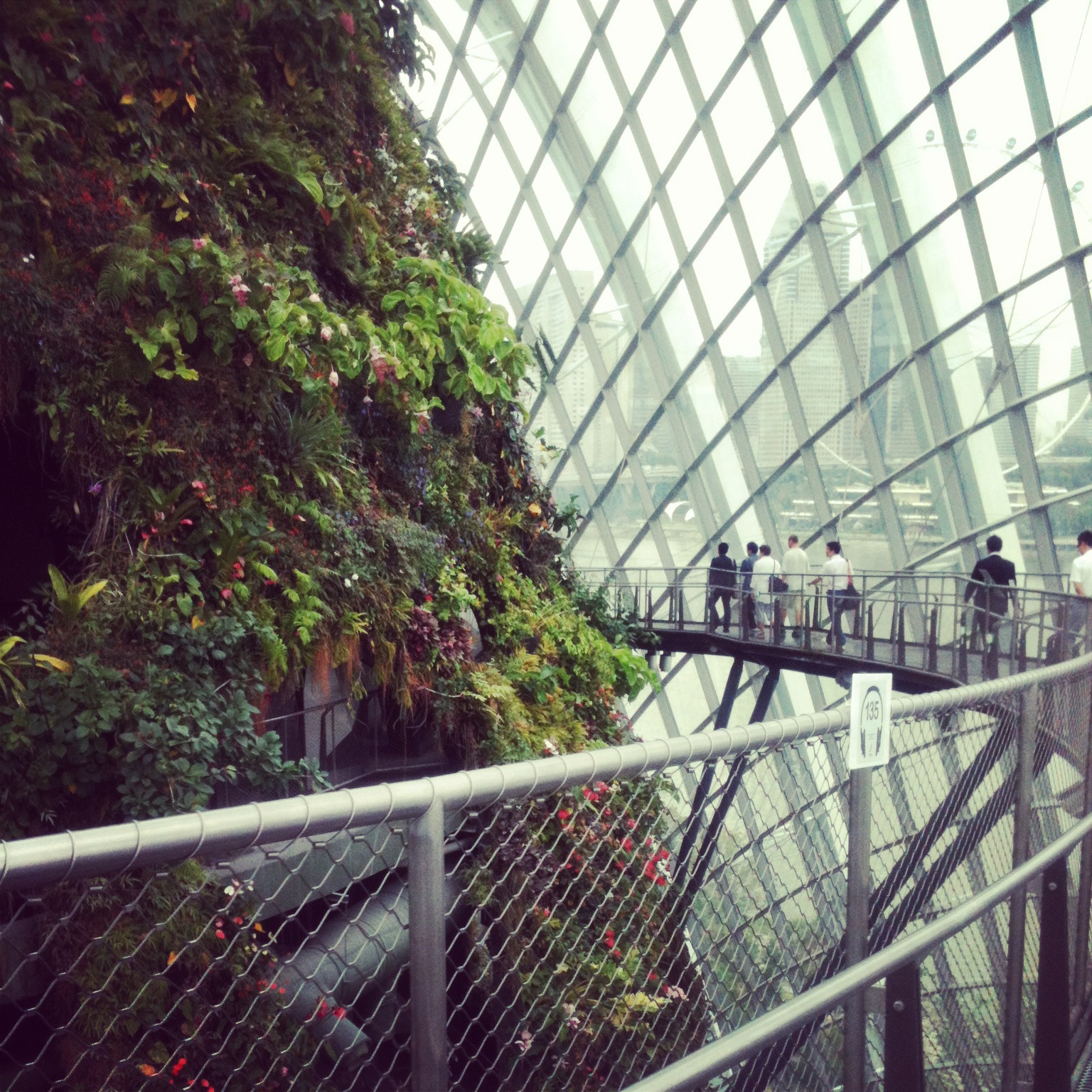
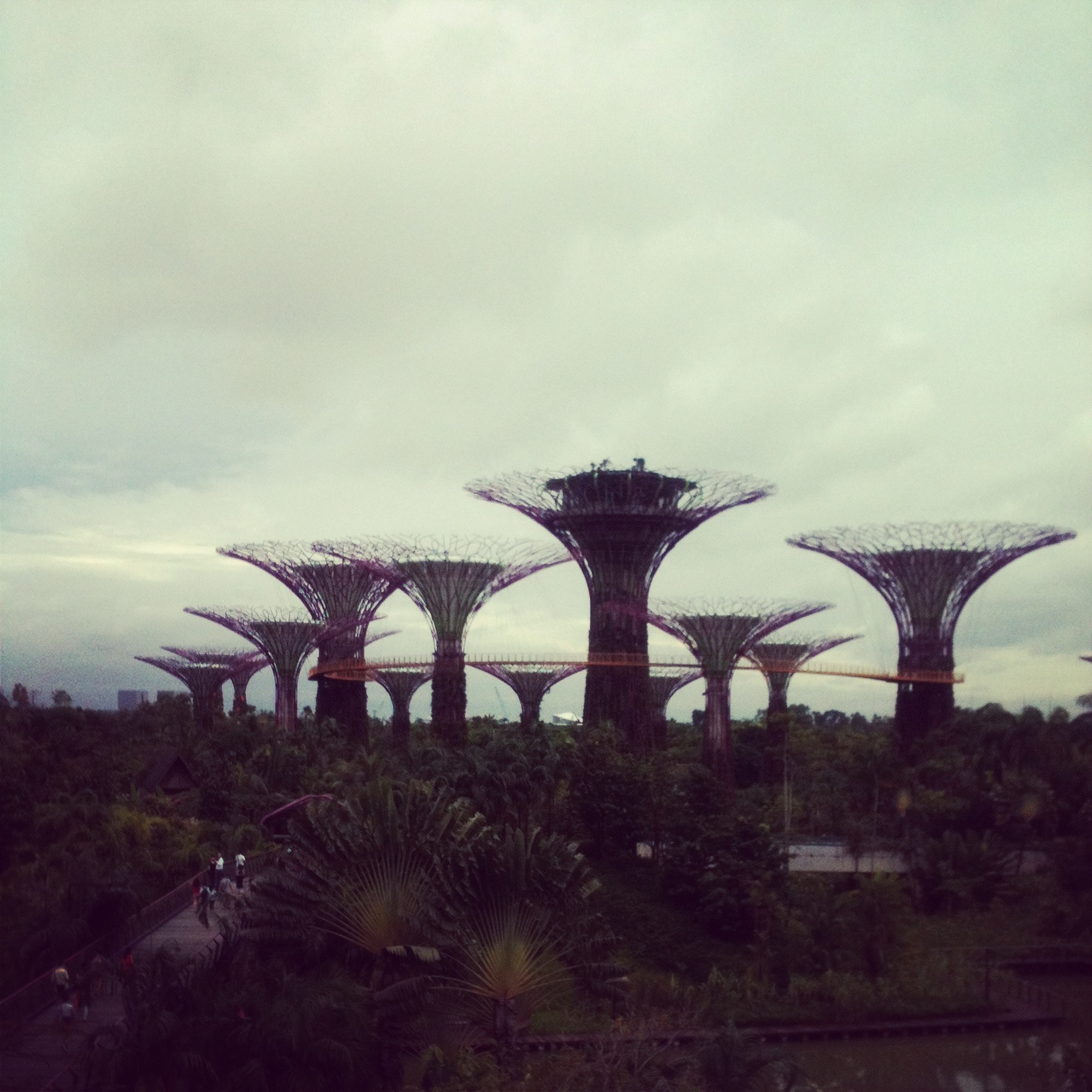
Travel triggers a change in our outlook: from goal-directed to present-moment. It’s not literally the experience of novelty, but the way we open ourselves up when we’re traveling.

Travel is a state of mind. We leave our routine to observe, experiment, and come back with stories that we could tell. There is, of course, a variety of travel that involves box-ticking and taking selfies by the landmarks, but even that’s a starting point. Inevitably, we end up behaving a little differently for the duration of our little get-away.

On top of that, a natural, effortless present moment awareness that comes with having to deal with foreign-languages and strange hotel rooms leaves us open to not just learn about the external world, but allow the internal to bubble up to the surface.

I am traveling a lot at the moment.

This time, I traveled abroad to help my friend with a business launch. The flight times were awkward, the flights expensive, but I knew it was the right thing to do and didn’t even feel the friction. She is imminently going live with a career-defining project.

I asked myselfwhat is this week going to be like for me? The answer was a resoundingand curious“I have no idea.”

Usually, I take ownership of the projects. I do the tasks only I can do. I play to my strengths and drag other people with me. However, this time, that wasn’t what was I imagined would be required. I was needed to help with getting the post, answering emails, making strategic decisionsand taking out the rubbish. Being on call for whatever was neededa bit like a doctor would be. It could be a cardiac arrest or it could be something near inconsequential. I could be saving the day or getting coffee. I was implicitly called there for the sake of being thereas they say.

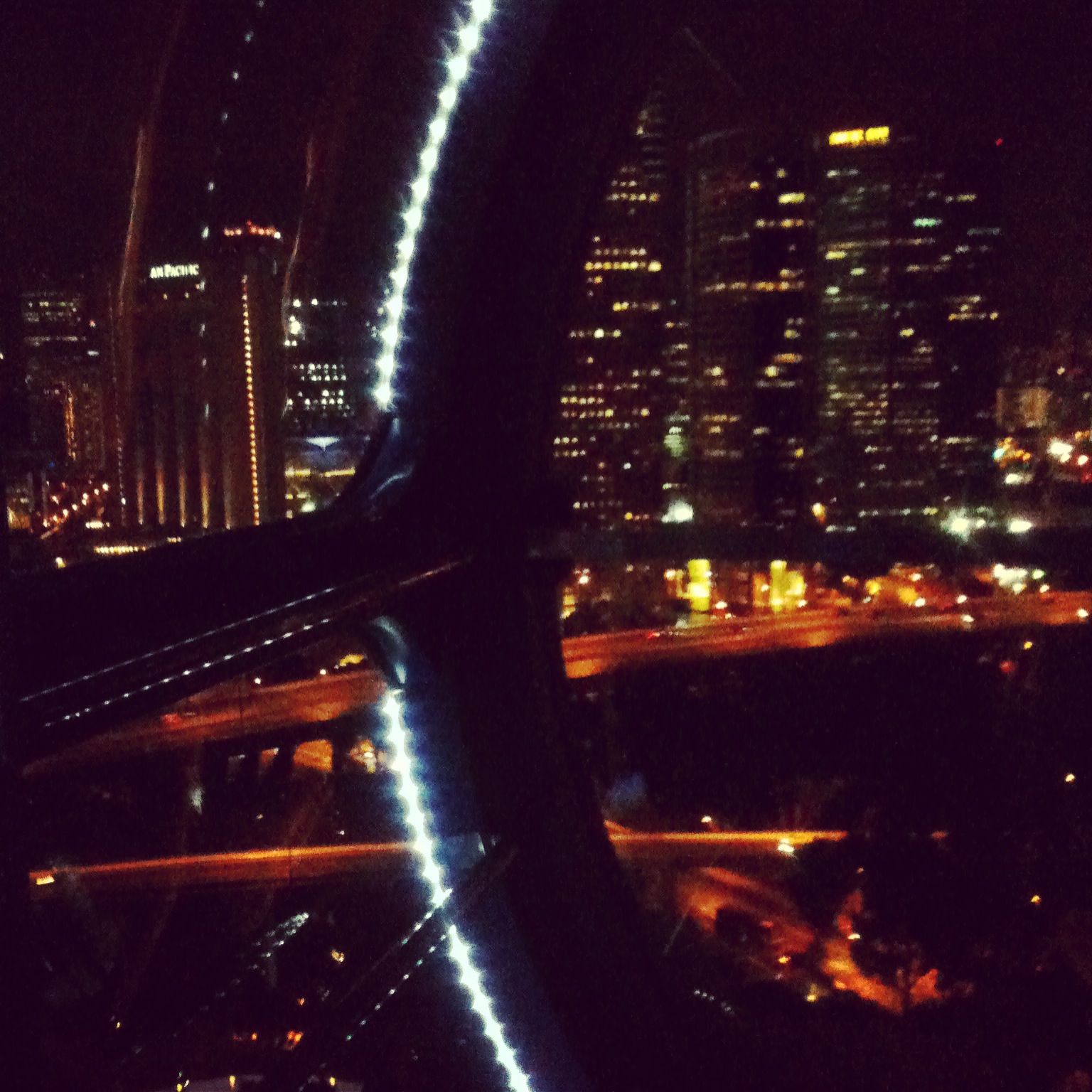
As I looked out onto the wing of the plane, I felt discomfort at this thought. Is this really what I want to do? My mindfulness exercises must be paying offbecause again, I didn’t know and, without any judgment, was curious to find out. That’s the thing about travelingit gives us the freedom to experiment. Leaving my normal MO for a week allows me to play a different rolejust temporarily. It’s less scary to try new roles that way. It’s not a big commitmentit’s just for a week.

Acknowledging my reluctance, I saidthat’s what I’ll do. I’ll let go of my own goals for a weekand just go with the flow.

Be reactive. Mindfulness is so hard to put in words.

One of the benefits is often phrased as “being less reactive.” It’s easy to misinterpret. In a way, it leads to being more reactiveonly appropriately so. Instead of being on autopilot and presuming things, we perceive the world more openly, more fullyand thus respond moreand more appropriately.

Traveling involves being ok with regular interruptions and allowing for deviations from the plan due to new circumstances inherent in the journey. It is a way to be in the present moment.

Travel makes us more aware of the world around us. In a way, our constant slipping into daydreams or anxieties is a product of routineand travel is the ultimate antidote.

Knowing that we have to be in the office by 9 a.m., go for our break at 11 a.m.and so on, tempts many into wanting to escape itif not literally, then mentallyby thinking of what we will have for dinner or whether the cute guy in accounting is single. Buddhists advocate disciplined routine as a way to be in the moment. For someone like me, it seems to backfire a lot: if I know what’s comingwhy would I pay attention?

The truth is, of course, I don’t know what’s coming.

It’s a bit like the placebo effectwe perceive what we expect. How does a restless millennial like me with a million addictive apps I use to not have to be right here – convince myself to be in the boring here? It is quite challenging to be really in tune with the present moment when it’s as you expect it. I believe “watching paint dry” is the appropriate metaphor. Incidentally, watching paint dry would be a great meditation.

A sense of novelty opens the senses to not only the sights and culturesbut what we otherwise deemed to be boring.

That’s why traveling is healingand a way to rediscover ourselves. Being on the rails of routine in a goal-directed way is a sure way to be miserable. In my opinion, this is a major contributor to the unhappiness of the many millennials who seem to passionately despise the 9 to 5not just because they don’t like what they are doingbut they are also allergic to how they are doing it.

The concept of a “gap year” is incredibly popular now.

In fact, for many of my friends, their gap year became the best year of their lives. The common assumption is that traveling widens our horizons by showing us all these cultures and ways of thinking in an organic way. I think it changes our state of mind. Instead of being in a goal-directed routine, we are in scout-mode: What is this? What does this mean? Not the usualhow do I get from A to B while optimizing for C? This scout-mentality spills over to how we view our feelings.

So what was this week of travel like?

It wasn’t just a change in geography. It was a change in mental state and purpose. What ended up happening was a surprise. I helped to codein a way, I had never done before and made batches and batches of coffee each day. Both felt incredibly satisfying because I knew they were needed. Instead of defining that I was only going to do x, y, and z, I did what seemed right in the moment.

An even bigger surprise was that I got a huge amount of “my own” work donethe stuff I had decided to shift into the background as I embarked on my escapade. It could be a coincidence, but things just happened more easilypeople got back, wanted to help, meet, and create. Or perhaps, I was expecting that nothing would progress that weekso when it did, it was that bit extra fascinating.

Letting go of goals and expectations is uncomfortable given the culture we live in. If the reader is debating whether he or she should try ittry it in experimental mode when you’re travelling. It may just work well for you.

………………
This guest post is brought to you by Martina: a medical doctor, blogger, and entrepreneur. She regularly blogs at thinkingclearly.co. Are you interested to do a guest post here? Just drop me a note.
hanny
WANT TO SHARE WITH SOMEONE WHO NEED THIS?

Gratiagusti Chananya Rompas (Anya) is the co-founder of a poet community, Komunitas Bunga Matahari (Sunflower Community). Her poems had been published in Kompas daily, Spice! magazine, and the anthology “Bisikan Kata Teriakan Kota” by Jakarta Arts Council, and “Dian Sastro for President! #2 Reloaded” by Yogyakarta Cultural Academy. She graduated from the University of Indonesia majoring in English Literature and got her Master’s Degree in The Gothic Imagination from the University of Stirling, Scotland. Her anthology, Kota Ini Kembang Api (This City Is Fireworks) is republished by Gramedia Pustaka Utama in 2016.

GRATIAGUSTI CHANANYA ROMPAS: ON FIREWORKS, SUNFLOWERS, AND METAPHORS. I do believe, though, that if one aspires to make poetry his or her art, one should understand that poetry is a discipline with a long history. So it is imperative that one educates oneself at least about other poets and what they have done as well as why they did what they did. This will help one to find one’s voice and what one wants to say through one’s art.And if one wants to write, one better reads too. Reading is good not only to widen one’s knowledge, but also sharpen one’s analytical skill. Any writer should have this, I think, so he or she can give a better judgment about his or her own works before anyone else does. This, in turn, will make him or her more critical to any form of art he or she is consuming.


Why city—and why fireworks?


Anya: I was born and have lived almost all my life in Jakarta. It is a city where I have felt a broad spectrum of emotions: from hurt to joy, sorrow to enthusiasm, rage to being loved, losing hope to believing in simple things. I think a person is more or less molded not only by their experiences but also where he or she spends most of their time. This helps create one’s reality and, in my case, it is an important ingredient in my poetry.

I am always drawn to lights, any kind of, since I can remember. Study lamp, street lights, fairy lights around a Christmas tree, the light coming from behind the curtain of a window, even the light coming out of a laptop or computer screen. However, I also realize that if there is light, there must be darkness.

So I feel it is just natural for me to use fireworks as a representation of the coming and going of light and dark, which then become an experimental tool to explore a city’s inhabitants. You may not find many references to fireworks though in this collection. The phrase “Kota Ini Kembang Api” is not even a title of a poem, instead, it is taken from a line in an untitled poem. To me, the swift changing from darkness to brightness that fireworks cause serves as a symbol and metaphor. That is why I chose it as the collection’s title.

And when I wrote the other poems, I kept in mind to associate how swift the day lapses with the contrast and irony between the city lights and its shadowy crevices to describe whatever emotion or event I wanted to talk about. When the collection was finally finished, I realized that my days went by more like a spiral than the literally linear concept.


Why poetry? Why not novels, or short stories?


Anya: When I was still in elementary school, I wrote short stories in one of my AA books so it did not attract the attention of my teacher, and distributed it around my class so my friends could read whatever I had written in it. And all my life I have always enjoyed reading novels or short story collections. One of my not many attempts at writing a short story even made its way to a collection published by the Jakarta Arts Council many years ago.

But when I started writing poetry (for an assignment when I was in junior high) I realized poetry is a format that fitted like a glove for me to express myself. No matter how long or short a poem is, every single word has to be significant. Not that novels or short stories do not have this trait. It is just poetry that fits how my mind works. Jagged, fleeting, tumultuous. I feel there are so many ways for me to express them through poetry compared to other forms.

I guess I just have to live with the fact that I am not an all-rounder writer.

whatsapp-image-2016-12-08-at-21-58-56


Can anyone write poetry? Can anyone be a poet?


Anya: As a co-founder of Komunitas BungaMatahari (better known as BuMa), a poetry community that has lived by its motto “Semua Bisa Berpuisi” (or, roughly translated, “Poetry for All”), I absolutely believe that anyone can enjoy, respect, understand, read and, of course, write poetry. I have seen this happen many times with my own eyes through various activities that BuMa organized or was part of. Many people from many walks of life were so keen on the idea of poetry. And this proved the popular belief that poetry was a difficult art form was not entirely correct.

I do believe, though, that if one aspires to make poetry his or her art, one should understand that poetry is a discipline with a long history. So it is imperative that one educates oneself at least about other poets and what they have done as well as why they did what they did. This will help one to find one’s voice and what one wants to say through one’s art.

And if one wants to write, one better reads too.

Reading is good not only to widen one’s knowledge but also to sharpen one’s analytical skills. Any writer should have this, I think, so he or she can give a better judgment about his or her own works before anyone else does. This, in turn, will make him or her more critical to any form of art he or she is consuming.

I am sorry if I sound too patronizing. But I believe one has to respect one’s art as well as other people’s. And then all you have to do is add a little bit of fun and some love to your poetic journey.


How should one read poetry?


Anya: When I was in university, my poetry lecturer said that poetry was meant to make a poet’s ideas or emotions concrete, not to make it unclear for the readers. But sometimes poets like to play too, break some rules, adding purposeful puzzles into their works. Just like writing, reading is a skill to be learned. So you can spot those “mischiefs” and decide for yourself whether they add meaning to the poet’s works or otherwise.

I believe in successful and unsuccessful poems. Again, to decide which one a poem is, you need your analytical and critical skills. Learning these skills will depend on, amongst others, what kind of literary diet you are consuming and your view of life.

I notice many people choose to see poetry as only a pile of emotions that came to a poet almost magically. Well, it is true that one of the first signs that a poem might—underline might—be successful is how it touches and connects with its readers. True but debatable. And we have not even talked about taste and its politics!

However, the answer to this entire conundrum is quite simple: read, read, and read.

whatsapp-image-2016-12-08-at-21-49-19


What’s going on inside of you before, during, and after poetry is born?


Anya: Poetry is my way to understand my head and heart and all the stuff that is in them. Oftentimes I feel like something is wrong and/or confusing and/or unrecognizable going on and I cannot stop it. On a good day, lines come across my mind and I can unleash them just by opening my laptop and typing them. On a bad day, I cannot write a single thing. On an okay day, I can write a few lines but then nothing. A poem in “Kota Ini Kembang Api” took me four years to finish.

When I am writing, I focus on the stuff I said above. It is like watching your laundry spinning in your washing machine and then grabbing that one shirt you have been concentrating on (impossible in real life, I know). I also pick on associations that appear—like memories, visuals, voices, smells—and try to incorporate them in my writing. However, this happens more organically than it sounds.

After finishing the first draft of a poem, I will give it a once-over so I can trim unnecessary words, or change them, fix illogical lines, etc. I will only stop when I feel I cannot mess around with it anymore. It will also be the moment when I can begin to understand what kind of shirt I have fished, its fabric, stitching, size, and fit. In other words, this is the moment of truth: have I used all the right literary tools and techniques and make them work or not.


Can you tell us more about the creation process behind the lines of Kota Ini Kembang Api?


Anya: All the poems in “Kota Ini Kembang Api” have been arranged in a certain order so that readers can read them as a book-long story. Yet, readers can also enjoy them individually as well as start or end at any page of the book and hopefully still find them enjoyable.

So, for me, each of them serves its own purpose. Like a string of pearls that I can claim as my necklace.

——

For more interviews with Indonesian writers, click HEREGet Anya’s book Kota Ini Kembang Api HERE. Photo courtesy of Gratiagusti Chananya Rompas.
hanny
WANT TO SHARE WITH SOMEONE WHO NEED THIS?

It is not so much as love at the first sight (or, these days—at the first swipe). It is more like the other day when I was at the grocery store, pushing the small shopping cart through the narrow alleys (fruits & vegetables, meat & dairy, snacks, chocolate & candies, hair & body, pet) before the shelves burst out into fireworks of memories.

There, exploding into a million little pieces of moments-once-shared: our usual granola, our favorite soy milk, our regular pasta, our instant spices for rendang and nasi goreng, our huge bottle of Pocari. Parading warmth despite the cold air blowing from the meat & dairy freezing units.

beradadisini love stocksnap

It’s beautiful to know that we’ve left traces of ourselves in one another. That despite the distance, the world is now full of them, full of you, full of us, wherever we look. It gives meanings to the most random sightings of daily whatnots.

It makes me feel as if you’re near. And, I guess, in one and other way, you are.

We share the world holding hands—or some other times, holding our mobile phones. Smiles and kisses are popping up from the palm-sized screen; words and voices are flying freely across continents: those days when I look out and see the sunshine, while raindrops fall over the sunroof above your kitchen (that I adore).

Together, we’re off on impulsive adventures: me on the back of the motorcycle, and you at the front with the GPS on. Cooking pasta and fried rice, pig them out directly from the pan. Swearing at each other at the squash court. Sitting next to each other somewhere, not talking, working on our passion projects.

Tens of thousands of feet above the ground, more than a year ago, you wrote me a letter.

You said you’re flying above Gwadar, speculating that it might be located somewhere in Iran. Later on, I found out that it was an area near Pakistan’s Balochistan. An area I once mentioned in my short story that was published years ago, Humsafar.

Isn’t it funny how life keeps on throwing signs your way, teasing you in a humorous way, knowing that you’d never get it until one day you really get it?

If life were a spider web, our stories have been entangled in a heap for many years, many millennia, many centuries… connecting us with millions of lives today, as well as millions of lives before us and beyond us. We might have a long history that we have yet to discover, billions of dots waiting to be connected.

Time, slowly, will spill the secrets of the random things, decisions, and connections that lead us to one another.

But until then, I just want to thank you:
simply, for taking a chance.

hanny
WANT TO SHARE WITH SOMEONE WHO NEED THIS?

Three days after arriving back home, still I haven’t unpacked, haven’t gone out, haven’t met anyone, and haven’t done anything productive—apart from replying to some emails that need to be replied, and meeting deadlines. I am that kind of person. After being surrounded by a lot of people or being on the road for a long time, constantly moving and bumping into others—I need my downtime. I need to recharge. I need a break.

I need to pause.

screen-shot-2016-11-17-at-9-06-22-am

Do you need to be alone to recharge?

I’ve known some friends who can be on the road for what seems like an indefinite period, moving from one city to another every 3-4 days, then coming back home and heading out to see some friends directly from the airport. The next day, they would have had some meetings or meet-ups, attended events, edited pictures, and wrote some articles about their travels, went to the gym, unpacked, plus organized another trip.

I envy them.
I envy people who do not need downtime.

Those who live their lives like an Energizer bunny. They are so energized. So active. So unstoppable. It seems as if they could do so much in the first few days they came back from their traveling journeys, while here I am, still enjoying the feeling of not having to go anywhere or to do anything, savoring the privilege of being alone.

These past few days can be simply summarised into coffee – books – bed – movies – lunch – books – bed – coffee -movies – bed (insert ‘work’ only when really necessary—meaning, deadline is tomorrow).

screen-shot-2016-11-17-at-7-58-28-am

This is how I recharge. To recover from travel-lag. To readjust the pace and pattern of my day. I live best the way I travel best: slowly.

There are 2 places I would dearly call home.

My real hometown in Bogor, and my adopted little town of Ubud.

Both are easy to navigate because each one is a donut: Bogor with the Botanical Garden to fill in the hole, and Ubud with its Monkey Forest.

Both are small towns (my boyfriend still finds it funny whenever I refer to Bogor, with a million people, as a small town) with access to networks, opportunities, and vibrant creative communities trying to make a difference. Only an hour away from Bogor, there’s Jakarta: the capital of all things shiny—while an hour or two away from Ubud, there’s Sanur and Seminyak: the hubs for any kind of jobs imaginable.

Both hometowns host loving friends and families (I once wrote that home is any place where you’ll be missed, while the boyfriend said that home is wherever your wi-fi connects automatically).

They are both small enough for you to bump into old friends (or exes!) in public events, restaurants, and coffee shops, but big enough should you want to exile yourself in the faraway villages or hide in the mountains. Nature provides plenty of breathing spaces not far from the center, and the arrays of mouth-watering street food deserve no such thing as a diet.

Nevertheless, the silent contentment of being home is simply that: being home.

beradadisini being home (stocksnap)To wake up on the same bed where you’ve cried yourself to sleep when you’re still an angsty teenager. To be surrounded by your overloaded bookshelves. To have your dog jumps on you because she wants to play. To talk to your Dad about how you’ve managed to float like a starfish in Raja Ampat.

To walk around the house with that old shirt and pants you’ve had since you were 17. To cook whatever you want because the kitchen utensils are all there, waiting to be put into good use. To create new therapeutic ointments with coconut oil and your growing collections of essential oils. To put your clay mask on and compress your eyes with slices of cucumbers.

To start your day with a set of routines you’ve developed throughout the years. To know what everything is for, where everything is stored, and how everything works.

To feel as if you can go anywhere, but at the same time not wanting to go somewhere else.

Probably, as much as it’s a convenient place, home is more of a feeling: about knowing that no matter how far you go, you’ll always find a place to go back to. About remembering your root and who you truly are. About being you when nobody’s noticing. It’s a feeling of knowing that you are free both to leave or to stay.

It’s about that yearning that keeps tugging on your heartstrings when you’re away.

Whatever that yearning is, it’s home.

______
PS: If reading is one of your favorite down-time, you might want to check Bookmate–a mobile reading app where you could find tons of fiction and non-fiction books. If you’d like to try the premium access for free for a month, insert the code readwithhanny here. I have a shelf there storing some of my favorite books about writing, Writer’s Reads.
hanny
WANT TO SHARE WITH SOMEONE WHO NEED THIS?
Indonesian Coffee Culture

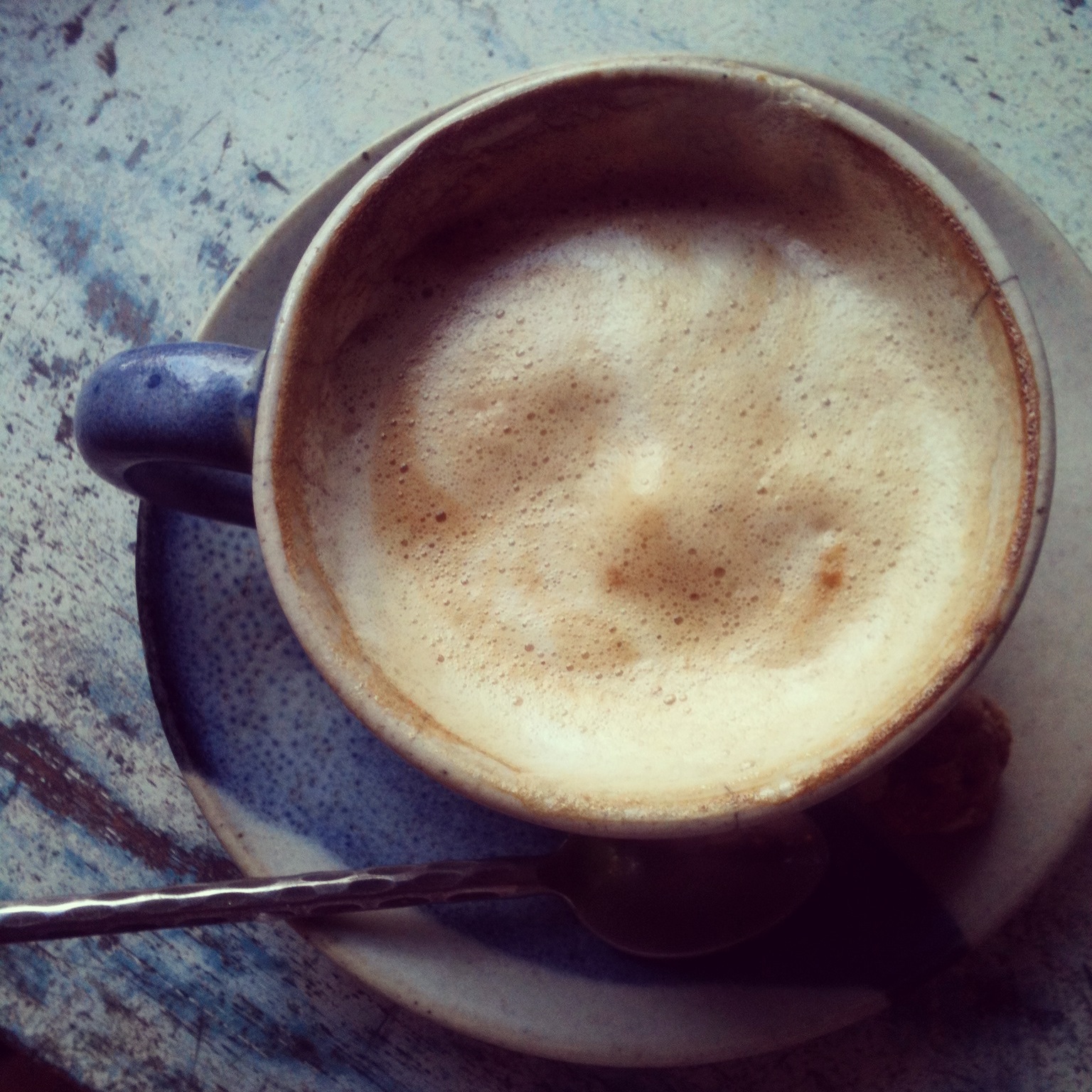
My boyfriend found out that I have sinned. He watched me in mild horror as I disgracefully sipped my well-deserved cup of cappuccino, after attacking some slices of Quattro Formaggi for dinner. An Italian, he knows and adheres the commandments of Italian coffee culture by heart: that cappuccino, as well as other ‘milky’ coffee, can only be consumed in the morning, and never after a meal.

OK, so I have sinned. And from then on, I have sinned continuously by repeatedly breaking the commandments. What can I say? I just enjoy drinking coffee.

***

For some reason, coffee has never had that huge of an impact on me.

I never felt my heart beating faster after gulping down an espresso. I don’t feel suddenly awakened or energized after consuming it. I can drink coffee before bed and sleep soundly for the next 8 hours.

Maybe I am dysfunctional—or somehow, have developed an inherited immunity towards caffeine.

My parents used to be heavy coffee (kopi) drinkers. My memories of a good morning was to wake up to the heavy and acidic smell of kopi tubruk for my Father (tinted with cloves and tobacco from his kretek cigarette) and the sweet and milky kopi susu for my Mother.

It has become a signature morning smell I’ve grown up with. Something to let me know that everything is okay.

The smell of coffee in the morning means it’s a good morning: where I can find my parents in the kitchen, sitting together, talking over their hot cup of coffee—not fighting, or arguing, or a kid’s scariest nightmare: disappearing. Thirty years later, I still find it comforting to wake up to the smell of hot coffee in the morning.

The smell brightens up my day.

***

When I drank my first coffee, it was love at the first sip.

I have always asked Mother for coffee since I was probably 6 years old.

Every week, we would go to a coffee-smelling stall in Pasar Anyar local market where she bought a pack of freshly ground coffee wrapped in brown paper. It could be one of my favorite stalls in the market—apart from the stall where they sell the latest Japanese comics about ballerinas and the one selling MSG-loaded chips.

But every time I asked for coffee, Mother always said no.

“It’s not for children. It’s for adults. If children drink it, they become stupid,” she said while sipping hers.

I had no idea why Mother suddenly decided to let me drink half of her kopi susu when I was 13. Either she thought I was already an adult by simply being 13, or she didn’t mind if from this point forward I would be stupid.

However, I am forever thankful for the chance, the long awaited opportunity: my first encounter with adulthood.

I still remember the sweet and slightly bitter taste of it, the combination of my hometown’s most famous Liong Bulan coffee and condensed milk: the way it glided so smoothly on my palate, so thick and heavy yet smooth and creamy.

It was bliss.

And I have never stopped drinking coffee ever since.

***

I drank more coffee during the times when I religiously watched Gilmore Girls series aired on TV, never missed an episode.

The way mother and daughter started their morning with coffee and went about their days with more sounded like a heartwarming concept.

Plus, I have always rooted to be the straight-A bookworm daughter in the series: I wanted to be Rory. To be like her, I study (carrying my pen & binders everywhere), read books, and drink coffee.

You may have concluded by now that my teenage years were anything but rebellious.

***

Indonesia may be most well-known for what people dubbed as the most expensive coffee in the world, Kopi Luwak or Luwak coffee.

The ripest coffee cherries are eaten by an animal called Luwak (a civet/palm cat), and the undigested coffee seeds that come out from the Luwak’s feces are collected to be made into your steaming cup of Kopi Luwak.

However, if you’d like to try it, please take the time to find out the source of your Luwak coffee beans, or get certified ones. Due to the high demand for these expensive coffee beans, sadly, there have been many practices of people capturing civets for coffee farming under cruel caged conditions.

As I grow up and the chance to travel around Indonesia occurs, I have the opportunity to taste many kinds of Indonesian local coffee mix.

When visiting a remote village, stopping halfway for some rest in an unknown part of a town, or simply needing a down-time after a long journey, spending some time in a warung kopi—traditional coffee stall—is always a good idea.

Here, sitting on a bench from wooden planks or a set of colorful plastic chairs, you can always have a nice cup of hot coffee with snacks like sticky rice, steamed cassava, sponge cakes, and sweet or savory fries; while eavesdropping on the locals talking about politics and latest celebrity news.

If you enjoy drinking coffee (kopi), here are some Indonesian local coffee mix you may want to try:

Kopi Tubruk.

Coarse coffee grounds are mixed with sugar (sometimes palm sugar) and boiled water is poured over it. You’ll need to wait for the hot water to ‘cook’ the coffee. It is ready to drink when the floating coffee grounds have all settled to the bottom of the cup.

Kopi Susu (milk).

Kopi tubruk with condensed milk instead of sugar.

Kopi Jahe (ginger).

Adding hot ginger water to your coffee instead of plain water. You can also find some with crushed ginger (sometimes lightly grilled) dropped into the coffee.

Kopi Ijo (green).

In Tulungagung, you can find a greenish coffee with a smooth texture. The greenish coffee beans are roasted over firewood.

Kopi Talua or kopi telur (egg). 

Well-known in West Sumatera, it’s a mix of coffee, sweet condensed milk, egg yolk, honey, vanilla, and cinnamon to be shaken until it’s foamy. There will be 3 layers on your cup: the custardy mix at the bottom, the coffee itself in the middle, and the foam at the top.

Kopi Joss or kopi arang (charcoal). 

You can find this one along the railway station of Tugu in Yogyakarta. It starts with coffee powder and sugar, as usual, hot water being poured over it, then a red-hot piece of burning charcoal from the stove’s fire will follow suit. For Indonesians, the sizzling sound of the burning charcoal hitting the coffee would resemble something like: “Josssssss!” Hence, the name of the coffee.

Kopi Durian. 

Either you like it or hate it: a piece of meat from durian fruit is mixed and stirred in a cup of hot coffee, resulting in a sweet, thick, and creamy coffee drink. Can be found in Bengkulu, but you may want to skip it if you have high blood pressure!

Kopi Kothok.

Popular in the small towns along the north coast of Java, like Rembang, Blora, Pati, and Cepu, to name a few. The coffee beans are roasted with shredded coconut. Then, coffee powder and sugar are boiled together with water.

Indonesia produces between 650,000 to 750,000 tons of coffee beans a year and is the fourth-largest coffee producer after Brazil, Vietnam, and Colombia. Italy, the world’€™s largest coffee consumer, has become the main export destination for our coffee growers.

Do you come from a country with a strong coffee culture? Are there any local or special coffee mix in your area I need to try? Or some commandments I need to know before my visit?

***

I still start my morning with a cup of coffee.

These days, it has become more of a ritual rather than a necessity. It just seems like the right smell to wake up to, the one that reminds me of good days, somewhere far away in my tightly-kept memories.

I choose coffee shops over tea parlors every time, stacking a dozen of Torabika Susu instant coffee powder when I travel, and—despite the disapproving look from my boyfriend—still order a cappuccino in the late afternoon, after a late meal.

When I am lost or stranded in a strange country, in an unfamiliar city, in an uncomfortable situation, I let myself be comforted by a smell of coffee: it could be black and strong, sweet and milky, light and chocolatey, and it doesn’t matter. I will follow it with my nose diligently, tracing the air for a sign of that earthy smell: a smell that keeps me rooted to the ground.

I know that I will always be in a safe territory the moment I step into a coffee shop, a coffee stall.

I know what to expect, what to smell, what to see, what to hear, and what to order. I know the cups—whether it’s plastic, carton, or ceramic—will snuggle perfectly inside my resting palms. I know that I wouldn’t need extra sugar. I know the coffee won’t burn my tongue if I let it sit for 2.5 minutes.

As its thick bittersweetness and slightly creamy texture bursts in my mouth, I sometimes wonder how drinking coffee makes me really feel—only to keep coming back to the same conclusion: that it makes me feel like an adult.

It can’t be so bad, being an adult, I tell myself if it can actually taste this good.

hanny
WANT TO SHARE WITH SOMEONE WHO NEED THIS?

There is a space between us and I am thankful for that.

The space allows me to fill in the morning pages of my journal, sip a cup of coffee while listening to the monks chanting mantras, or curl again in bed to read a book at a leisurely pace. The space allows you to put on your running shoes and wander around the streets, the hills, the ridge; enjoying your 8 kilometers of uninterrupted moves while listening to your favorite podcasts.

The space gives us the time to be us: to breathe, to think, to reconnect with the essence of who we truly are, to enjoy our simple little pleasures, and be happy for that.

There is a space between us and I am thankful for that.

The space gives us the opportunity to stay as these two personalities with their own unique taste, traits, and characters; who just happen to like each other so much (sometimes, too much) despite the more-than-obvious differences. The space stops us from being reduced into one, and instead, it gives us enough room to grow, to expand, to bloom. The space lets us be together, in parallel, walking side by side, hand in hand, but never too close to risk cutting each other’s track or cramping each other’s path.

The space provides us the chance to chase our true calling, to pursue our dreams, to persevere in the things that have always taken a big chunk of our hearts. And while you may not fully understand why I choose the things I choose and I may not fully understand why you choose the things you choose, the space is indeed, spacious enough, to let us be: so we are never felt forced to choose one over the other. So both dreams can be equally exciting and important.

There is a space between us and I am thankful for that.

The space reminds us from time to time that we are here because we choose to be here.

No one is holding the other too close, no one is holding the other too loose. We are keeping the sacred space in the center: from where we’re tugging each other from time to time with shared memories and experiences while keeping our owns; that may or may not be shared with one another one day, but both is equally okay and acceptable. It gives us a chance to miss each other while trusting that the other never really leaves.

The space provides us a safe distance to be sad, angry, or heartbroken, without accidentally hurting the other and getting them wounded by the splinters.

The space lets us know, every single day, that we can only be responsible for our part in the relationship: for the things we choose to bring, to feel, to think, to say, to share, to give, to withhold.

There is a space between us,
and I am thankful for that.

hanny
WANT TO SHARE WITH SOMEONE WHO NEED THIS?
Hanny illustrator
Hi. I'm HANNY
I am an Indonesian writer/artist/illustrator and stationery web shop owner (Cafe Analog) based in Amsterdam, the Netherlands. I love facilitating writing/creative workshops and retreats, especially when they are tied to self-exploration and self-expression. In Indonesian, 'beradadisini' means being here. So, here I am, documenting life—one word at a time.

hanny

TAKE WHAT YOU NEED
VISIT THE SHOP