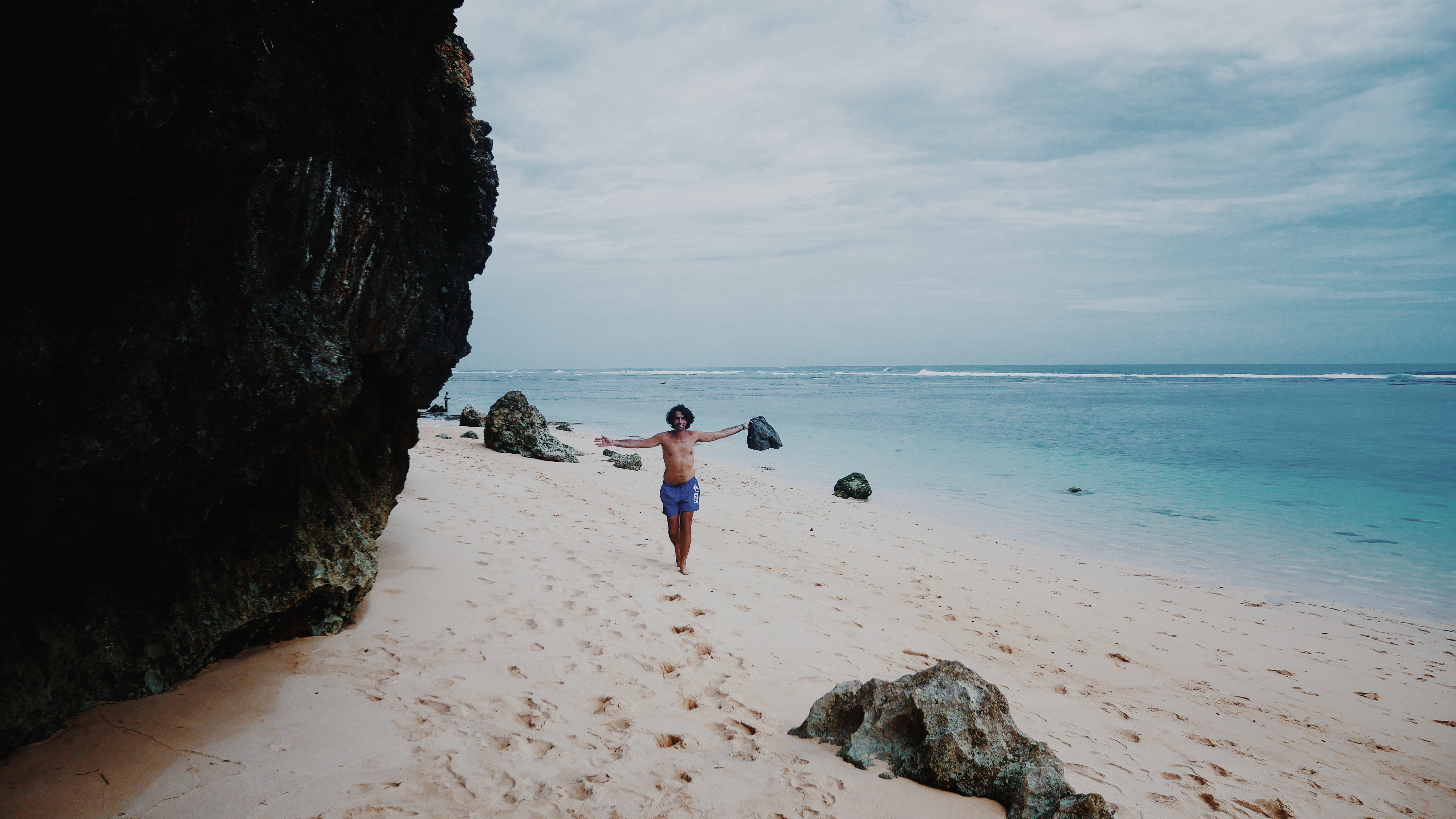
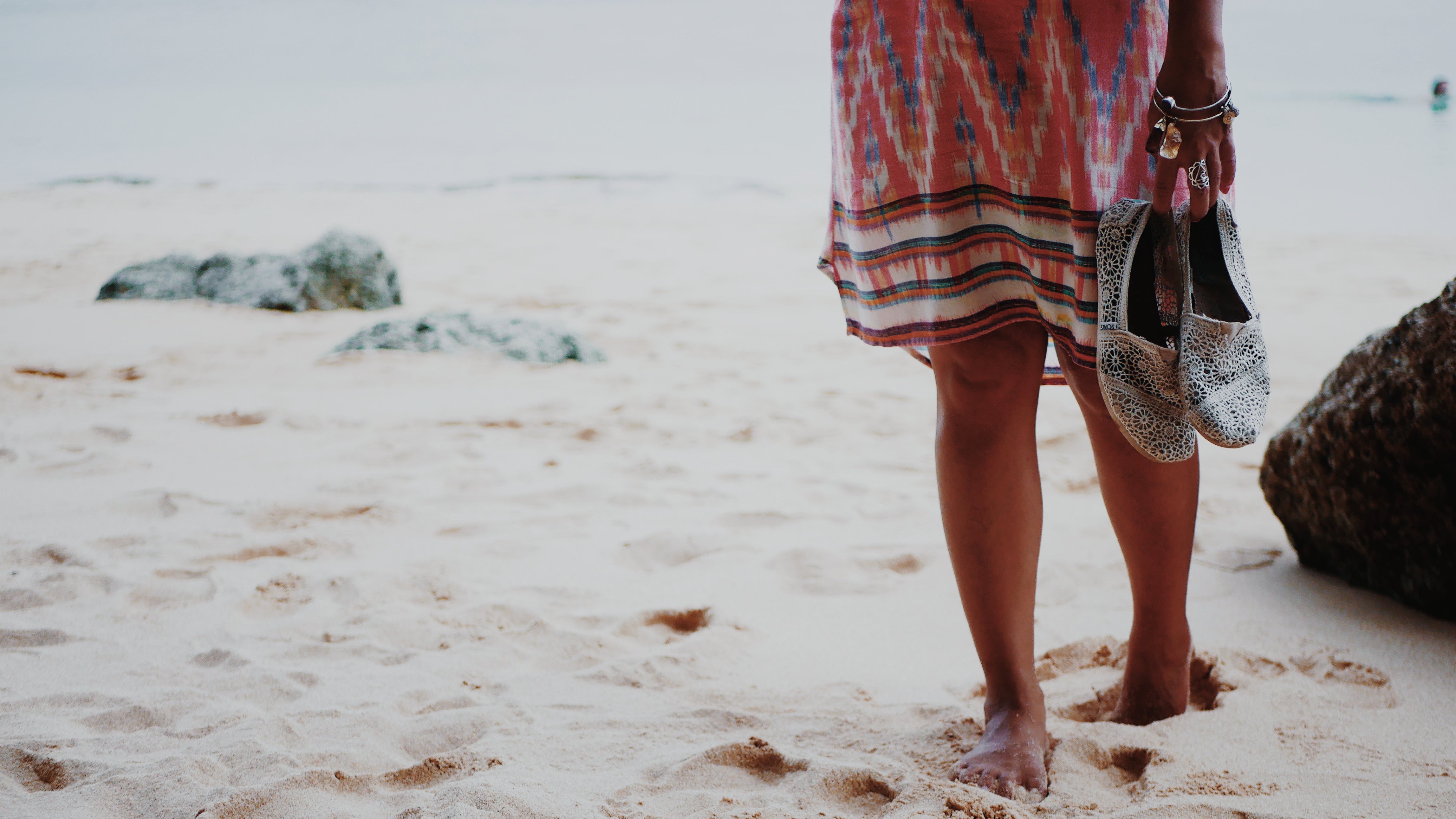
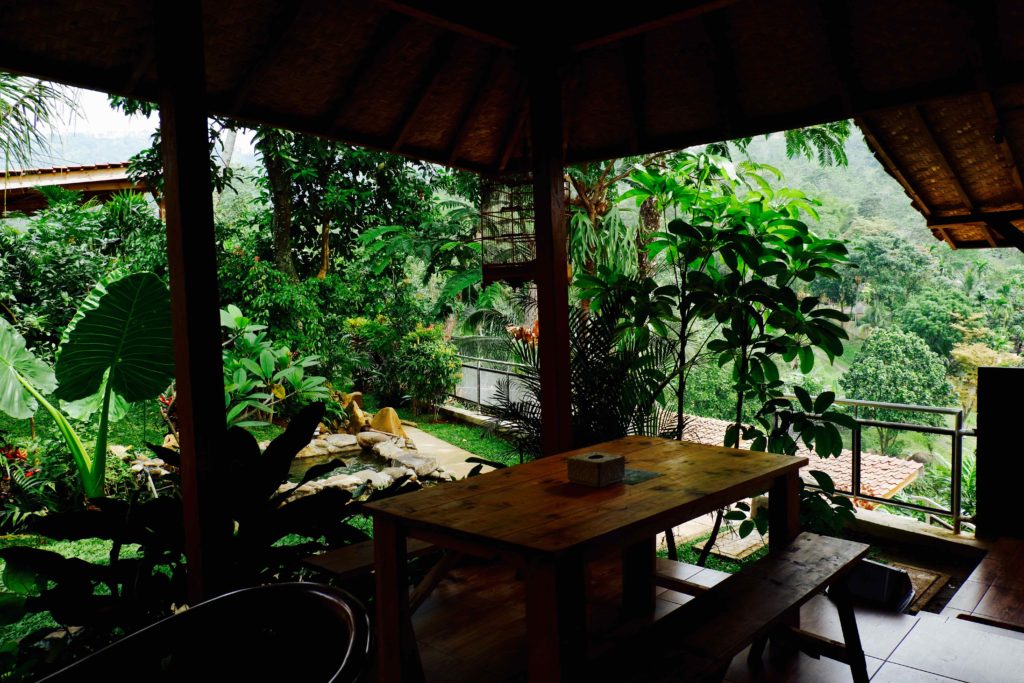
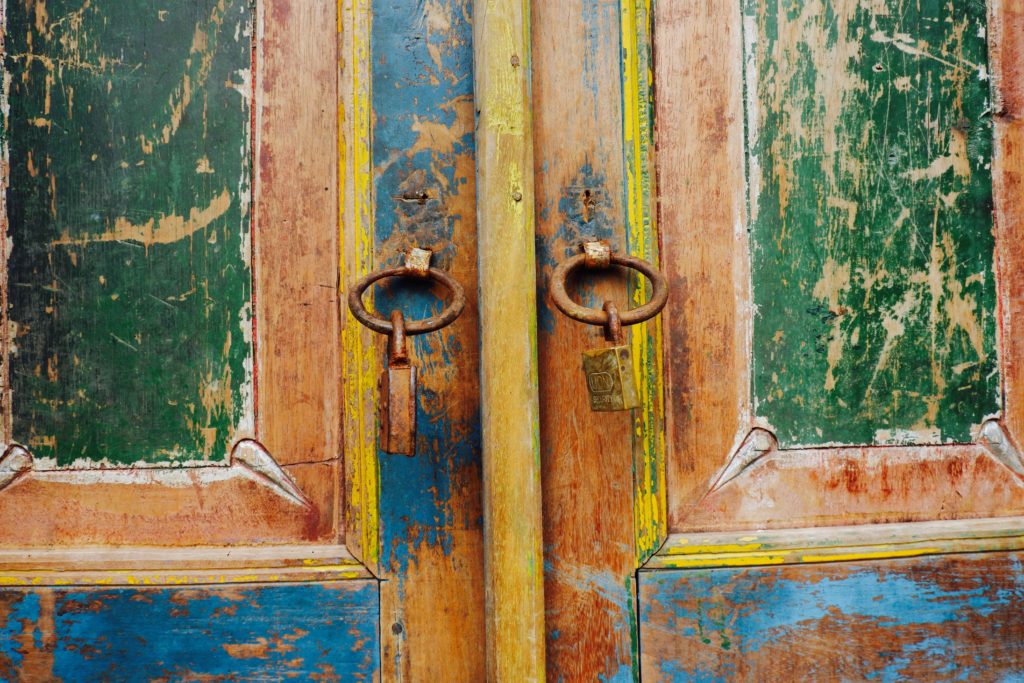
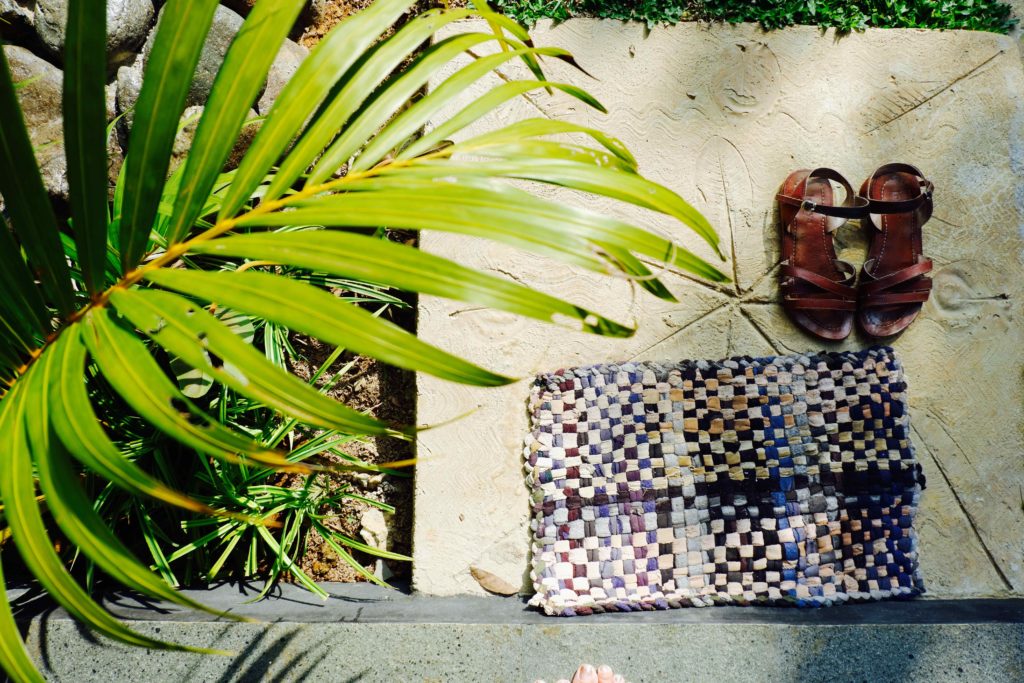
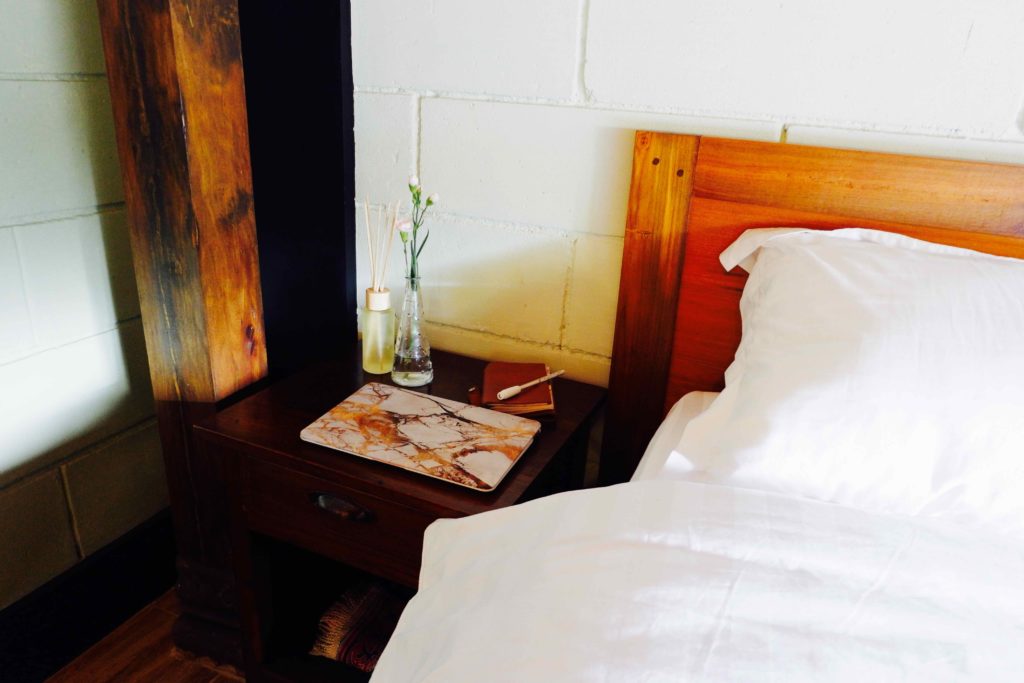
It was a cloudy Saturday, but the weather forecast seemed promising. So, with our rented motorbikes, we drove down to the beach.

Our destination was a beach close to Nusa Dua. A friend told me it was a considerably quiet beach. We followed our Google Map faithfully–but it led us through a truly challenging off-road path. We didn’t give up, though, and thankfully, the sign to the beach showed up before we changed our mind.

Gunung Payung BeachGunung Payung Beach
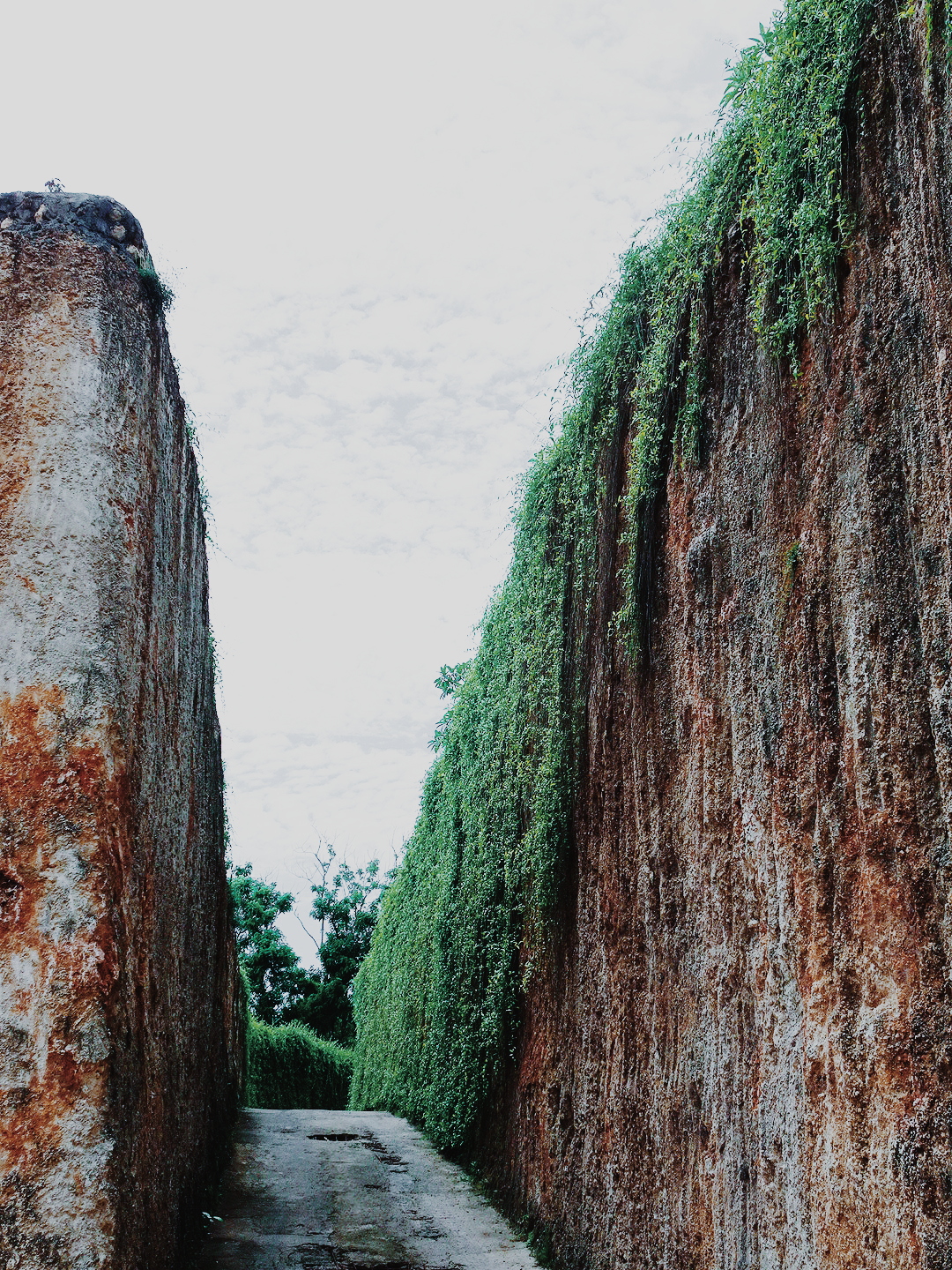
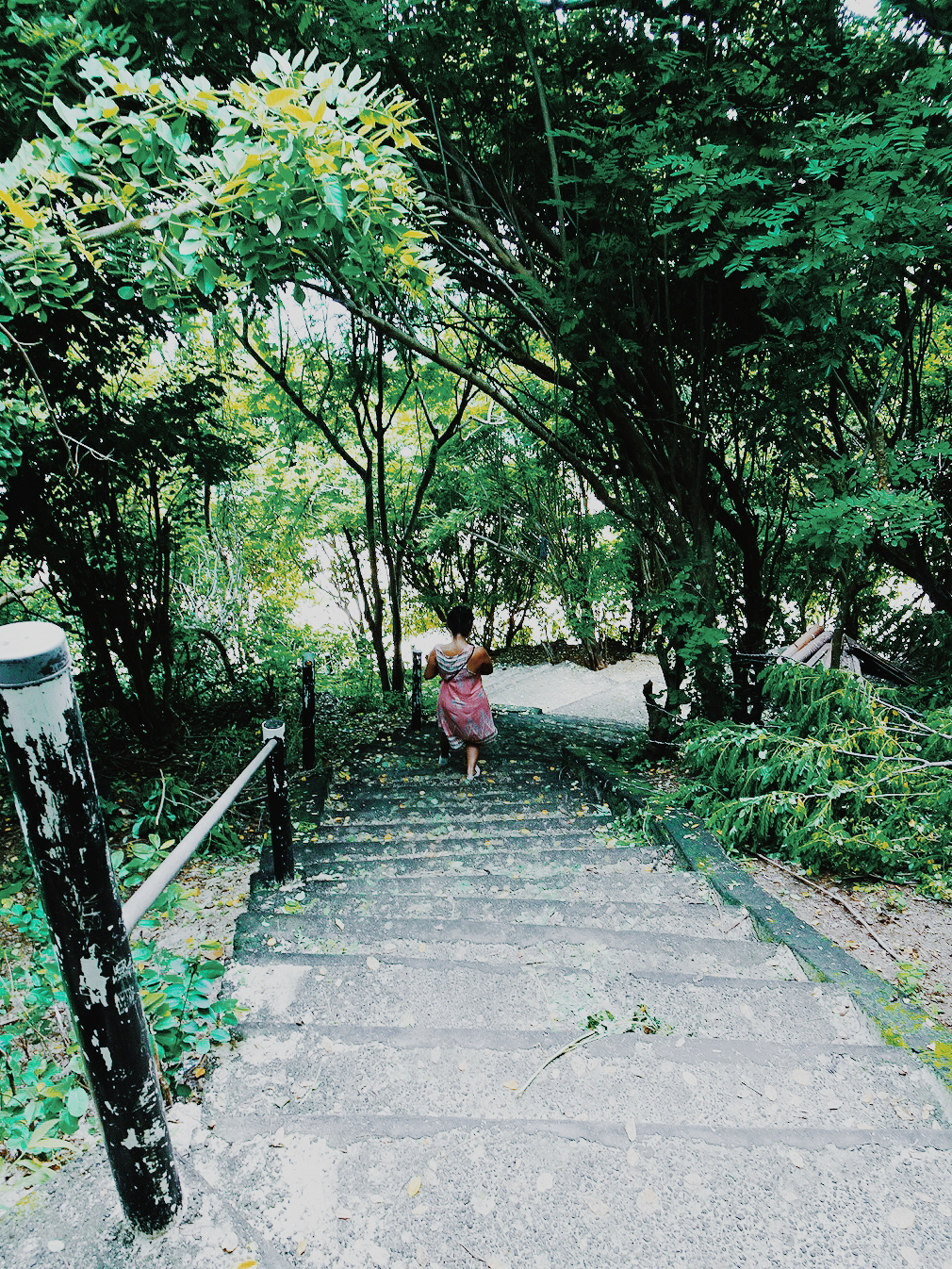
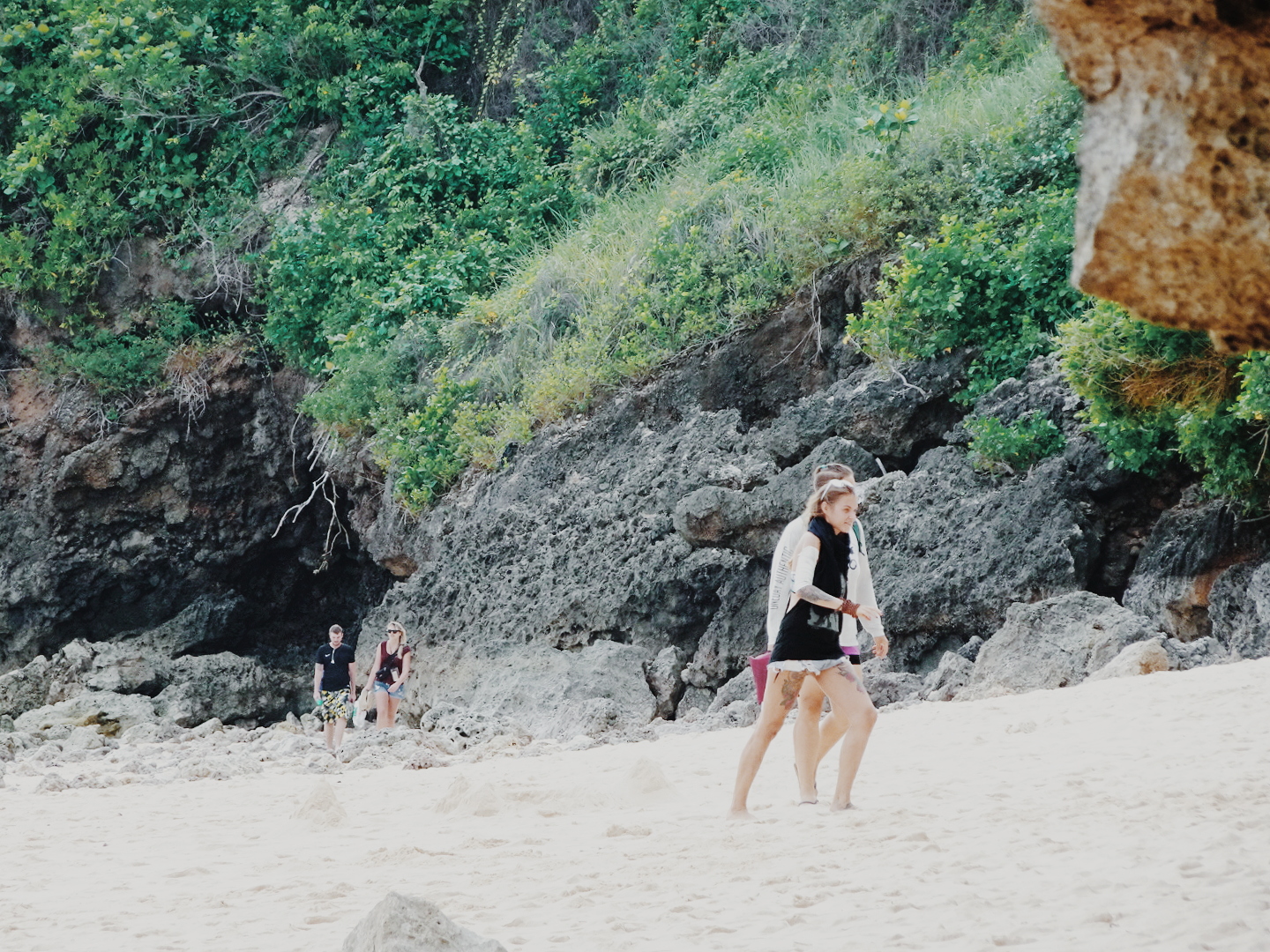
The beach has a cave-cliff entrance–resembling the beaches along Uluwatu, and we need to climb down hundreds of stairs to get to the water. Good thing was that we were surrounded by trees along the way, providing us shelter from the afternoon sun.

Gunung Payung BeachGunung Payung Beach
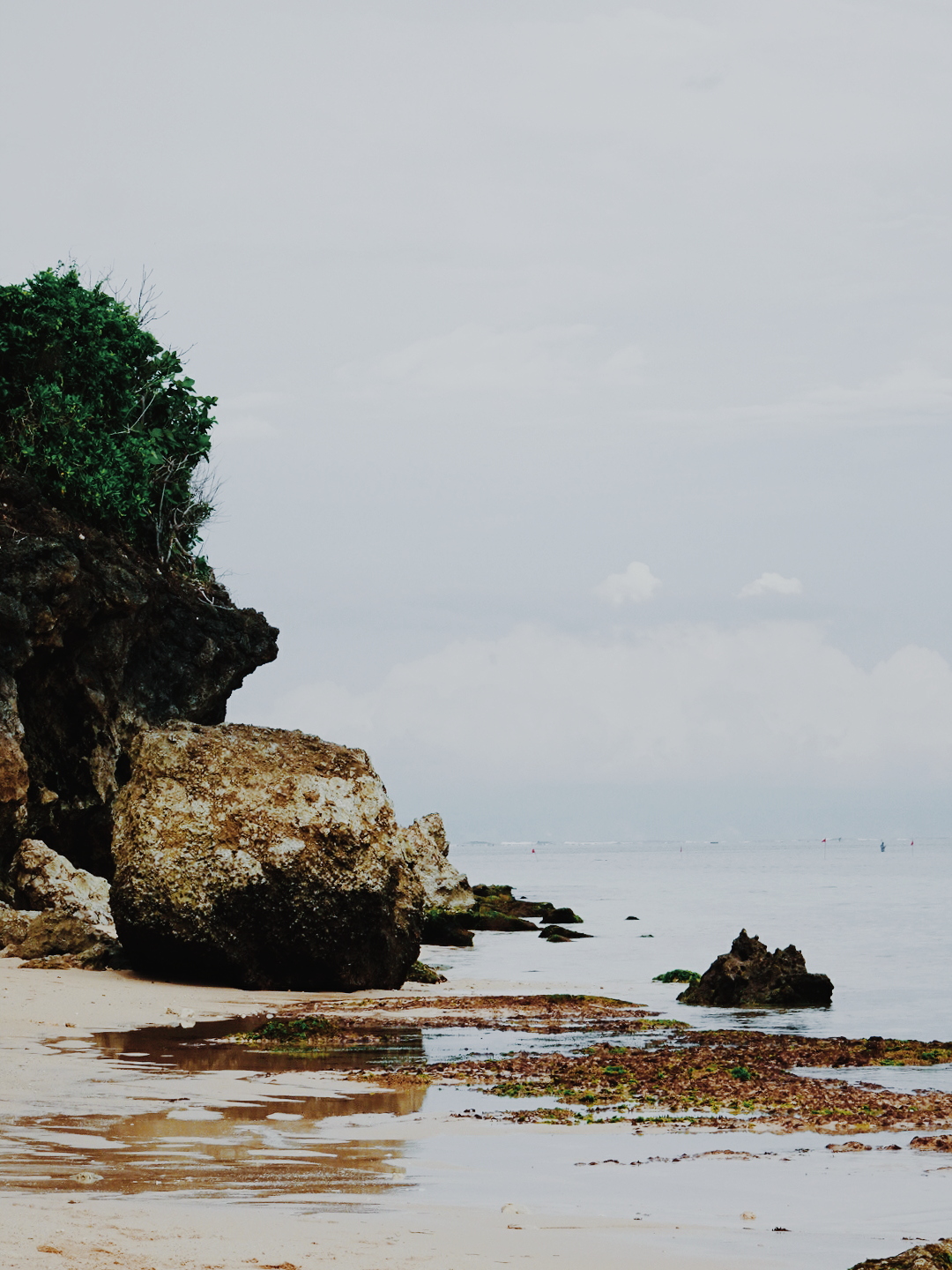
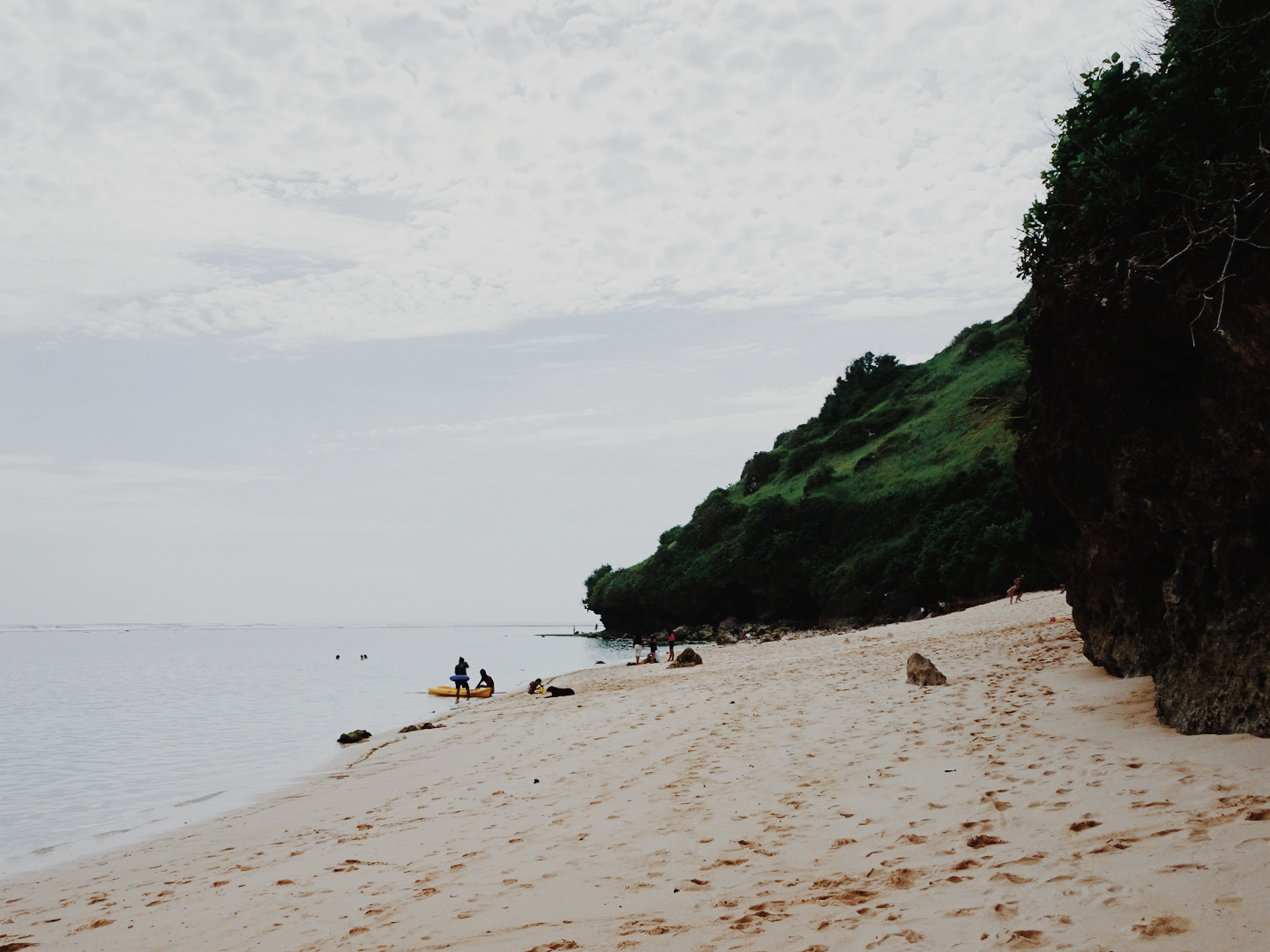
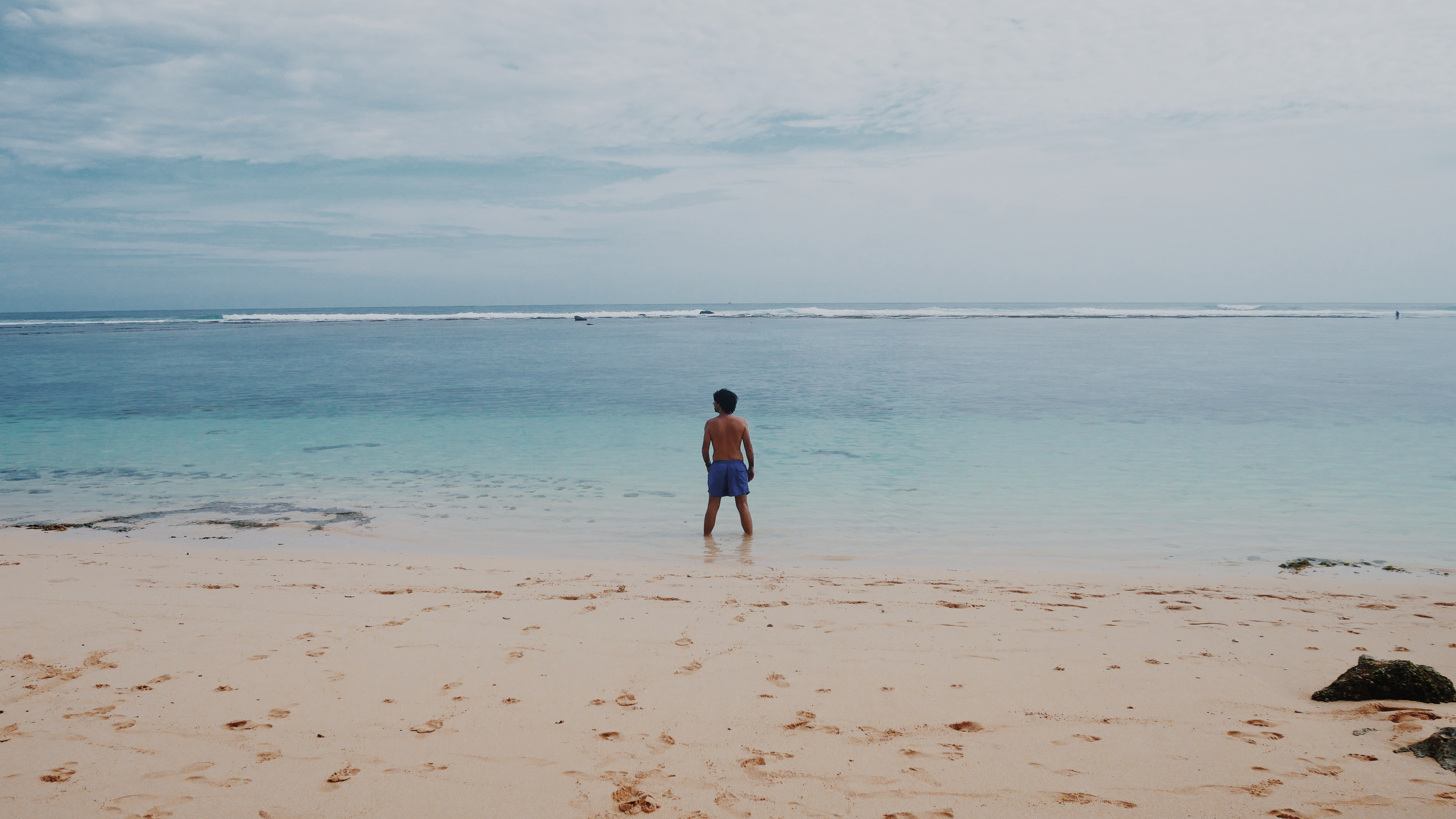
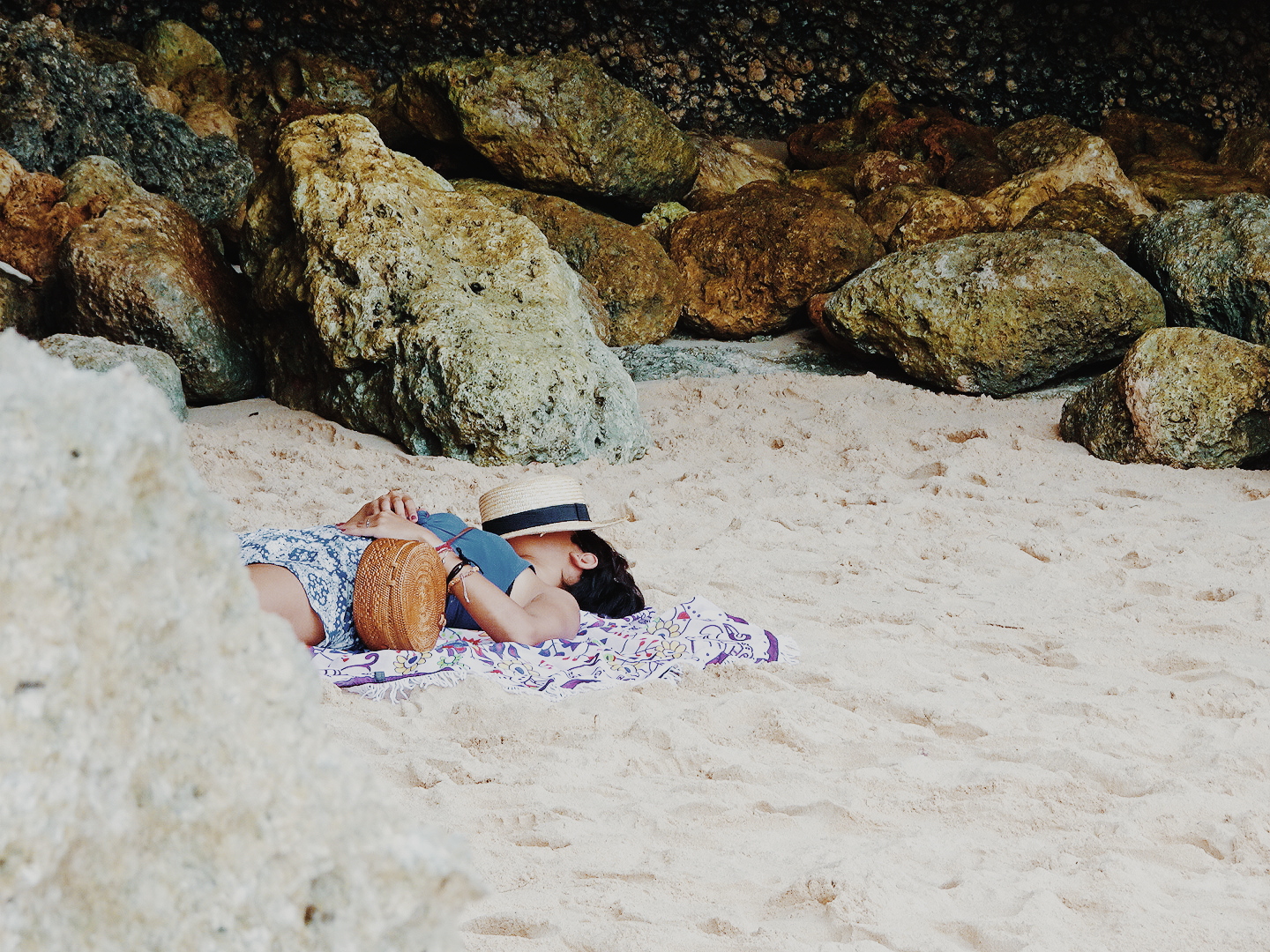
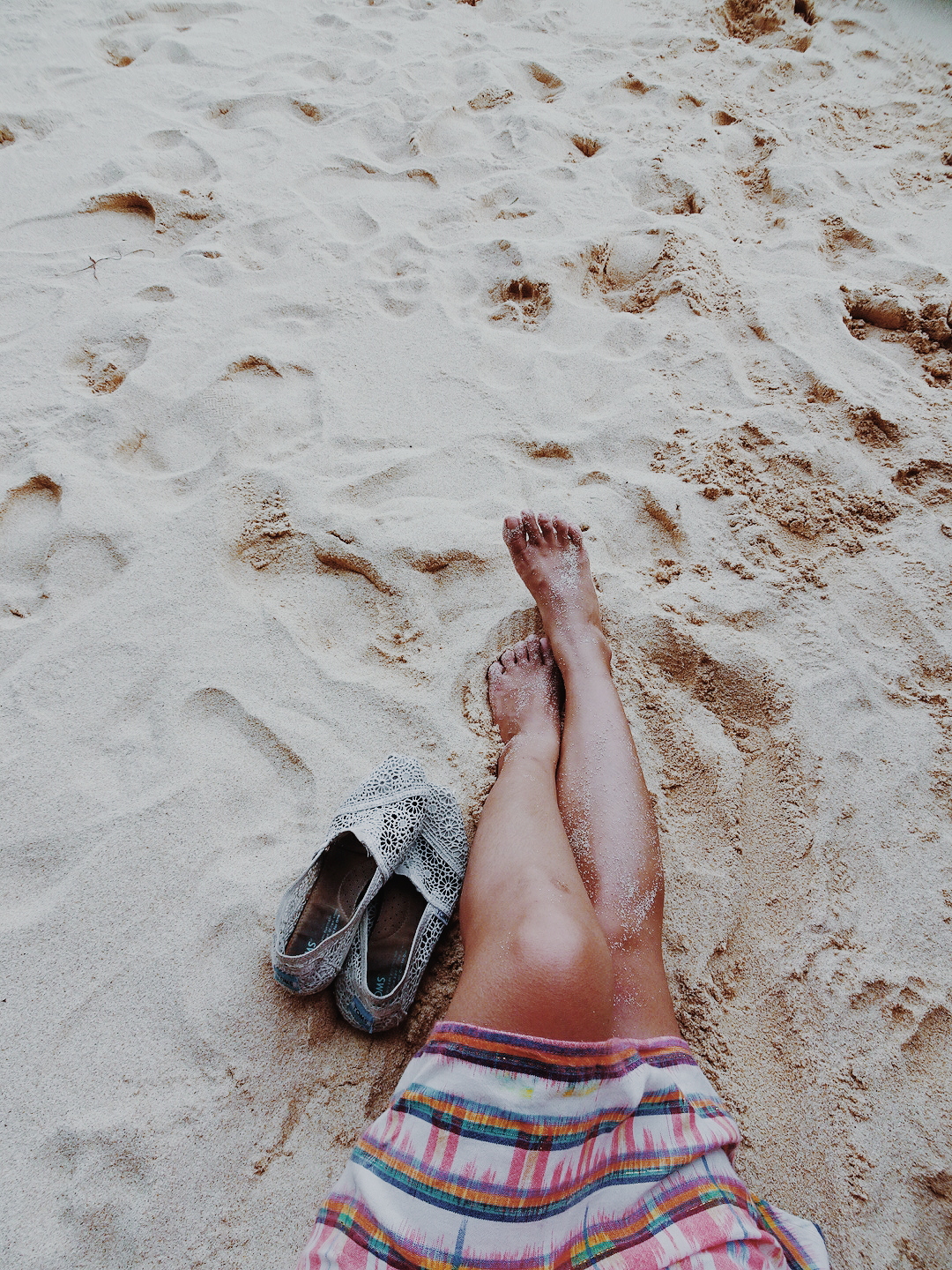
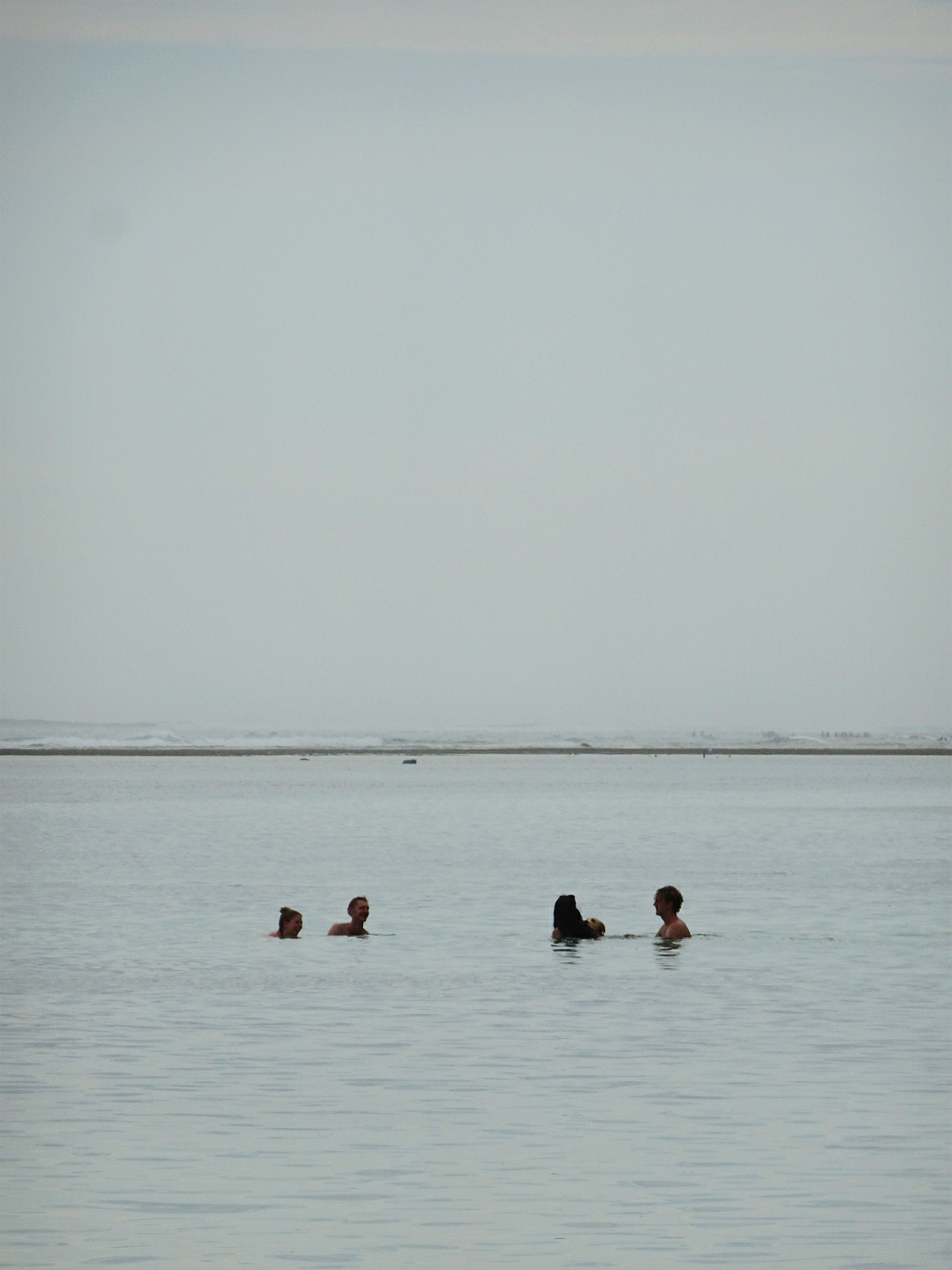
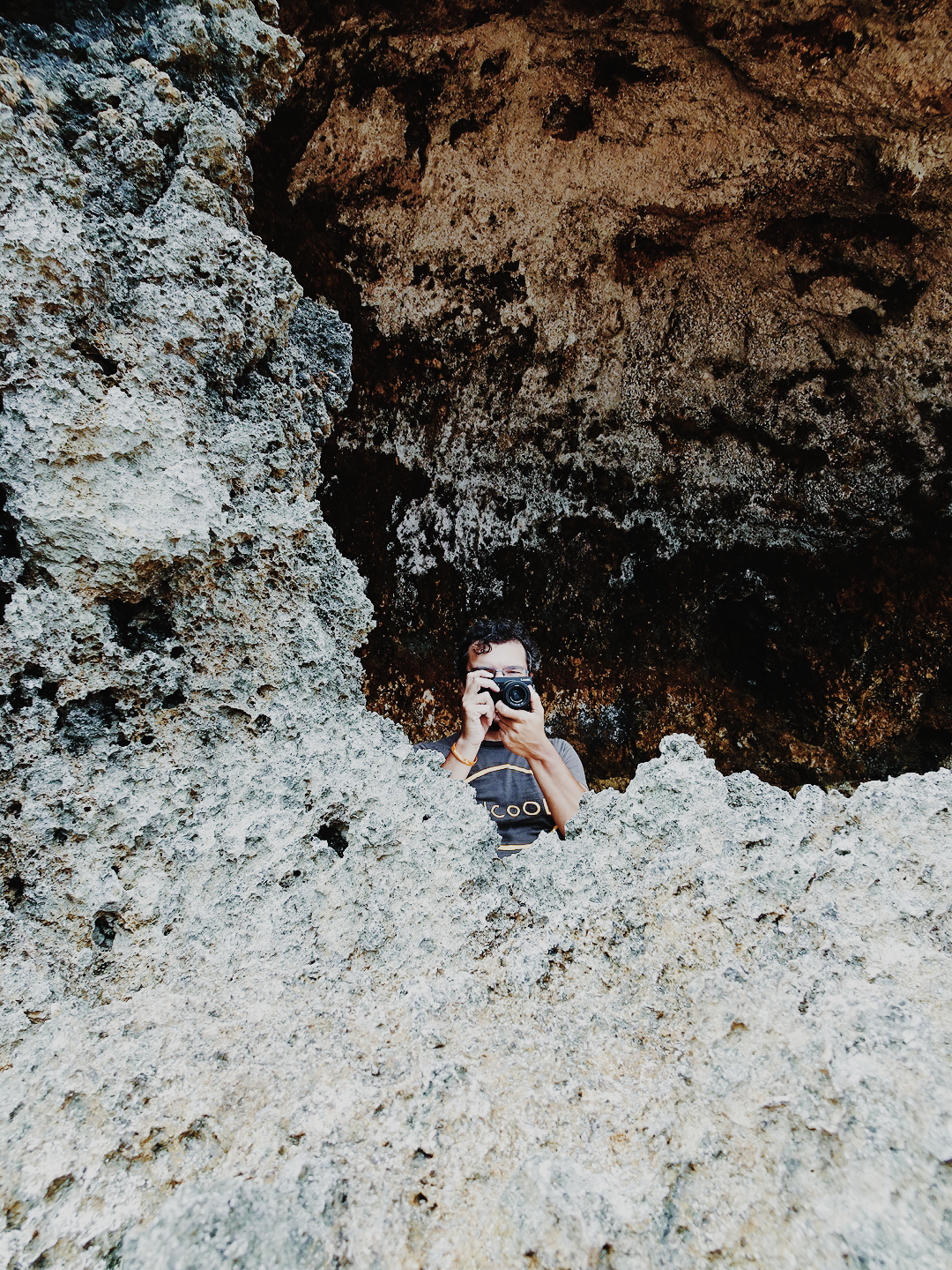
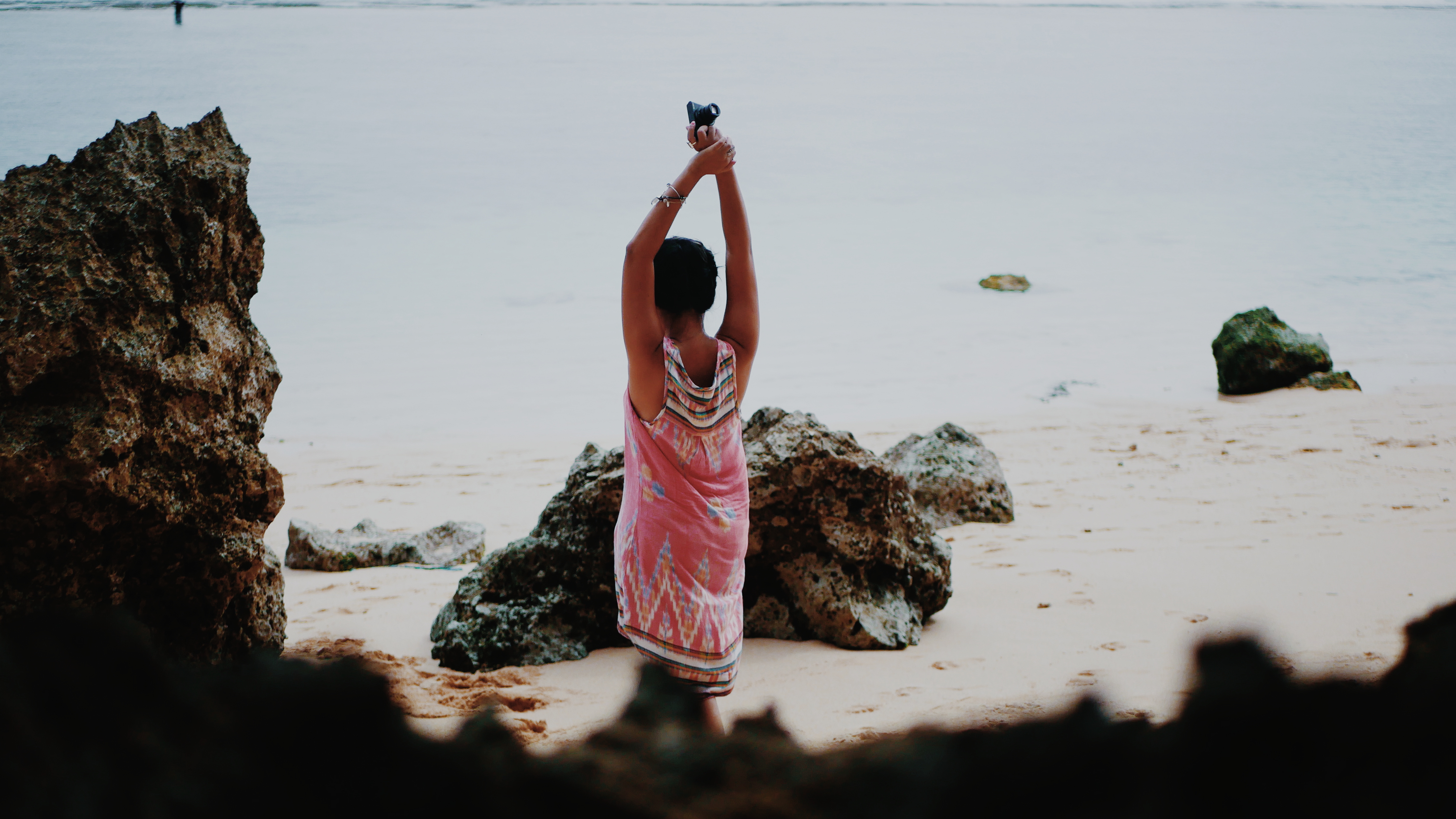
The beach was quiet, as promised. The water was crystal clear, calm, and perfect for swimming. The sand underneath my feet was so soft and smooth. Vale was happy to find a huge cave for us to put our stuff and take a nap. It was a perfect spot to lie down on your beach towel and read a good book (I am currently reading Essence and Alchemy: A Natural History of Perfume by Mandy Aftel).

Gunung Payung BeachGunung Payung BeachGunung Payung BeachGunung Payung Beach
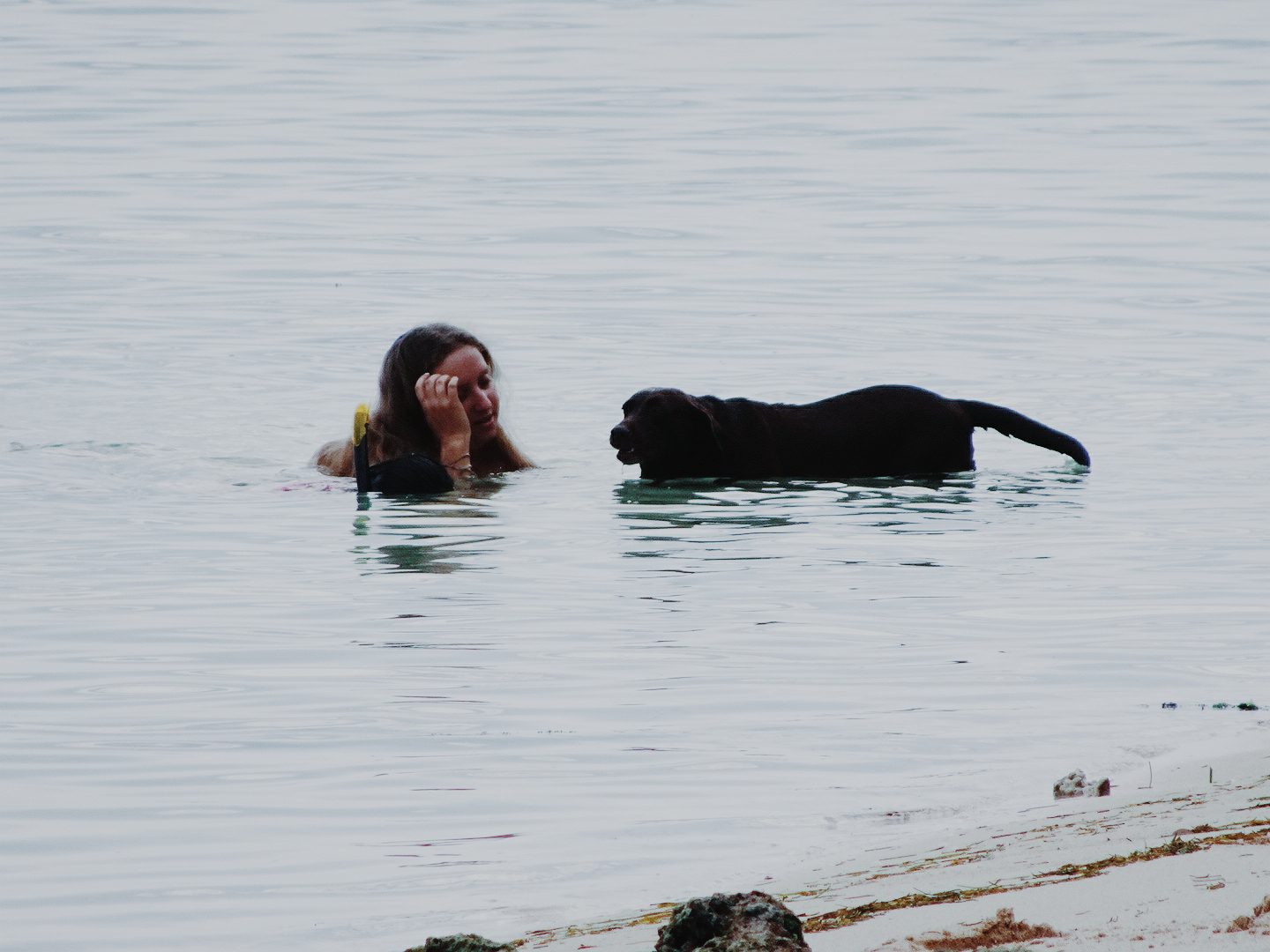
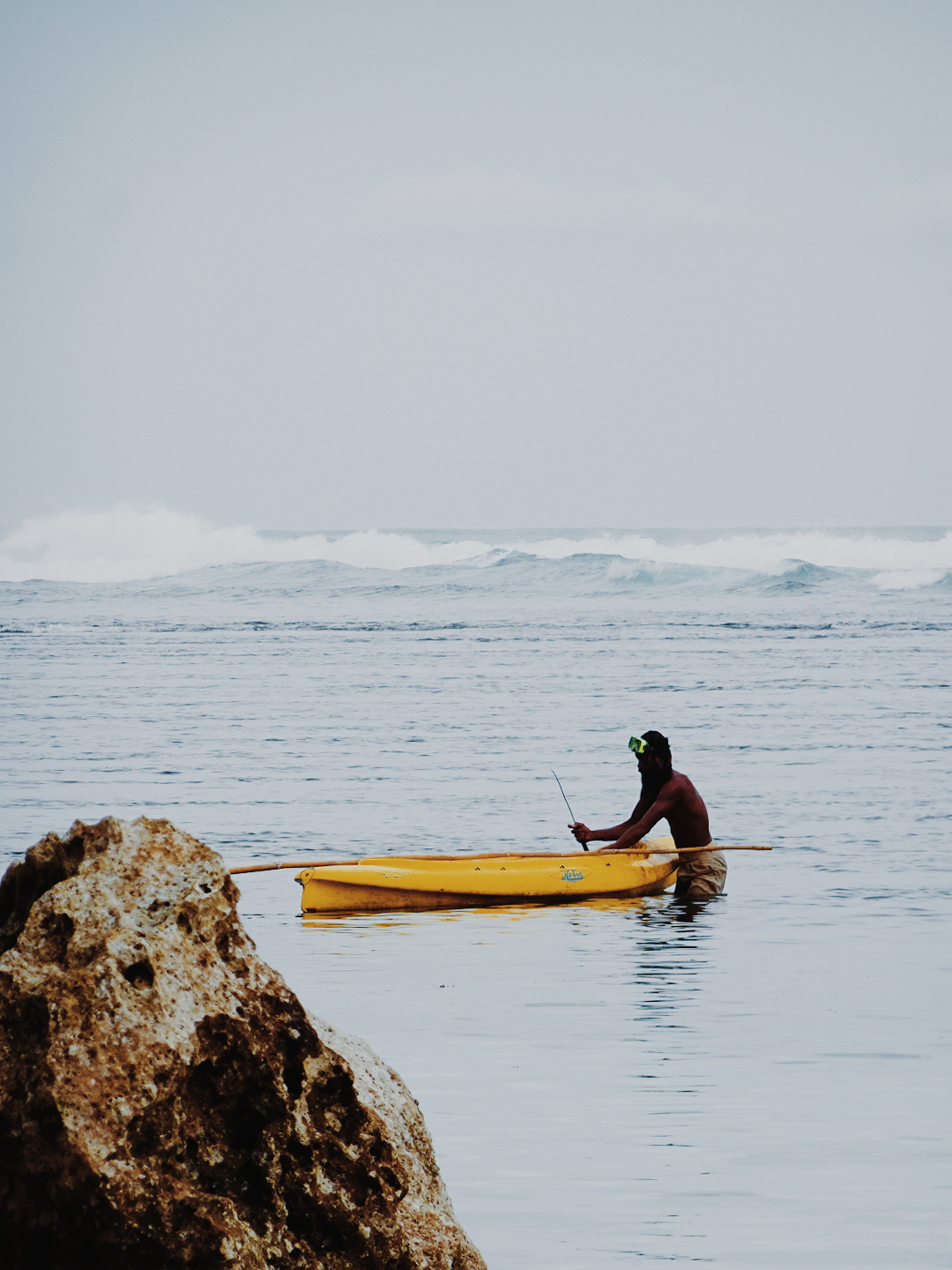
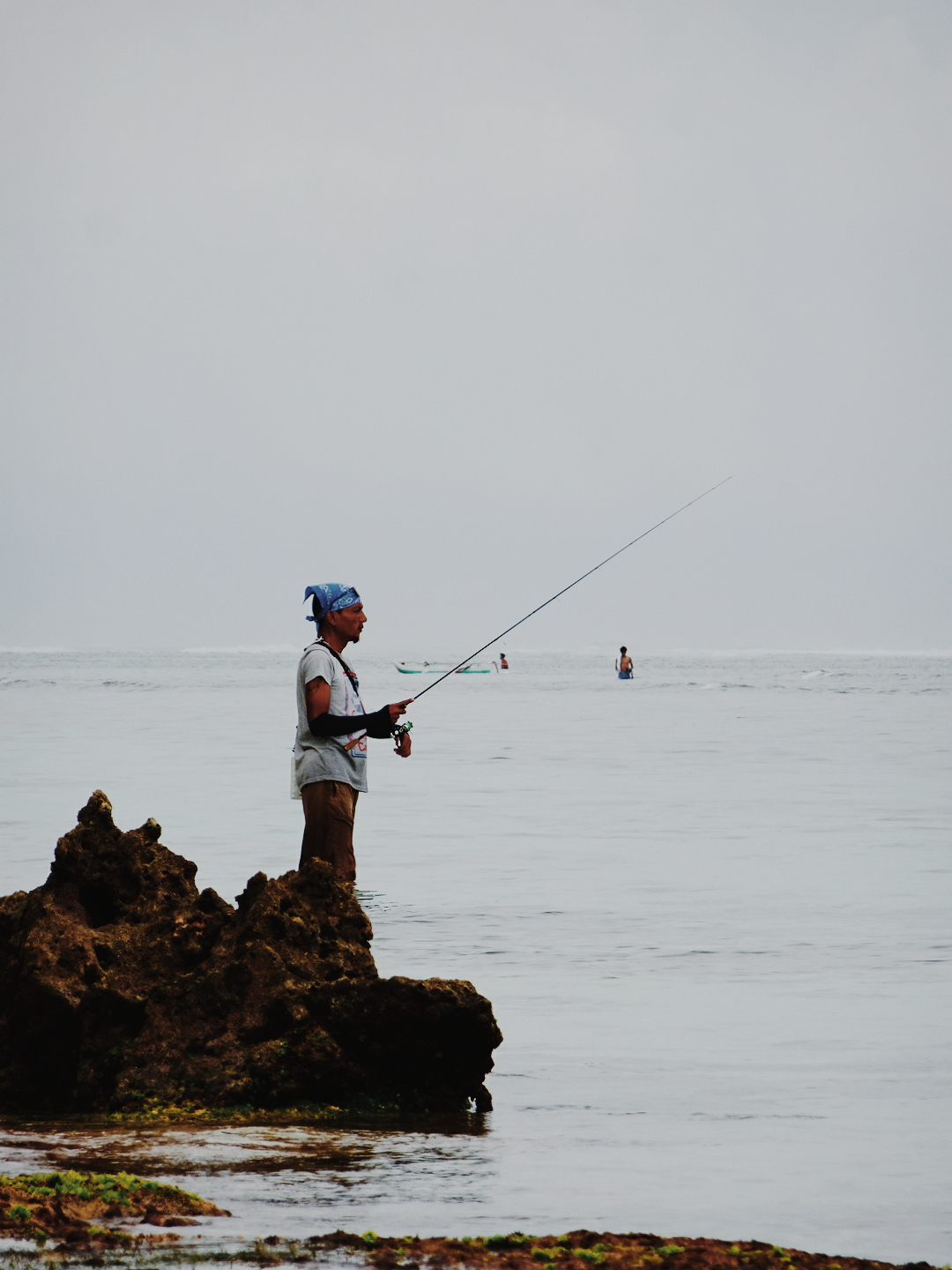
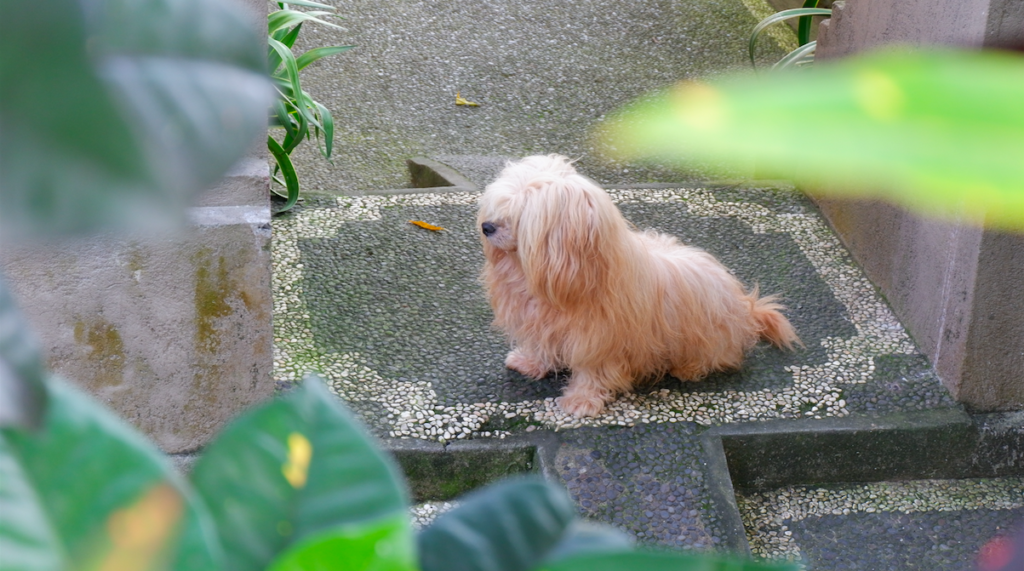
I love the fact that I could still find people from the village fishing here, along with visitors (and a dog!) who came for surfing, swimming, or having a picnic.

Gunung Payung BeachGunung Payung BeachGunung Payung BeachGunung Payung BeachGunung Payung Beach
There were only a few stalls selling food and drinks at the parking lot (young coconut, instant noodles) but there were none by the beach. And nobody was trying to sell me anything. After experiencing some crowded beaches here in Bali, this lovely little beach gave me room to breathe. To just sit still and stare at the seawater lapping at the sand.

Gunung Payung BeachGunung Payung BeachGunung Payung Beach

PS. Some of the pictures (capturing me by the beach) are courtesy of Daniele Besana.
hanny
WANT TO SHARE WITH SOMEONE WHO NEED THIS?
morning coffee in ubud

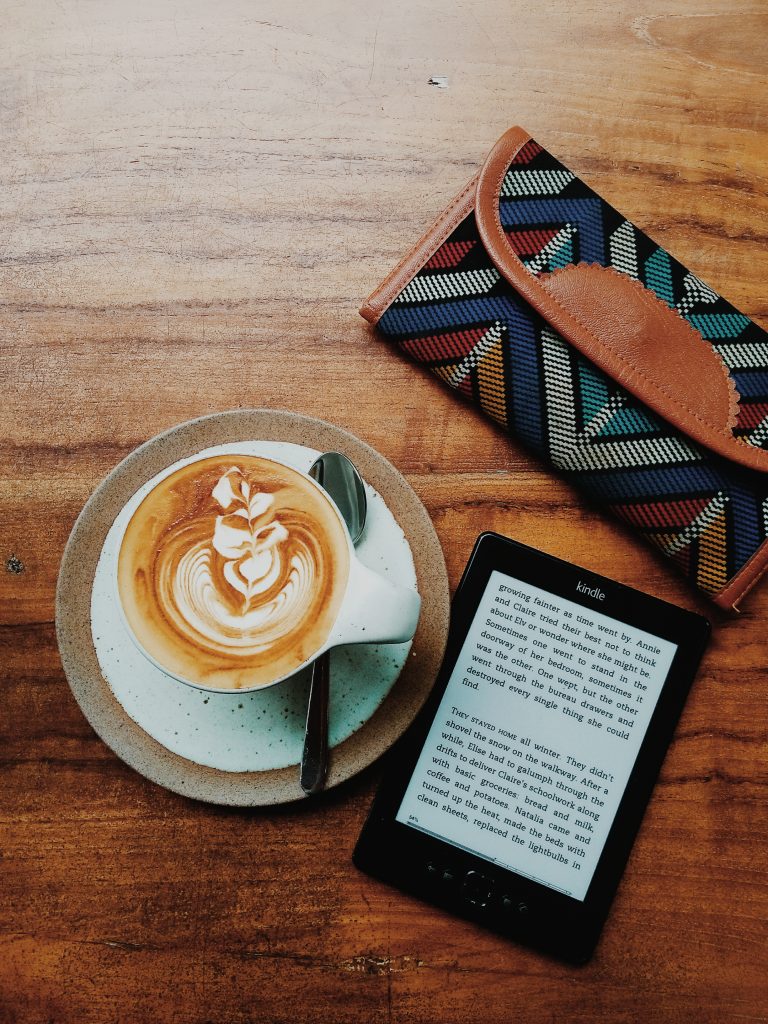
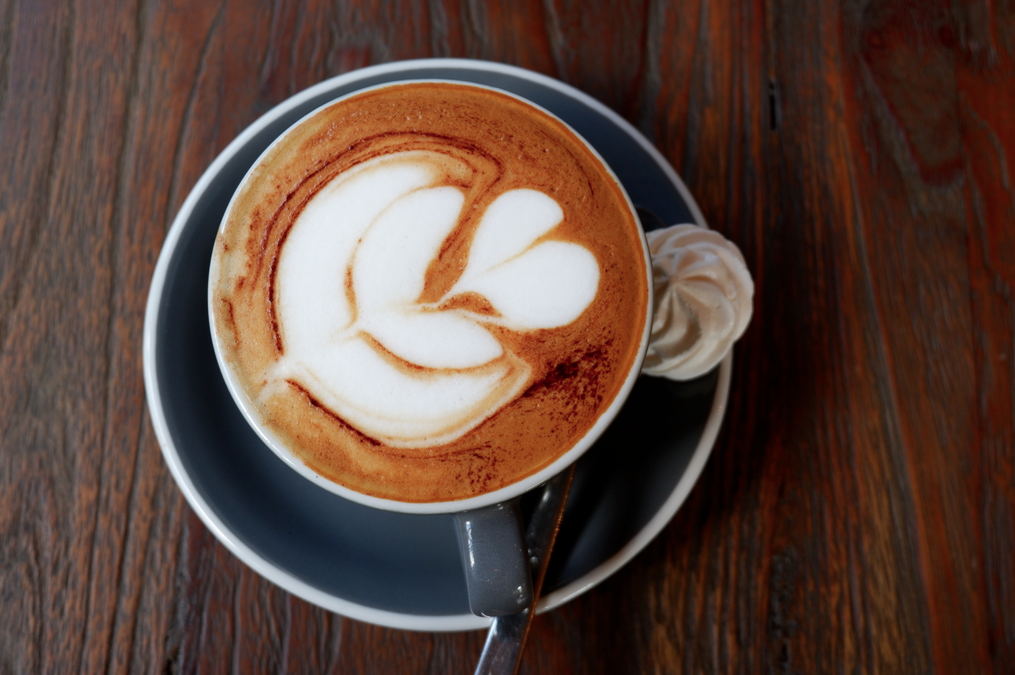
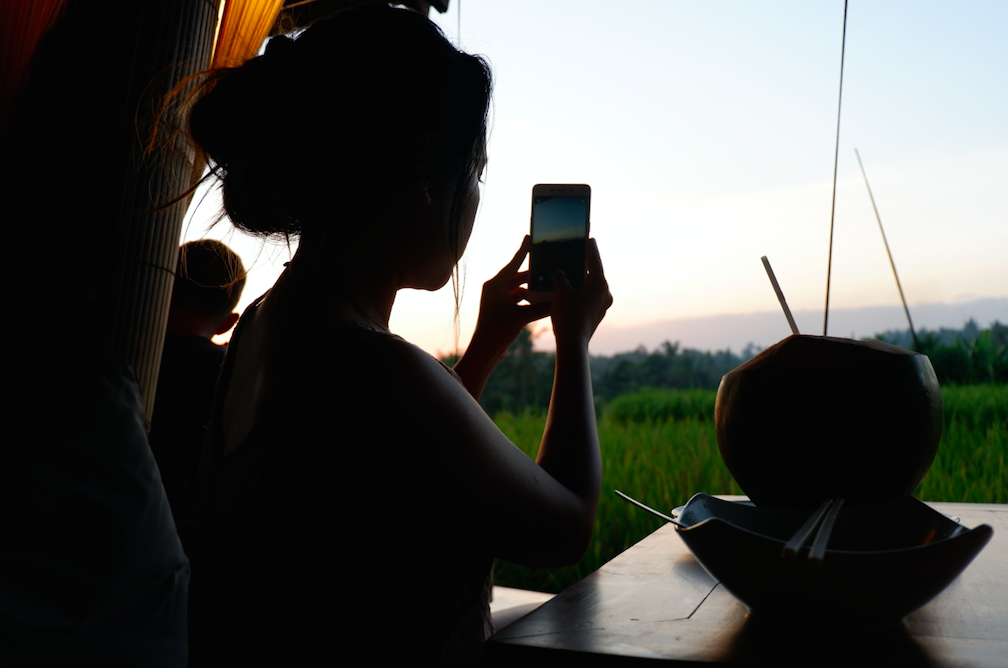
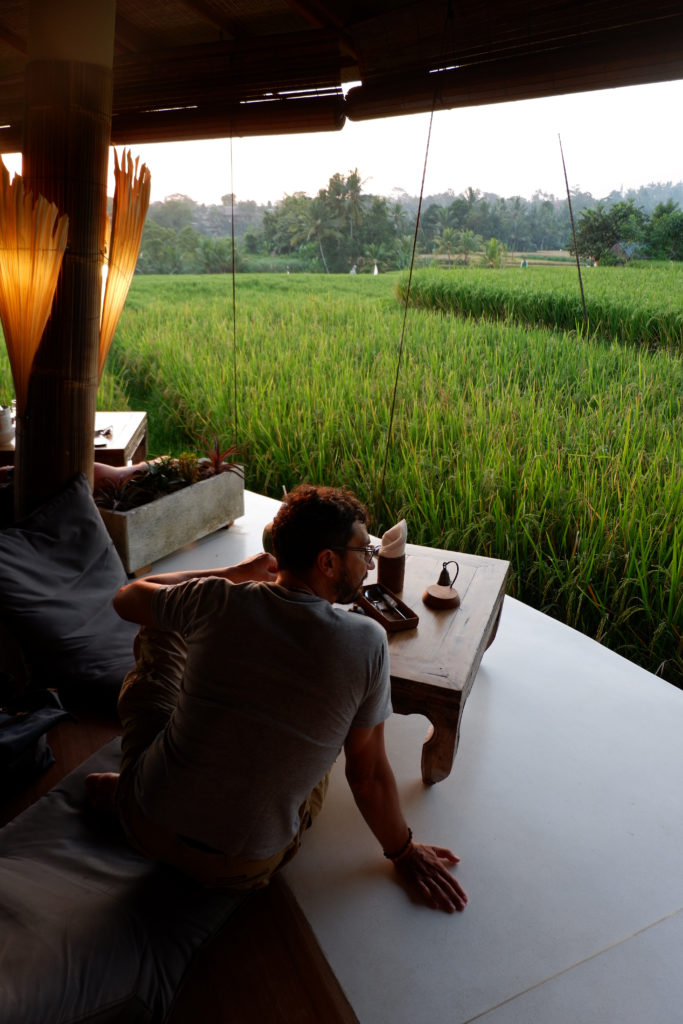
This morning, I took some time to sit by myself in a coffee shop, accompanied by a warm cup of cappuccino and Alice Hoffman’s The Story Sisters. I started the day early, wishing to get more work done. These past few weeks have been hectic with deadlines, and at times, I felt as if my brain was boiling.

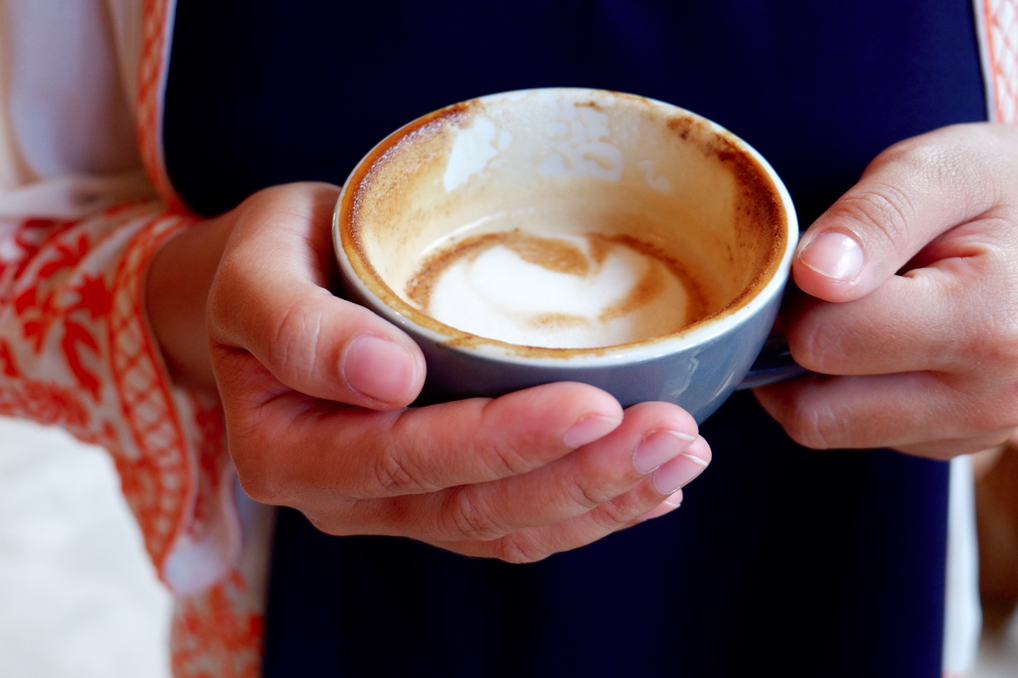
Ubud’s sky was gray. The air felt fresh against my skin as I sat there, sipping my coffee in silence. I left Alice Hoffman on the side, and found myself appreciating my surroundings instead: the dogs barking, the birds chirping, the motorcycles passing, the trees around the Monkey Forests rustling–the sounds of the morning. And I noticed how wonderful it was: the feeling of warmth that crawled from the tip of my fingers that were cupping the coffee mug.

Suddenly, I was still.

morning coffee in ubud

I dropped everything in that fleeting moment: my to-do list, the emails I need to sent, the invoices that have not been paid, the calls I need to schedule, the sentences for a web copy…

For the time being, there was only me, a cup of coffee, and Ubud in the morning.

As the warmth of the coffee mug permeated my skin, a deep feeling of gratitude swept me off of my feet, and I could feel my muscles relax: I smiled. I truly felt grateful to be here: to be back in Ubud, to be able to enjoy a cup of coffee leisurely at 8 in the morning, to be surrounded by the people I love, even to have today’s deadlines and work ahead of me!

And of course, I was lucky.
Of course, I should be grateful.

However, since the first day I came back to Ubud, I hadn’t actually felt it. I had been buzzing around, meeting friends, snapping pictures, painting, attending events, going out, typing away on my laptop, but I hadn’t really felt the wave of gratitude for the simple things: for being able to be here.

To be back.

morning coffee in ubud

I almost forgot how beautiful that magical feeling was: an instant wave of gratitude and appreciation towards life as it is. It was not one of those moments when you say gratitude as a ritual or part of a routine–or those moments when you said to yourself: okay, I need to be grateful. Or those times when something nice happened to you, and you were grateful for that.

I was referring to something spontaneous. A spontaneous rush of gratitude.

morning coffee in ubud

I wonder when was the last time I had this sudden rush of gratitude and appreciation, something so strong and so spontaneous, and at the same time: so fleeting. I could only go back to as close as a few years ago–when I was lying on my back by the beach in Sebayur Island in Flores.

The island was dark and the sky was full of stars.
So full I was almost sure that I could see the whole of the Milky Way.

This morning, the whole of the Milky Way was spinning inside my cup of coffee. And happily, I let myself spinning in it.

hanny
WANT TO SHARE WITH SOMEONE WHO NEED THIS?

One thing I love the most about my hometown, Bogor, is its proximity to the mountains. (Well, that, and the abundance of delicious street food). To me, beaches are lively and intense, forests are adventurous and mystical, but mountains are tranquil and relaxing. When I want to do nothing, I go to the mountains.

Tirta Arsanta Gunung Pancar

To do nothing at all is the most difficult thing in the world, the most difficult and the most intellectual.

—Oscar Wilde

A few days ago, I found my latest favorite spot for ‘doing nothing’ in Mount Pancar. I was surprised knowing that it was only 30-40 minutes away by car from Bogor, and the journey was free from traffic jams.

We drove to the mountain from Sentul Selatan exit; passing the posh residential complex and a gigantic amusement park before climbing further up until the road became narrow and bumpy. The sounds dimmed, the air cleared, the mountain top appeared, and we drove through the villages, further up, and further up. We stopped at Babakan Ngantai village and entered an establishment that looked like it could be someone else’s house.

Tirta Arsanta Gunung Pancar

Tirta Arsanta Gunung Pancar

Tirta Arsanta Gunung Pancar

Well, it is, to some extent.

The Hidden Gem of Mount Pancar.

Tirta Arsanta is a gorgeous family-owned hot spring retreat overlooking the mountain.

The place reminded me of those stories Indonesian kids wrote for our composition homework in elementary school: those stories about how we spend our fictional weekend visiting our fictional grandfather in a fictional village.

Only this time, the place is real.

Tirta Arsanta Gunung Pancar

Tirta Arsanta Gunung Pancar

Tirta Arsanta Gunung Pancar

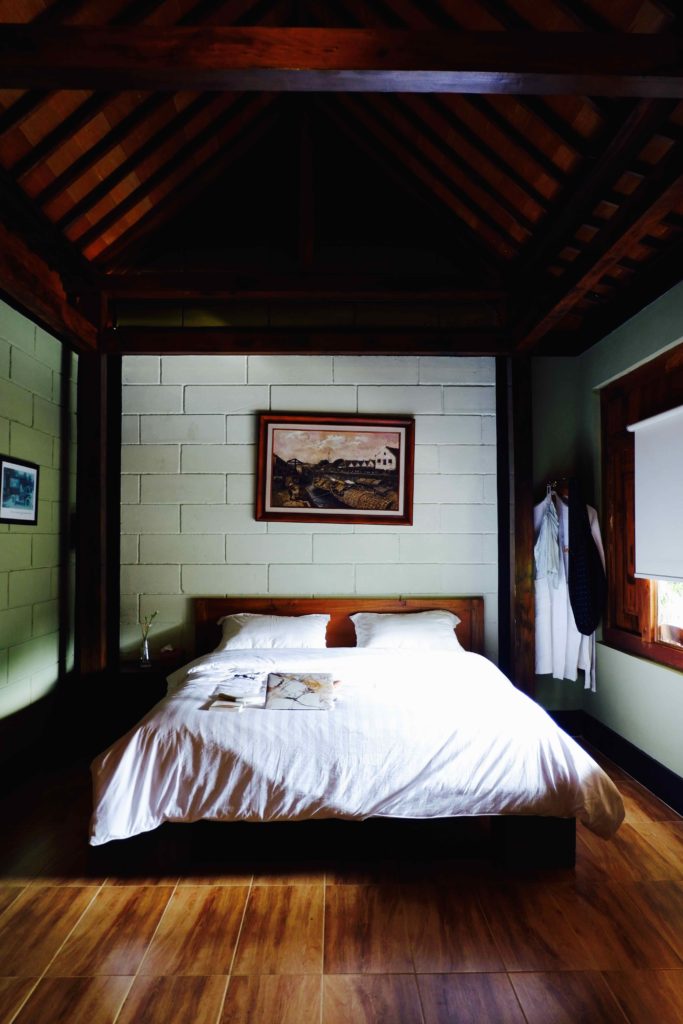
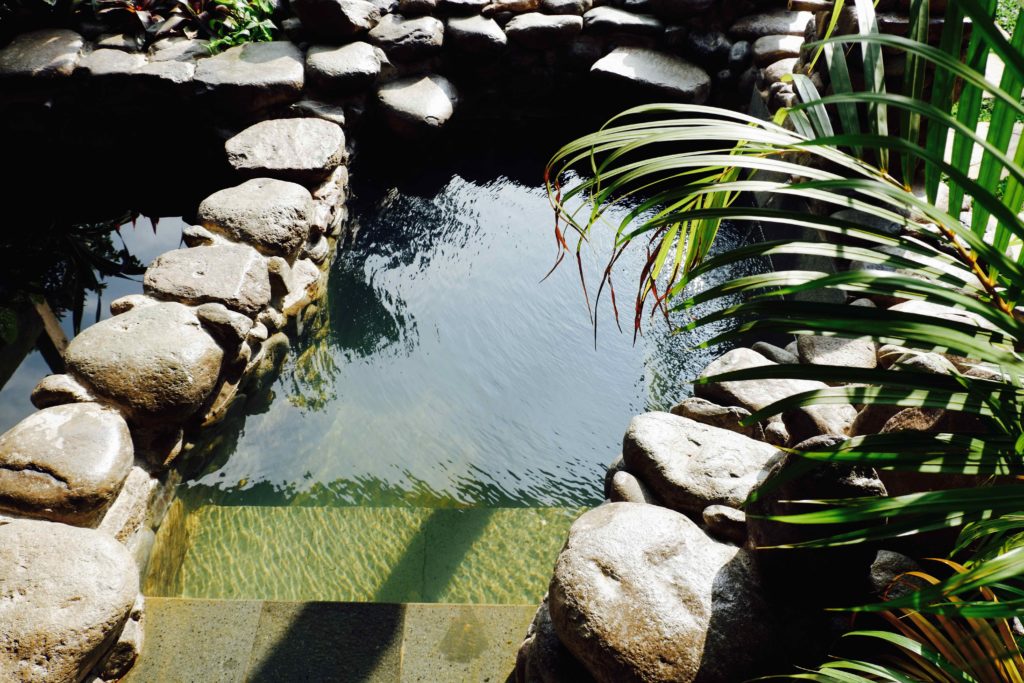
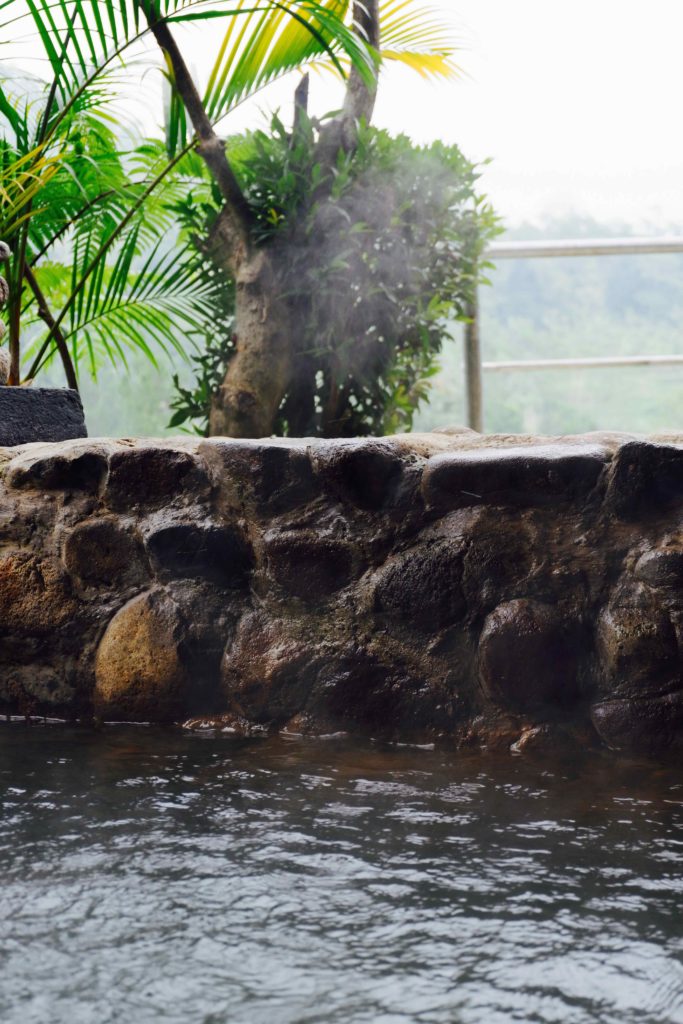
The resort hosts four teak joglo villas—each with a private mineral hot spring pool—surrounded by gardens where bananas are hanging from its tree. The villas are rented for IDR 1.5 million on weekdays and IDR 1.8 million on weekends. However, the room is so spacious—and with extra beds, you can have 4-5 people sleeping there comfortably. Two private hot spring pools, each with a spacious seating area and private shower room, are also available for visitors who do not wish to spend the night at IDR 350K for 4 people.

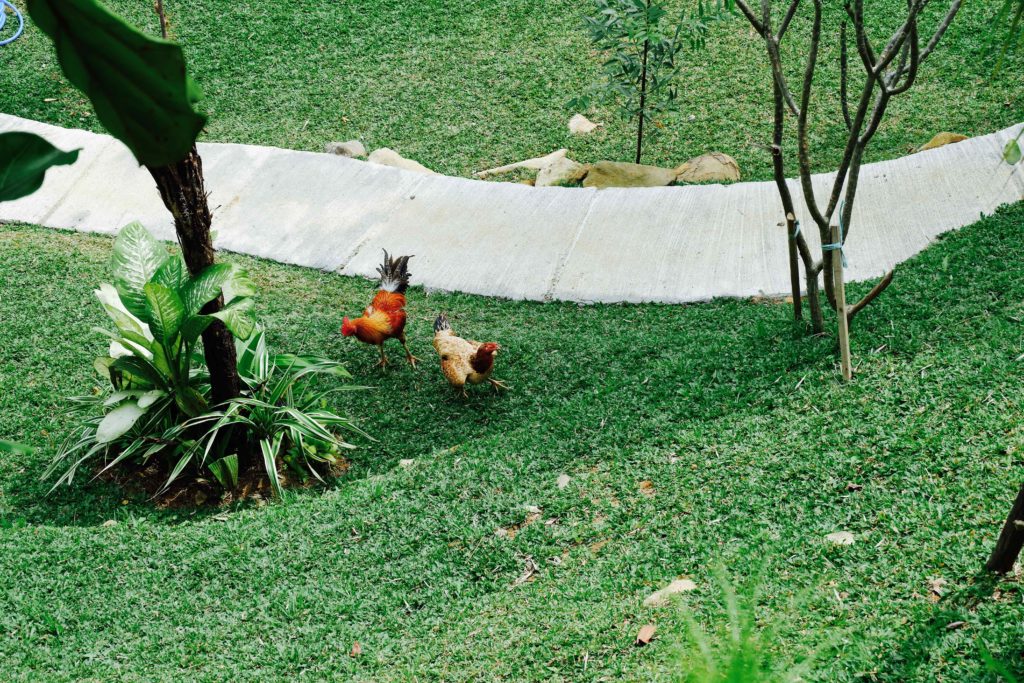
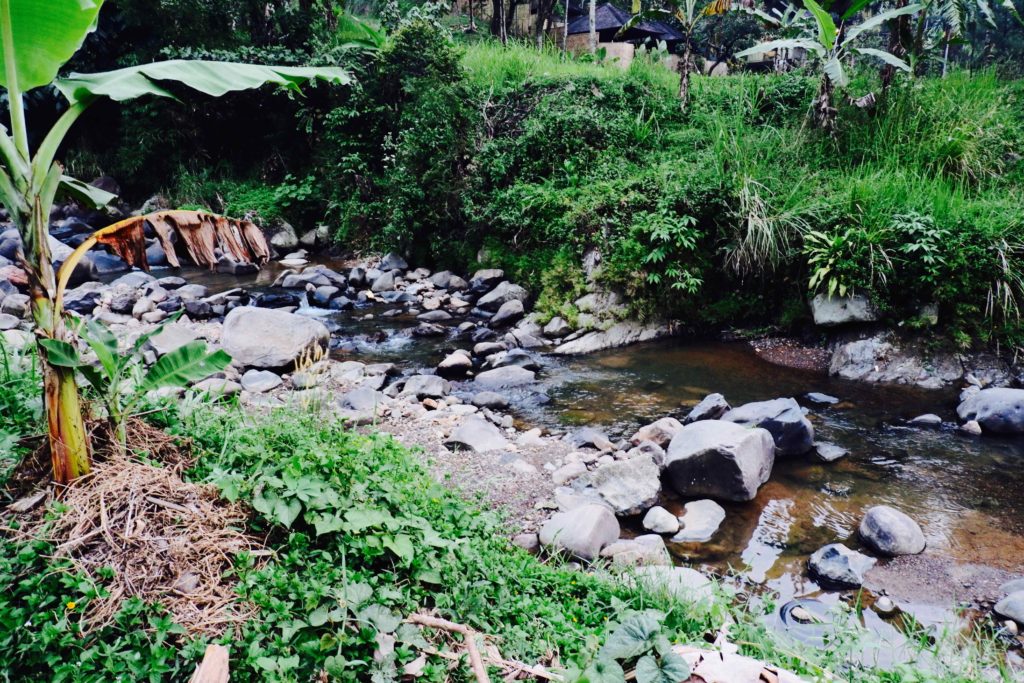
Down below is a small river you can cross to reach the vegetable plantation and the pine forest. To get there, be prepared to say hello to the gouramis, the chickens, and the geese. If you’re lucky, you can also meet the friendly owner, Pak Faisol, and converse with him on various different subjects through the night.

Tirta Arsanta Gunung Pancar

Tirta Arsanta Gunung Pancar

Tirta Arsanta Gunung Pancar

Tirta Arsanta Gunung Pancar

Tirta Arsanta Gunung Pancar

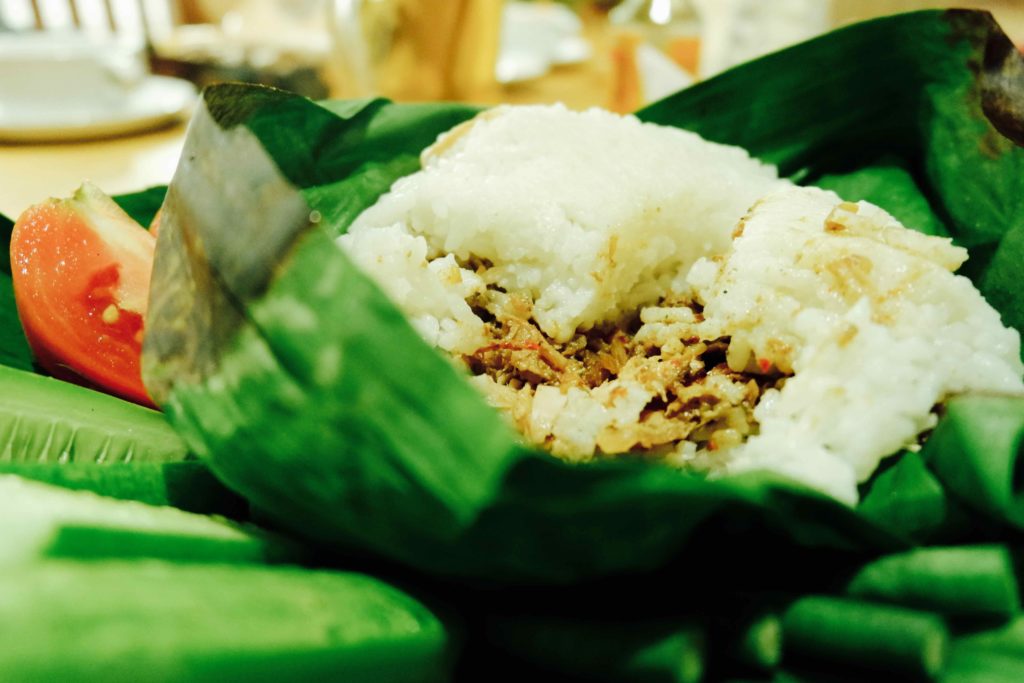
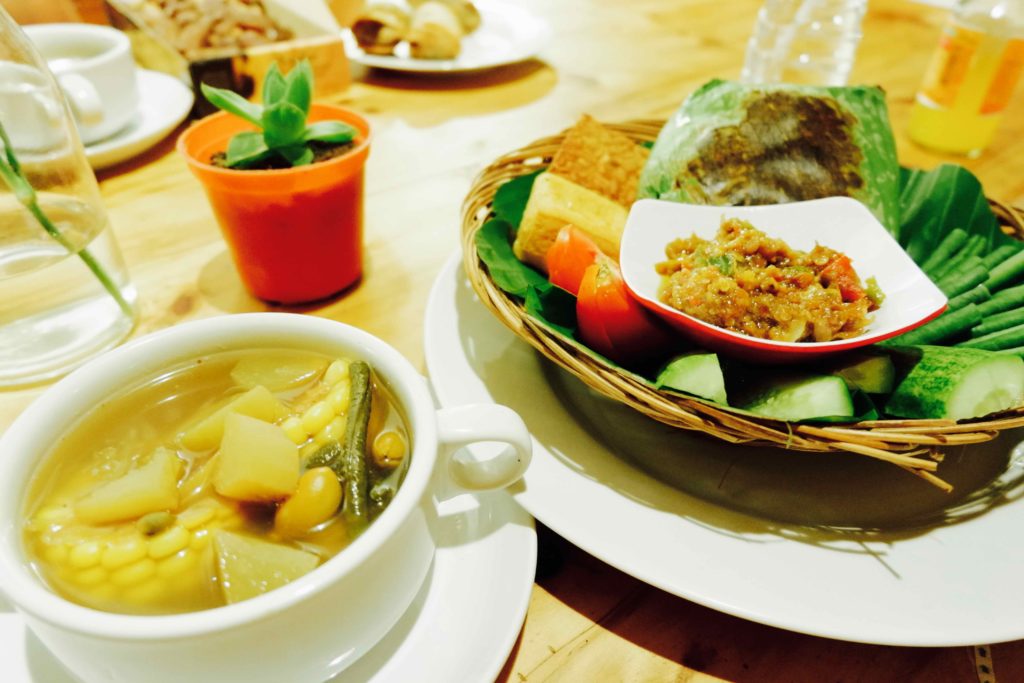
Tirta Arsanta exudes a certain familiar warmth and smells of lemongrass. I was surrounded by the sounds of nature and the beautiful view of the mountain. Everything that came out from the kitchen tasted delicious: the crispy banana fritters, the pecel madiun, the grilled rice with salted fish, the kampung fried rice, the ginger lemon tea…

I sometimes wonder if eating our meal in a beautiful place can actually improve its taste.

Tirta Arsanta Gunung Pancar

Tirta Arsanta Gunung Pancar

I spent my time around the compound mostly barefoot, feeling carefree, and child-like. That day, I came with a book I wanted to finish, but at the end of the day, I was mostly just walking around, relaxing, daydreaming, and enjoying the view. Phone signal, like the Wi-Fi connection, was unreliable (the villagers use Indosat); but it was actually a good thing. I love to unplug every once and a while, as it helps me to rest and be still.

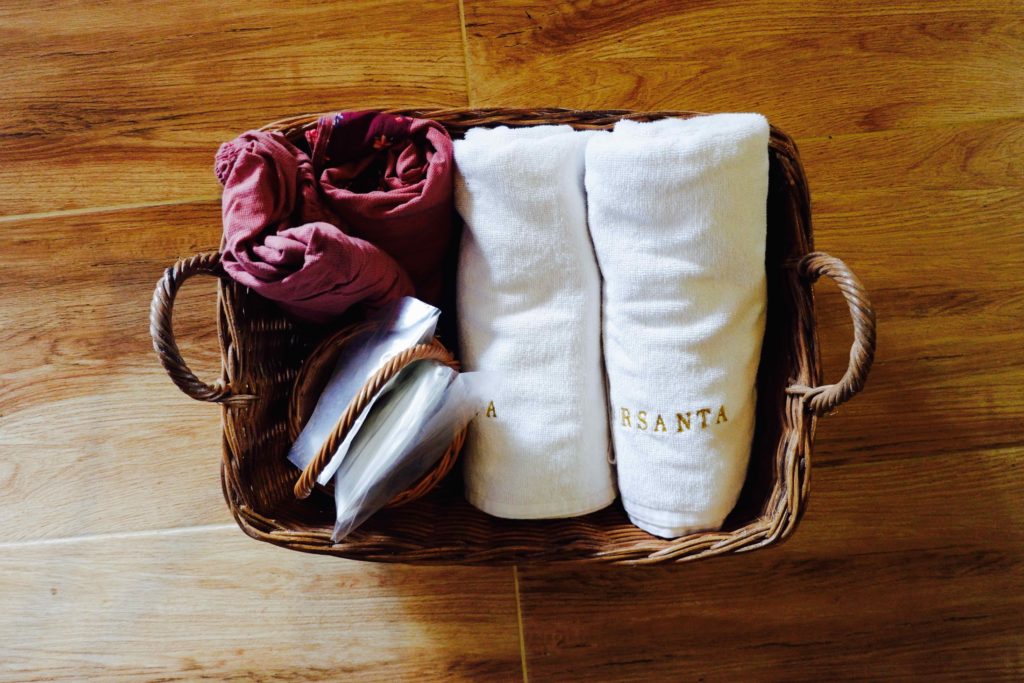
In the evening, Pak Henri—the manager of the resort, invited a massage lady from the nearby village. Bik Nur came to my room equipped with herbal oil and a sarong. The staff had prepared an extra bed for my full body massage; and after more than an hour, my muscles were so relaxed I felt like a jellyfish.

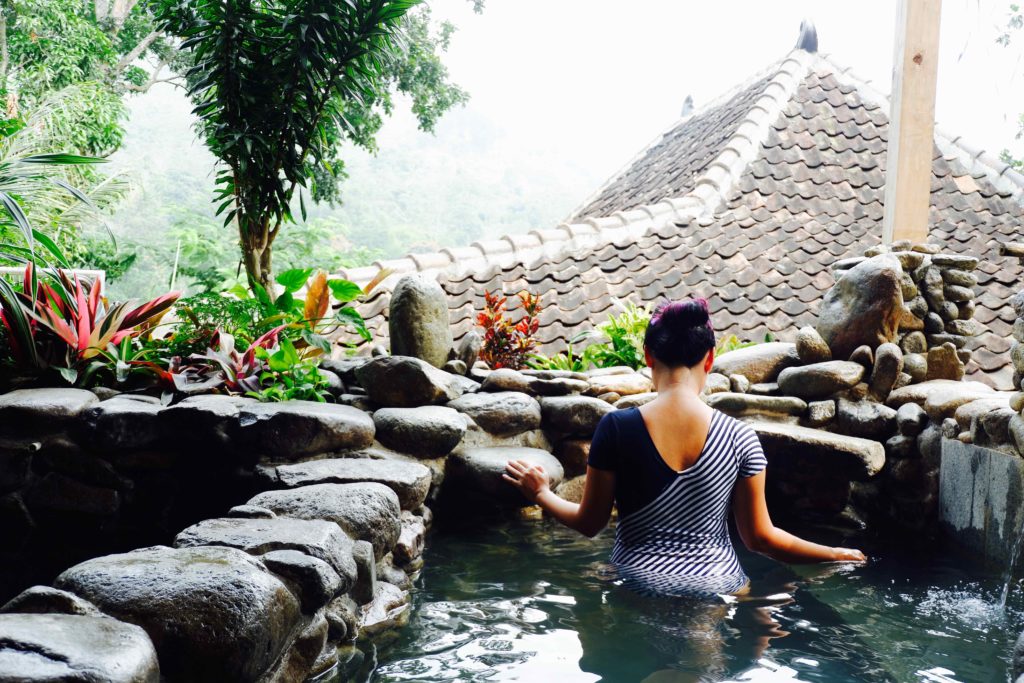
As the temperature went down, I stepped into the private hot spring pool by my villa’s terrace—feeling its comforting heat on my skin until sleepiness nudged me on the shoulder.

The Village of Hot Springs and The Pine Forest.

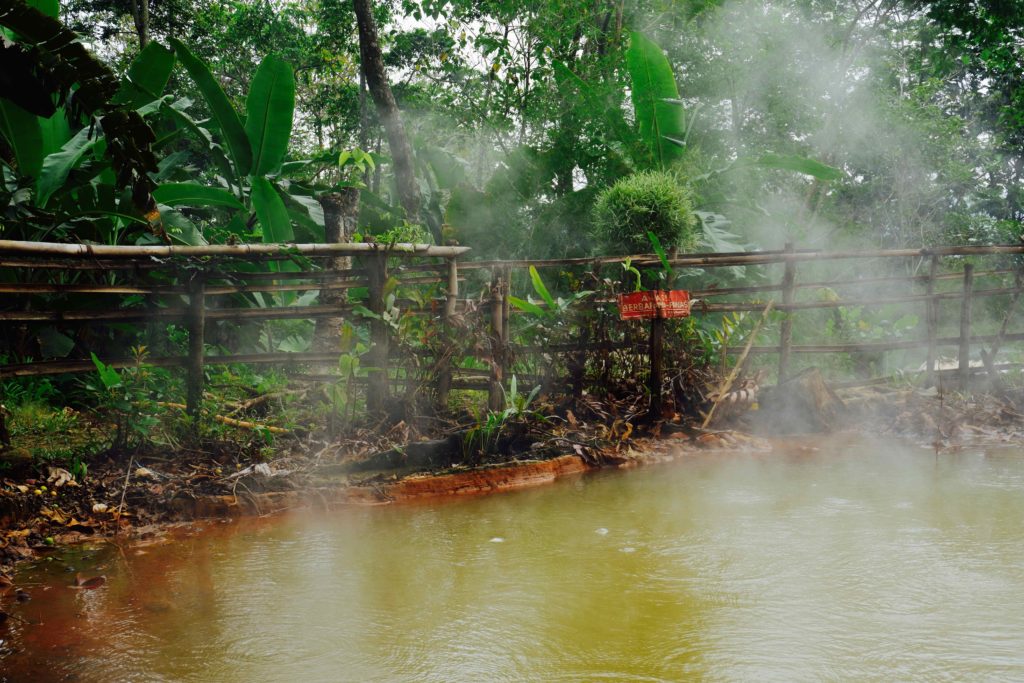
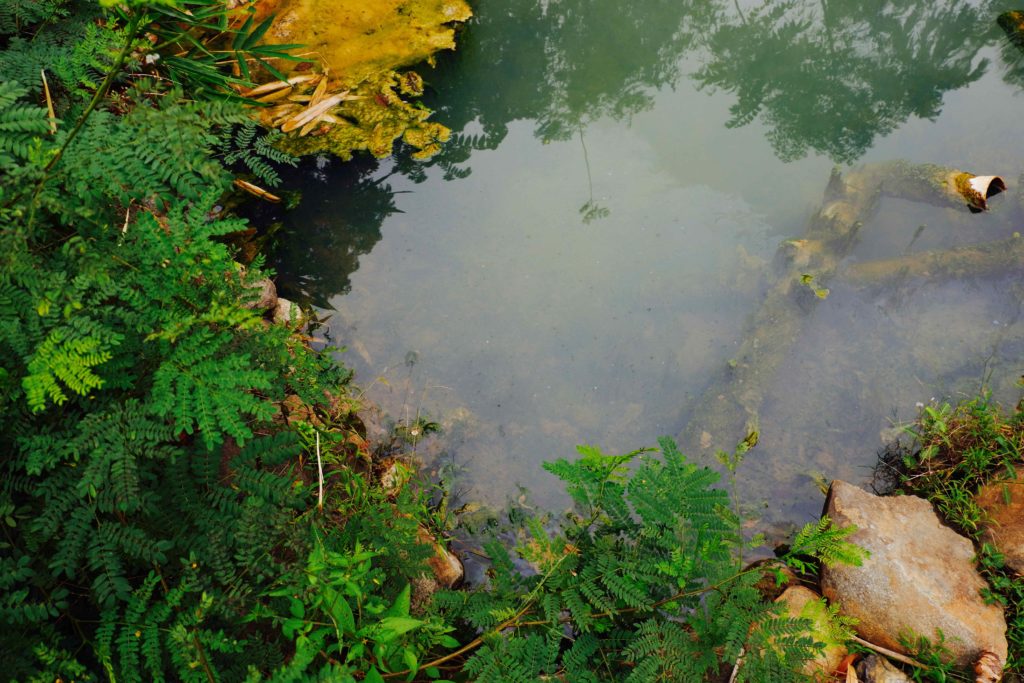
Mount Pancar is rich in hot springs. Near Tirta Arsanta retreat, there are 3 sources of hot springs the locals referred to as Red crater, Green crater, and Black crater. A 20-minute stroll from the resort, crossing the river, would take you to these craters. There was no strong sulphuric smell in the air, as the village hosts mineral hot springs, not sulphuric ones.

Tirta Arsanta Gunung Pancar

Tirta Arsanta Gunung Pancar

Tirta Arsanta Gunung Pancar

“You see, there are mosses growing here,” Pak Henri said when we visited the Green crater. “The locals believe that you can use it as a beauty mask. You can scrape the moss, add the mineral water from the hot spring, and blend it into a paste to be smeared on your face. After a while, it would harden and you’d feel as if your face was stretched out. Do you want to try? I can get some for you later when we’re back.”

“Sure!” I exclaimed. It would be an experience to get this local beauty treatment while I was there!

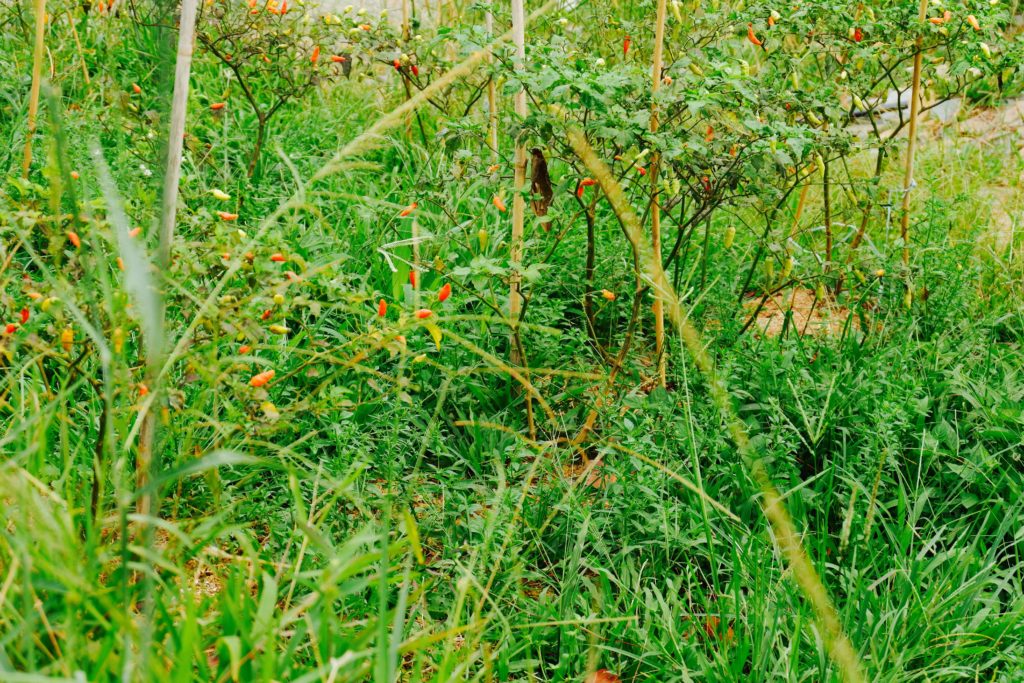
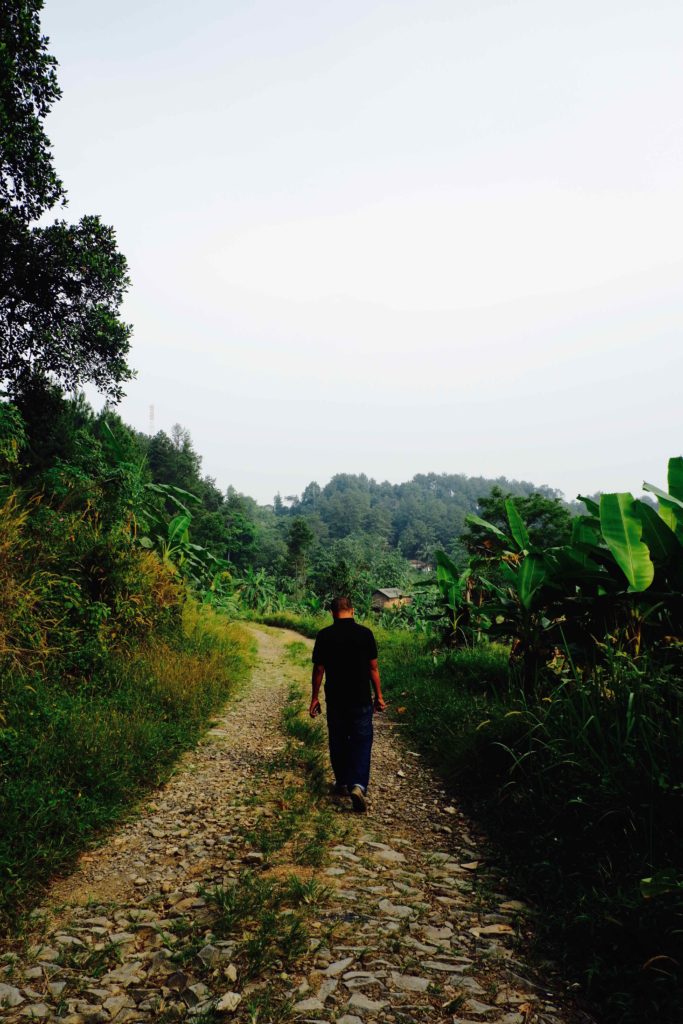
That morning, Pak Henri took me and my friend, Chyntia, on a hike to the craters and the pine forest surrounding the village. It was quite a mild hike (I was on my leather sandal), but the track could be steep at times. It took almost 3.5 hours for us to go there and back, but the hike offers lovely scenery of the vegetable plantations and the villagers plucking chilis and climbing trees.

Tirta Arsanta Gunung Pancar

Tirta Arsanta Gunung Pancar

Tirta Arsanta Gunung Pancar

Tirta Arsanta Gunung Pancar

Pak Henri, like all the staff at Tirta Arsanta, came from the village. During our hike to the pine forest, we made several stops at the villagers’ houses when the owner called out to him.

“We’re walking to the pine forest,” he said.
“Walking? From the resort? So far!” the villagers responded.

I was scared hearing this as I was reminded of the day when I got lost in Taipei’s Yangmingshan National Park, looking for hot springs. At the time, tired and sweating, I stopped by a police station to ask about the exact location of the hot springs, but it seemed like the police officers could not explain it in English.

They could only say, “Ah, far, far.”
When I asked, “How far?”
The police officers replied by extending their hands, and said: “Faaaaaaaaaaaaaar.”

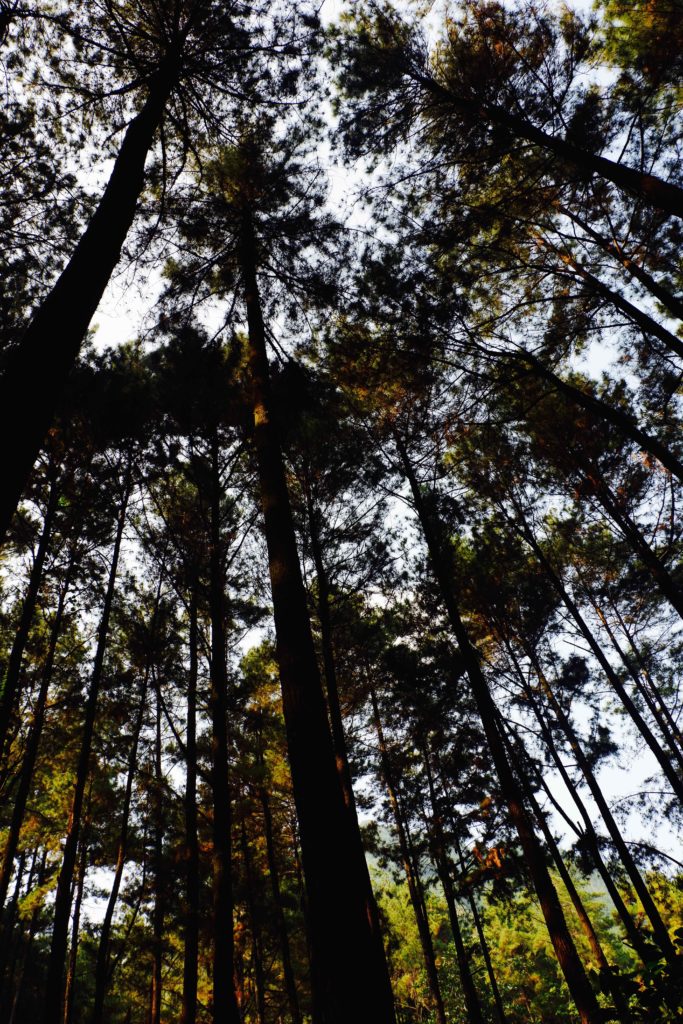
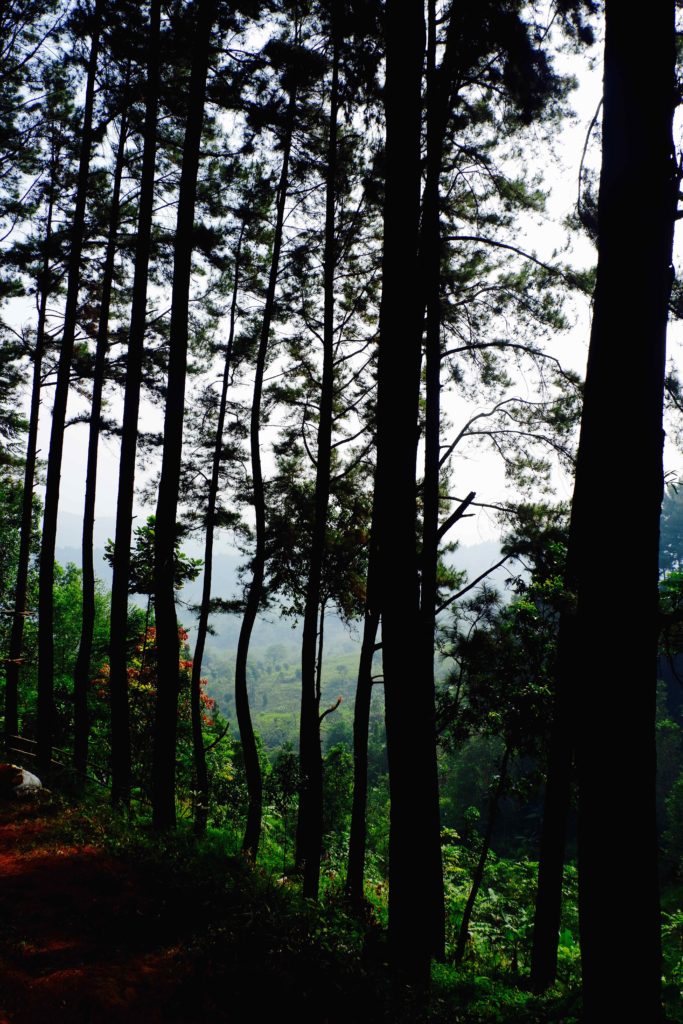
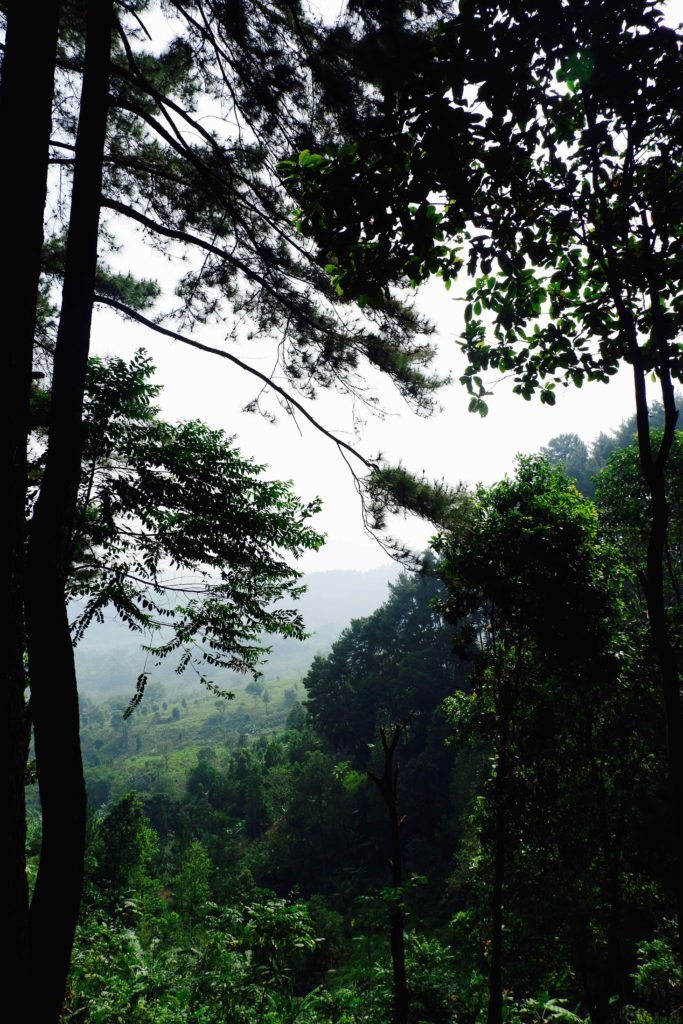
But the pine forest was not that far, and we reached it in another 30-40 minutes. The forest is where the locals go for dating or family outings. “I don’t know why they love it here,” said Pak Henri. “I mean, there’s nothing here but trees.”

Tirta Arsanta Gunung Pancar

Tirta Arsanta Gunung Pancar

Tirta Arsanta Gunung Pancar

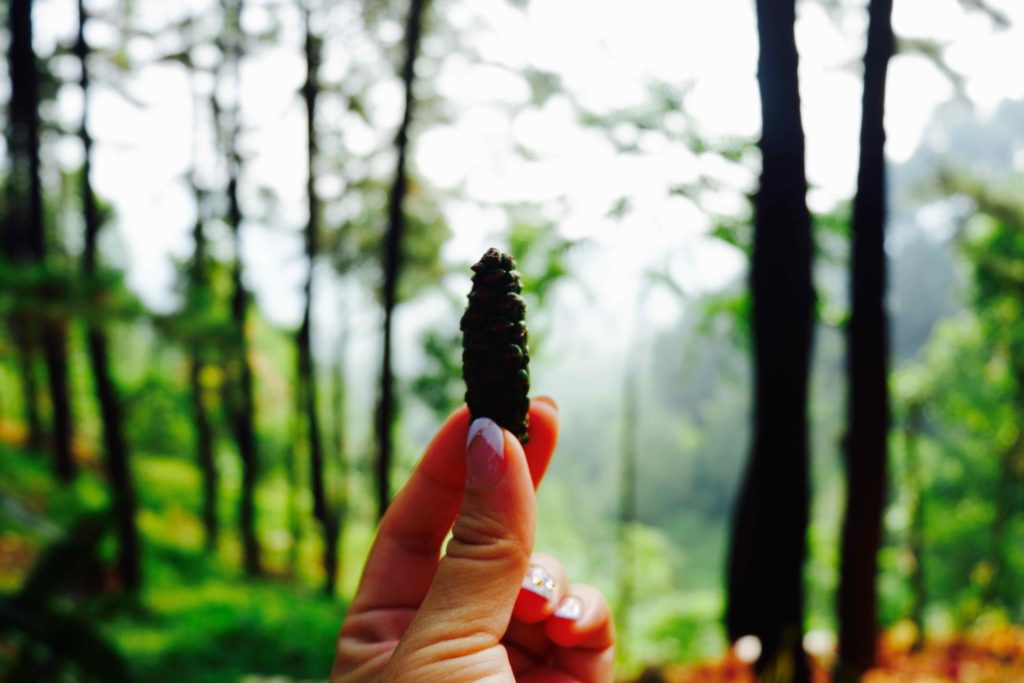
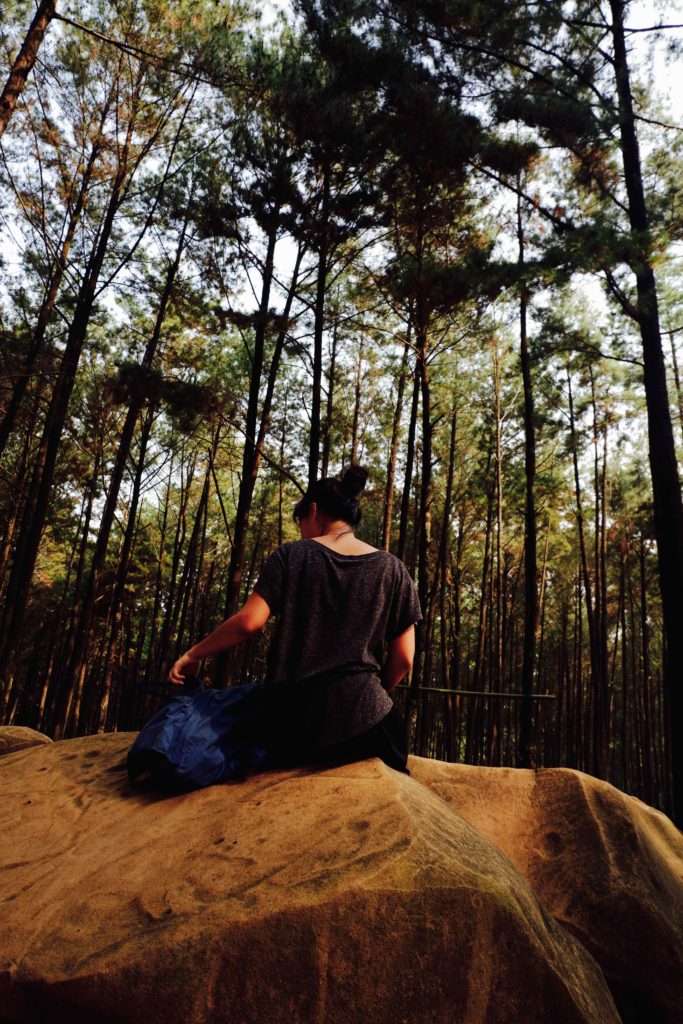
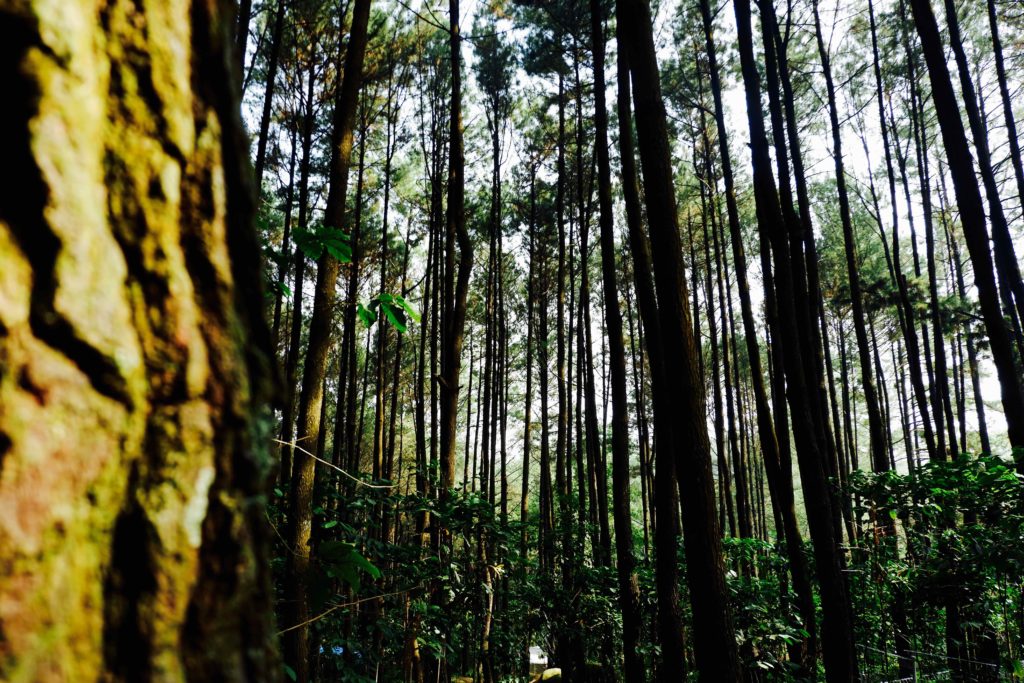
But Chyntia and I loved it there. The breeze was lovely and the view was beautiful. We walked around the area, posing at a huge rock, and watching a ladybird. Chyntia also found a green pinecone. It made me feel as if I was transported to a scene from Ghibli’s My Neighbor Totoro.

Tirta Arsanta Gunung Pancar

Tirta Arsanta Gunung Pancar

Tirta Arsanta Gunung Pancar

Tirta Arsanta Gunung Pancar

A Soak in Time.

The best thing to do after a hike was dipping our sore feet in the refreshing water of the river; had some breakfast, and then retreated to our villa for a hot spring soak by the terrace. Pak Henri had prepared our traditional moss-mask from the hot springs, so Chyntia and I started our DIY beauty treatment by the pool. I could feel how strong the moss-mask stretched my skin; although the application made our bathroom quite messy and muddy (sorry, Pak!).

Tirta Arsanta Gunung Pancar

Tirta Arsanta Gunung Pancar

Tirta Arsanta Gunung Pancar

Tirta Arsanta Gunung Pancar

Maybe the time spent ‘doing nothing‘ can actually be a time well-spent, even if it’s just a day!

Lately, I am so used to long-term travels—in which I am actually working while traveling. It is fun, yes, and I am grateful for the opportunity; although to be honest, at times it can also feel intense and tiring. Pausing a reset button for a day; doing nothing but enjoying nature and having a relaxing time with a friend was actually reinvigorating.

For a day, forget Facebook and Instagram. Get your feet dirty. Smear muddy moss-mask on your face. Smile to the villagers as you pass by. Smell the lemongrass. Sweat as you hike. Jump into the river. Soak in the hot spring. Slow down.

And then, be still.

hanny
WANT TO SHARE WITH SOMEONE WHO NEED THIS?

I am very protective of my mornings.

One thing I appreciate the most about working independently is the flexibility that comes with it: the flexibility to manage my own time based on my own pace. For me, this means protecting my mornings.

Naturally, I wake up early; as soon as there is sunlight in the room—which is why I love to sleep with my curtains and windows open. But I love to take my time in the morning. To go slow. I spend some time just lying in bed, feeling the way my body tingles with life after an 8-hour rest and remembering my dreams. Then I would reach out to my bedside table, grab a book, and start reading. I reserve at least the first 2 hours in the morning for myself: reading, writing in my journal, having coffee, dancing, or listening to uplifting or inspiring talks and interviews.

For this reason, I love late breakfast. I don’t like to prepare some food or fill myself up first thing in the morning, so breakfast has to wait. Until later. Until around 10.

Some mornings deserve a big hearty breakfast.

Those mornings are not meant for instant coffee and leftovers, yogurt and granolas, or apples and bananas. They are the kind of mornings when you are craving to be pampered with food. Good ones.

You know exactly when you experience these mornings from the time you wake up. You could be very sad, very happy, very tired, very energetic, very heartbroken, or very much in love; but you know that you just want to start your morning by slouching in someplace nice, ordering a full breakfast served in a beautiful plate with beautiful presentation, and sipping a good cup of coffee. A big cup of coffee.

breakfast in ubud

breakfast in ubud

breakfast in ubud

When I woke up groggy one morning, D suggested that we have it: that big hearty breakfast. Not knowing that by asking me to eat, he already lifted up my mood level a notch.

“Pick a place,” he said. “And we’ll go there.”

My ‘Secret place’ pick for breakfast in Ubud.

D and I have this thing about ‘secret places’. On slower days, after clearing each other’s schedule for the day, one of us would exclaim: “I am going to take you to a secret place today!”

A ‘trip’ to a secret place means:

  1. it is a place we have never visited together before
  2. it is either a beautiful place or a place offering a beautiful experience
  3. we will spend some time there relaxing and lazying around
  4. the person suggesting the secret place would offer to pay

That particular morning, for the big hearty breakfast, I decided to choose a ‘secret place’.

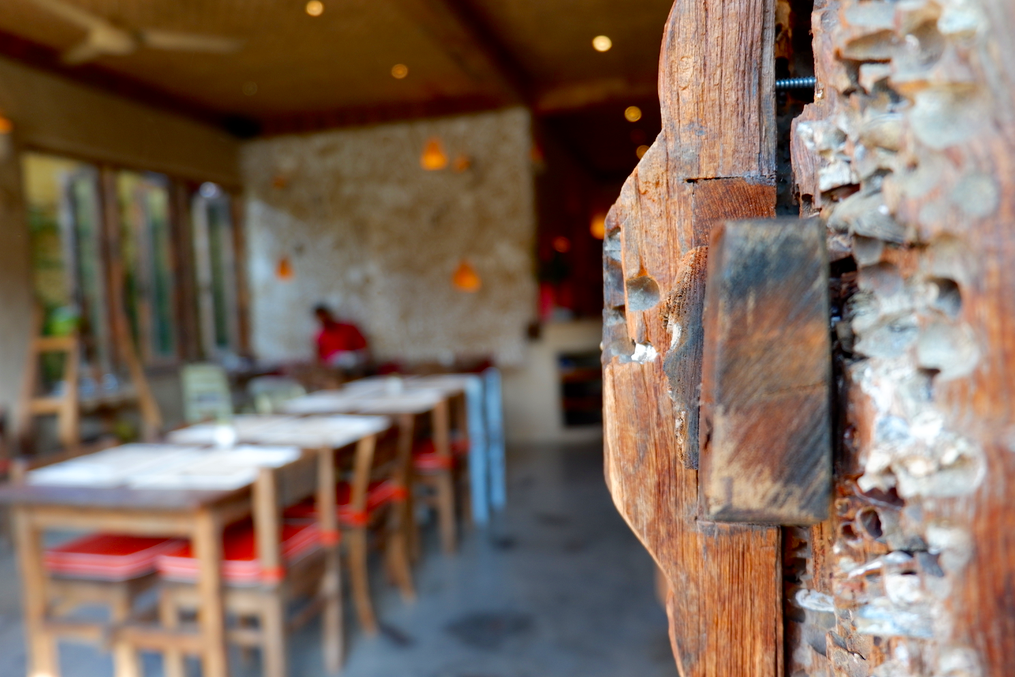
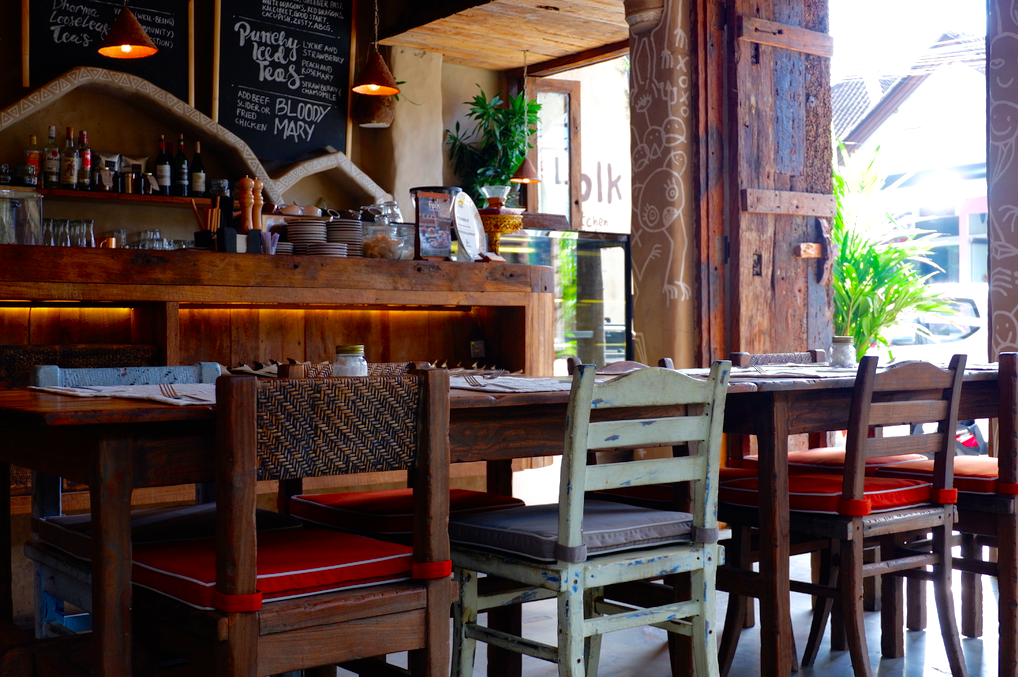
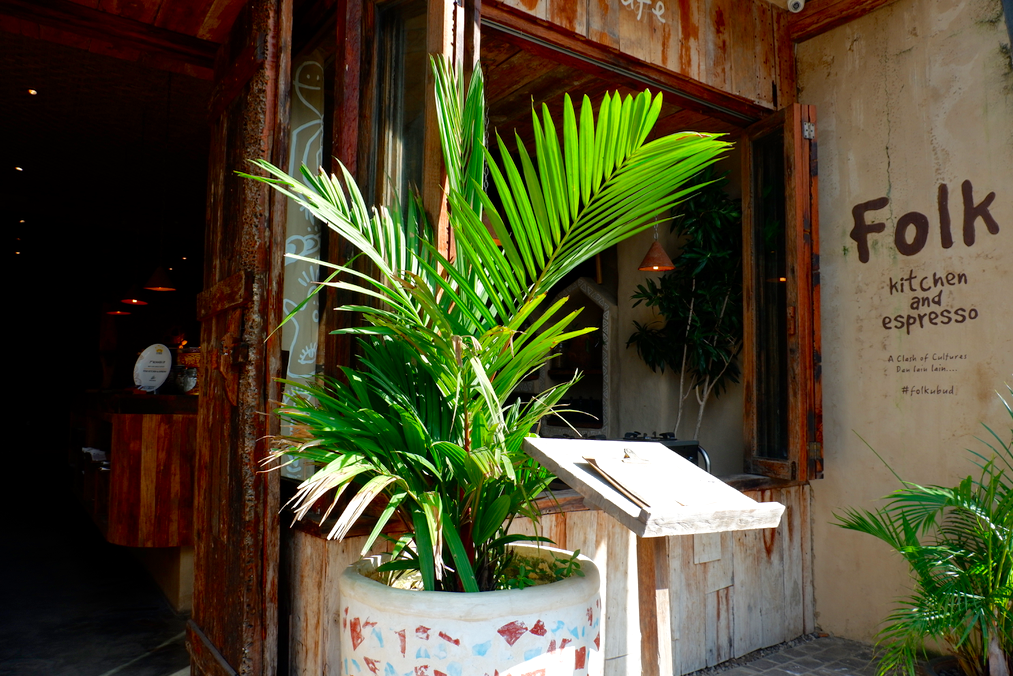
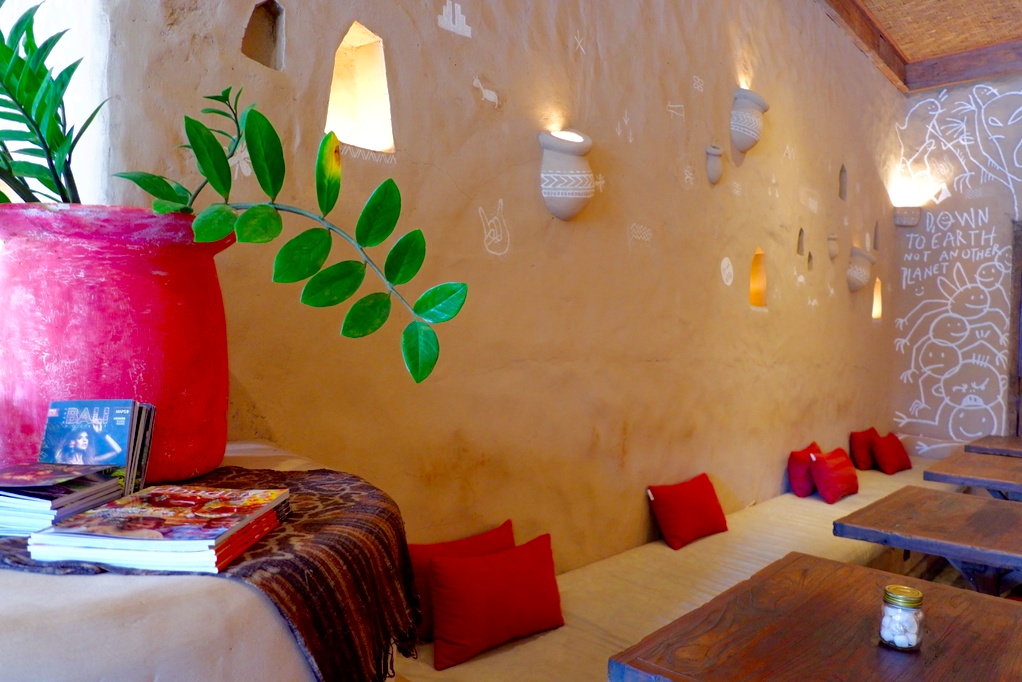
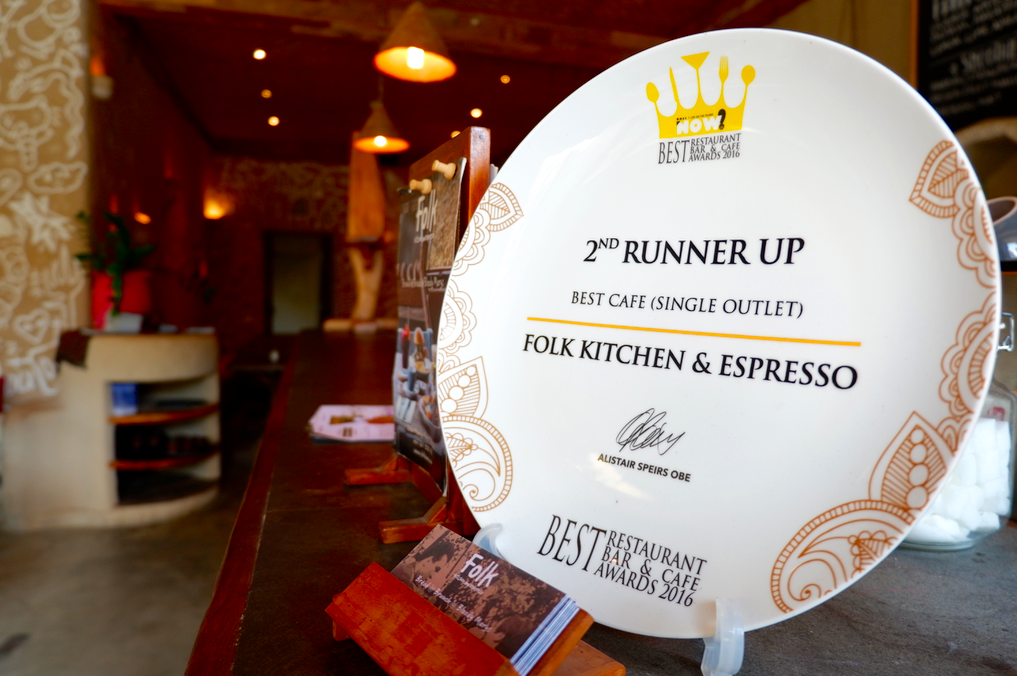
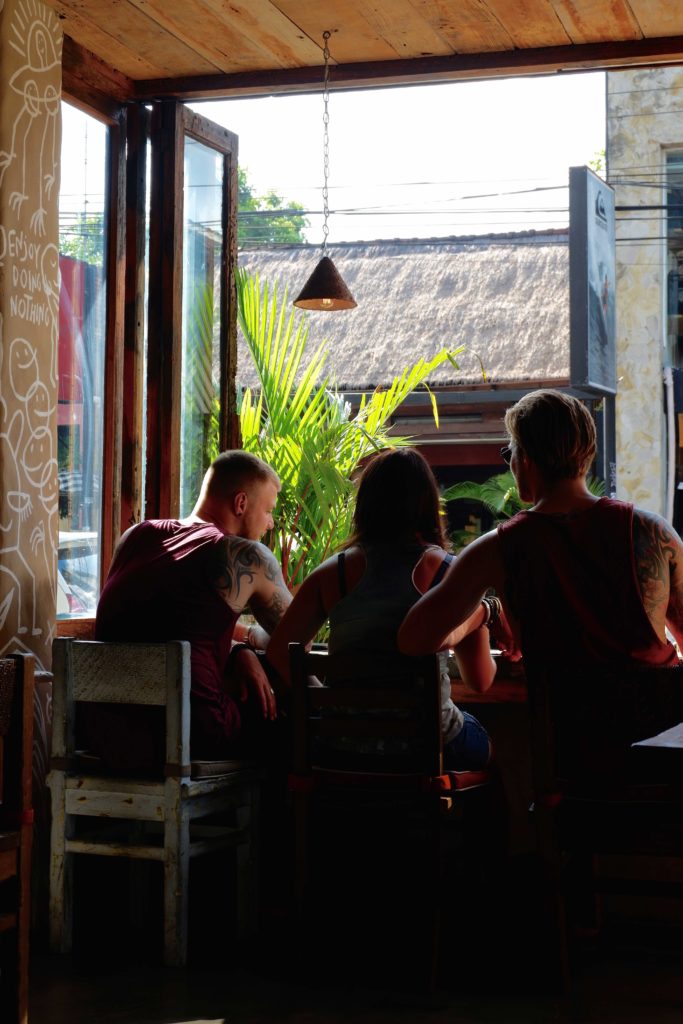
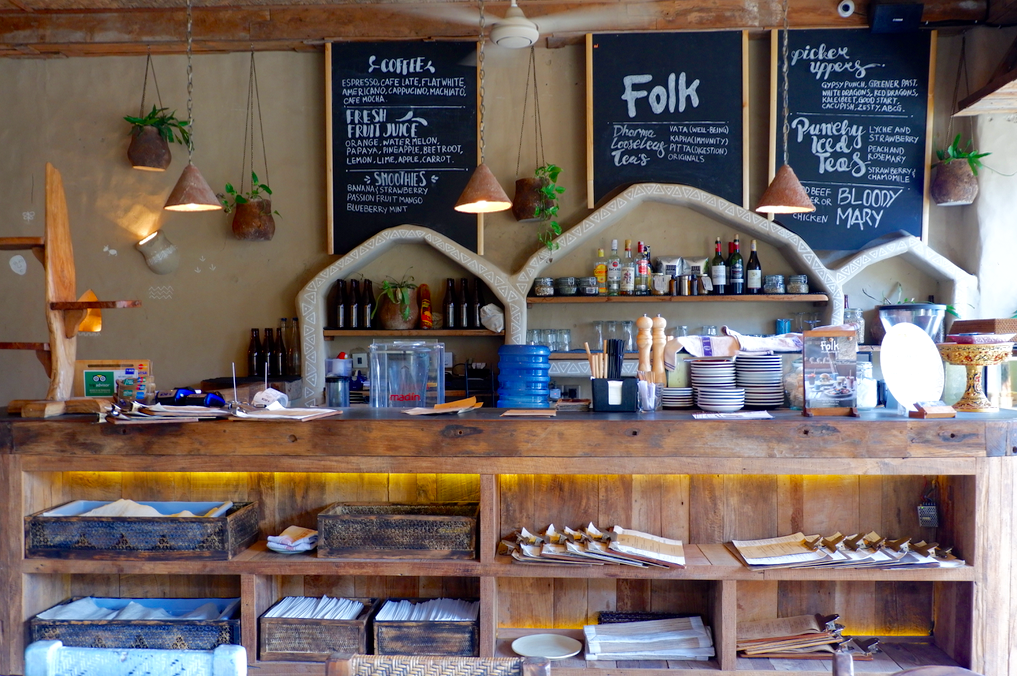
There was this cafe called No Mas in Ubud‘s Monkey Forest Road that we frequented in the evenings to catch up with friends. Below the cafe, there was this hipstery-looking place called FOLK. Usually, it was already dark and closed when we’re about to have some drinks at No Mas.

breakfast in ubud

I read some online reviews of the place and found quite a bunch of surprisingly mouth-watering testimonials. So, I told D to drive to No Mas; because our secret place for breakfast in Ubud would be ‘nearby’.

breakfast in ubud

I always opt for good food, not Instagrammable food.

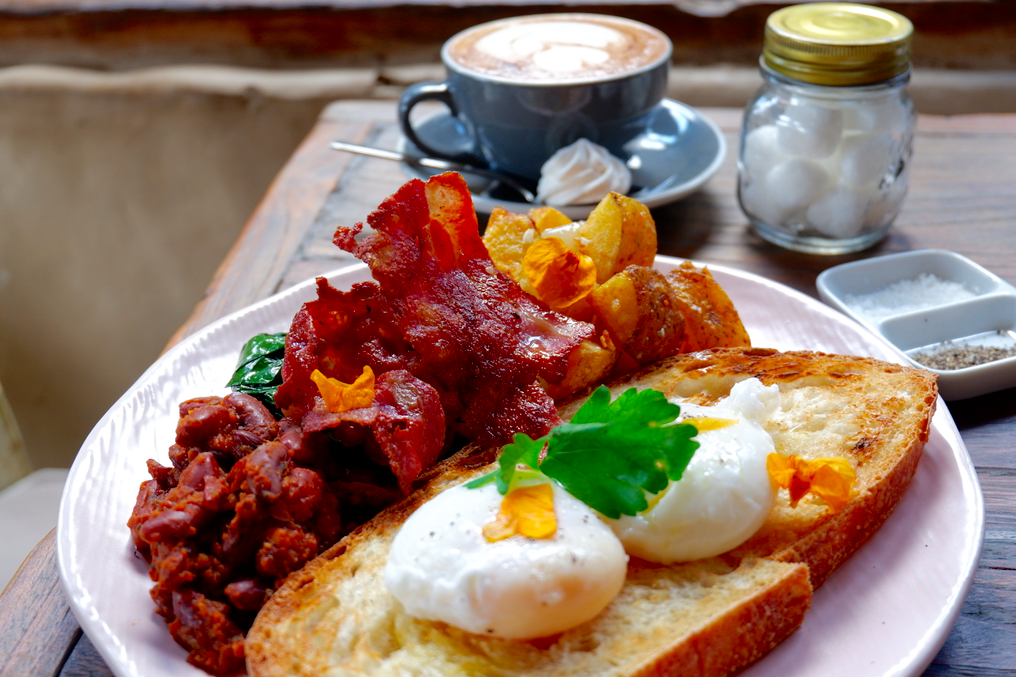
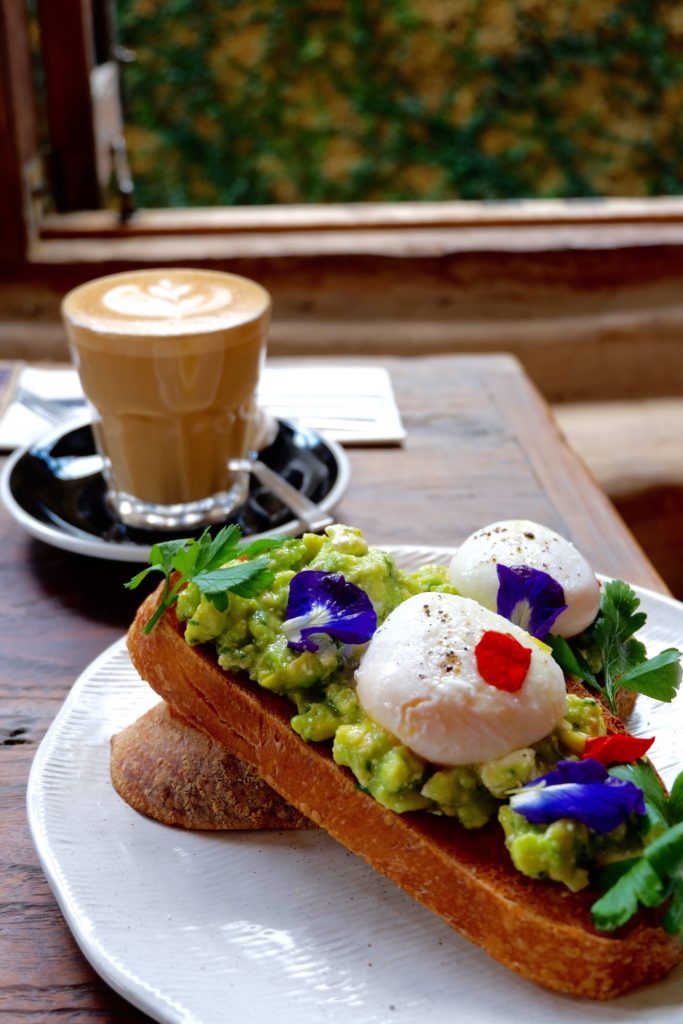
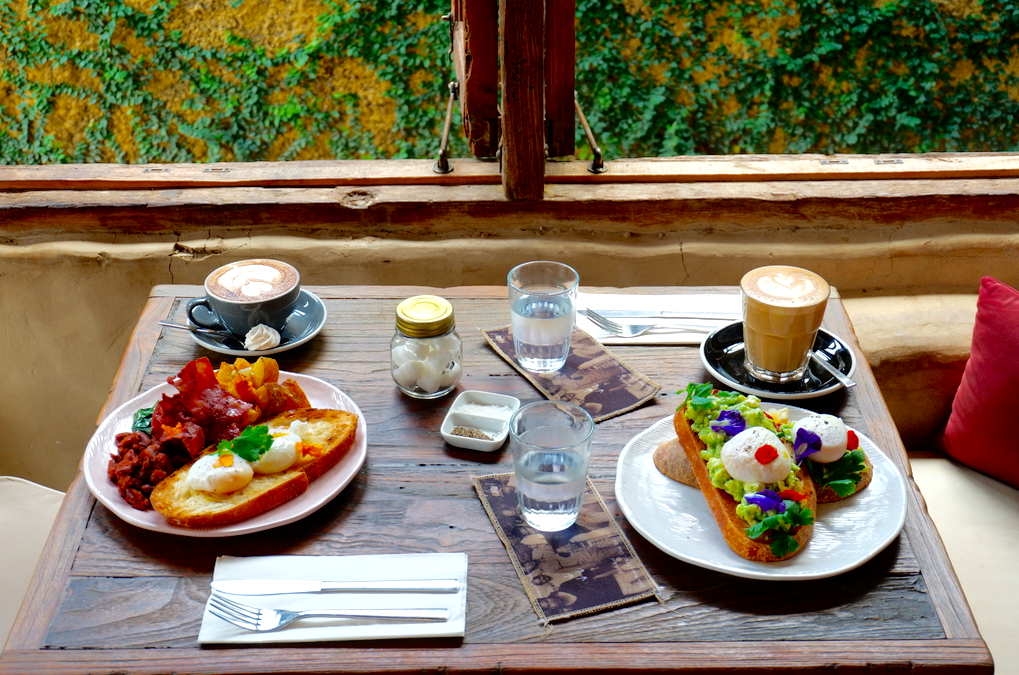
When our order came, they looked exactly like Instagram food. So pretty and neat and clean, carefully carrying all the right color combination to look wonderful on my camera. They even came with edible flower petals. And the portion was quite big.

breakfast in ubud

breakfast in ubud

Imagine our surprise when instead of simply looking good, the food actually tasted delicious!

The good reviews were spot on!

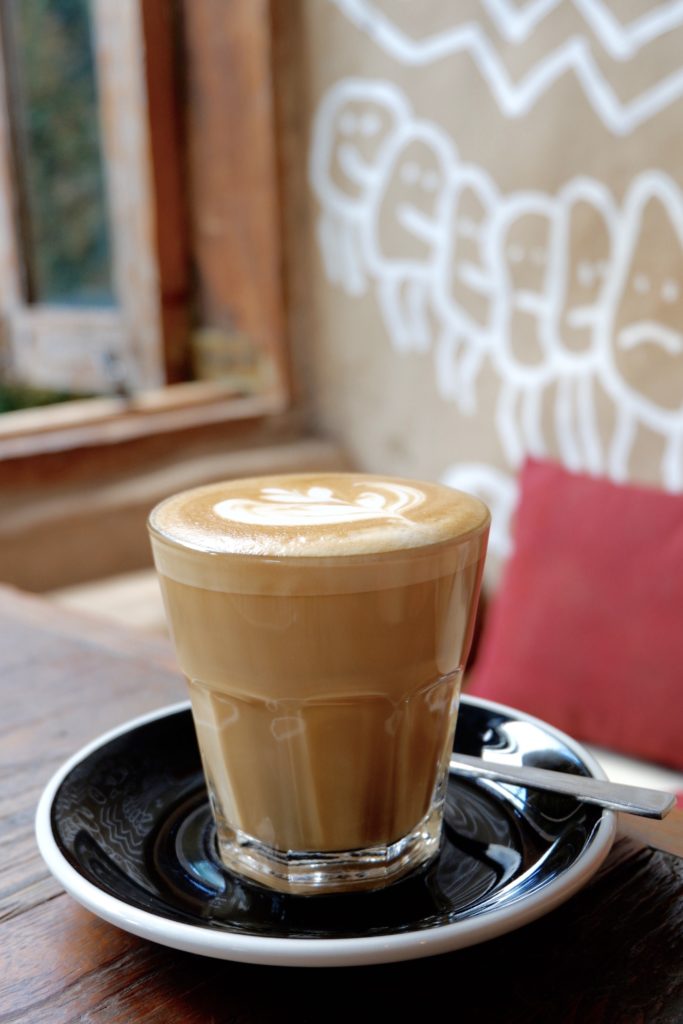
We had the epitome of a big hearty breakfast: toast, poached egg, bacon, spinach, potato, and beans—and also a healthier version of toast, poached egg, avocado, and feta cheese. Plus a cup of cappuccino and latte. Each element of the dish is delicious in itself; each one a bomb of flavors, even when tasted separate.

A good hearty breakfast can always make my mornings and lift up my mood. And that day, I must have chosen a good secret place.

breakfast in ubud

breakfast in ubud

breakfast in ubud

Folk Kitchen & Espresso
Jl. Monkey Forest, Ubud, Kabupaten Gianyar, Bali 80571
hanny
WANT TO SHARE WITH SOMEONE WHO NEED THIS?
Sunset Spot in Ubud

Are you the sunrise type, or the sunset type?

I have been sharing a room with Mumun from the travel blog Indohoy during some of our trips, and before bed, she always said enthusiastically, “Let’s wake up early tomorrow and watch the sunrise!” – to which I responded with: “Well, let’s see tomorrow.”

Usually, the next day, we would open our eyes at around 7—looking at each other sleepily, still curling in bed, our stomachs growling, craving for breakfast. Nobody mentioned the sunrise that has completely risen by then.

So, let’s just say that I’m more of the sunset type.

Sunset Spot in Ubud

My latest sunset spot in Ubud.

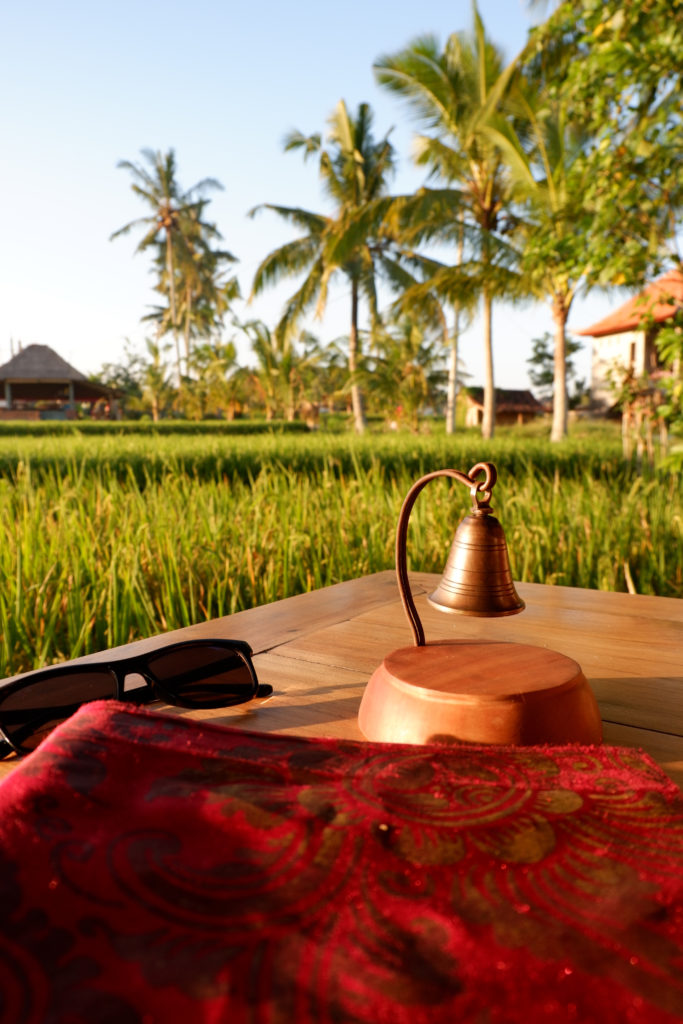
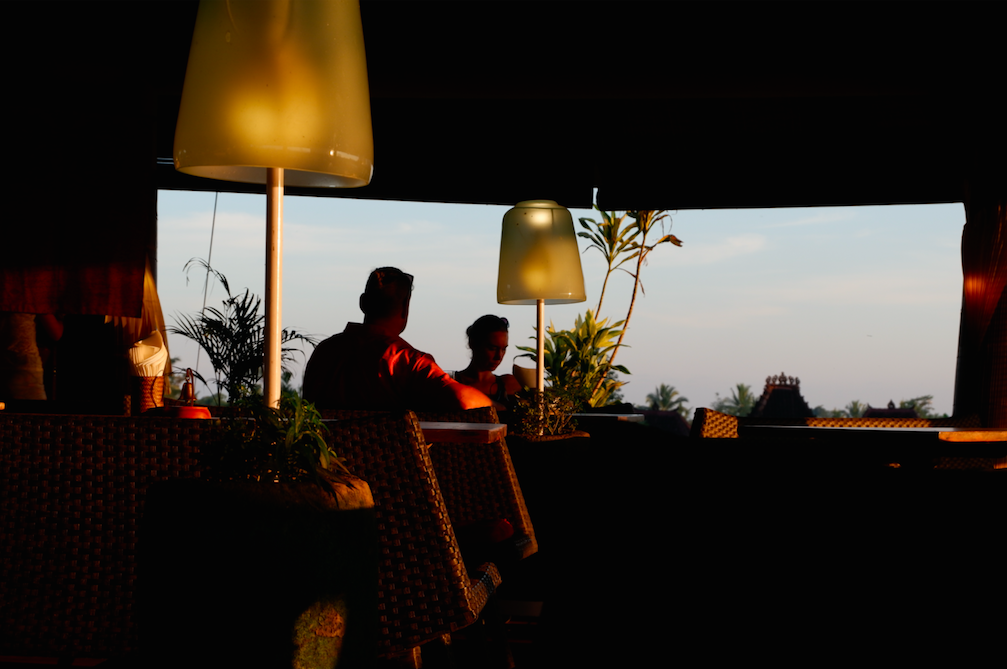
Apart from the Tjampuhan Ridge, lately, my favorite sunset spot in Ubud is hidden just in the midst of its center. A few meters across Bisma Street, before the entrance to Tjampuhan Ridge, a rocky uphill path takes you to a narrow alley leading up to Subak Sok Wayah. There, a winding narrow track awaits: lined with cafes, guesthouses, and shops selling paintings and souvenirs on the left, and rice fields on the right.

Sunset Spot in Ubud

Sunset Spot in Ubud

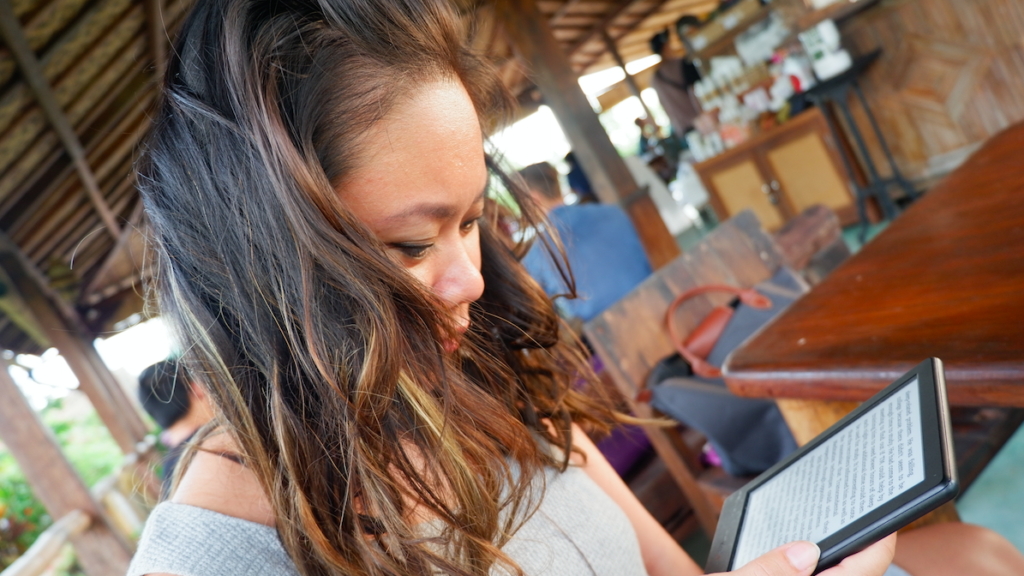
Cafes and restaurants with sunset views are plenty along the track, perfect to wind down after a stroll around Ubud. A small cafe even offers a reading of your Vedic charts—could be a fun pastime for the curious! I personally love waiting for sunset while reading on Kindle at Sari Organik or Cafe Pomegranate. They are located not too far away from one another.

Sunset Spot in Ubud

Sunset Spot in Ubud

The Golden Hour.

There is something magical with the lights at this hour. When I was little, I used to think that sunset was a gate to another realm. There must be a door somewhere behind those beautiful lights, leading up to an enchanted forest with imps, fairies, and talking animals. As a grown-up, I still get the chilling excitement of watching the sun goes down; still having the feeling that I have just been transported ‘somewhere’ without actually moving, or leaving.

The In-Between.

My friend once told me, that we can feel the Divine between our breath: that tiny moment in-between inhaling and exhaling. There are many in-between moments in our daily lives: when we walk, in-between the changing of our left and right foot; when we brush our teeth, in-between the moment when the brush leaves and touches our teeth; when we eat, in-between the tasting and the swallowing of our food.

In watching sunsets. In-between light and dark: that tiny window into the magical world of a pivotal moment when eternity sneaks in through something so mundane and temporary.

Sunset Spot in Ubud

Sunset Spot in Ubud

SARI ORGANIK
Address: Jl. Subak Sok Wayah, Tjampuhan, Ubud
Phone: (0361) 972087

CAFE POMEGRANATE
Address: Jl. Subak Sok Wayah, Ubud
Phone: 0878-6080-3632

hanny
WANT TO SHARE WITH SOMEONE WHO NEED THIS?

My mother was a maker. She baked the most delicious cookies and cakes. She sewed bags, patchwork blankets, and dresses out of a Japanese how-to book. Made hair bands and bead bracelets. Redesigned an old wooden bed-stand into a couch. If she was still alive, she would have launched a DIY tutorial channel on YouTube.

***

No. You haven’t showered!” she would scold me when—upon waking up in the morning—I dragged myself to the kitchen in the hope of joining her making kaasstengels.

Put on a proper dress!” she would dismiss my presence in my thin, rugged, and washed-out pajamas another time when I was excited to help her storing the unused beads based on their shapes and colors.

“Wash your hands!”
“Don’t sneeze!”
“Sit respectfully!”
“Get rid of that sulky face.”
“If you’re angry like that, stay away.”

I used to cry or sulk, even more, leaving my mother to work on her creation alone. I hated those moments, those words. To me, they all sounded judgmental, harsh, and patronizing.

I always thought that ‘making things’ was my mother’s. Not mine.

I was careless and sloppy; while my mother was neat and tidy.

***

A few months back, my friend Clara wrote a heart-warming piece about how, as a teenage girl, she had sworn not to grow up to be the adults her parents were. But of course, in her late twenties, she found out that she had actually become her parents. That she had grown to like the things they like and value the things they value.

I wasn’t sure when I started to make things again. Maybe that one time when I enrolled in a course to make batik. Then, silver jewelry. Cooking Balinese food. Watercolor painting. Weaving. Making prayer beads.

I have spent the last few years learning to ‘make things’.
Random things.

They came to me one by one, and I simply said yes. I don’t even know what I would do now that I know how to make these things. I am pleased simply from witnessing the way I can do something I couldn’t do a few hours before; amazed by how I can create something close-to-beautiful out of what seemed like scattered components.

I love how time silently flies when I am concentrating on the way my hands move: my nerves and muscles memorize the mechanics of how things work—sometimes by carefully listening to instructions, other times by listening to my intuitions.

From ‘making things’, I learn about humility—that there’s always something new under the sun. I learn about patience—knowing that everything takes time. I learn about commitment—to keep trying after a series of failed attempts until I can do it. I learn about harmony—on how to keep your brain and your hands moving in unison. I learn about respect—to treat each component: attentively as each one, no matter how small, would be the sum of the finished goods.

To me, it’s meditative.

After more than 30 years, I just realised that making things was my mother’s meditation. It was her practice. And she had put so much respect to it: the respect it truly deserves.

Before making things, my mother would take a long shower and put on a nice dress. She would put a light make-up, comb her hair, and spray herself with a body mist. She would then clean her ‘maker space’ thoroughly and keep the place as neat and tidy as possible throughout the making process. She would do everything in silence; or by reciting one of the 99 names of God in a whisper.

***

I watched the way my fingers silently weaved prayer beads last weekend, as I sat cross-legged on the porch of a Balinese compound in Ubud after a quick shower. The warmth of the morning sun was grazing my skin and the smell of coffee wafted gracefully from my working desk.

Maybe, just like my mother, ‘making things’ has become my practice, too.

And, just like Clara, I have somehow grown into my mother; more than I thought I ever would; more than I thought I ever could.

hanny
WANT TO SHARE WITH SOMEONE WHO NEED THIS?

The place I like best in the world is the kitchen.

With this heart-robbing sentence, so begins the story of a young woman, Mikage Sakurai, as she’s dealing with love and loss while trying to find her place in the world.

After more than 10 years, the novel Kitchen by Japanese author Banana Yoshimoto is still one of my all-time personal favorites. I couldn’t remember how often have I taken this book out from the shelf and read it again cover to cover, I could almost remember most of the words by heart. The pages have started to yellow and worn out to the point that I started to think of getting myself another copy—just in case.

A SOVIET KITCHEN, MELON, & COGNAC.

That evening, we had just wrapped up our dinner in a local establishment in Kyiv, well-known for its varenyky; a kind of Ukrainian dumpling. I enjoyed mine with gusto (mushroom-filled and served with sour cream) while Ieugenia and Kyryl told me some stories about their childhood as they remember it when Ukraine was still a part of the Soviet Union.

It was drizzling outside when we stepped out, just as Kyryl had predicted in the afternoon. He had sniffed the air earlier as we were walking around Andriyivskyy—dubbed as Kyiv’s most charming street, and exclaimed: “It’s going to rain later on!”

He was right.

We huddled together in front of the establishment, thinking of what to do next. We didn’t feel like going out, but we were still eager to converse some more. So Kyryl said, “Let’s go to Ieugenia’s place, then. We can just hang out there. This way, you can also see the typical Soviet flat!”

The drizzle turned into the pouring rain, so Kyryl stopped a taxi. I sat at the back with Ieugenia, and off we went to a ‘typical Soviet flat’. According to the couple, old apartment buildings in Ukraine built during the Soviet era have identical rooms. “All the furniture, the desk, the chairs, the bed, the stove, the layout, everything is identical!” said Kyryl with much amusement as we climbed the stairs to Ieugenia’s flat.

When Ieugenia opened the front door, I gasped at the view of a ‘typical Soviet flat’ and gasped some more as she gave me a short tour. I felt like I had just transported back to my childhood home in the ’80s. All the furniture and the electronic appliances were the ones I recognized by heart from the times when I was still too short to touch the kitchen counter!

The tube television, the radio, the stove, the cupboard, the washing machine… I kept on pointing at them and laughed nostalgically: “I had one exactly like this when I was little! And this! And this!”
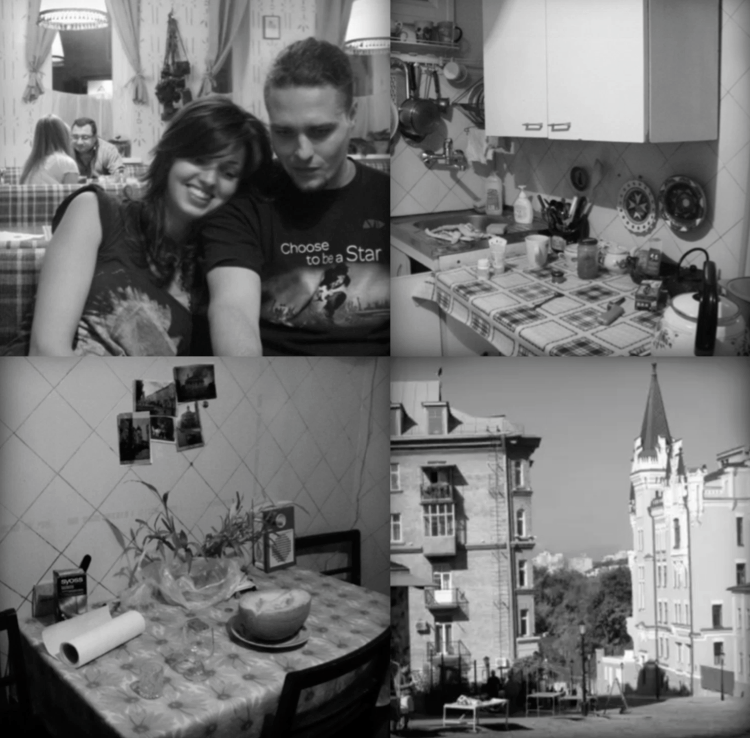
We spent the evening sitting in a ‘typical Soviet kitchen‘ that looked exactly like the kitchen in my childhood home, where I could find my mother frying eggs with margarine. The similarity was striking, even to the tablecloth.

Kyryl served cognac and cut some melons (“This is not something Ukrainian, to eat melons with cognac,” he laughed. “But this is the only thing we have lying around. And the melon is really good! So sweet!”). We sat there for hours, talking, while the government’s radio played some songs in the background.

The tint of its static sound reminded me of the days when I was 8 and found the short wave (SW) switch on my parent’s old radio. That day, all of a sudden, my room was filled with foreign languages: a different kind of strange sounds I didn’t truly comprehend. They came all the way from faraway places: Australia, Britain, Germany, China…

I listened to these radio broadcasts ceremoniously, as if it was my one-way ticket to get transported to another world: a magical one.

I was a kid who found the SW broadcast way more interesting than television. I sprawled myself on the floor, one ear glued to the speaker, listening to foreign people reading news in foreign languages from faraway countries. My mother was the one who told me that it was, indeed, just a news broadcast.

However, to me as a little girl, it was a promise. A promise that there was another kind of world out there, a world I felt so close and so attached to, as magical as those foreign voices wafted around my bedroom.

TRAVELING THE KITCHENS.

When I came to think about it, the SW radio broadcast was probably the first impulse I had as a little girl to dream about traveling. And when it comes to the kitchen, as a little girl I spent most of my time in it, watching my parents cook.

I squatted near the oil stove when my mother cooked a giant pan of chicken soto (clear herbal broth with turmeric and herbs) for the New Year, and enthusiastically took the small duty of brushing egg yolk on top of about-to-be-baked kaasstengels (Dutch-Indonesian cookie) as if it was a great responsibility. I hovered around my grandmother as she cooked instant noodles inside a dented pot (the bottom was blackened after years of use) for my grandfather. I adored the smell of the kitchen as my father made scrambled eggs with stinky beans and sweet soy sauce.

Later in life, as I traveled around either for business or pleasure, I found myself ‘adopted’ by a kitchen, again and again. It was in the kitchen that I could experience those moments when I was still technically a stranger but didn’t really feel or being treated like one.

A Filipino lady who lived in Kuala Lumpur took me to her kitchen and taught me how to cook chicken with potato, tomato, onion and cream.

On the remote island of Sawendui in Papua, I squatted in front of the communal outdoor kitchen, along with the dogs and a cat, while the village women cooked rice, mussels, and shrimp the men had just caught a few minutes earlier. In a transmigration village in Pontianak, I let my eyes got teary from the smoke as the village women cooked rice, vegetables, sambal (Indonesian hot relish), and salted fish over a wooden stove. They were chatting and laughing as they cooked, the sounds of pots and pans and plates as they bumped into one another were simply musical.

I loitered around Ian Curley from Conviction Kitchen in Jakarta as he prepared beef tartare and leek salads, and sat right in front of the kitchen during breakfast in Blixen, an artsy brasserie in Spitalfields, London, watching the Chef manned the kitchen staff in awe: reading orders aloud, giving instructions on what to prepare next, and inspecting each plate before it was served to the customers.

I assisted in the making of ricotta dessert with honey, orange, and cinnamon for Christmas lunch in Albiate, Italy, shredding the zests of the fresh-picked oranges while the family’s black cat, Pepe, slept soundly under the kitchen table; then hovered over Elena (an Italian girl who speaks Mandarin) in another kitchen next door as she made red wine risotto. I borrowed the kitchen a few days after a visit to the Esselunga (supermarket) to make sambal goreng ati (liver, potato, and shrimp cooked in spicy coconut milk) for the family.
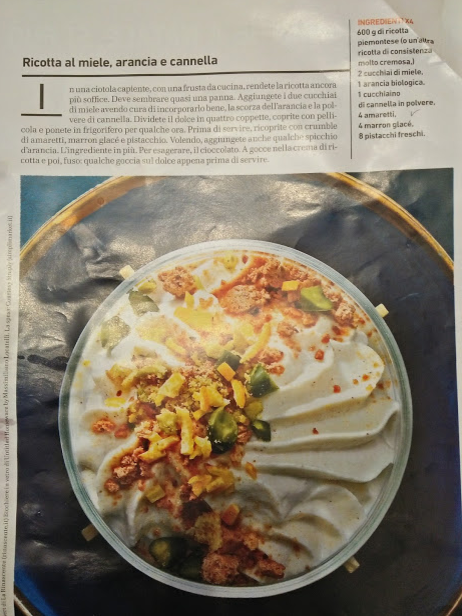
I spent a day smelling of coconut milk and garlic in a spacious kitchen in Amsterdam to make gado-gado (Indonesian vegetable salad with peanut sauce), rendang (slow-cooked meat in spicy coconut milk), tofu and eggplant gulai (Indonesian curry-like sauce), as well as mojito cheesecake for a New Year’s Eve dinner party.

IF YOU WANT TO KNOW SOMEONE, SPEND TIME WITH THEM IN THE KITCHEN.

There’s always something magical and meditative about spending some time in the kitchen: either it’s for cooking dinner, preparing breakfast, baking cakes, brewing coffee, or simply watching someone getting busy around the kitchen counter.

The living room is too polite, the bedroom is too intimate, the terrace is too open, the bathroom is too weird, but when someone took you to their kitchen, you’ve somehow been taken in. You’ve crossed the line between a guest and a good friend.

It is in the kitchen that stories were being poured out over pans and pots and kettles and bowls; just like in the old days when women cooked together for a festivity and whispered their hearts’ secrets as they washed vegetables, peeled garlic and onions, boiled chicken broth, marinated fish in salt and tamarind, and scrubbed their turmeric-stained fingers with cucumber and key lime.

It is mostly in the kitchen, around the dining table, or over a kitchen counter, life-changing news was brought out to the open. It is in the kitchen, those family members who do not see or talk to one another as often as they like bumped into one another as they’re about to grab something from the refrigerator.

Because in the kitchen, even in such circumstances when nobody was talking, the silence itself tells a story. Just like the faint sound of the soup in a pan, discreetly boiling over a small fire.

Dream kitchens.

I will have countless ones, in my heart or in reality. Or in my travels. Alone, with a crowd of people, with one other person—in all the many places I will live. I know that there will be so many more. [Banana Yoshimoto]

hanny
WANT TO SHARE WITH SOMEONE WHO NEED THIS?

It is not so much as love at the first sight (or, these days—at the first swipe). It is more like the other day when I was at the grocery store, pushing the small shopping cart through the narrow alleys (fruits & vegetables, meat & dairy, snacks, chocolate & candies, hair & body, pet) before the shelves burst out into fireworks of memories.

There, exploding into a million little pieces of moments-once-shared: our usual granola, our favorite soy milk, our regular pasta, our instant spices for rendang and nasi goreng, our huge bottle of Pocari. Parading warmth despite the cold air blowing from the meat & dairy freezing units.

beradadisini love stocksnap

It’s beautiful to know that we’ve left traces of ourselves in one another. That despite the distance, the world is now full of them, full of you, full of us, wherever we look. It gives meanings to the most random sightings of daily whatnots.

It makes me feel as if you’re near. And, I guess, in one and other way, you are.

We share the world holding hands—or some other times, holding our mobile phones. Smiles and kisses are popping up from the palm-sized screen; words and voices are flying freely across continents: those days when I look out and see the sunshine, while raindrops fall over the sunroof above your kitchen (that I adore).

Together, we’re off on impulsive adventures: me on the back of the motorcycle, and you at the front with the GPS on. Cooking pasta and fried rice, pig them out directly from the pan. Swearing at each other at the squash court. Sitting next to each other somewhere, not talking, working on our passion projects.

Tens of thousands of feet above the ground, more than a year ago, you wrote me a letter.

You said you’re flying above Gwadar, speculating that it might be located somewhere in Iran. Later on, I found out that it was an area near Pakistan’s Balochistan. An area I once mentioned in my short story that was published years ago, Humsafar.

Isn’t it funny how life keeps on throwing signs your way, teasing you in a humorous way, knowing that you’d never get it until one day you really get it?

If life were a spider web, our stories have been entangled in a heap for many years, many millennia, many centuries… connecting us with millions of lives today, as well as millions of lives before us and beyond us. We might have a long history that we have yet to discover, billions of dots waiting to be connected.

Time, slowly, will spill the secrets of the random things, decisions, and connections that lead us to one another.

But until then, I just want to thank you:
simply, for taking a chance.

hanny
WANT TO SHARE WITH SOMEONE WHO NEED THIS?

Three days after arriving back home, still I haven’t unpacked, haven’t gone out, haven’t met anyone, and haven’t done anything productive—apart from replying to some emails that need to be replied, and meeting deadlines. I am that kind of person. After being surrounded by a lot of people or being on the road for a long time, constantly moving and bumping into others—I need my downtime. I need to recharge. I need a break.

I need to pause.

screen-shot-2016-11-17-at-9-06-22-am

Do you need to be alone to recharge?

I’ve known some friends who can be on the road for what seems like an indefinite period, moving from one city to another every 3-4 days, then coming back home and heading out to see some friends directly from the airport. The next day, they would have had some meetings or meet-ups, attended events, edited pictures, and wrote some articles about their travels, went to the gym, unpacked, plus organized another trip.

I envy them.
I envy people who do not need downtime.

Those who live their lives like an Energizer bunny. They are so energized. So active. So unstoppable. It seems as if they could do so much in the first few days they came back from their traveling journeys, while here I am, still enjoying the feeling of not having to go anywhere or to do anything, savoring the privilege of being alone.

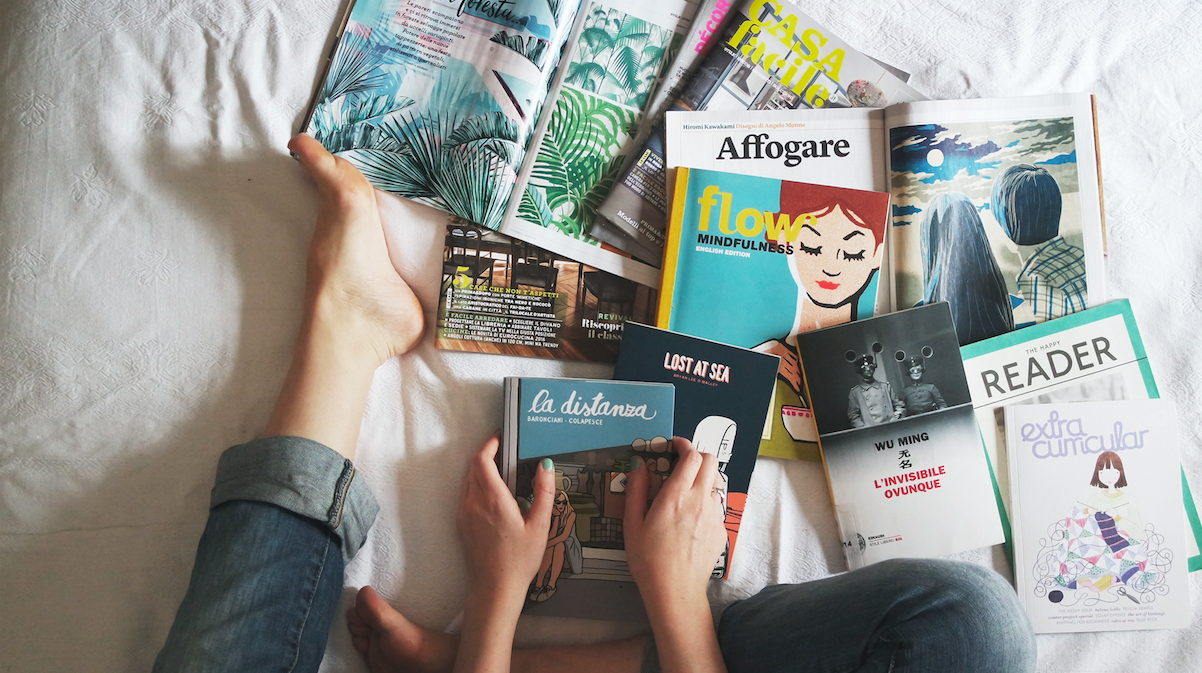
These past few days can be simply summarised into coffee – books – bed – movies – lunch – books – bed – coffee -movies – bed (insert ‘work’ only when really necessary—meaning, deadline is tomorrow).

screen-shot-2016-11-17-at-7-58-28-am

This is how I recharge. To recover from travel-lag. To readjust the pace and pattern of my day. I live best the way I travel best: slowly.

There are 2 places I would dearly call home.

My real hometown in Bogor, and my adopted little town of Ubud.

Both are easy to navigate because each one is a donut: Bogor with the Botanical Garden to fill in the hole, and Ubud with its Monkey Forest.

Both are small towns (my boyfriend still finds it funny whenever I refer to Bogor, with a million people, as a small town) with access to networks, opportunities, and vibrant creative communities trying to make a difference. Only an hour away from Bogor, there’s Jakarta: the capital of all things shiny—while an hour or two away from Ubud, there’s Sanur and Seminyak: the hubs for any kind of jobs imaginable.

Both hometowns host loving friends and families (I once wrote that home is any place where you’ll be missed, while the boyfriend said that home is wherever your wi-fi connects automatically).

They are both small enough for you to bump into old friends (or exes!) in public events, restaurants, and coffee shops, but big enough should you want to exile yourself in the faraway villages or hide in the mountains. Nature provides plenty of breathing spaces not far from the center, and the arrays of mouth-watering street food deserve no such thing as a diet.

Nevertheless, the silent contentment of being home is simply that: being home.

beradadisini being home (stocksnap)To wake up on the same bed where you’ve cried yourself to sleep when you’re still an angsty teenager. To be surrounded by your overloaded bookshelves. To have your dog jumps on you because she wants to play. To talk to your Dad about how you’ve managed to float like a starfish in Raja Ampat.
To walk around the house with that old shirt and pants you’ve had since you were 17. To cook whatever you want because the kitchen utensils are all there, waiting to be put into good use. To create new therapeutic ointments with coconut oil and your growing collections of essential oils. To put your clay mask on and compress your eyes with slices of cucumbers.

To start your day with a set of routines you’ve developed throughout the years. To know what everything is for, where everything is stored, and how everything works.

To feel as if you can go anywhere, but at the same time not wanting to go somewhere else.

Probably, as much as it’s a convenient place, home is more of a feeling: about knowing that no matter how far you go, you’ll always find a place to go back to. About remembering your root and who you truly are. About being you when nobody’s noticing. It’s a feeling of knowing that you are free both to leave or to stay.

It’s about that yearning that keeps tugging on your heartstrings when you’re away.

Whatever that yearning is, it’s home.

______
PS: If reading is one of your favorite down-time, you might want to check Bookmate–a mobile reading app where you could find tons of fiction and non-fiction books. If you’d like to try the premium access for free for a month, insert the code readwithhanny here. I have a shelf there storing some of my favorite books about writing, Writer’s Reads.
hanny
WANT TO SHARE WITH SOMEONE WHO NEED THIS?
Hanny illustrator
Hi. I'm HANNY
I am an Indonesian writer/artist/illustrator and stationery web shop owner (Cafe Analog) based in Amsterdam, the Netherlands. I love facilitating writing/creative workshops and retreats, especially when they are tied to self-exploration and self-expression. In Indonesian, 'beradadisini' means being here. So, here I am, documenting life—one word at a time.

hanny

TAKE WHAT YOU NEED
VISIT THE SHOP