[dedicated to n.n]

Sunday is about staying in bed for a while as you slowly gather your consciousness while thinking about how blessed you are for being able to wake up to another day, warm and dry. You stretch yourself and feel the crispness of your bed sheet against your exposed skin–realizing that this is another thing to be grateful of. You stay in your bed for a while, and spend the next 3 minutes counting your blessings, no matter how trivial they may sound: the roof over your head, the alarm clock, the pillow, the faint sounds of the birds, the wonderful memories you are able to cherish… the ability to cry.

Sunday by Nico Wijaya

PHOTO BY NICO WIJAYA.

You know that tears cleanse our soul. It’s a beautiful way of knowing that you can still feel something to this extent. It shows that you have worn your heart on your sleeve, you have loved hard, you have tried your best, you have risked it all, you have let your guards down, and that you have braved the one thing a lot of people are not yet dare to cross: to be vulnerable.

So, cry.

You know better than to not let those tears flow on your cheek. It’s okay. Your body knows how best to heal your soul, and so let it help you. We always think that it’s good to let things go, but it’s just as important to let things in. So let it in. Feel what you need to feel. Do not chase it away too soon. Be patient with yourself, be gentle with your heart. It’s Sunday, anyway.

Let Sunday be your gift. A day to be spent on you. A day that ends the working days and a night out dancing and partying with your closest friends; a day that is about to welcome another week where you’ll be making another set of memories and walking various dimensions of life–so let Sunday be yours. Craft your desired future and dream about the you you’ve always dreamed of. Have a conversation with yourself on how you’d like to see things unfold in your life, why you’d like to experience these things, and how they will make you feel.

Spoil yourself on a Sunday. Make it a day to celebrate your rebirth–and invite yourself to be your most loving and wonderful company. Do the things you love to do by yourself; things that will make you appear childish; things only you may understand: dancing slowly in your pajamas to the tunes of Hindi classical music, daydreaming while brewing your perfect cup of coffee, lighting scented candles and making a list about the things you love about yourself, playing with your dog and snuggling with your cat, cooking an elaborate lunch and serving it beautifully for a solo feast, going out to buy yourself a beautiful bouquet of your favorite flowers…

Fall in love with yourself once again on a Sunday. Slow down and just enjoy the feeling of being you. Today is your day. Remind yourself of how meaningful it is to be you–those experiences in life that have made you wiser and stronger, those encounters that have given you memories worth remembering, those instances where you thought you’ve ruin it all but things turned out to take care of itself and ended up okay, those moments when you were afraid to fall flat on your face only to find out that there was someone there ready to catch you…

Fall in love with your life all over again on a Sunday. Celebrate the life you’ve lived: for you have been there and now you’re here, for you have been crushed but you survived, for you have been heartbroken but still–you will never give up on love.

And smile.

Smile, because though life may not be perfect all the time, you know that with everything you have celebrated today, you have no reason not to.

Screen Shot 2016-04-03 at 7.01.55 PM

hanny
WANT TO SHARE WITH SOMEONE WHO NEED THIS?

All of us have that one person in our lives: the one who never leaves.

The one who never leaves is both always and never around. He is here, but at the same time, he isn’t.

You cannot hold his hands or kiss his cheek or hug him from behind anytime you like. He is not going to text-flirt you or call you every single day or pick you up for a night out (that will end up with an episode of snuggling on a couch, talking about dead authors and unheard poems). He may not give you presents on your birthdays or send you postcards from faraway places when he travels. You cannot run to him when you’re having a breakdown and cry on his shoulders–seeking a familiar comfort on the slope of his neck that you have known by heart.

At first, you think you love and hate him with a more or less similar intensity. However, the more you try to hate him, the more you realize that you can’t. Of course, he is not perfect. He has his own flaws. He has his own issues. But he has also loved you and hurt you so deeply, to the extent that both the love and the wounds have transformed you completely–you will never see the world the same way ever again.

And then you get it.

You can’t hate him simply because you love him too much to be able to hate him. After all the ups and downs, fireworks and turmoils, late-night romance, and silent tears, no matter how sad and lonely you feel, deep down inside you know that all you really want is for him to be happy. It surprises you, at times, that you are actually capable of loving someone that way.

The one who never leaves will always be around as you’re stepping into the milestones of your life: a relocation to an exotic country, an international best-selling book, an around-the-world trip for a year, a death in the family, an engagement, a marriage, a first child. He may be there to congratulate or console you (either in person or via Facebook), or he may not. But you know that he is (and will always be) the first person that comes to mind when you’re having these big moments in your life. And for a while, in the midst of euphoria or tragedy, he reminds you of the person you were, the person you always are, and the person you choose to be.

The one who never leaves is there inside of you as you’re listening to your favorite songs. When you’re visiting beautiful places and dancing with beautiful strangers. When you’re having a cup of coffee, gazing out the window, and realizing that you’re looking at such a lovely view. He is in your heart when you’re spending your time doing the things you love, as you’re falling in and out of love with somebody new; when you finally have the courage to kiss someone and be vulnerable again after a long time.

You know that this is how the two of you are: that you have gone your separate ways and lived your separate lives. No matter how close you are to the one who never leaves, there is also a distance now–one that is not merely physical–that you cannot trespass; unless he allows you to. But you will never know if that will happen, or whether you would want to cross that distance once again. So you are moving on with your life, your heart has healed from its swells and bruises and only gotten stronger.

If you’d like to be really honest, there will always be a glimmer of hope, no matter how faint, that the one who never leaves will be the one you can hold and hug and kiss every single day, the one you can cuddle and snuggle with whenever you feel like it, the one you can wake up to in the morning and fall asleep with at the end of a lovely evening. But soon, you ditch that hope and smile as you slip into another sunny day of yours, knowing that life is good the way it is. He has appeared in your life and you know that it’s enough of a blessing in itself.

Today, whether he’s here or not does not really matter anymore–and it does not bother you at all. Because despite everything, you know that he will always be the one who never leaves.

PHOTO BY NICO WIJAYA.
hanny
WANT TO SHARE WITH SOMEONE WHO NEED THIS?

One day, you’ll understand that the highest compliment you could ever receive is having someone who is with you; instead of having someone who wants to be with you.

By then, you’ve learned the hard way: that promises are not that difficult to break, that people don’t always mean what they say, and that hearts will always change course. When the day comes, you’ll just get it: that the highest compliment you could ever receive has nothing to do with having someone who wants to spend the rest of his life with you. The highest compliment you could ever receive–on the contrary, has everything to do with having the one who is with you: right here, right now.

The most precious gift one can give you is time: the willingness to spend one’s time with you–conscious about the fact that one will never know how much time one has left in the world. What makes us think that we will always have more time? What makes us believe that there will come a perfect day when we will feel better and stronger and bolder… and only when the day comes, then we can offer more of ourselves and our love to the one that deserves it? How do we know that this perfect day will ever come? And even if this perfect day does come to us, what makes us think that the one we love will still be around?

One day, you’ll understand that I-miss-you is actually one of the saddest words one could ever say to you. You used to blush and giggle to the sight or sound of the three words until you started to hear the unspoken words accompanying the three. I-miss-you means I-want-to-be-with-you (but I’m not). I-miss-you means I-want-things-to-go-back-the-way-they-used-to-be (but they’re not). I-miss-you means I-want-us-to-be-together (but we’re not). Now you realize that there are conscious options in every I-miss-yous; conscious options not to do something about it but simply saying it–though we know that we may not have more time.

The best I-miss-you one could ever get is the I-miss-you that is never spoken. Because the one who wants to be with you is there with you; the one who wants things to go back the way they used to be is currently making an effort to do so, and the one who wants the two of you to be together is sitting by your side: holding you as if it’s the most pressing thing in the world one is supposed to do.

Someone who loves you doesn’t need to hear a promise of forever-ever-after. Someone who loves you is not waiting to finally end up with the best version of yourself. Someone who loves you is not looking forward to the day when you can offer what you think she deserves.

Someone who loves you simply wants to be with you–for who you are, with all your flaws and imperfections, right here, right now. Someone who loves you simply wants to hold your hand and look into your eyes in silence and kiss you and smile at you with all of her being and tell you how much she feels for you, right here, right now. Someone who loves you knows that we have no idea about how much time we have left in the world, and precisely because of that, someone who loves you makes a brave and conscious option to spend that time with none other but you: right here, right now.

So be here. So be there.

hanny
WANT TO SHARE WITH SOMEONE WHO NEED THIS?
sky full of stars

I guess I always knew that the words good and bye don’t just sit together side by side like that for no reason. There must be something good in goodbyes, although I know how difficult it is to accept that–especially if you’re the one who stays instead of the one who leaves.

So, what’s so good about goodbye, anyway?

You may ask yourself this question as you’re witnessing someone else’s back walking away from you. Your heart is aching as the figure is getting smaller and smaller before completely turning into a chaotic blur; and you wonder what goes wrong only to realize that your eyes are already welled up in tears. You have promised not to cry this time, that you’re going to be strong, that you know this day will come, that everything is going to be okay; but there are things in life that you can’t control–like tears and goodbyes, and it’s okay. It’s okay to feel sad over goodbyes. We are only human after all.

But I know that I have experienced a lot of good things in life after goodbyes–even when I wasn’t the one who initiated it;  even when it hurts; and even when during the grip of grief I could not see how things could possibly be better. Goodbyes have made me respect myself better, pulled me out from toxic relationships, threw me into the arms of a person who is more loving, reminded me of living a life without regret, showed me the things I can and cannot tolerate in life. Goodbyes have made me appreciate the present and taught me that each moment are sacred, taught me how to be empathetic, and opened up my heart to become even more loving and compassionate–knowing that everyone has been dealing with painful goodbyes. Goodbyes have also made me so broken-hearted I spent my days chasing my childhood dreams simply to stay functioning; and unexpectedly reaped such wonderful results which feel… amazingly sweet.

And then I kind of get it.

Someone who loves you simply wants to be with you–for who you are, with all your flaws and imperfections, right here, right now.

What’s so good about goodbyes is not something that you can answer in an instant. It’s not something for the now. It’s something that will unveil itself to you through time.

I am not going to write anything poetic or sentimental about goodbye this time; because today, it’s about you.

I just want you to remember those instances in your life when you have to say goodbye to someone–or when someone has to say goodbye to you; since you’re a little child until about 5 years ago. How many goodbyes have you experienced in life? Is there one particular goodbye you remember vividly? What are the goods coming out of that goodbye?

hanny
WANT TO SHARE WITH SOMEONE WHO NEED THIS?

Dear Goodbye,

Sorry for I have been quite unwelcoming (again) the last time around. I mean… I always know that you would eventually come for a visit. I know that on one of those random days, I would hear someone knocking on my door and rush over to open it–only to find you standing there awkwardly, swaying from one foot to another, a look of guilt is painted all over your face. It’s as if you have predicted (and expected) the terrible reactions you would receive from those who cross paths with you; while you know full well that there is nothing you can do differently.

I know you pay me a visit because you have to, not because you want to. Sometimes I think it must be such a lonely and melancholic job: to cast farewells upon others; to separate hearts and cut down ties or to let people know that their time is over. I could not imagine what if I were the one who had to do such a thing every single day. That must be pretty awful.

People got to do what they got to do, and I know that you’re just doing your job. It’s just that… no matter how often you came for a visit, still, I could never get myself used to it. Again and again, I feel hurt, or sad, or betrayed, or confuse–and so, I’m sorry for the way I reacted to you the last time (but at least I didn’t slam the door on your face the way I did before!).

I would like you to know that I am still trying to accept you for who you are–and for what you do; and that I would love to invite you in for some conversations over tea (or coffee) after the shock of your visit dissipates.

But it’s impossible, isn’t it?

Because you can’t just pay a casual visit and hang out without having any farewells to deliver. This means, the next time I see you again, I would be totally unprepared again, totally sad and shocked again, and I would probably react with such an unwelcoming demeanor again. Can I say sorry in advance if this is going to be the case? Though I really hope that the next time I see you, I have had a bigger heart to simply nod and let you come inside for a while. Of course, a tinge of sadness will still be there when I found you in front of my door again. However, from all the people in the world, I guess you are the one who understands the most about sadness. So probably, we can comfort each other just because we both understand how it feels.

I know you have been sending me gifts as well after your visit. Sometimes they reach me in a week or two, other times they reach me in a year or two; and other times it takes 8 years for your farewell gifts to fall on my lap. I have no idea which delivery service provider you are using; as those gifts came in random timings and intervals–but, thank you for the wonderful gesture. I guess, oftentimes, I overlook this lovely side of you–because I have been blinded by animosity towards you, just because you’re doing your job well (which is so unfair of me!).

So, I’d like to say thank you so much for sending me those farewell gifts–even after I reacted so badly towards you. No matter how early or late those gifts are, they always reach me when I least expected them. Mostly, they come in a simple hello; an opportunity to be brave and do spontaneous things; an exchange of smiles and shy glances; or a random conversation that ends up in warm and fuzzy kisses.

It’s fun to receive these gifts–although at the back of my mind, I am always conscious of the fact that one day, you will pay me a visit again and take away a particular gift from me. I know you will always send me new gifts–because that’s the only thing you can do (and another thing you’re really good at) to make me feel better. I know you can’t undo farewells, but you can always throw in new beginnings–when I have allowed myself to answer the doorbell again when it rings. And really, I think you’re kind that way.

Anyway, sorry for bothering you with this pointless letter. I think I’ll stop now. I just want you to know that I understand you–although most of the time it appears as if I don’t. But I do.

This is hard to say, but I will say it anyway: until I see you again.

Yes, until I see you again, Goodbye.

hanny
WANT TO SHARE WITH SOMEONE WHO NEED THIS?

At first, it was as if someone was brushing their gaze on you; like a soft touch on your bare shoulders–something light and airy and wonderful, like a luminescent feather oscillating in the dark; and then slowly, you felt the heat built up around you and the intensity got heightened; the feather was burning with blinding lights of fireworks; and then you caught his eyes from the other end of the room–something that lit up in the midst of swaying dark shadows and beers and music and half-drunk conversations; and he smiled, and you smiled back until one of you lowered your gaze shyly, and the other did, too; but you knew that once the ancient ritual had started, it was bound to happen anyhow.

It was the first quarter of the day, the morning was just around the corner–but under the strobe lights, the music was still blaring and the crowd was still cheering and the night was still too young–and so you caught him gazing your way again and you gazed his way again, and again, and again, and you smiled, and he smiled, and then you realized that this evening was your last–one of that now-or-never kind of moment that you would cherish or regret; and so you said what-the-f**k and invited him for your last dance in a city that had robbed your heart when you were still finding ways to not fall in love with it. And so he took your hand, circled his arms around your waist, fixed his gaze upon you; and the rest was history.

***

There were times when you couldn’t capture the detailed outlines of the flower petals or the trees or the clouds or the skyscrapers because it seemed like time flew away so fast, too fast–and you could only recall the blurry feeling of cotton candies and marshmallows and merry-go-rounds, and you remembered feeling fuzzy and warm and comfortable and both of you were whirling in concentric motions, throwing your heads in the air as you were laughing while clinging into each other’s arms and you felt the world around you moved faster and faster and faster as if it was seen from a kaleidoscope: where the tube of mirrors and pieces of colored glass produces changing patterns as it was being rotated by some random tiny little hands; waiting for some sort of magic to start appearing before your eyes.

And suddenly you came to notice that your feet were not even touching the ground anymore; as he had lifted you up high in the air and his moves took you orbiting in circles–faster and faster and faster, and you were giggling and closing your eyes and holding on to him tighter and tighter and tighter–until gently, he put you back on the floor–both of you were sweating and laughing and the world was silent for a moment while the two of you were looking into each other’s eyes; the lights above you were becoming brighter and brighter and brighter; the chatter dissipated–and it was as if emptiness enveloped you from all corners of the room. The music had long stopped and you heard nothing but your irregular breathings and heartbeats, and it was then when you realized that he had literally swept you off your feet.

*photo credit: piotrpazola via photopin cc
hanny
WANT TO SHARE WITH SOMEONE WHO NEED THIS?

It was late afternoon, and we were sitting at a nook in our Parisian hotel room, looking at a wall fully decorated with beautifully painted plates.

“I’m going to eat on that one,” I pointed at a plate with a painting of a cat on it. “Which one would you prefer?”

He looked at me as if I were crazy. “Well, I think I am going to choose that one,” he pointed at the one with the frog painting. “But, come on, you don’t eat on those plates!”

“Why not?”

“Because,” he shrugged, definitely thinking that any sane person would clearly know the reason why. “Because those are not eating plates. Those are, like, really beautiful plates. And not to mention that they are bloody expensive!”

“All the more reason to eat on them, don’t you think? In the end, they are what they are, right? They are plates. Why can’t I eat on beautiful and expensive plates?”

Yes. I can be stubborn at times.

***

About a year ago, I started using my beautiful plates.

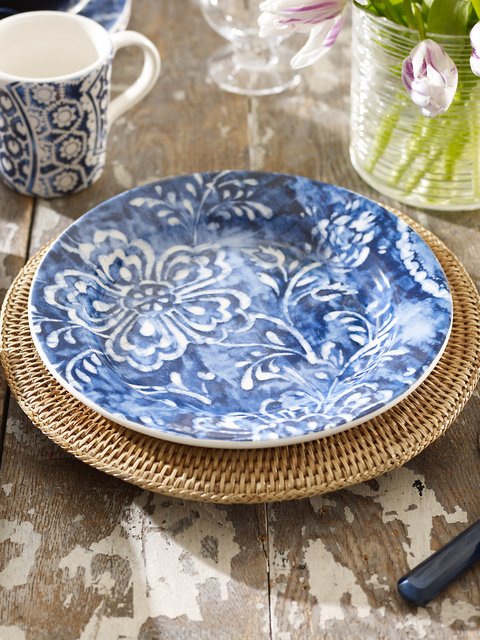
Well, those were actually inherited plates–some China and vintage Delft Holland–passed on from generation to generation; usually only to be left gathering dust in the cabinet or to be hung proudly on the living room wall; not really sure about what kind of impression they should make. And we’re not only talking about plates. We’re also talking about flower vases, teapots, and teacups, as well as something like butter dishes.

One day, I simply washed them all (a serious washing involved due to more-than-a-decade excessive dust-gathering) and started using them.

I make garlic and cheese butter and place it on the beautiful butter dish to be used every morning as a spread on my bread. I boil my green tea inside the elegant tea pot and sip it slowly from the gorgeously decorated floral teacup. I use the blue and white ceramic vintage plate for my scrambled egg.

It does feel nice, to eat from beautiful plates or drink tea from beautiful teacups. And right now, I do feel alright (and happy) to use them up on a daily basis instead of storing them away or keeping them as decorative items. Yes, I have to admit that at first, I felt a bit guilty. And undeserving. And scared.

Am I supposed to do this? This is too good. Do I deserve this? This is too beautiful for me. What if I broke it? 

***

But where do we actually start getting the idea that something can be too good for us? Are we actually being taught to lower our expectations and not have too high of a hope or to have big dreams–simply because someone is trying to protect us from hurt, failure, or disappointment that may lurk behind us?

He’s-just-too-kind-for-me is something I heard from a lot of women (and I might be guilty of using this nonsense once or twice in my previous relationships years ago–when I didn’t know better). In that sense, what are we implying with those words? Are we thinking that we’re so undeserving to be treated kindly? How often do we lessen ourselves to the point where we decided that we’re okay settling for less and lowering our standards only to please others?

Other times, I guess we’re doing it to protect ourselves–our hearts, our dreams, our hopes, our memories. We’re thinking about storing them away in someplace safe or hanging them on the wall for everyone to see–but not to touch. We’re too afraid of making failures or breaking our hearts or humiliating ourselves or looking vulnerable because then we’re going to get hurt, and then we’re not going to be perfect anymore (not to say that we are/were, ever).

Maybe we’re afraid that we’re not going to be those beautiful decorative plates that are being admired by everyone anymore–because the fact is when we’re no longer becoming a decorative item in life–just like those plates; we’re going to break or decay or our colors may get washed out after some times.

***

I made some Italian spices butter this morning and stored them in the beautiful butter dish. Every time I see it as I’m about to spread it on my bread, it becomes a great reminder for me to be brave and to not settle for less. To know that I am deserving of wonderful things, great experiences, amazing life, and comforting love; to believe that nothing is too good or too beautiful for me, and nothing is too good or too beautiful for you, too.

You deserve it.

And starting tomorrow, I hope you’re having your meal on a beautiful plate.

*photo credit: Wicker Paradise via photopin cc
hanny
WANT TO SHARE WITH SOMEONE WHO NEED THIS?

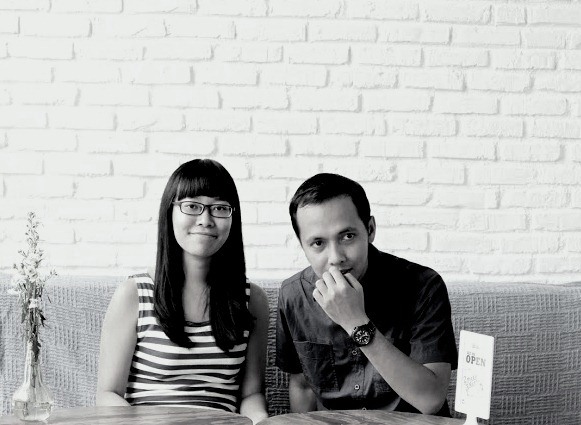
Maesy Ang and Teddy W. Kusuma wrote about their traveling journeys in the book Kisah Kawan di Ujung Sana (A Story of A Friend On The Other End), published by Noura Books in 2014. Both can also be found typing away on their travel blog, The Dusty Sneakers or hosting pop-up stores and creative events at POST Pasar Santa, Jakarta.


What’s the biggest challenge in writing a book together?


Maesy & Teddy: The biggest challenge was to begin.

Although we have blogged together in The Dusty Sneakers for five years, writing a book together required us to work much closer together. We’ve always known that our creative processes are different, but we never clashed until we started working on the book.

Teddy is a true blue artist; he writes when he wants to write. He doesn’t even need to know what the story is, he just needs some jazz and coffee to accompany him as he types away until the story reveals itself.

Maesy is the exact opposite. She could only write when she knows exactly what she wants to say and how she wants to say it. She needs to know the big picture and the small details, so she spends a lot of time plotting and brainstorming in her notebook before she could open her laptop and write.

So when we started, Teddy felt constrained by Maesy’s questions and planning, while Maesy got frustrated over Teddy’s push to write impulsively. In the end, we resolved it by playing to each other’s strengths.

For a week, Teddy was left to write the prologue to set the tone of the book, while Maesy thought, researched, and planned. Then Maesy brewed a huge pot of kokos ananas tea, brought out a stack of colorful post-its, and facilitated a two-hour workshop for Teddy and herself, which resulted in an outline for the whole book.

At the end of the week, we had everything we needed to start writing. Maesy loved how Teddy’s prologue set up the tone for the book, while Teddy was amazed by the fact that he could just glance at a wall with color-coded post-its to see all the plans for every chapter in the book as well as how they are linked with one another.

It was smooth sailing afterward, as each of us was free to work as we liked and find that our different approaches complement each other.
Maesy Teddy


What’s your idea of a “perfect journey”?


Teddy: To me, a “perfect journey” is one that touches you on a personal level. You know, the kind that has elements that you’d remember for a very long time. A trip filled with warm conversations with a close friend, one that reminded you of a significant moment from your past, or sometimes, a small random gesture of kindness, like when we were on a train in Japan, an old lady gave Maesy and I a panda origami she just made.

Mostly though, a journey is perfect when shared with a loved one.

One of my most vivid memories is a bumpy bus ride that Maesy and I shared in South India. We’ve been going our separate ways for more than a year before spending 14 days together in India, so I was missing her quite a lot. Maesy was sitting next to me, her face green from carsickness and she was about to fall asleep. It was just a bus ride, but I remember it vividly.

Maesy: I agree with Teddy, but to add a very practical dimension, a perfect journey is one where I could be completely unplugged. When I am able to roam without any Internet connection, it means that I am not travelling for work and that I travel with Teddy. There is no one I need to keep in touch with, nothing is urgent and no screen is competing with my surroundings for my attention. It feels very liberating, being unplugged.


What’s the life-story of this book? 


Maesy & Teddy: Like the story within, the backstory of the book also took place in several different places.

The idea first came to life under the coconut trees in Sekotong, Lombok. Maesy was recovering from a serious case of respiratory problems and Teddy has his first break after a long, intense period at his office.

We spent four days swimming, sleeping, sunbathing, and reflecting on what we felt missing in our lives. As much as we love our jobs, we felt that a creative spark was missing, a spark that only writing and traveling could fulfill.

We started reminiscing about all the life lessons we found through traveling and found that mostly came from the period when we first started the blog when Maesy got a scholarship to study in the Netherlands and we each traveled on our own.

We thought that these stories are best told in a longer narrative format than what we usually do in the blog, so that was the first spark of idea for a book.

It seemed that the universe was listening, for Noura Books contacted us right after we returned from Sekotong. Noura Books found our blog and asked whether we’d like to write a book, so of course, we said yes. What serendipity!

After we came up with an outline, we went for a four-day retreat to Portibi Farms, an organic farm in Cicurug, West Java. We took enough breaks between writing to hike and swim in a waterfall, bake bread, help out on the farm, and play Twister with the children of Portibi’s owners.

That proved to be a winning combo, for we drafted half of the book during the retreat! Perhaps also because we happened to stay in a room called “The Librarian”, another serendipity.

But mostly, the book was brought to life in Jakarta. In the weekday evenings, where Teddy stayed at work after everyone had left to write. In the weekend mornings, where a sleepy Maesy would brew pots and pots of tea – rooibos, Darjeeling, and hoji cha – to accompany her to write.

As much as we love traveling, the ultimate magic is finding the wonder in everyday life in our hometown.

Jakarta is home for us, and it is at home we saw the book came together – a truly magical experience for us.


What do you like the most about each other’s style in writing? 


Teddy: The way Maesy writes reflects a happy, sweet, quirky, and intelligent personality – just like she is in real life.

She has a way to reflect on and synthesize her encounters into a meaningful story. When she wrote about the dark side of fairy tales, she could draw the similarities between fairy tales and the tales told about Indonesia as a nation. Behind the beautiful story of Indonesia as a prosperous, united, and friendly nation, there is underlying darkness of inequalities and intolerance.

For me, home is where I was born, Denpasar. I was intrigued when Maesy explores the idea of home so far away from her own – in Taipei, in Amsterdam, and in Den Haag. I found myself thinking about the way she sees things far after I was done reading her chapters.

Maesy: Teddy writes with his heart on his sleeve. You can tell exactly how he feels about something through his writing.

In the chapter he wrote about the unpleasant consequences of tourism in Bali, you could see how upset he was although it was written in a mild tone. You could tell how much he loves his odd friend, Arip Syaman, although the chapters with Arip in them are full of silly incidents and humor.

You could sense his agitation when he questioned the call to preserve tradition during his trip to Baduy. Reading Teddy’s writing feels very intimate because he lets you know how he feels, in the most charming use of Bahasa Indonesia.


What kind of travel stories are your favorites? And why?


Maesy & Teddy: We grew up reading fiction and folktales. We find that characters matter the most in any story, so we love travel stories with strong characters.

We care much less about a place, we keep on reading because we want to know the characters better and get to know a place through their eyes.

Maesy grew up reading fantasy books, and in those books, traveling is how a character becomes aware of their personalities and grows as a person. Lyra Belacqua in Phillip Pullman’s His Dark Materials trilogy is bold and mischievous when the story started, but it was only when she traveled to the North Pole she understands that being brave also entails sacrifice and thinking of the consequences of her actions.

We love travel stories that are also stories of personal journeys, one in which the narrator finds something meaningful about him/herself.

We also enjoy Agustinus Wibowo’s Titik Nol. It is ultimately a story of humanity, seen in people he met throughout his travels, those whom he hold dear, and also within himself. These are the kind of stories that will last in our minds.


You talk about friendship and distance in your book, and how you’re bridging that gap through letters. In your personal life, what are the significance of friendship, distance, and letters to you?


Teddy: I started writing letters to friends before the dawn of e-mails. My best friend in high school went to university in Yogyakarta while I studied in Jakarta and we decided to keep in touch by writing letters.

Those letters to me were not just a way to connect with my friends, they were also a way for me to connect with myself. I only wrote my most significant thoughts and events that left the deepest prints in those letters.

How I write my letters became my habit in writing anything personal – be it blog posts or the book.

Maesy: The book (Kisah Kawan di Ujung Sana) was about the period when Teddy was my friend at the other end of the world, while I studied in the Netherlands and formed new friendships. These friends are now my soul sisters at the other end of the world – in Brussels, Managua, and Vienna.

While we stay in touch through Facebook, Whatsapp, and Instagram, it is only when we took the time to write long letters that I really could connect with them beneath the surface and see our friendship grow.

It is only when I write long letters that I feel the distance shrink. It is when I read their letters I believe that life is long and the world is small, that our paths will cross some other time.(*)

—For more interviews with Indonesian writers, click here. 

hanny
WANT TO SHARE WITH SOMEONE WHO NEED THIS?

Elia Bintang had just launched his first novel, Pantai Kupu-kupu (Butterfly Beach), published by Plot Point. He is also an avid blogger who writes at Jurnal Elia and a singer/musician. Albert Camus, Haruki Murakami, and Jean-Paul Sartre are some of his major influencers. He is now living in Bali, Indonesia. You can read more interviews with Indonesian writers here.


Why beach? And why butterflies?


Elia: It’s a very simple story. A girl meets a guy in a strange, faraway, almost mythical place called Butterfly Beach (Pantai Kupu-kupu). She is in search of the purpose of her life. He is in search of the love of his life. In Butterfly Beach, every morning, the sun rises with millions of butterflies flying out of it. That’s the general idea.

Why beach?

Because it’s a perfect setting for the characters. Imagine that you’re sick of the way you’ve lived so far, and decide to think about what it is that you really want, why do you exist, and stuff like that. Imagine that you are into the alternative way of living (and thinking) because the accepted way sucks. If you stay in the city, you’ll feel very much alienated. If you go to the mountains, you must be full of hatred.

This is not a story about alienation nor hatred.

There might be a subtle feeling of alienation throughout the book—I can’t put that out of the picture—but it has a certain quality of warmth, as well. A certain quality of fun–and a relaxed attitude. You’re serious, but not so serious at the same time. So, the beach is a necessity.

As for the butterflies, no particular reason. Maybe because they’re beautiful (just think about millions of them coming out of the sun). The main character has a rainbow-colored butterfly tattoo, too. She, as well as the guy, is a part of the Rainbow Community. It’s inspired by the Rainbow Family of Living Light in real life, a community that embraces the alternative way of living.

I choose butterflies more for artistic reasons, I guess.


How and where do you write?


Elia: When I’m working on a novel, I write for eight hours every day. I write anything that comes to mind for the first draft. After that, I review it, analyze it, make an outline, and begin the second draft. I review and analyze it again, decide on which parts that are inefficient and should be left out; and what I should do to improve the story and the writing. Then I begin the third draft.

If everything goes well, it’s all that it takes. But sometimes, it takes more.

I write anywhere. I’ve written in Jakarta, Yogyakarta, and Bali. All I need is a quiet, peaceful room with a closed door. And cigarettes. And cups of coffee. A beer, occasionally. Whisky. Songs that take me somewhere else. Magic mushroom would be nice, as well, for fresh new ideas and perspectives.


You’re a musician, as well. What is it that music can’t do, that writing can do, or vice versa? How do these two influence each other?


Elia: A song is a sword. A novel is a slow knife. If you want to die, get the first one. If you want to understand pain, get the second one. You will die, too, in the end, but as a deeper, wiser, more complete person.

My music doesn’t influence my writing. My taste of music does.

I like Radiohead, Sigur Ros, Massive Attack, Isaac Delusion, stuff like that. Their songs set my mood right when I’m writing surrealistic things, which is an important aspect of my work besides freedom and counterculture. They stimulate my senses and imagination.


I believe that our writings or stories reflect our fears, dreams, wishes, concerns, beliefs—or a combination of all those. How do you see Pantai Kupu-kupu reflects yours?


Elia: It reflects my concerns and belief quite a lot. I believe that we should live this life as subjects, not objects to labels, stereotypes, norms, values, and anything created by society.

We have responsibilities towards other people, of course, but we are individuals at the same time. We are free.

It’s up to us–how to live and define ourselves. All the characters in Pantai Kupu-kupu define themselves; or in the process of defining themselves.

I support equality between men and women. I’m not talking about the difference in salaries they make at work or the numbers of men and women in the parliament or stuff like that. I’m talking about the mindset.

Women shouldn’t be afraid of anything. Women are free individuals and shouldn’t give a shit about the pressure society puts on them; it’s how society sees them that has to change. Women shouldn’t live their lives expecting to rely on men financially and emotionally; because they are better than that, and are capable human beings—besides, men don’t owe women anything, we are all equal.

All female characters in Pantai Kupu-kupu are free individuals with good self-image and self-esteem.

Today’s culture was shaped by the generations before us. What kind of culture will we pass on to the next generations? It’s not the time to write about weak, fragile women and the superiority of men.


I sense several issues related to interconnectedness, finding oneself, and spirituality in this novel. How do you—yourself, as Elia—see these issues?


Elia: You pray to the ‘higher’ being every night and day. Then things work out as you asked. You say, my prayer is answered. Then things don’t work out. You say, my prayer is not answered. How do you see that?

I’d say, it’s just the nature of life.

Even if you pray to a tree, the outcome would be the same: sometimes you get good things, other times you get bad things.

Based on this argument alone, I see no point in being too spiritual. I believe in the existence of spirits, but that’s it. I never discuss anything beyond that in my writing because my purpose is to emphasize the absurdity of life and the surrealistic things you can experience, not the spirituality itself.

I’m a non-believer and I think life is absurd.

You can live all your life as a good person and die in a traffic accident or in a bombing. You can be a bad person, kill millions of people, live a long life, and some people suggest to make you a national hero after you die. One phenomenon could occur just because it ‘felt’ like occurring.

I don’t believe in interconnectedness.

About finding oneself, I always think that self-knowledge is important; and that in life, it’s much more important to be than to have. Do everything your way. Succeed your way, fail your way, and in that, you will find yourself. The logic is very simple. When you’re being you in every decision you make, self-discovery is inevitable.


What’s the most difficult writing days in your life look like? 


Elia: Writing is not difficult. Thinking of what to write is.

I always have a big picture in my head before I work on a story. I know how it’s going to be like, how the main characters look like, what are their strengths and weaknesses, their clothing style, how they move, how they become who they are, what they want, and so on. If you know all these before you write, it’s easy.

Writer’s block is a myth.

I don’t remember anything so unbearable about my writing process.

hanny
WANT TO SHARE WITH SOMEONE WHO NEED THIS?
Hanny illustrator
Hi. I'm HANNY
I am an Indonesian writer/artist/illustrator and stationery web shop owner (Cafe Analog) based in Amsterdam, the Netherlands. I love facilitating writing/creative workshops and retreats, especially when they are tied to self-exploration and self-expression. In Indonesian, 'beradadisini' means being here. So, here I am, documenting life—one word at a time.

hanny

TAKE WHAT YOU NEED
VISIT THE SHOP