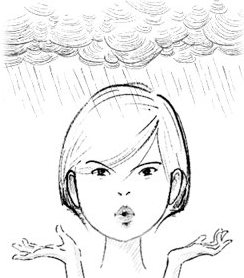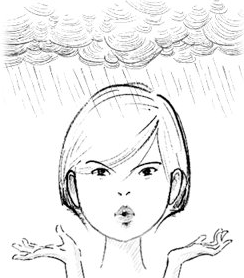
Why do we have the tendency to feel guilty when we have to stop, to give up, to rest, to slow down?

Maybe because we’ve been brought up believing that to be ‘productive’ we need to keep going, keep trying, keep moving, keep running…

But sometimes, to travel further, we need to stop and rest to recharge ourselves. When things are no longer serving us, we need to give them up instead of holding on. When we want to enjoy the journey, appreciate the experience, and make memories, we need to slow down.

This month, let’s give ourselves the time to do all of them–when we need to, unapologetically. Let’s give ourselves the ultimate permission to dedicate this month for ourselves, so we can have the chance to stop. To give up. To rest. To slow down.

Because we deserve it.
Because you deserve it.

hanny
WANT TO SHARE WITH SOMEONE WHO NEED THIS?

“Breathe like a turtle,” said Dr. Suresh, my Ayurvedic doctor.

He then mentioned the way some animals breathe: a dog (+24 breaths/minute), a bear (+15 breaths/minute), a turtle (4 breaths/minute).

“Animals that breathe slower live longer,” he said.

Thus, the turtle breath.

***

I know that breathing correctly and mindfully has a vital role in our wellbeing. We can clearly notice how we breathe when we’re angry, tired, anxious, rushing–and how they differ from how we breathe when we’re relaxed, calm, and slowing down.

I learned a few years ago that if you don’t know how to change your mood, change the way you breathe.

If you’d like to feel a bit calmer, breathe the way you breathe when you have just arrived in a beautiful, pristine place, and about to relax while admiring the gorgeous view. Or breathe following the rhythm of the ups and downs of a cat’s (or a baby’s) belly when it’s soundly sleeping.

Writing on my journal, decorating it, and flipping the pages unhurriedly in the morning helps me to breathe slower. Noticing the way I breathe throughout the day also helps me to know my mental state at a particular moment, and give me the opportunity to consciously ‘breathe’ a better mental state.

***

How do you breathe today? 🙂

PS: Oh, there’s also this beautiful app called Tide I installed on my phone as it has some guided breathing exercise.
hanny
WANT TO SHARE WITH SOMEONE WHO NEED THIS?

Can you believe that it’s only less than a month to the end of 2018?

I have been a little bit busy with work these past few months (and I am also working on my YouTube channel on journaling), but I have been missing working on my blog and sharing my thoughts & musings the way I used to do in the old days.

I always feel as if time flies away so fast, and I have to admit that sometimes I am being hard on myself–feeling that I haven’t done anything great, anything meaningful, anything worth remembering.

Maybe this is why one of my end-of-year favorite moments is actually having my me-time, flipping over the pages of my journals and reading all the small things that made me happy, tiny fragments of life that made me grow or rethink my beliefs and perspectives, delicious food that makes my belly purrs in delight.

This year’s end-of-year me-time involves creating an affirmation calendar for myself.

I found it a bit challenging to find a lovely calendar for 2019 that is already equipped with some Indonesian national/public holidays; so I decided to create one with the pictures from Unsplash in passport size for everyday carry.

When I finished, I thought: “Why not share it with everyone else?”
And so, the calendar is available if you’d like to download or print it. Just click here: Calendar 2019 – Passport Size

All in all, maybe it doesn’t matter if there is nothing big happening in our lives, as long as we can recall and reminisce the tiny ones as we remember them with gratitude.

hanny
WANT TO SHARE WITH SOMEONE WHO NEED THIS?

Intuitive Journaling Challenge: Why?

Well, first, it was because of #inktober–the 31-day challenge in the art community to draw something with ink throughout October. I was thinking of joining, but I wasn’t sure that I could actually do it for 31 days. Drawing (or painting) is still something quite new to me, and I’m still trying to get a hang of it.

However, I always love the idea of challenging myself to complete a tiny project, like when I posted about the things I’ve learned every single day for 28 days in February. Then, as I migrated into my new bullet journal this morning, I thought, “Why not having a journaling challenge instead?”

I was trying to come up with something that won’t take a lot of time to do and won’t need any specific tools/supplies; when it suddenly dawned on me that in 3 months, we’d say goodbye to 2018! How time flies! So, I thought, why not having a journaling exercise that will help us to reconnect and discover something new (or old) about ourselves–thus, we have 2 more months to prepare for our smooth transition to 2019?

And just like that, this challenge was born.

Intuitive Journaling: How to Do It?

Some refer to it as freewriting or automatic writing. The idea is to set a timer for a certain period of time: one minute, three minutes, five minutes, ten minutes up to you (although for this challenge, we’ll do a 3-minute session per day).

As the timer starts, begin writing (with pen and paper) in your journal, without really thinking, without really stopping.
Write whatever crossed your mind.
It doesn’t matter if things appear to sound weird, funny, or senseless.
The idea is to translate your tangled and busy mind into the paper.

Here’s the secret: DO NOT stop as you write, not even for a split second. Do not think. Just write until your time is up. Follow the chaos of your mind and write everything down. Everything.

You could even write something like, “I don’t know why I am doing this, oh, I’m so hungry, like so, hungry and my foot itches and what should I write this is strange really…”

It’s OK.

Keep writing no matter what until your timer beeps.

I like to call this technique ‘intuitive writing’ or ‘intuitive journaling’ because after doing this practice for a while, you will notice the magical moment when your intuition starts talking to you from the chaos of the page.

This is exactly why you need to relax and let go of the need to control; set aside the urge to think, to edit, to look for the right words or sentences.
When you’re still trying or thinking, you are not letting your intuition take over.

So, let it flow. Let whatever needs to come out from within you find its way onto the page.

How to Join This Intuitive Writing Challenge and More.

Here’s how it’ll play out:

  1. All you need is a pen, a notebook to write, and a timer (you can use the timer on your phone). Set the timer to 3 minutes to start your intuitive journaling session. Can you do more than 3 minutes a day? Sure. However, remember that we tend to go strong at the beginning of a project and then lose our drive a little bit more every day. Personally, I believe that completing the challenge by writing 3 minutes a day for 31 days will benefit you more than writing for 15 minutes a day, but stopping after the first 7 days. And please only write by hand! Why? Find the answer here.
  2. Every day, before 8 am, I will post your intuitive journaling prompt on this page (at the end of this post). I don’t want to post all the prompts right away, because I think it will be overwhelming. Plus, there will always be that temptation of “thinking” about what to write for tomorrow’s prompt, which is something that will beat the purpose of intuitive journaling. So, every day, when you’re ready to write, open this page and see that day’s prompt. I will also share the prompt via my Instagram Stories.
  3. If you want, you can share your experience of going through each challenge or even share what you write. But you don’t have to do this. Just know that you’ll benefit from it even if you want to keep the journal to yourself. Don’t feel the obligation to share if you don’t feel like it.
  4. I am using the hashtag #intuitivejournaling #writeandwander and #octoberjournal to talk about this challenge/project on social media. I might not share what I have written throughout the challenge, but I might want to share some lessons, memories, or sentiments that come up when necessary. You can also share your experience by using those hashtags, so we can find each other. Know that you don’t have to share or use the hashtag if you don’t want to. You know I’m not fussy about those kinds of things 🙂
  5. Have fun, and don’t forget to set your intention to use this challenge as a way to discover something about yourself, or to hear the message you need to hear.

The 31-day challenge.

Happy journaling!

hanny
WANT TO SHARE WITH SOMEONE WHO NEED THIS?

Usually, it started out with a conversation like this:

+ “What are we going to have for lunch?”
– “I don’t know. Can’t think of anything.”
+ “Me neither. Let’s go to the market, then.”

Or this:

+ “What are we going to do this weekend?”
– “I don’t know. Can’t think of anything.”
+ “Me neither.”
– “Visit the market?”
+ “Sure.”

While traveling, visiting local markets (and grocery stores) has always sat on the top of my bucket list. I love people-watching and local markets are the best place to do this while sipping a cup of freshly-pressed orange juice or having a bite of that delicious Kibbling (fried cod) sandwich–topped with onion sauce.

Amsterdam is vibrant with local markets.

Some of them, like the flower market (Bloemenmarkt), Waterlooplein flea market, Het Spui book market (Boekenmarkt) and the ever-popular Albert Cuyp Market can be pretty packed with tourists–but even then, I still find the whole experience entertaining.

It’s all about the music in the air, the clinging and clanging of goods and utensils, the explosion of scents and colors, and the murmurs on the stalls on the left, and on the right: everything is so alive, so vibrant, so attractive!

My favorites to visit are actually the neighborhood markets–smaller local markets in different residential areas where locals get their fruits and vegetables, fish, meat, and bread. The one closest to where I was staying the last time was the Ten Katemarkt in Amsterdam West (the hip foodcourt De Hallen is nearby!), and the other one I love is the Noordermarkt on Saturdays–when they have their farmer’s market.

Some tips before visiting the local market in Amsterdam:

  1. Find out what kind of market you’d like to visit. There are book market, flower market, flea market, fabric market, art market, vinyl market, and many more.
  2. See the opening days/hours. Some markets closed early (or completely closed) on certain days. You don’t want to be disappointed!
  3. If you don’t have enough time to explore the popular markets, find a neighborhood market that is closest to where you stay. You can always get some food there.

You can find more information about the local markets in Amsterdam (location, opening hours/days, and what they sell) here and here.

Personally, these are some of my favorite things to see (or buy!) when I visit Amsterdam’s local markets:

  1. Heavily-decorated vintage plates and cups.
  2. Old pins.
  3. Beautiful fabric.
  4. Delicacies from a country I’ve never visited, served from a food truck.
  5. Watercolor postcards or canvas paintings.
  6. Home-made jam, tea-mix, or spices.
  7. Potted plants!


When I’m alone, I can spend hours in these markets: standing in front of different stalls, sniffing the fresh produce, reading the labels on jars, running my fingers through vintage dining utensils, and admiring the naturally artistic way the sellers move behind their counters.

It reminds me of the feeling I have while I am sitting by the beach, gazing at the rolling waves licking the sand.
It’s strange how I can always feel somewhat calm in the midst of such a bustling environment.

Hanny Kusumawati

hanny
WANT TO SHARE WITH SOMEONE WHO NEED THIS?

I published this illustration on Instagram yesterday, and it seemed like the message resonated with a lot of you. Thus, I decided to post that illustration here, along with a chapter from my interactive playbook, Break, Hearts.

I used to think that love is synonymous with ‘sacrifice’.

I could still remember the pride that was swelling inside of my broken heart from being able to say: “I’ve sacrificed so much for him!”–as if by sacrificing more, I had won a nonexistent competition to prove my significant contribution to the relationship; while the other party contributed much less. So, I sacrificed more to show how I can love more and to be loved more. I hurt my feelings to protect other people’s feelings.

Only in the past few years have I realized that love is not about sacrificing something–or someone. It’s not about succumbing to anything–or anyone. We don’t have to choose who or what to be sacrificed to be able to love (and to be loved).

Love should be a win-win instead of a win-lose. A relationship is not a matter of mutual sacrifice. It’s about being able to compromise. And yes, it took me a long time to understand the difference between the two.

When I love from a broken heart and hurt feelings, I came from the mindset of lack. Therefore, when I have to share the love inside of me, it has to feel like a sacrifice–because now that I’ve shared it, I ended up with less.

When I learned how to love from a heart that is full and content (because self-love has become my top priority), I realize that loving could leave me with a whole functioning heart–not only a fraction of it. It’s not a sacrifice. It’s a pleasure. There’s so much love inside of me to give; I can’t help but sharing it with the people I love.

***

Excerpt from the interactive playbook, Break, Hearts.

There are times when picking ourselves up after a heartbreak feels almost impossible. We feel as if we’ve lost ourselves. We feel as if the version of ourselves—the one when we were in a relationship—is missing. Strange. Because we cannot lose ourselves, can we?

But, the truth is: we can.

At certain stages in our lives, we can lose sight of our real selves. It is particularly for this reason that we have the term ‘self-discovery’—a journey to rediscover ourselves. But how do we lose sight of ourselves in the first place?

Most of the time, by pretending to be someone else.

We pretend to be someone we’re not to please others or to receive their approval. Some of us play this role for so long to the point where we start to believe that we are who we pretend to be.

Fake it until you make it, they said.

This is precisely what some of us are doing.

We are pretending to be the version of ourselves that—we believe—will be approved by others more, will be wanted by others more, will be loved by others more.

For this reason, a lot of us enter a relationship by pretending to be someone we’re not. We are doing the things we don’t typically do, behaving the way we don’t usually behave, and tolerating stuff we often won’t tolerate.

We are obsessed to find out what our significant other like or dislike, want or do not want. We believe that if only we knew all these, then we can present ourselves as an ideal partner. We are not confident that appearing as our true selves will interest our significant other enough.

Thus, throughout the relationship, we keep molding and readjusting ourselves to please our significant other: craving for their approval. The problem started to kick in when we were tired of putting on a show and realized that we have turned into the person we are not.

In such uncomfortable situations, our real selves sometimes appear, to the point that during fights or argumentations, our significant other might say: “It feels like I don’t know you anymore.”

Which, to this extent, might be valid.

On a day-to-day basis throughout our relationship, we might have presented ourselves as someone else. Someone we thought would better suit our significant other. We’ve been wearing masks.

However, who is it that our significant other truly loves? Our masks or ourselves? If we appear in front of our significant other unmasked, do we think he or she would still recognize us—let alone love us?

At the tipping point when we realize that we have repressed our true selves only to please our significant other, a word makes itself visible: sacrifice.

We feel as if we’ve made sacrifices throughout our relationship. Sometimes, we ask, “Why am I the only one who make these sacrifices?”

But here’s a hard pill to swallow: love should not feel like a sacrifice.

Sacrifice means one person gets nothing while the other person gets everything. If it feels unfair, we are right. It is unfair.

The more we sacrifice, the more we got frustrated with our relationship, with our significant other, and ourselves. The more we sacrifice, the more we’re losing ourselves.

The thing I’ve learned throughout the years is this: in a healthy relationship, we do not need to make sacrifices.

We compromise.

hanny
WANT TO SHARE WITH SOMEONE WHO NEED THIS?
Hanny illustrator
Hi. I'm HANNY
I am an Indonesian writer/artist/illustrator and stationery web shop owner (Cafe Analog) based in Amsterdam, the Netherlands. I love facilitating writing/creative workshops and retreats, especially when they are tied to self-exploration and self-expression. In Indonesian, 'beradadisini' means being here. So, here I am, documenting life—one word at a time.

hanny

TAKE WHAT YOU NEED
VISIT THE SHOP