Almaty is a big city. How does one travel around in Almaty? Well, by bus. Or by metro (subway). Or by taxi. I didn’t get to experience the bus, but I adore the metro (subway). On the other hand, Almaty’s taxi story is amusing. Any cars in Almaty could function as a taxi. So, what you should do is to hail this ‘unofficial cab’ by lifting your hand in front of you as high as your waist. Don’t raise your hand too high if you’d like to do it like a local.

The next thing you should do is to bargain with the driver on where you’d like to go and how much you’d have to pay. Usually, if you’d like to travel anywhere inside the city, the cost is about 300-500 Kazakhstani Tenge (KZT). KZT 1000 worth around USD 7. Language barrier made it more difficult for me to take the taxi. First, I needed to communicate my destination. Second, I needed to bargain for the price. Third, my local Kazakh friends told me that I might be given a higher price because the driver would know that I was a tourist.

Thus, I retreated to the comfortable metro. Metro stations were located within walking distance from my hotel. The nearest one to Hotel Kazakhstan is Abai station. Almaty’s metro-stations are themed. They look like museums. Abai station, for instance, took the theme of the famous poet, Abai Kunanbaev.

He was a poet, writer, public figure, founder of the modern Kazakh written literature, culture reformer in spirit of rapprochement with Russian and European culture on the basis of the educated liberal Islam.

Baikonur metro station looks like a space shuttle. Baikonur Cosmodrome is the launch complex where Sputnik 1, Earth’s first artificial satellite, was launched. The rocket that lifted Yuri Gagarin, the first human in orbit, was also launched from Baikonur.
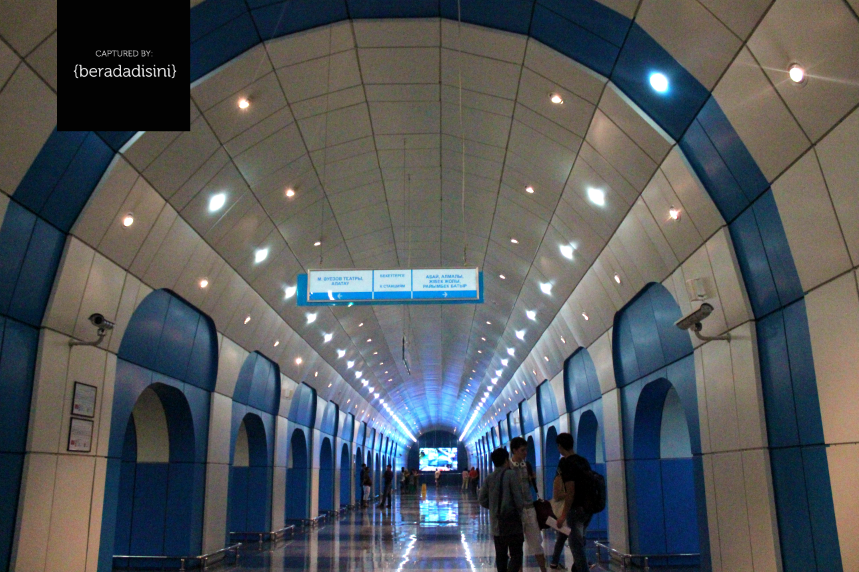
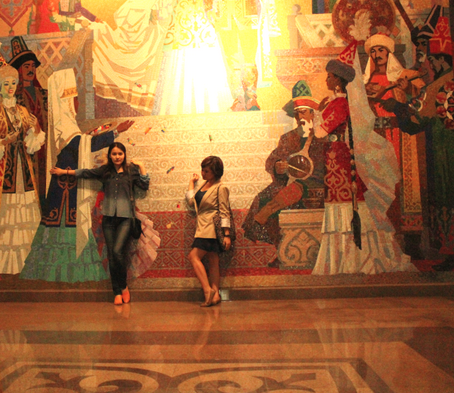
However, my favourite is Grand Theatre (Dramteatr im Auezova) metro station. It’s so pretty, with thousands of mosaic tiles forming a scene from a folktale.

For one ride with the metro, you need to pay KZT 80 only. Very cheap! Finding out which station you should get off at or which side you should take (left or right—heading to this station or back at that station) might be a bit confusing. However, if you could read some of those Russian alphabets (I managed to grasp it in a few days), you’d find it easier and more convenient to ride on the metro.

To reach the “hip area” where most bars/restaurants/clubs are located (like Barfly at Hotel Kazakhstan), or should you want to ride a cable car to KokTobe mountain, the stop is at Abai station. If you’d like to visit Almaty circus, the amusement park, the museum of art, get off at Grand Theatre (Dramteatr im Auezova). Hop off at Zhybek-Zholy if you’d like to visit Arbat—the artsy street of Almaty with its stretch of upscale restaurants/bars and branded shops or if you’re interested in visiting the famous Green Bazaar.

So, what did I do in Almaty in my remaining 5 days?
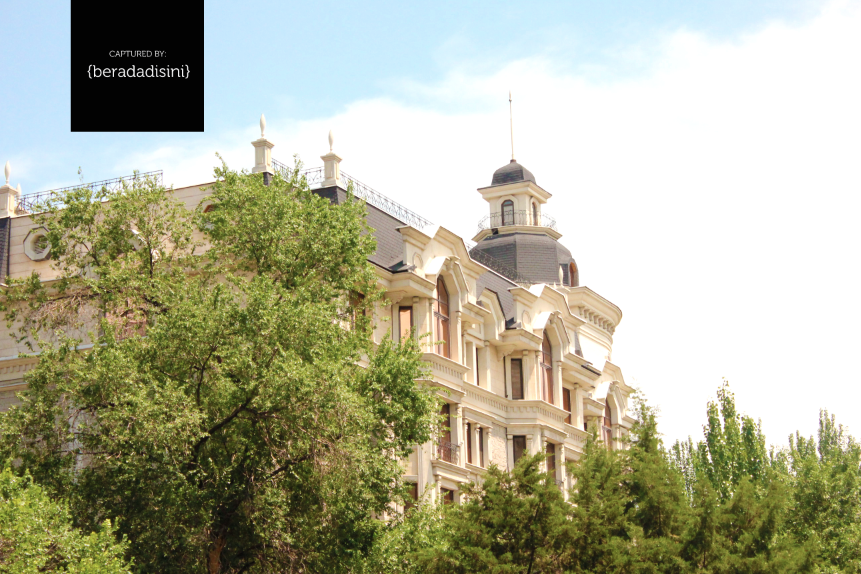
I visited Zenkov Cathedral in Panfilov Park, rode the cable car to KokTobe, experienced Almaty’s traditional market at Green Bazaar, took a cab to Medeu (where the olympic-sized ice-skating stadium was located), strolled around Arbat, spent 5 hours to savour the amazing French painting & sculpture exhibition at Almaty’s Museum of Art, and fell sick.
hanny
WANT TO SHARE WITH SOMEONE WHO NEED THIS?

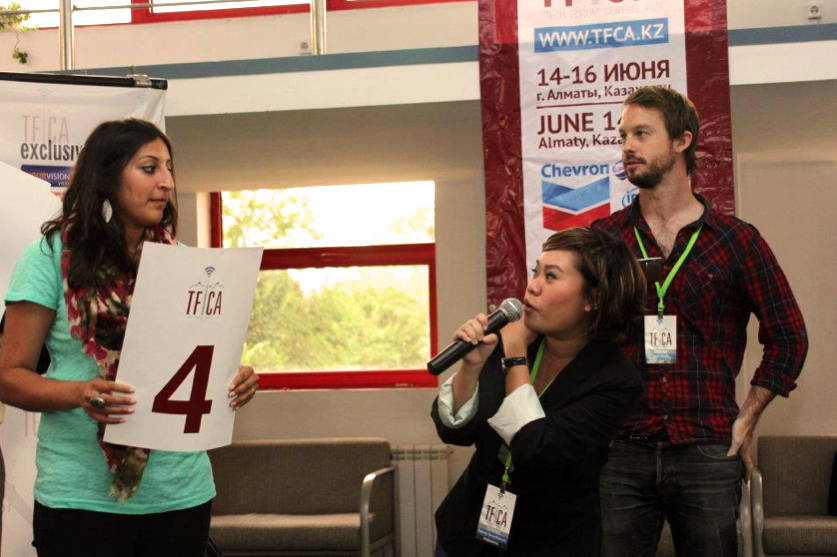
I knew nothing about Kazakhstan, let alone Almaty. I knew that it’s a country located in Central Asia, I knew about President Nazarbayev, and I had heard about the movie Borat (though I haven’t watched the movie—never felt intrigued to do so); but that was all about it. Thus, I was so excited when I got invited to speak at Tech Forum Central Asia (TFCA) 2012 in Almaty, Kazakhstan last June.

Organized by U.S. Mission to Kazakhstan, in partnership with Civil Alliance of Kazakhstan and KIMEP University, TFCA 2012 brought together youth leaders and activists from the -STAN countries (Kazakhstan, Uzbekistan, Kyrgyztan, Tajikistan, Turkmenistan, Afghanistan, and Pakistan) to meet, discuss, and brainstorm with a group of technologists and fellow activists from all around the globe about the problems they are facing in their respected countries, and how technology can fit in the picture. | *)More about TFCA 2012 can be read here.

So, that was how—more or less, I got myself stranded in Almaty, Kazakhstan.

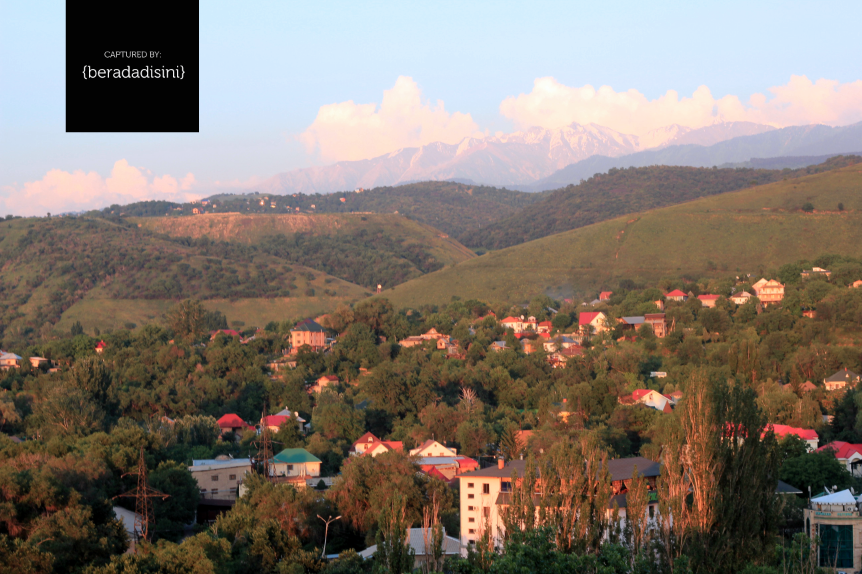
The very first thing I noticed when I landed in Almaty was the fact that people here didn’t speak Kazakh. Being me, of course I had spent 2 days learning “Useful Phrases in Kazakhs” online, but turned out that people in Almaty speaks Russian. It’s kind of challenging to roam around Almaty by yourself if you can’t speak the language. Thus, in the midst of preparing some slides for TFCA 2012, I started all over again; learning Russian in my (thank God it’s wi-fied) hotel room. I should, at least, know how to greet people, introduce myself, saying thank you, ordering basic food in restaurants, and asking for directions. When my eyes got tired, I tiptoed to my room’s window and stood in front of it, swallowing the beautiful view of Almaty’s snow-topped mountain.

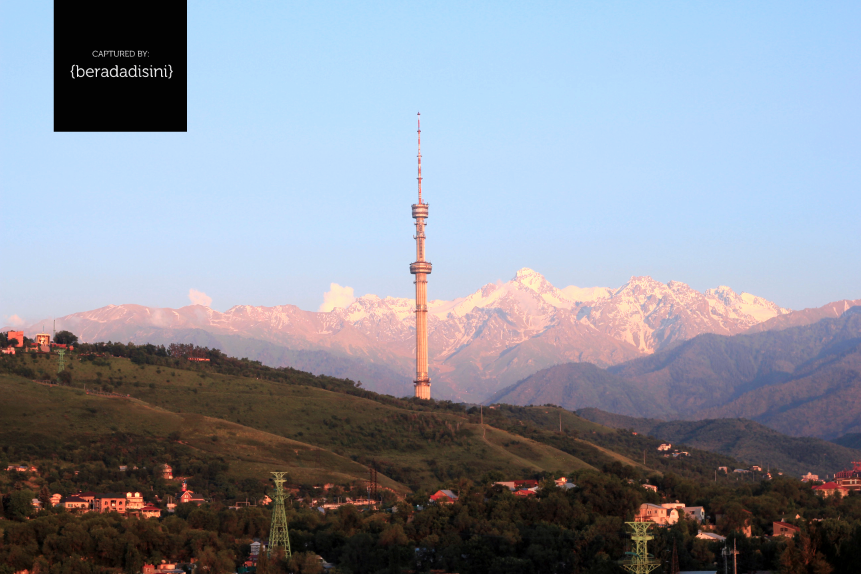
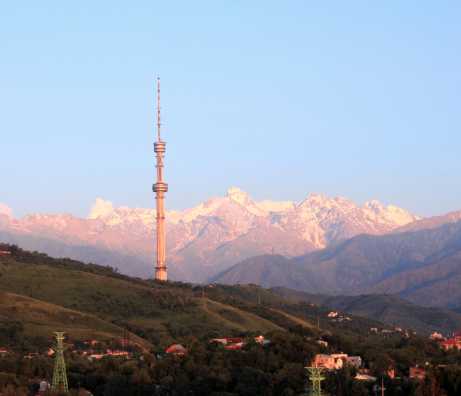
The TV Tower (in the middle) is the symbol of Almaty city (oh, and Almaty means “the valley of apples”). Almaty is a modern city—in one and other way, it’s very Western. The girls are very fashionable. You can see them walking on the street wearing high-heels, dressed in colourful gowns or short pants; with sunglasses on, carrying fancy bag in one hand.

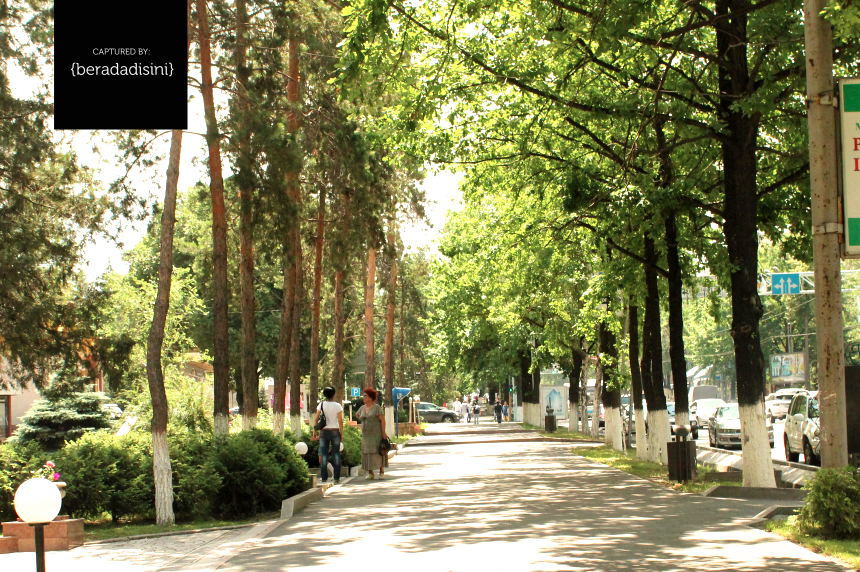
What I love the most from Almaty is the cleanliness and the comfortable sidewalk (which explains why the girls can walk around in stilettos). When my new Kazakh friends asked me what I love the most about Almaty, I cried out whole-heartedly: “The sidewalk!”—and they looked at me as if I were crazy.

If you don’t like the weather in Almaty, wait for a few more minutes. In mid June, I experienced sunny day, windy day, rainy day, stormy day, and another sunny day in the interval of 5 hours only. The locals said that in the winter, the temperature could drop to as freezing as -40° C (I’ll die!).

Whether you look Asian or Caucasian (or a combination of both), you’ll fit right in Almaty. With my Chinese look, I blended in very well with the locals. Waiters in restaurants handed me Russian menu, some people in the metro station asked me things related to the train’s direction—and looked at me in disbelief (or laughed) when I said: Isvinyih, yanyi gavaru pa Ruski (sorry, I do not speak Russian); pronouncing each word perfectly.

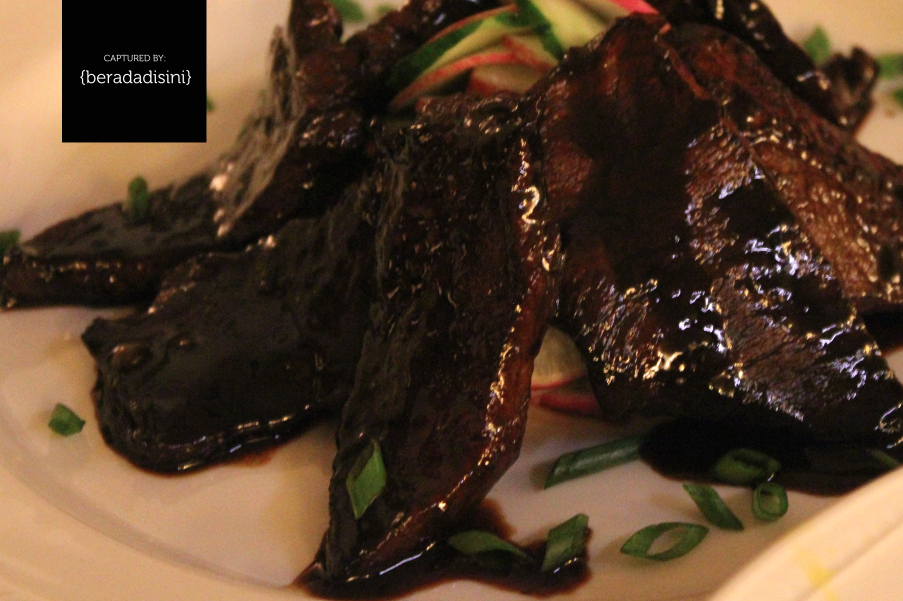
On my third day in Almaty, I found myself tasting this delicious horse-flesh teriyaki at Le Dome restaurant.

Horse meat is common in most restaurants in Almaty. I had never tasted horse meat before, so I didn’t expect it to be so tender and delicious!

My encounter with food was how I learned about prices in Almaty. Almaty—I found out about it way too late—was actually one of the most expensive city in the world. The food here is more expensive than Europe (well, at least compared to Spain, Portugal and Greece). For a decent meal, you could spend US$20-35; and for a more lavish meal in a nice restaurant with dessert and fresh juice, you could spend around US$40-70. Not only food. Prices of fruits, vegetables, accessories and fashion items would make you frown as well. A lot of goods in Almaty were imported from other countries, like Uzbekistan. That’s why the prices are rocketing. So, what’s cheap in Almaty? Well, there are three things: chocolate, liquors and caviar.

During my Almaty days, I stayed at Hotel Kazakhstan. This was the hotel where other speakers of TFCA 2012 were staying as well. The hotel used to be the tallest building in Almaty.

Right next to the hotel was this fast-food chain called Noodles and the coffee shop, Gloria Jean’s. TFCA 2012’s speakers (well, including myself) retreated here from time to time to grab a quick lunch or pick up our morning coffee.

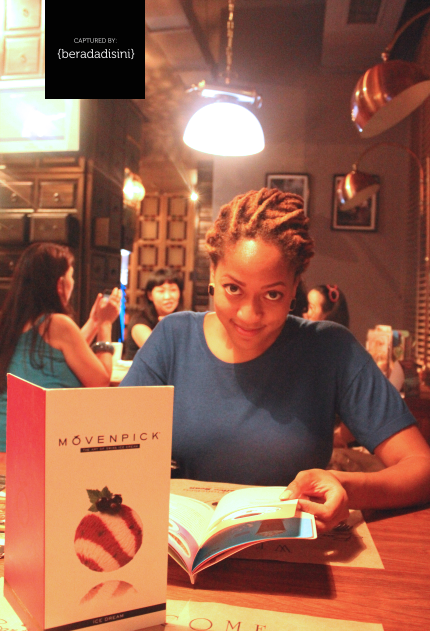
They also served Movenpick “Ice Dream” here (yes, they called it ice-dream). Around midnight, I found myself stranded here with Brittanie, attacking ice-cream and apple pies. The ice-cream and apple pies were just extremely good.

Once TFCA 2012 was finished; I gave myself 5 more days to explore Almaty. Everyone was surprised when they heard about this. They asked me what would I do with my remaining 5 days. I said, really… I don’t know. I didn’t have any fixed plans back then. I might go to the mountains or to the lake, or to the conservation area… or just hanging around town, taking pictures and reading books.

“But, why?” people asked. “But, why not?” I answered.

So, how did I actually spend my remaining 5 days in Almaty?

hanny
WANT TO SHARE WITH SOMEONE WHO NEED THIS?

I know that I’ve been postponing this for quite some time. A part of myself refused to say an official ‘goodbye’ to Santorini—thus, I found it difficult to actually sit down in front of my computer and write this last part; the epilogue. Finally, I’m writing this from Almaty, Kazakhstan, somewhere in the midst of the mysterious charm of Central Asia. An encounter with someone here a few days ago reminded me of a conversation I had with G inside the car on my last day in Santorini, when he drove me to the airport.

It’s all about living a life without regret. A life worth celebrating.


“I love my job, I love what I do. I get to talk and meet with a lot of interesting people,” said G that cloudy morning. “But I don’t like money. Really, I hate money. That’s why I spend it. I travel around the world and spend loads of money. I even invite my friends to come along with me. Then I go back here, without money, and start working again. But it’s been an amazing life. You know, if I should die today, I have no regret. The business is running well, I know that my family will be alright without me. My father, my mother, they are doing fine. And I am happy, Hanny. If I die today, I will die happily. I will die a happy man.”


The following week, I received a reply from AP about the thank-you note I’ve written for the great meal and the great service I’ve experienced in his tavern. “Honey, I’m really happy because you’re the proof of all the hard work and efforts we make everyday to be everything-perfect! We see our customers as friends first,” wrote AP. “We’re learning, from generation to generation, to give our best. To be hospitable. And to do everything with love. One baklava is waiting for you, so come again as soon as possible!”


And what about those guys who came up with the lovely Atlantis Books in Oia? If you’ve read their stories in my previous post, you’ll see that it all started with nothing but love and passion.

If there’s any secret ingredient to live a life without regret, that must be it. Love. To do things that you love, and to do things that you might not love that much with a lot of love. It’s about seeing people that you love happy and content. It’s about radiating the love inside of you, which in turn will make people around you feel accepted and comfortable. You do not judge. You do not compare. You do not count. You have no fixed plans. You seize the day and grab the opportunity. You never wish that you said ‘hello’ because you always do. You connect. You smile. You laugh. You flow. You love. You live.


Should you have the opportunity to visit Santorini one day, please come and meet these gorgeous souls who understand the art of living a life without regret:

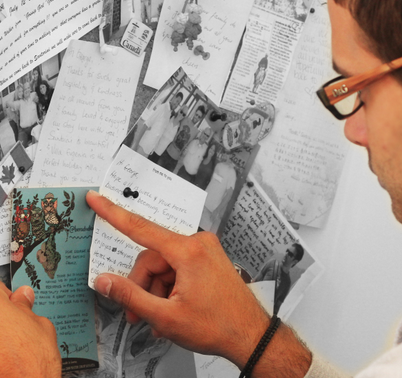
  • George Katsipis | Villa Evgenia Hotel in Fira, Santorini. Ranked #1 of 25 specialty lodging in Fira by TripAdvisor (that’s what love can do). If you’re at the reception area, look for an owl postcard on the customer’s board: that’s mine!
  • Alexandros Passaris | Petros Fish Tavern in Oia, Santorini. Enjoy the tasty grilled fish while admiring the sunset view by the ocean.
  • Oliver, Craig, Tim, Maria and Chris | Atlantis Books in Oia, Santorini.

——————————-

More in this series:

hanny
WANT TO SHARE WITH SOMEONE WHO NEED THIS?

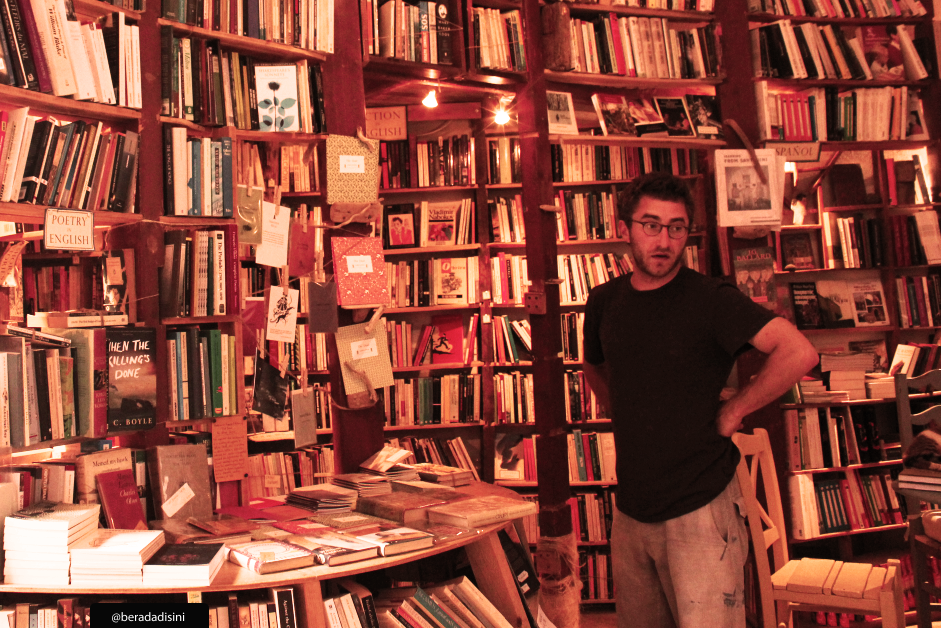
Wherever I go, I always find myself being drawn by tiny old-looking bookshop. Of course, gigantic bookstores like Kinokuniya or Taipei’s 7-storey high Eslite are amazing and jaw-dropping. But there’s always something romantic about a small bookshop. You can sense this personal touch, you can more or less gauge the characteristics of the owner. All the things he/she sell is a reflection of who he/she is: the title of the books, the way the bookshop is decorated, the shelving system, the items being displayed behind the window, the way he/she greets people… each and every little details convey a story.

Santorini holds two precious little bookshop I adore so much. The hidden jewel (just like what its name suggest), Atlantis Books in Oia and Books & Style in Fira—not far from the bus station (the owner of the bookshop is the one who gave me Karagkiozis wooden puppet as a gift, and I gave him a bottle of Vinsanto as a parting gift before I left).

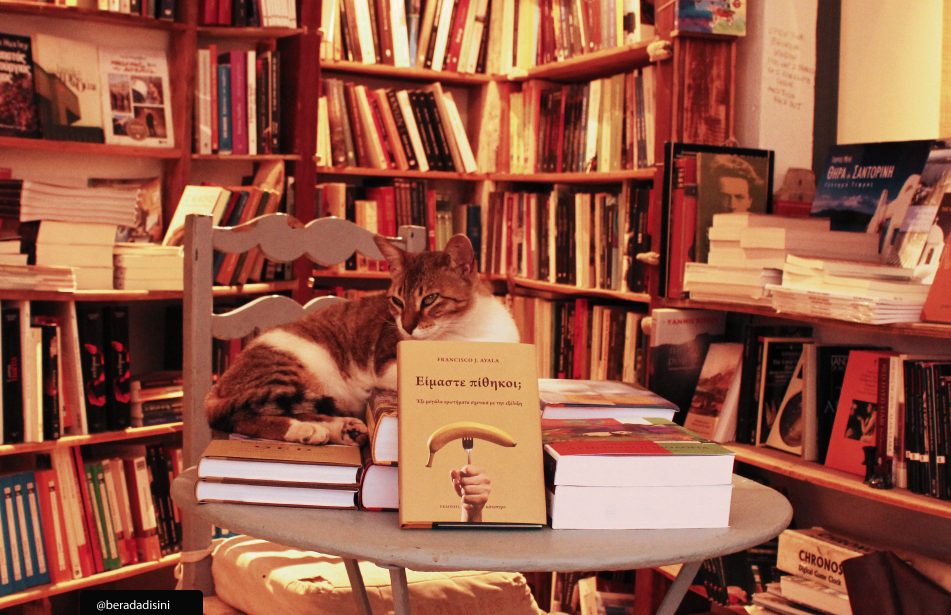
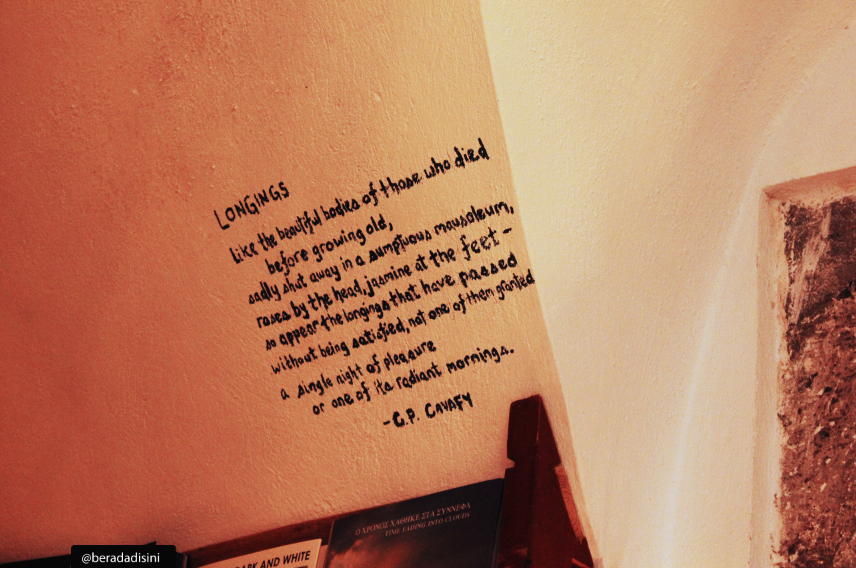
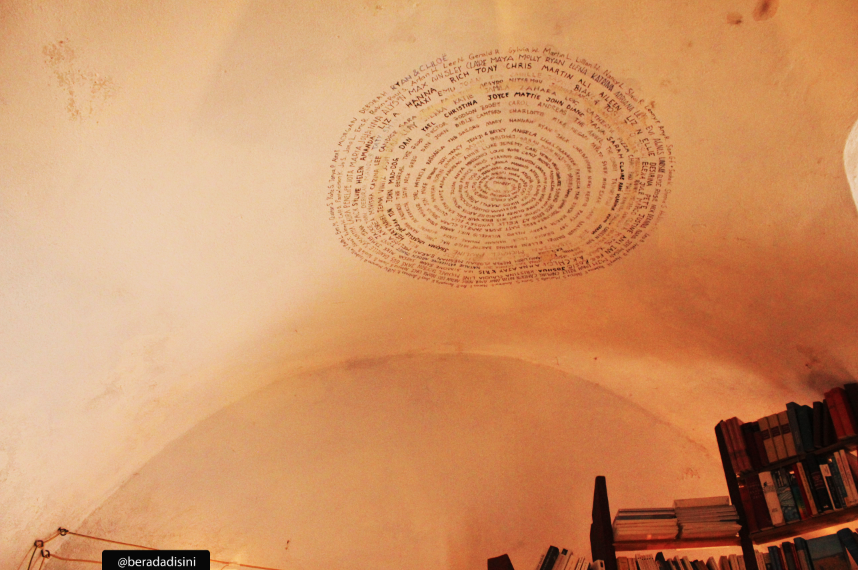
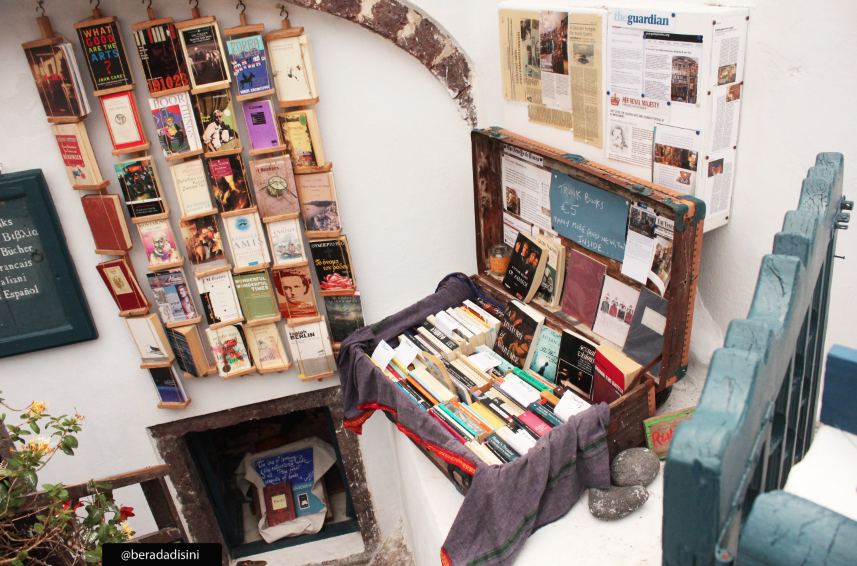
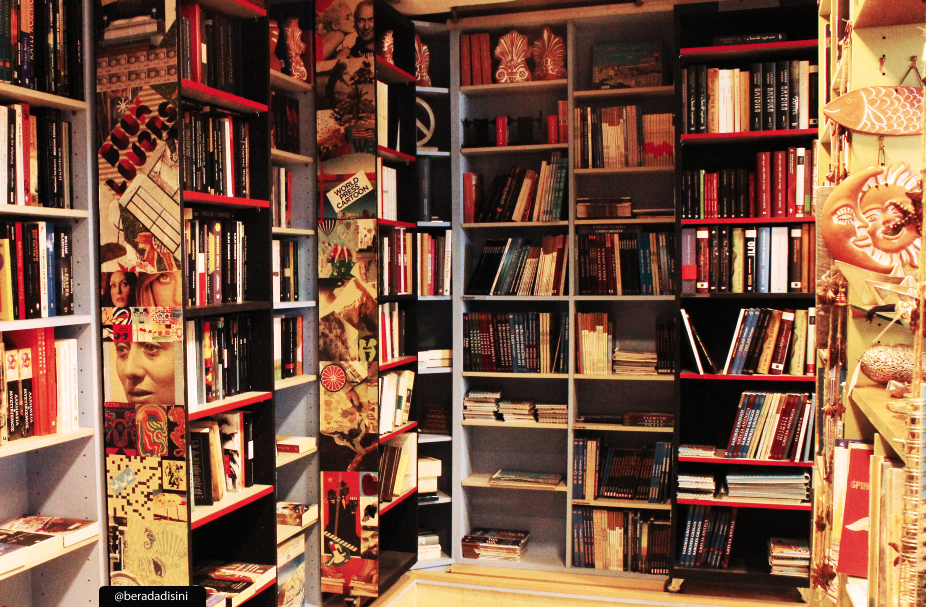
Atlantis Books is a true hidden treasure. You could miss it easily as you walked by those colorful tiny shops in Oia’s alleyways. But I always think that I’m a bookshop owner in my past life. Books are calling me. Bookshops are my sanctuary. And that’s how I found Atlantis Books that windy afternoon, climbed down the stairs to their magical blue door, and as I stepped in, I realized: heaven must look like this.

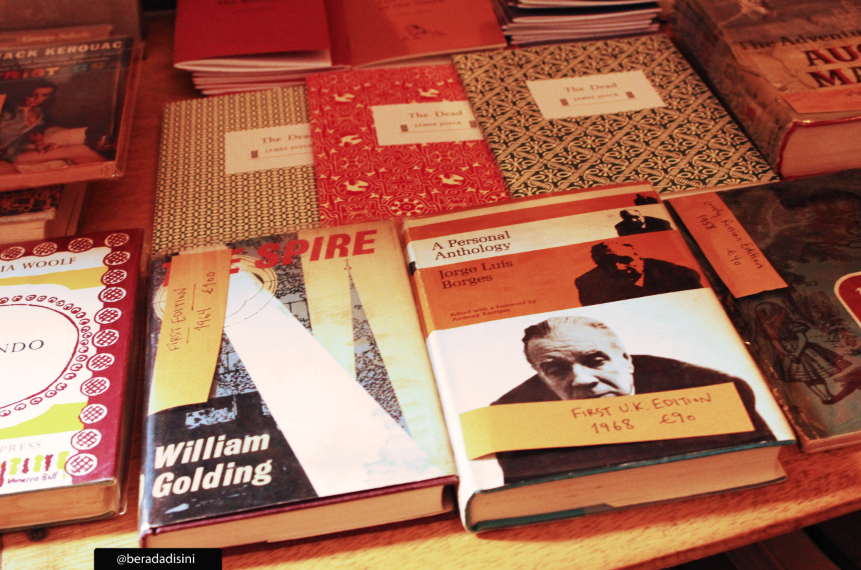
When it comes to books and reading, I love it the traditional way. Looking at those crumpled cover, caressing the flipped pages, reading the notes written on the side of the page with a pencil, laughing at the coffee stains, smelling the damp paper—vintage books get me high! And Atlantis Books is heaven because they have these vintage collections and some classic’s first editions. True gem.

The story behind this bookshop—as appear in their official site, is even more romantic:

“In the spring of 2002, Oliver and Craig spent a week on the island of Santorini. The land inspired them and there was no bookshop, so they drank some wine and decided to open one. Oliver named it Atlantis Books and the two laughed about how their children would run it someday. In England, Tim took Craig for a walk along the Sussex coast. Craig told Tim about the bookshop and Would he like to build it. Tim said Great!

For a year the idea percolated as Craig and Oliver went about graduating from university. Around his thesis deadline Craig called Chris and talked about the bookshop. Chris said Can I come?

An email from Jenny went like this: Maria and Craig, I’m introducing you both. Maria, Craig’s going to Paris in December and thence to Santorini. Craig, Maria is from Cyprus and is English Literature & bookshop employee extraordinaire. Love you both, J.

The four boys and Maria devoted six months to saving money, finding books, settling debts, writing and reading and thinking. Tim borrowed a van named Danny. Will offered to design a website and a wave logo and said Could I come along.

New Year’s Morn, Quinn packed Danny, waved us off and we ploughed across the continent and landed in Oia. We found an empty building facing the sunset, drank some whiskey and signed a lease. We found a dog and cat, opened a bank account, applied for a business license, found some friends, built the shelves, landed a boat on the terrace and filled the place with books. Jenny came in April and painted everything blue.

Atlantis Books opened in the spring of 2004 and lived below the castle for one year. In the winter of 2005  we moved into the center of town and settled nicely into the community. We’ve had food festivals and film festivals, writers reading on the terrace, and a host of cats and dogs.

The bookshop feels like home now and we’re still laughing about how our children will run it someday. As Will says, it’s as easy as that. As you. As that.”

Books & Style is nostalgic in its own humble way. It reminds me of the little bookshops in my hometown where my parents used to take me. Apart from some lovely postcards, they have children’s corner (where I found the Greek edition of The Little Prince to complete my friend’s The-Little-Prince-book collection), wooden souvenirs, as well as recipe books. But what I love the most is the watercolour paintings and the vintage-looking tin cans/boxes. They are so beautiful!


I’m still holding on to this all-time dream: to open up a small bookshop with a small cafe inside it (and I always believe that I’ll meet my soul-mate in a bookshop!). Wish me luck!

——————————-

More in this series:

hanny
WANT TO SHARE WITH SOMEONE WHO NEED THIS?

In the end, it is not about the city, nor the streets. It is also not about those picturesque hills or beaches or mountains. And it is not about the local food or delicacies, traditional dances or performances. It is definitely not about the tourist attraction, nor the hidden exotic spots. And, surprisingly, it is not even about the photographs you have taken, no matter how wonderful they turned out to be.

It is always—always, about the people you meet along the way.

From my previous travelling journeys, I realized that the places I cherish the most are places with names and faces; places where stories and dreams are being shared with someone you have just met for the very first time; places where you arrive as a stranger and depart as a dear friend. It is that connection that matters. It is that warm feeling of friendship that lingers—even long after the post-journey excitement fades away. It is that kind of feeling that stays with me after I got back from visiting Karachi, Pakistan, June last year; and it is also that kind of feeling that remains as I was sitting on the plane, leaving Santorini behind.

It is about G, and our casual talk at the reception area.

About how he introduced me to his friends and showed me the best spots in town to eat, hang out, or take beautiful pictures. About how he wanted me to bring a bottle of his family’s wine back home. About how he gave me his phone number and said, “Anytime you need anything, just call. I’m available 24 hours.”

It is about AD who greeted me every morning just because I always walked past his place on my way to the bus station. It is about our small talk every day when he asked me where I would go that day and what I had seen yesterday before giving me that pleasant smile and shouted, “Have a nice day!”—while waving his hands cheerily.

It is about AP who came to my table when I dine at his place. About how he thanked me for coming and told me stories about how he went fishing in the morning and caught the now-grilled sea bass I was eating. About how he told me that the baklava I ordered for dessert was a treat from him.

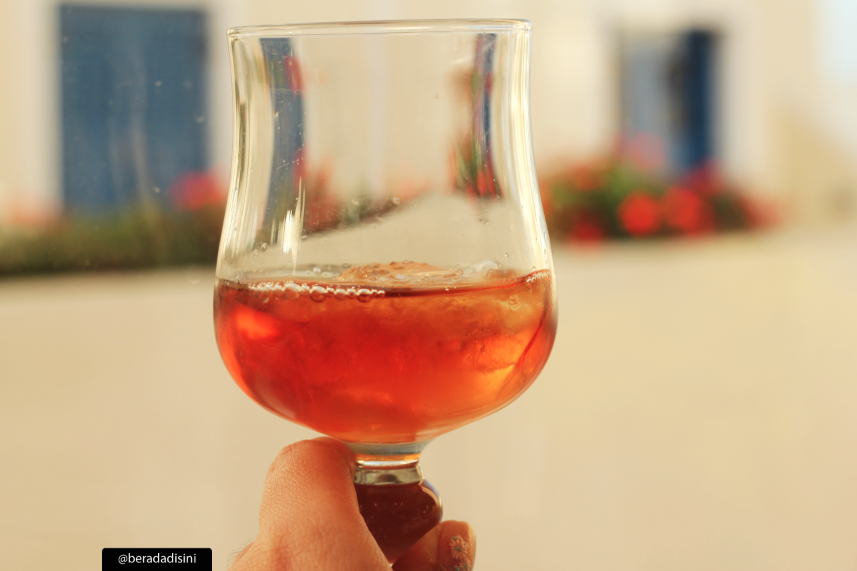
It is about MS who welcomed me at his tavern and said that he remembered me (“You’re staying at G’s place!”) and sent a free Vinsanto wine to my table when I finished my meal.

It is about F who was watering his plants when I passed by his house. About how he asked, “Hello, everything’s alright?” because he thought I was lost. It is about how we chatted after I told him that I was not lost; I was just wandering around the alleyways to take pictures of people’s fences, doors, and windows.

It is about MA who shouted, “Apa kabar?” whenever I passed by her little shop after she learnt that I am from Indonesia.

It is about O, a friend of G, who gave me a crash course in Greek.

It is about the guy at the bookshop who pulled out a wooden puppet from somewhere and asked me, “Do you know Karagkiozis?”—and when I shook my head, he said that Karagkiozis is a kind of shadow play from Greece.

About how you can move the wooden puppet by pulling on the strings attached to it. “It is played behind a white screen, so people only see the shadows,” he explained, before slipping the wooden puppet into my shopping bag and said, “This is for you. A gift from Santorini!”

In the end, it is all about the people. It is always about the people.

They are the ones who make your journey memorable. They are ones who teach you something new, who enable you to see the world from a different perspective, who send subtle messages that somehow feel relevant to your life. They are the ones who shape the faces of your journeys. They stay with you throughout, because somehow—no matter how brief their kindness had brushed up on you, they have left a part of themselves in you. And whether you realize it or not, you have also left a part of yourself in them.

And that’s exactly why, no matter where you are, whether you’re heading out on a new journey or simply going back from one, you will always feel at home.

____

Also in this series:

hanny
WANT TO SHARE WITH SOMEONE WHO NEED THIS?

When travelling alone, I am the kind of person who will be spending as much time to do things I am interested in, in places I am most attracted to. It is never about the number of places I have visited or photographed, and it is definitely not about walking around with a tourist map in hand, check-marking the sites flagged as “must-seen” by others.


Travelling alone is about a journey that is taking place inside of me. It is about waking up very early or very late. About enjoying or skipping breakfast. About wandering aimlessly or looking for a particular spot. About sitting in one small patisserie—reading poetry books for 2.5 hours straight or fluttering from one art shop to another in 15 minutes. About coming back to the hotel before dark and writing in my room or going out after midnight to take a peek at the bars or having a very late dinner. It is about what I feel like doing. It is about slowing down and taking a deep breath. About stopping and being still. About following where your heart is taking you. About not being in a rush.

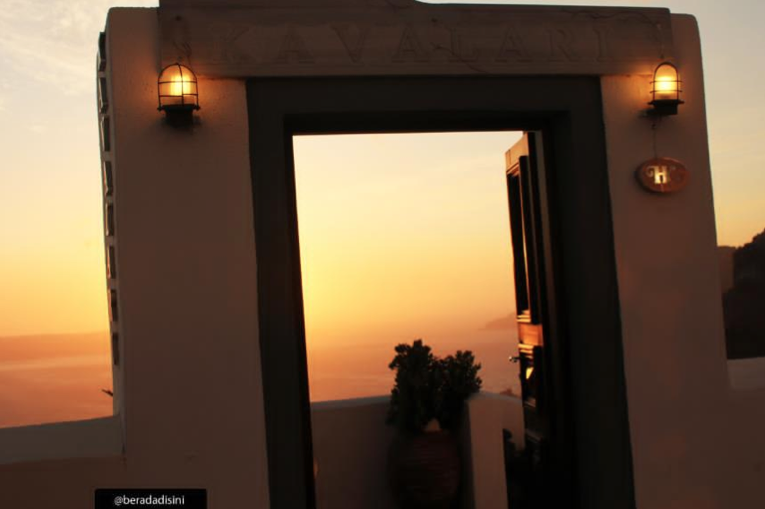
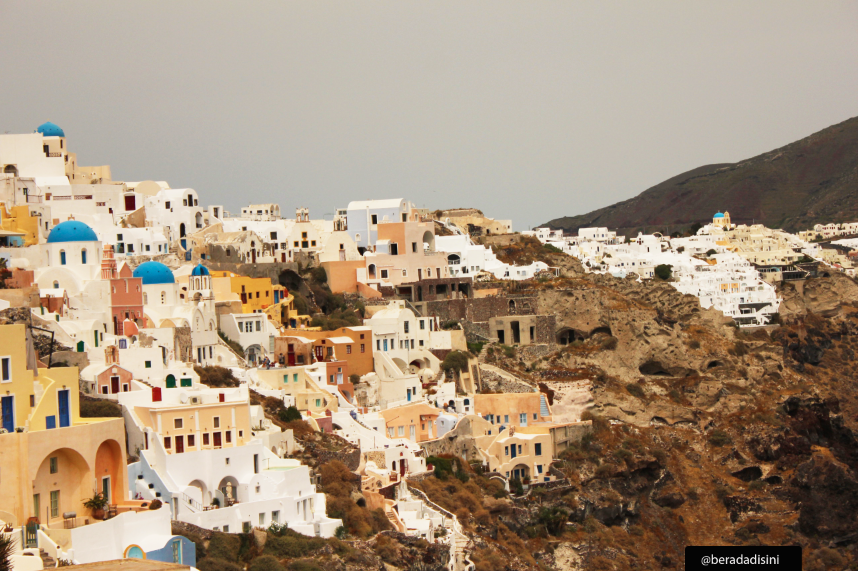
Santorini is the perfect place to do just that. Nobody is scurrying or honking or yelling or cutting in line. It is like seeing the world moving in slow motion, and it is such a wonderful scene to watch. You can see how people move their hands. The way the wind ruffles somebody’s skirt. The color of someone’s eyes. The freshness of the tomatoes on your salad bowl. The shapes of doors and fences and rooftops. The sound of a lizard moving lazily on the gravel path. This is a small island where everybody knows everybody. Where one is always somebody else’s childhood friend. Where people actually go to the beach or to the hills by bringing along their canvas and paints or guitar; then spend hours there, painting or strumming—just like in the movies. Where the streets and shortcuts and alleyways become amazingly familiar to you in just a day or two (“It’s really difficult to get lost here, trust me,” said G—the owner of the hotel where I stayed, when I told him that I have a very poor sense of direction. He was right).

On my first day, I tried my luck (and courage) in taking the shortcut from the hotel to the city center. Instead of following the main road, I climbed the alleyways behind the mini market, walked past people’s homes and establishments, took pictures of everything beautiful while trying to avoid stepping on the fresh donkey manures. I did well. I went out (somehow) at the right alley, just before the bus station at Fira’s city center. From that day on, I got all the courage in the world to take shortcuts and alleyways to some small villages nearby, never once got lost.

Later that day, having seen the photographs, G was surprised knowing that I had snapped a picture of his family’s old cave house. “How did you find it? It is hidden from the street…!” (well, I did take the road less travelled!). G’s father and grandfather was raised in this cave house, a traditional house—built deep into the rock face—of the locals in Santorini. At the moment, most cave houses have been sold or leased as hotels/villas.

“The cave house is empty now, and we’re planning to sell it as well,” said G.

“Must be hard to let go of such a precious family possession. It holds the family’s history,” I replied, reminded of a friend of mine who had recently sold her family’s old house.

G just shot an ‘it-is-OK’ smile.

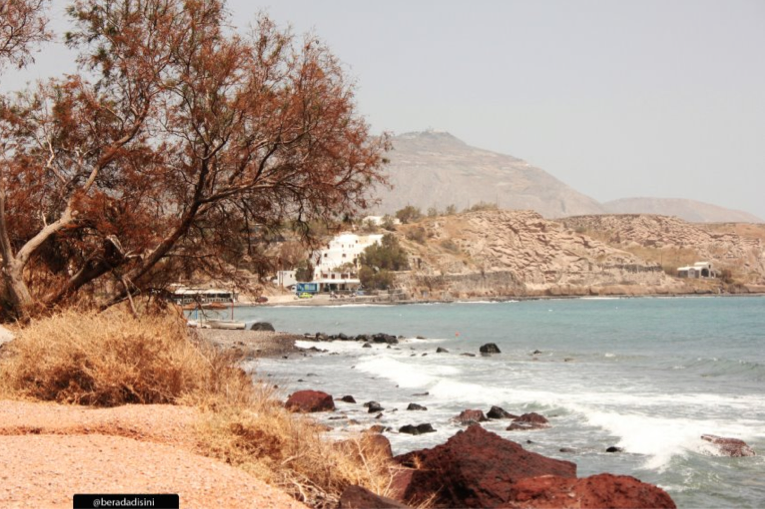
I wandered around Fira’s city center that afternoon. The sun was shining brightly, but the wind was blowing hard and cold—enveloping me in the fresh and salty scent of the Aegean sea. Wrapped in my pink cardigan, I climbed up past the little shops selling local delicacies; Vinsanto wine and olive oil in pretty bottles, to the stretch overlooking the caldera.

{Note: The present-day crescent shape of Santorini island is essentially what remains of an enormous volcanic explosion some 3,600 years ago. This created the current geological caldera; a giant central lagoon, more or less rectangular, and measuring about 12 by 7 km, surrounded by 300 m high steep cliffs on three sides.}

I just sat there for I didn’t know how long; mesmerized by the stunning view and the fact that I was actually here, standing right in the middle of my fairy tale. How far can a dream take you? I would say, far. Really far.

———-

On these series:

hanny
WANT TO SHARE WITH SOMEONE WHO NEED THIS?

These past few days have turned to be the most wonderful days in my life ever; a series of non-stop uber-sweet moments full of loving surprises. I feel so blessed; and so loved.

The Reunion

I landed in Kuala Lumpur last Saturday and had a reunion with some good friends. It was a lovely one; as we had the chance to just chill out while sharing stories about our lives—something that we missed in several other journeys we’ve shared before. The moment reminded me (again), to embrace the opportunity to connect.

We’ll never know how much time is left, whether we’ll see the person we’re with at the moment ever again; thus, don’t waste your time to hold things back. Say the things you’d like to say, do the things you’d like to do, like what my best friend once said, “It’s better to live your life in whatever than in what-ifs.”

Malaysia Social Media Week 2012

On Monday, I was speaking at an awesome event, Malaysia’s Social Media Week 2012 at PWTC, sharing the panel on brand and storytelling with Dave Duarte, the Managing Director of Ogilvy South Africa (Dave, you’re the coolest and the best moderator, ever!), Ryan Hayward, the Asia Pacific Product Marketing Manager of Google+, and Willy Lim, the co-founder of NetProfitQuest.

That day, I shared about how the principles used in fairy tales can actually be adopted by brands/companies/organizations in designing their social media activities. Came to think about it, we all love fairy tales, right? It sticks with us until the longest time: the story, the names of the characters, the setting, the illustrations… dissecting fairy tales and learning about each elements inside it can actually help us (well, me) in designing a social media activity that—just like fairy tales, will stick. Something beautiful, simple, and memorable. Something you’d find entertaining to be retold, to be shared…

OK, enough, I’ll write more about this at the Raconteur‘s blog in a few days. At the moment, I’d just like to say thank you, thank you so much, for all the participants of Malaysia’s Social Media Week conference who came to me after the talk; especially those who told me that they have found the inspiration they need in the fairy tale analogy I shared, and gave me some big hugs! It felt awesome! I truly appreciated your appreciation and enthusiasm. I was humbled. Oh, and thank you to the MC, Terence, who was being so sweet in nicknaming me Fairytale Princess :”)

Valentine’s Day

More sweet surprises came over me on Valentine’s Day: from the lovely pink rose and fun karaoke session to Valentine dinner + movies with friends (that was full of laughter!) and some sugary-sweet gift-exchange moments with best friends: I got a dress and a cute owl necklace! *hoot*

Strings

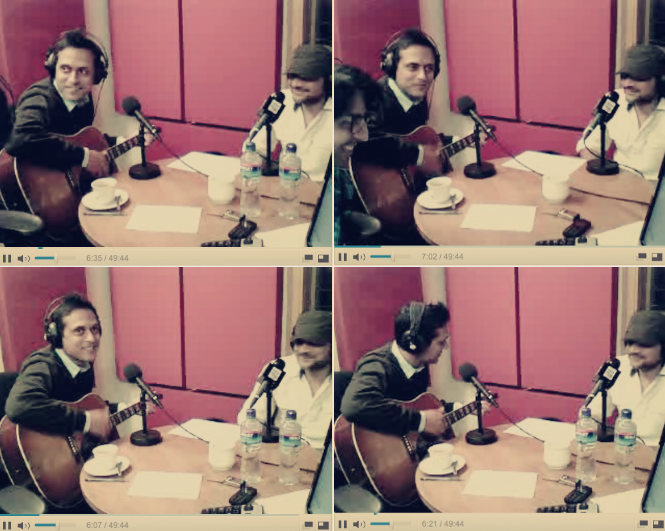
The magnificent closing of these amazing days happened on Wednesday morning, as I reached Jakarta from Kuala Lumpur. My lovely friend, Sundus Rasheed, who worked in CityFM89 radio in Karachi, called me up to get me on-air, live, with Strings—a Pakistani rock band that I love! ^^

Hosted by the ever-friendly Khalid Malik (Khalid, yaar, we’ve never met before, but I owe you one!), I got the chance not only to talk to Bilal Maqsood (guitarist) and Faisal Kapadia (vocalist), but also, being the nicest person ever, Bilal generously offered an opportunity to do an on-air duet with me, to sing one of their most popular song, Mera Bichra Yaar (A Long Lost Friend)! :’O It was the sweetest moment I’ve experienced in my life, ever! *crying* And this is the snapshots of Khalid (the DJ), Bilal and Faisal inside the radio station, when Bilal and I were singing together, via phone :’)

So, today, I can only say thank you—and really, THANK YOU, for those of you who have made my day (and you know exactly who you are). I love you, and I’m so blessed to know you all :’)

– one morning in Jakarta, with a cup of hot coffee and some loving memories –

hanny
WANT TO SHARE WITH SOMEONE WHO NEED THIS?

A DANCER.

A dancer discovers music everywhere. He knows that life in itself is an orchestra of nature’s instruments, a collection of the universe’s melodies. He sees everything around him moving rhythmically as if all things have their own cadence.

A dancer knows that this is how life works: it works in a flowing motion. Like a trained dancer, his very own reflex is to feel the beat, follow the melody and move along with the rhythm. He doesn’t fight the music, but drowns himself in it instead, savoring every note with style, as if it were the last few notes on earth. He flutters around with the music of life pulsating in his veins: the excitement, the joy, the energy: the giving away of every inch of muscles, every bead of sweat, every particle of mind.

A dancer understands perfectly that the key to everything lies in harmony, balance, and a splash of spontaneity. He knows that life is the magical tunes he had been carrying in his heart since the day he was born, and as always, he will only need to follow the tempo, surrender to the sensation and dance it away.

A SKY-GAZER.

A sky-gazer knows that looking out into space is like looking back in time. On a starry night, he’s the one who will be touched by the romantic melancholy of how the stars could have actually died a very long time ago, way before its light reached his very eyes.

A sky-gazer, thus, appreciates how his past defines the way he sees the world as he sees it now. He understands the beauty of embracing what’s gone, not to be replaced by something else (because he believes that the things of the past are irreplaceable), but to be carried inside his heart: a keepsake as he walks his way to the future. At times, it serves as a reminder—to live life to the fullest, to not holding back too much; and at other times as a blanket—to keep him warm with loving memories or to snuggle inside when things become ugly.

A sky-gazer knows that looking at the future is like gazing at the night sky. Deep down inside, we’re actually looking back in time to who we were and who we used to be. A sky-gazer receives this knowledge like something that has been written in his DNA: that life always flows to the future carrying everything from the past along, and nothing is left behind.

A LOVER.

A lover loves and nothing else matters. He knows that love isn’t pink; it can be black or white or maroon and other times bluish purple. He accepts the fact that love draws tears as much as it draws laughter, but he doesn’t mind. He understands that roses have thorns and that thorns have roses. A lover realizes the perfection that lies behind tiny imperfections, the flickers of words beneath those shy-looking eyelashes, the thirst of grape-flavored kisses inside empty wine glasses, the yearning of togetherness beyond every goodbye clenches.

A lover falls for the beauty of an unmade bed and stains of paints on a white fence, the solitude of a buzzing traffic jam and cries of seagulls above the sand, the charm of getting soaked under the rain and playing catch under the blazing sun, the fondness of plunging into a quarrel and feeling the pain of a mistake unrepaired. A lover appreciates sadness as a way to alleviate the beloved’s tears and embraces happiness as a reason to shower the beloved with marshmallow-tempered caresses and sweet-sugary sentences.

A lover knows that he has no other thirst but to love—even when he realizes that the thirst will never get quenched.

A lover loves and nothing else matters.

———————————–

*) a gift for a dancer, a sky-gazer, a lover, and a very dear friend. Kuala Lumpur, February 2012.

hanny
WANT TO SHARE WITH SOMEONE WHO NEED THIS?

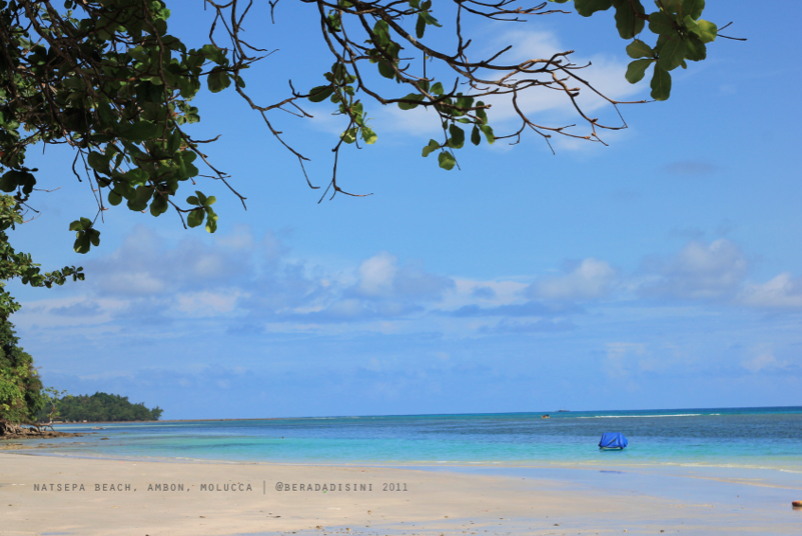
Indeed, the eastern part of Indonesia is breathtakingly beautiful! I have always wanted to visit the faraway Molucca Archipelago—well-known for its wonderful beaches and magical underwater views; one of the best site for diving in the world, according to my diver friends.

And I was lucky for being able to set foot there!

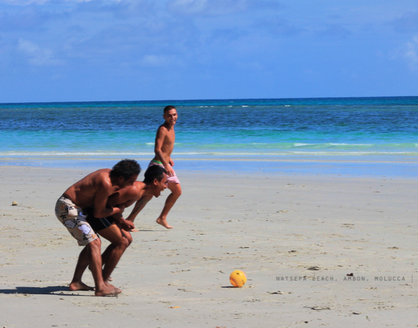
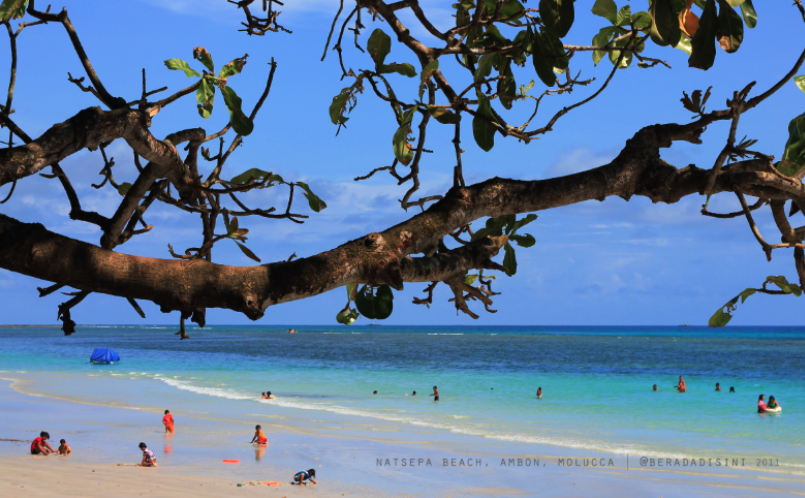
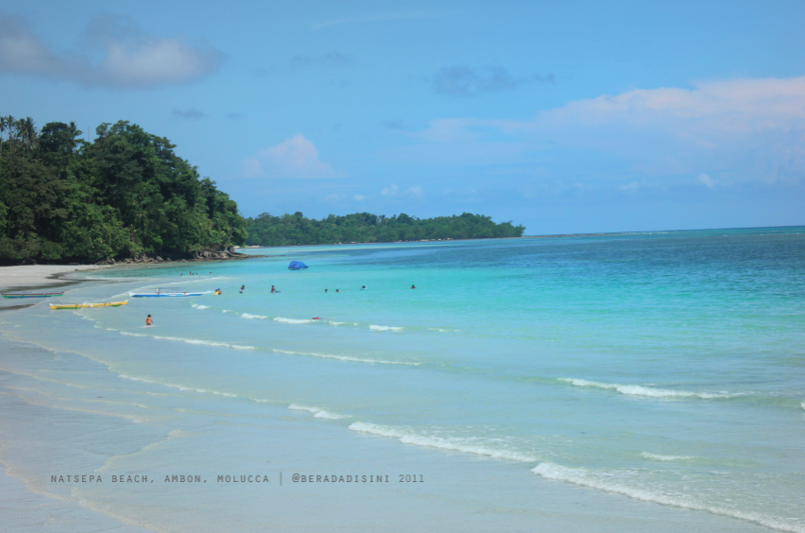
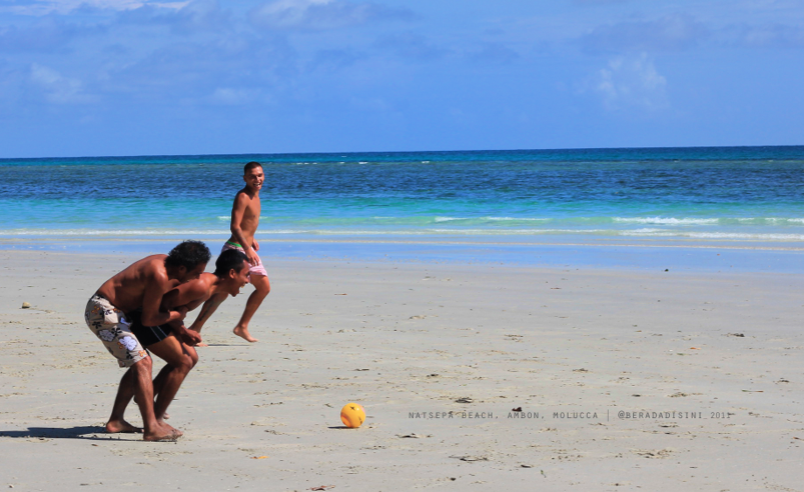
From the city center of Ambon or from the Pattimura Airport, it took only 30-45 minutes by car to reach this magical Natsepa Beach.

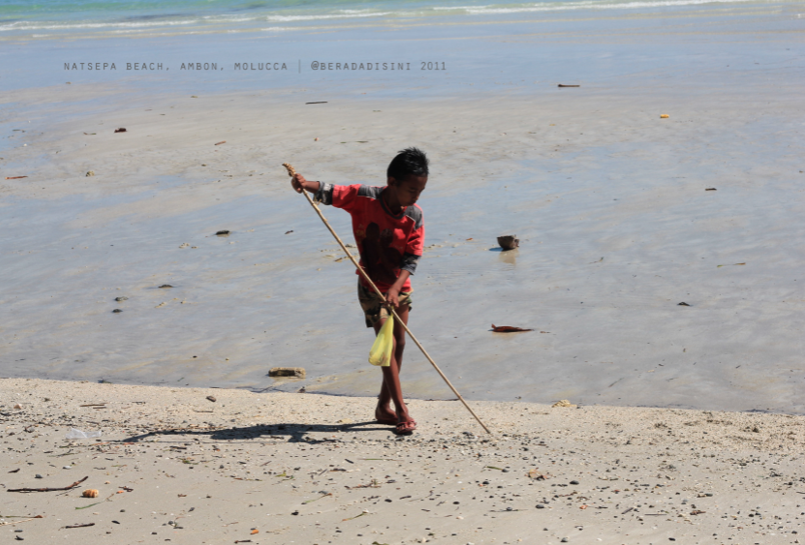
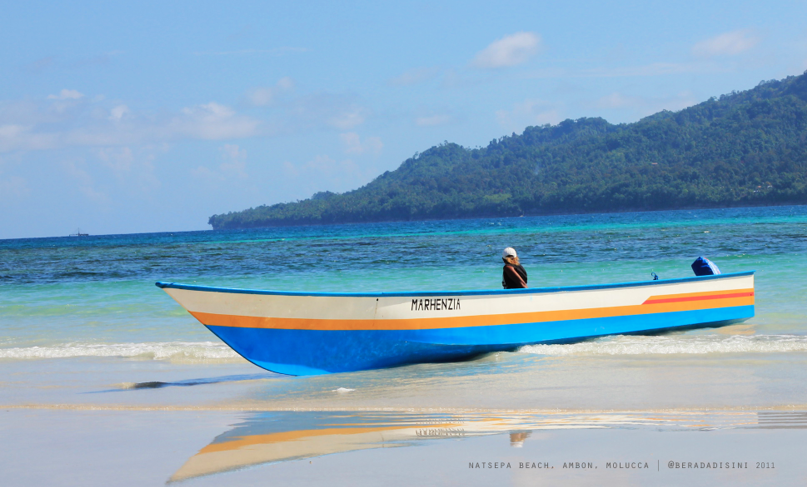
After paying an entrance fee of IDR 2,000 (or around US$ 0.2), you can enjoy the stretch of white sand and the seductive view of the faraway hills. The sea is calm and the water is clean, very ideal for bathing and swimming. Trees are growing along the beach, perfect for a shelter from the sun!

Ambon had suffered from ethno-religious clashes—the worst took place in 1999 (until recently, some countries are still issuing travel warnings for their citizens who’d like to travel to this part of Indonesia). Since then, several parties have been trying to shake the city’s peacefulness. However, the youths in Ambon won’t let it happen. Consisting of youths from different social classes, religions and backgrounds, they are trying to promote tolerance and respect through a peaceful movement, Badati Ambon.

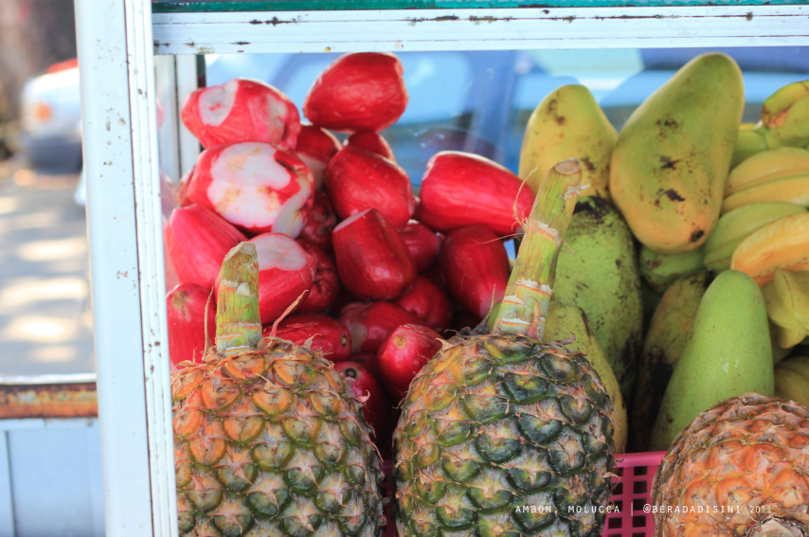
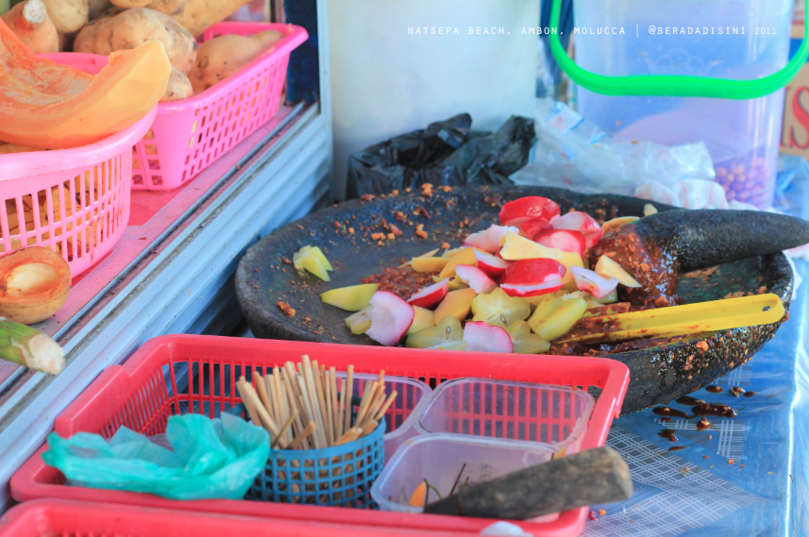
When you’re visiting Natsepa Beach in Ambon, you have to try the famous Rujak Natsepa. There are tents along the front of the beach, with local women behind a stack of fresh fruits, selling traditional fruit salad called ‘rujak’–a suitable treat after a sunny day at the beach.

Rujak Natsepa is made of a mixture of tropical fruits: pineapple, mango, starfruit, papaya, rose apple (water guava), bangkuang (jicama/mexican turnip), and cucumber. These sliced fruits are then mixed with a paste of peanuts and brown sugar; you can choose whether you’d like to add some chili into it or not. For a plate of fresh and fruity Rujak Natsepa, you need to pay around IDR 10,000 or US$ 1.

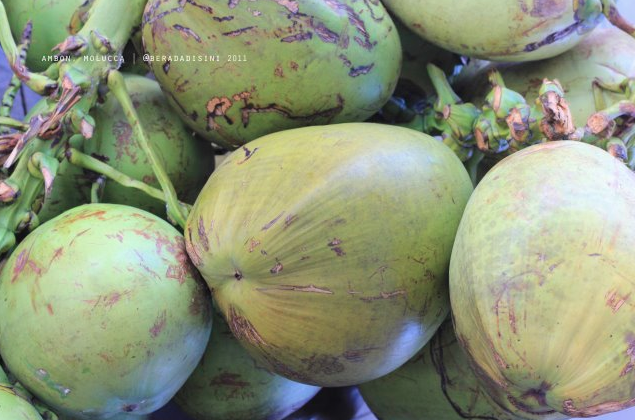
And sipping fresh coconut afterwards? 🙂

Early in the morning, you can also walk around the traditional street-market and find fresh vegetables/spices, as well as fresh/salted fish! Ambon is a heaven for seafood lovers! 🙂

Let’s go exploring more beautiful places in the eastern part of the country! (As for the travel warning, the only warning I’d like to give you is: you wouldn’t want to go home after this).

————–

*) special thanks to Almascatie and friends from Badati Ambon for the hospitality 🙂

hanny
WANT TO SHARE WITH SOMEONE WHO NEED THIS?
Hanny illustrator
Hi. I'm HANNY
I am an Indonesian writer/artist/illustrator and stationery web shop owner (Cafe Analog) based in Amsterdam, the Netherlands. I love facilitating writing/creative workshops and retreats, especially when they are tied to self-exploration and self-expression. In Indonesian, 'beradadisini' means being here. So, here I am, documenting life—one word at a time.

hanny

TAKE WHAT YOU NEED
VISIT THE SHOP