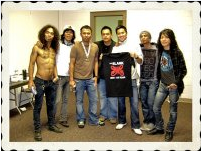
Winna Efendi is a writer who has published several novels such as Kenangan Abu-Abu (February 2008), Ai (February 2009), Refrain (September 2009), Glam Girls Unbelievable (December 2009), Remember When (March 2011), Unforgettable (January 2012), and Truth or Dare (Gagas Duet May 2012). Her books have also made their way into the big screen. Winna’s non-fiction book is Draf 1: Taktik Menulis Fiksi Pertamamu (September 2012). She also participated in an anthology travelogue, The Journeys (March 2011). You can read more interviews with Indonesian writers here.

How’s your writing process? How do you decide on which idea to be developed first? Are you the kind of writer who obeys an outline?

Winna: Usually, I set my deadline and my writing target. Basically, in one year, I want to finish two books. It depends on my writing schedule as well, which needs to compete with my working schedule and other stuff.

When I am having a heavy workload or there are any obstacles in writing, at least I can have 1 book in 1 year. There are even times when I don’t write at all!

But most of the time, it takes me up to 6 months to write, research, and edit the whole manuscript until the moment I send it out to the publisher. After that, I’ll take a long break to recharge by reading books, watching movies, doing anything I like–as some kind of a personal reward.

Sometimes, there are several ideas that catch my attention and stimulate me to write them down, but I try to focus on one project before moving on to the next. I save and develop the ideas I have first until they feel ‘ripe’ enough and ready to be written down. Only then, I start to write them down.

I tend to choose one idea that excites me the most. The one that makes me want to start writing as soon as possible, and put other ideas on hold while I focus on that one.

Basically, my writing process can be summarized as ideas first, brainstorm later. I brainstorm while creating plots, creating plots while researching, and I keep on researching during the time I write. They don’t always come in that order, so in my writing process, some are usually overlapping: from research to plotting, to the brainstorming process.

I usually create an outline for my plot, and most of the time, I use and follow it.

But it doesn’t mean I don’t make rooms for deviations or other developments outside the scribbled outline. I tend to trust where my instincts and ideas take me and enjoy the ride.

When all is done, I go through 2 phases of self-editing. The first one is to rewrite the whole manuscript while fixing my grammar, diction, idea development–or cutting down or adding more chapters. The second is to ensure that the plot makes sense, the flow is smooth and the manuscript is enjoyable to be read.

The last step is proofreading to check the spelling and the overall quality of the draft. Then, I send it out to my editor and cross my fingers.

Winna Efendi

What’s the most challenging part of writing, editing, and publishing? How do you deal with it?

Winna: The most challenging part about writing is that it takes a great deal of discipline and effort to finish a manuscript. I may get distracted by other ideas, personal lives, books, work, movies, the Internet, or simply do not have the time to write. To deal with this, I set a deadline and a target, then try to fulfill it as best as I can.

During the months when I’m writing a book, I tend to avoid reading other books, and just spend most of my time writing away (although sometimes I can’t help but sneak in a movie or two during the week!).

Editing for me is as complicated–if not more difficult, than writing. We can rewrite or delete paragraphs, change our course, or abandon a manuscript during our writing process–which starts almost like a blank canvas. But editing is an entirely different process because we’re working on a draft that is already ‘done’. That’s why I have several phases of editing, then proofreading, so I can present the best manuscript I can write to my editor/publisher, and eventually, to my readers.

As for publishing, feedbacks from editors and readers are the challenge. We can write anything we want, but in the end, it is their opinions that mold us and help to define us as a writer.

Before writing novels, you actually started out by writing some short stories, in English, which was being published in Australia. What’s the story behind this?

Winna: It was like an online community where readers and writers gather and I was lucky to have a few of my stories published there and be given feedback by the readers. At first, I participated just for fun, and I wrote a short story Pink or Black about a pair of teenage twins. I tried to send it out, and surprisingly, it got published! Another story, Bus Driver’s Wife, was also being published there. That was the starting point of my writing passion when I realized that I loved to write and would like to continue doing so.

Do you feel more comfortable writing in Indonesian? Or in English? What are the challenges to maneuver between the two?

Winna: At first, I was more comfortable writing in English, because that was the first language I used when I tried writing short stories and novels. That was also the language I used at school or in universities, so I was more accustomed to that. However, lately, I practiced writing in Indonesian more often, and now I actually write in Indonesian more than in English.

The challenge to write in both languages… I guess, sometimes I think about a word or a sentence or a story in one language, but I need to write it in the other language. Sometimes I cannot find the words in the other language that shares the exact meaning with the words I want to write and vice versa. Moreover, when the words that share similar meanings are not really ‘identical’ when they are being translated into another language.

A lot of aspiring writers (especially those who are writing a novel) stop in the middle because they have no idea how to carry on. Sometimes, they don’t know how to connect the dots and make the story flows from the beginning to the end. Do you have any suggestions to help overcome this problem?  

Winna: That actually happened to me a few times before. I stopped in the middle when I was writing Refrain and Unforgettable because I ran out of ideas, and I wasn’t ready to write them down. I also have folders for other projects on my laptop that do not have an ending yet.

Some of the things we can do:

  1. Brainstorming. Sometimes a new idea will pop up so that we can continue writing our story.
  2. Creating an outline. Planning your plot can help to prevent you from suddenly “running out of ideas” in the middle of your story. At least, you already know the ending or the flow of the conflicts beforehand.
  3. ‘Cooling down’ your manuscript until you get a new idea.
  4. Moving on can be another feasible option when you feel really stuck. Because not all of our manuscripts ends nicely. That can actually be a practice material and a lesson for us–to avoid facing the same problem for our future projects.


Do you have a special place to write? Do you think where you write affects the quality of your writing?

Winna: I don’t have a favorite spot. I can write as long as the place is quiet and I can sit comfortably with a glass of water by my side. Sometimes music helps, especially if the place is noisy. Sometimes, it distracts me.

Usually, I write by typing directly on my laptop. But, for ideas, brainstorming, research, and plotting, I still write them by hand in my “Idea Journal”.

My preference is to write in a place I’m already comfortable with, so I prefer writing at home or at the office rather than writing in other unfamiliar places or in the outdoors.

Where I write affects my focus. And my focus will affect the quality of my writing.

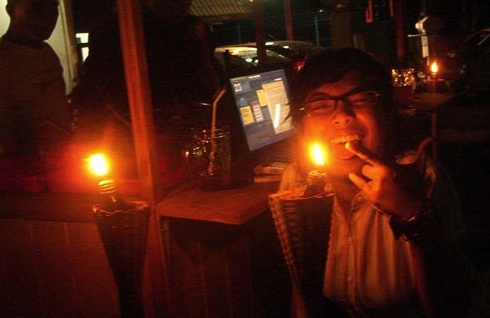
*) photo courtesy of Winna Efendi.
hanny
WANT TO SHARE WITH SOMEONE WHO NEED THIS?

Windy Ariestanty is the Editor-in-Chief of GagasMedia and Bukune, two of the most well-known publishing companies in Indonesia today. She is also a writer who loves to travel. Her travelogue Life Traveler was shortlisted at Anugerah Pembaca Indonesia or Indonesian Reader’s Award in 2012. You can read more interviews with Indonesian writers here.


The script that is being published and the script that isn’t being published. What are the 3 most basic things that differentiate the “fate” of those two, based on your experience?

Windy: Hahaha. This is a tricky question. But let me rewind an ‘old song’ that people have always known all these times–but they forget it many times.

No matter what, books have two faces. Business face and social face (when it comes to ‘art’, for the time being let’s put it under the social face).

Based on those two faces, as short as my experience taught me, I can summarise them into 3:

  1. Theme. A theme that answers market needs or gives information about what the market will need in the future. A publisher must have known about the readers of the script that will be published. Is the theme answer market needs or even a few steps further from the existing market? The ability to predict themes that can answer market needs or go one/two-step further from the existing market is the ability to create a “trend”.
  2. Content. When buying a book, a question people always ask would be: what is this book about? When it comes to writing, forever, content is the king.
  3. The writing. How the theme and content are being written. No matter what, good writing is the first catch to grab the attention of an editor. Editors easily fall in love with good writing.


What are the most common misconceptions held by aspiring writers who are about to publish their first books? 

Windy: There are several things.

1. Editing stage.

A writer often assumes that the editor is someone who will scrutiny his script. Someone who will tear his masterpiece apart. In reality, your editor is your writing partner. She is the first reader who tries to see the hole in your script.

Not one single editor wants to damage her writer’s piece.

She is the first person that will clap her hands when you finish your writing, and she is also the first person who will go brokenhearted when your writing is not becoming any better.

Another misconception is that the editor is the person who will take care of all types and errors on your script. Come on, that’s not really the job of an editor. You can activate the spell-checker facility if you only need this function from an editor. An editor’s responsibility is way more than that.

On a very ideal level, an editor needs to have the ability to guess and create book trends. True, an editor will help taking care of all those stuff regarding structure, grammar, and typo. But my suggestion is this: before sending your script out, there is no harm in cleaning up all those typos.

Trust me, no matter how bad the script is, an editor can still read it when the typos are minimal. Do help the editors to enjoy reading your script by minimizing typos. Won’t you feel tortured reading a raw script with typos scattered all over from the first to the last page?

Sending a script without a title. Yes, the publisher will help you in finding a title for your to-be-published script. But sending out a script without a title shows that you don’t even know what your script is all about.

2. Publishing contract.

A publisher only has the ‘publishing right’, not ‘copyright’. The contract only binds the writing/script, not the writer. Thus, before signing a contract, pay close attention to this. Don’t regret it later. Go through your contract carefully before signing it.

3. Do I need to pay?

A lot of writers still think that they need to pay some amount of money to publish their books. I am going to say this straightforwardly: you don’t need to pay for anything. On the contrary, you will have royalty rights for your script.

4. Promotion is a publisher’s business.

Most of the time, a writer believes that as a writer, his task is limited to writing only. Unfortunately, life nowadays expects more than that.

A writer also needs to think about what he’s going to do after the book is published.

Of course, the publisher will think about that. They will think about book distributions and how to get attractive displays in bookstores, or about sending free copies to media or colleagues. They may even think about book launching or discussions. But the publisher is not taking care of one single writer.

It will also be impossible for them to keep on promoting the same book over and over again. Based on my limited knowledge, I came to the conclusion that the most effective promotion tool for a book is its writer.

Thus, I always ask writers to learn about how to ‘sell’ both themselves and their works. They also need to learn how to develop themselves into a brand (self-branding).

Windy Ariestanty


How does Windy-the-Editor influence Windy-the-Writer, and vice versa?

Windy: Hahaha. This is a bit hard to explain, but have you ever heard this sentence: you can write badly, but you need to edit your writing well?

I have this mindset. To edit well, of course, you need to know about good writing, right? So, when I write, I just write. I push the “off” button on my mind as an editor. When I finish my writing, I will read it again. This is the time when I turn on my editor’s brain. I try to see what is not working in my script and what’s working. Then I edit and revise it.

My knowledge as an editor helps me to see my script more clearly and objectively.

To me, an editor should be able to become a writer. She knows what a good writing is like. So it’s only natural that she can produce good writing.

An editor who doesn’t become a writer–well, to me they look like a dead chicken in a rice barn.

Although I have to admit it myself, for an editor to be a writer, she needs to defeat the fear inside of herself: hey, as a writer who edits and an editor who writes, you’re gambling your reputation. If your writing is good, people will say, that’s natural, she’s an editor. If your writing is bad, generally people will say, how come an editor produce such bad writing? What does it tell about her quality as an editor?

In reality, being a writer and being an editor is two different thing. We can’t even write while editing.

It’s difficult, isn’t it?

When it comes to how my profession as a writer influences me as an editor? It will be easier for me to inform a writer about what to do because I understand how these writers’ minds work.

It will also be easier for the writers to accept my inputs because they can see that I also do what I preach and I go through all the difficulties they are facing. The probability to get comments like, “It’s easy for you to just say it all. You don’t know how hard it is to write and revise!” is minimal, because I also write.

But I have to admit, I am lucky to have a profession as a writer and an editor. Both support each other. Both teach me to have above-average listening skills. Writer-editor who doesn’t learn to listen will face difficulties in becoming better.

What is the relationship between inspiration and discipline when you write?

Windy: I am a slow writer. I will let you know that before I am being delirious.

To work with a material, I need to read it many times, let it seep in, and only then: writing it down. Inspirations, indeed, can come in a short burst. When it happens, I will catch it in a hurry.

I believe that inspirations are everywhere. But they are also looking for those who can become their “masters”. Someone who will execute them into something–who will make them manifest. At times like these, I will write or note it down hurriedly. I don’t care how bad my writing is when I’m doing this. Afterward, I’ll leave it to seep in, and then I’ll polish it into better writing.

Isn’t writing a matter of rewriting over and over again?

When it comes to discipline, that’s another thing. I know that I oftentimes get lazy. Not being discipline to myself. The temptation to create an excuse so I don’t have to write is plenty. I’m tired. I don’t have time. I am not in the mood. I don’t feel like this idea is good enough. As a result, everything stops in the “wanting” level, instead of in the “doing” level. To be honest, this state sweeps me often as well.

But writing is not for the lazy ones. Writing needs strong will and extraordinary discipline. So I try to craft times to write in the midst of my busy days ‘playing around’. Hahaha. Hey, it’s fun. To win over time or even defeat it–is always pleasing to me.

Are you the type who believes in writer’s block?

Windy: Let me tell you one more thing based on my not-so-many experience.

Writer’s block, to me, is just an excuse to cover up the fact that we’re lazy to write.

I am not the type who believes in writer’s block. Saying that I am not writing because I do not have any idea–to me that’s bullshit.

If you’re lazy, than you’re just lazy. That’s fine. That’s human.

Writing is about discipline in practice. Of course, a vacation for a writer is not writing. Similar to the concept of taking vacations, it feels so good not to write. So, if you want to take vacations from writing, go ahead, and do whatever you want to trigger your creativity and create the desire to write again soon. Play around.

However, I also control my ‘vacation period’ so I don’t keep myself from not writing for too long. Even if I don’t feel like going back to the script I am working on, I will write other things to ‘warm-up’ my machine.

Another simple thing I do to keep my machine warm–even when I am swept by laziness, is by reading and watching movies. Or… this is my favourite part: creating quality time with selected people. I can pick these people randomly–those I haven’t met in a long time, those I have just met, close friends, boyfriend, etc. I like conversations and meetings. From here, new ideas often spring to life.

A writer will not be able to suppress her desire to write something that inspires her. Thus, go out and see anyone. They could be the ones who fish the inspirations out of you and drag you out from the laziness to write.

Looking back, what makes you start writing in the first place?

Windy: Simple. I write down a lot of things because I want to prolong my memories.

*) photo courtesy of Windy Ariestanty.
hanny
WANT TO SHARE WITH SOMEONE WHO NEED THIS?

What does it mean to get The Answer?

This question crossed my mind one cold and wet evening, as my friend and I sat at the corner table. She was having a plate of chicken teriyaki and I was facing my Fettuccine Alfredo. The old restaurant was surprisingly busy on a weekday. People kept coming through the front door. The last order was just an hour away. I glanced outside the window and made a wish for the rain to stop when we closed our bill, so that we could stay dry as we walked back home.

***

After several months of lovely and confusing pseudo-relationship, she decided to manage her expectation and guard her heart. And so, she posed The Question. “I am not asking you to do anything. I just need to manage my expectation,” she said, as they sat side by side under a strange sky in a strange country, far away from home and past memories. “I love what we have. And I will want to have it as long as possible. But at the same time, I need to protect my heart, too. I only need to know whether this will go further than a summer fling; or not. That’s all. That way, I can prepare my heart, so I won’t hurt myself again.”

He gritted his teeth and responded right away with, “It’s NOT a summer fling! I really believe in what we have, in what we share. I love the idea of us as much as you do. And I want you to know that from the very beginning.”

She felt her heart leaped a little bit.

“But the fact is, I have a girlfriend,” he went on. “And we’re about to get married at the end of the year.”

Something sunk in her chest. She felt that familiar pain, again. She was not immune to that, no matter how often she had been exposed to such a situation.

So she decided to put an end to it. She knew that they wouldn’t go anywhere. He was about to get married. There was no future in it. She didn’t want to get hurt again. So she bid him what-she-thought-to-be farewell. But he refused to leave her. And she could not deny the chemistry. The signs. The bond. She could not deny her heart. But the clock was ticking. So she posed The Question, again.

“We can’t go on like this,” she said, a bit frustrated. “I need to know where we’re going. You’re about to get married. So why are we here? Why are we doing this?”

“I love you,” he said. The answer almost everyone would want to hear. “I could not betray my feelings, too. I’ve made up my mind. I’ll talk to my girlfriend and her family. I want to be with you.”

And with that, she had The Answer–something most of us want: certainty, affirmation, commitment. She smiled with all of her beings. With The Answer, for the first time after those bittersweet months, she finally found both her official permission and her safety net. To open up. To dream of a future. To be vulnerable. To pour her heart out. To fall in love completely.

Three months later, she received a wedding invitation. From him. She wasn’t the bride.

***

“So, what does it mean to get The Answer?” I asked myself when she finished her story that evening.

I realized that The Answer could come in many forms: from the three-word I-love-you thing to a reply to your text message; an invitation to watch movies, a “you’re beautiful” whisper, the changes in someone else’s Facebook profile from single to in a relationship, a marriage proposal, a wedding ring, the “imaginary lights” in his eyes whenever he looks at you. And we always think that we need The Answer. To move on. To have a closure. To be sure. To be double sure. To decide on what we want to do. To find out whether we should or should not fall in love completely. I felt this way before, too. There were numerous times when I persevered too much in getting The Answer; to the point that they started to feel like lame excuses.

When we came to think about it, The Answer does NOT guarantee anything. We think that we’ll feel certain when we have The Answer, although we know full well that there’s no such thing as certainty in life.

As I finished my Fettuccine Alfredo and sipped my lime juice, it became clear to me that while a lot of people are trying as hard as they can to get The Answer, getting it doesn’t really matter much. Such is life. People say things they do not mean. People say things they really mean but then change their minds. The heart finds a new object of affection. People grow together and then grow apart. Having The Answer would not make us immune from hurt and pain.

Why do we need to get The Answer from someone else to decide on what we want to do: on whether we want to smile or weep; move on or fall in love? Why do we need to be certain about something when we know that life is full of uncertainties? What is wrong with not knowing and be okay with that? Because even when we have The Answer, we will always find another question to ask.

hanny
WANT TO SHARE WITH SOMEONE WHO NEED THIS?

I picked up this book from the shelf because I fell in love with the title and the cover. As I read the blurb on the inside jacket, my heart fluttered. The book tells the story of Julia Win’s journey to unravel the mystery of his father’s past. Julia’s father, Tin Win, disappeared without a trace one morning–leaving his family unsettled and confused. After finding a love letter written by her father to a Burmese woman called Mi Mi in Kalaw, Myanmar, Julia found herself leaving her life in New York behind to go to this small mountain village–without really knowing what she would actually find there.

I know it’s only January 2014. But as I finished reading the book a few days ago, I am convinced that this is going to be my favorite book in 2014–as well as one of my all-time favorites. I love the poetic dialogues and the rhythm of the sentences; I care too much about the characters, and I adore the unexpected turn of events as the story unfolds. But of course, like most of my all-time favorites, the book contains loads of wonderful quotes that seem to speak to me about the right matter at the right time.

As I read along, I could not resist myself to share some lovely quotes from the book on Facebook and Twitter, and Path; but I still felt the urge to share much more–and so I decided to share all of my favorite quotes on this blog instead. If you don’t run to the bookstore and grab this book immediately after this, I hope the quotes will still speak to your heart the way they speak to mine.

THE ART OF HEARING HEARTBEATS
Jan-Philipp Sendker
325 pages

Do you believe in love? Of course I am not referring to those outbursts of passion that drive us to do so and say things we will later regret, that delude us into thinking we cannot live without a certain person, that set us quivering with anxiety at the mere possibility we might ever lose that person–a feeling that impoverishes rather than enriches us because we long to possess what we cannot, to hold on to what we cannot. No, I speak of love that brings sight to the blind. Of a love stronger than fear. I speak of a love that breathes meaning into life, that defies the natural laws of deterioration, that causes us to flourish, that knows no bounds. I speak of the triumph of the human spirit over selfishness and death. (p.6)

How flat and empty the most beautiful words can sound. How dull and dreary life must be for those who need words, who need to touch, see, or hear one another in order to be close. Who need to prove their love, or even just to confirm it in order to be sure of it. (p.29)

How can anyone truthfully claim to love someone when they’re not prepared to share everything with that person, including their past? (p.33)

A confession, a disclosure, is worthless when it comes at the wrong moment. If it’s too early, it overwhelms us. We’re not ready for it and can’t yet appreciate it. If it’s too late, the opportunity is lost. The mistrust and the disappointment are already too great; the door is already closed. In either case, the very thing that ought to foster intimacy just creates distance. (p.34)

There are wounds time does not heal, though it can reduce them to manageable size. (p.77)

There is no power that can release a person from pain or from the sadness one might feel–unless it be that person himself. Life is a gift full of riddles in which suffering and happiness are inextricably intertwined. Any attempt to have one without the other was simply bound to fail. (p.109)

A person’s greatest treasure is the wisdom in his own heart. (p.115)

The true essence of things is invisible to the eyes. Our sensory organs love to lead us astray, and eyes are the most deceptive of all. We rely too heavily upon them. We believe that we see the world around us, and yet it is only the surface that we perceive. We must learn to divine the true nature of things, their substance, and the eyes are rather a hindrance than a help in that regard. They distract us. We love to be dazzled. A person who relies too heavily on his eyes neglects his other senses–and I mean more than his hearing or sense of smell. I’m talking about the organ within us for which we have no name. Let us call it the compass of the heart. (p.123)

Ambition and fear have something in common: neither knows any limits. (p.125)

There is nothing, for good or for evil, of which a person is incapable. It would be much worse to expect good from other people, only to be disappointed when they didn’t measure up to our high expectations. (p.156)

A time of waiting offered moments, minutes, sometimes even hours of peace, of rest. Each and every thing required a certain amount of time. (p.165)

Was it really possible for a person to shorten the time it took to get from one place or person to another? How could anyone think so? (p. 166)

You don’t need to be afraid. You can’t lose me. I am a part of you, just as you’re a part of me. (p. 197)

“I couldn’t bear to be without you.”
“I’ve been here the whole time.”
“I wanted to feel you. And I was sad.”
“Why?”
“Because you were so far away, because I couldn’t touch you. Every hour we spend apart saddens me. Every place I go without you. Every step you take without me. Every night that we don’t fall asleep in each other’s arms and every morning that we don’t wake up side by side.” (p. 207)

A person maybe wasn’t alone after all. The smallest human unit was two rather than one. (p. 224)

Love has so many different faces that our imagination is not prepared to see them all. We see only what we already know. We project our own capacities–for good as well as evil–onto the other person. Then we acknowledge as love primarily those things that correspond to our own image thereof. We wish to be loved as we ourselves would love. Any other way makes us uncomfortable. We respond with doubt and suspicion. We misinterpret the signs. We do not understand the language. We accuse. We assert that the other person does not love us. But perhaps he merely loves us in some idiosyncratic way that we fail to recognize. (p. 244)

I am not without you, that you are with me from the moment I wake until the moment I fall asleep, that it’s you I feel when the wind caresses me, that it’s your voice I hear in the silence, you whom I see when I close my eyes, you who makes me laugh and sing when I know no one else is around. How can I explain to them that what you mean to me, what you give me, does not depend on where you are in the world? That one need not feel the other’s hand in order to be in touch? (p. 277)

It’s not the size of one’s nose, the color of one’s skin, the shape of one’s lips or eyes that make one beautiful or ugly. It’s love. Love makes us beautiful. Do you know a single person who loves and is loved, who is loved unconditionally and who, at the same time, is ugly? There’s no need to ponder the question. There is no such person. (p. 290)

At the end of the day, when I closed the book, I said to myself: I would like to love someone the way Mi Mi loves Tin Win and to be loved by someone the way Tin Win loves Mi Mi. May I be blessed with such a big heart to love someone that way: sincere, simple, and faithful–and find someone to share it with one day 🙂

hanny
WANT TO SHARE WITH SOMEONE WHO NEED THIS?

I don’t normally spend New Year’s Eve traveling or partying with friends. Most of the time, I’ll be reading some good books in my bed until the clock strikes 12. This year, 10 days before New Year’s Eve, a friend of a friend invited me to come with her to Alor–a small island in Eastern Indonesia. She wanted to visit some schools in the villages and asked me to do some storytelling for the local kids. I was making an impulsive decision when I said yes.

To be honest, I was pretty reluctant to spend New Year’s Eve outside the comfort of my own bedroom–remembering how last year’s New Year’s Eve celebration in Penang had turned into such a disastrous experience. However, I was happy to say that this year I didn’t regret my decision at all! 2014 began ever-so-beautifully in Alor–and I genuinely hope that the rest of the year would be as (if not more) beautiful! *cheers*

December 31, 2013, around 9:30 pm, I found myself sitting in a shack near the port in Kalabahi (the small town on the island) with my friend, Monica, and four of our new friends from Alor. We had just ordered our humble New Year’s Eve dinner for the night: some plates of rice with chicken, beef, and goat satay; hot coffee and tea, as well as some bottles of Bintang beer for our Alorese friends. The air was filled with the salty smell of the ocean, the explosion of firecrackers, and a blast of dangdut music from the nearby shack–where Alorese men and women danced festively in every possible move. Some were already drunk from the unlimited supply of sopi (local alcoholic beverage); poured directly into people’s mouths from time to time.

In Kalabahi’s street-side, every 5 meters or so, the youths had set up their own pop-up clubs: filling empty areas or house terraces with huge speakers (blaring the kind of music you’ll hear in clubs all over the world), disco lamps, and rows and rows of beer bottles.

Everyone was laughing and enjoying the night. Me included.

I wish you all a wonderful 2014–and may you have the courage to follow your heart’s desires.

love,

hanny
WANT TO SHARE WITH SOMEONE WHO NEED THIS?

We talk about words. About how they form stories from memories: of places, and faces, and feelings. We talk about warmth–as we go about our days and being reminded constantly by each other’s presence, or absence, knowing that the longing is mutual. We talk about poems, and how random words can actually make up something so beautiful–the way random encounters with random strangers by the beach sometimes do. We talk about haikus and Kerouac, of the feeling of being here and there, of being nowhere and everywhere–as the idea of us in each other’s arms fills the air.

Well, here I am
2 PM
what day is it?

No telegram today
only more leaves
fell.

Drunk as a hoot owl, 
writing letters 
by thunderstorm.*

We talk about fixing coffee and tea, about breakfast in bed, and the joy of preparing meals for dinner time. We talk about traveling around the world and staying at home for two weeks in a row when the Internet is down–about how both possibilities seem fascinating simply because we are together. We talk about material gains and spiritual paths, about the books we are writing and the projects we are working on; about business ideas and dead musicians, about dark humor and classic movies, about dogs and cats and rain and thunderstorms. We talk about being stuck in a traffic jam for 2 hours, about sea-glass and cartoon characters, about disrupting the market and financing options, and about how wonderful we feel in each other’s embrace.

We talk about the history and ancient temples. About a family island that has been passed down from generation to generation for over 400 years. We talk about the idea of something that remains constant for so long, about how amazing and romantic it is, and questioning whether the things we hold of importance today will still be around in many years to come–and that we certainly hope so**.

We talk about cities and their different vibes. About how some have consistent flows of interaction–where we will always be in regular contact with people and energy, while the rest is filled with dead zones. About how, similar to life, sometimes it’s best not to prepare too much and too far ahead, and just jump in when we get there**. We talk about flowers and their different appearance. About how some are trying so hard with beautiful shapes and colors and complicated configurations of petals, while the rest are just there: as plain and honest as flowers could, swaying happily as the wind caresses their simple florets; couldn’t care less about trying to impress.

We talk about dreams and fears; the things that make us laugh and the things that make us cry. We talk about the way we hurt–about how pain is a true sensation of life: one we can’t hide from if we really want to grow and understand all that life has to offer us.** We talk about happiness; about following our bliss in the midst of turmoils and uncertainties; about the way we find each other as we’re manifesting our hearts’ desires. We talk about how the timing may not be ideal, but somehow perfect in every way–as we have hurt enough to mature and have loved enough to see each other in a childlike manner: with a sense of wonder, of being amazed and joyful when it comes to those everyday little things we see in each other.

And we talk about life. About how life is good when the other is in it–in any form: be it a song, a word, a picture, or best of all, in a touch.**

*) from Jack Kerouac’s American Haiku
**) from M’s letters.
hanny
WANT TO SHARE WITH SOMEONE WHO NEED THIS?
Hanny illustrator
Hi. I'm HANNY
I am an Indonesian writer/artist/illustrator and stationery web shop owner (Cafe Analog) based in Amsterdam, the Netherlands. I love facilitating writing/creative workshops and retreats, especially when they are tied to self-exploration and self-expression. In Indonesian, 'beradadisini' means being here. So, here I am, documenting life—one word at a time.

hanny

TAKE WHAT YOU NEED
VISIT THE SHOP