passion
Finding your passion can be such a confusing feat. But the thing is, if you’re truly passionate about something, chances are: you’re already doing it.

passion

There were times when I tried to ‘find’ my passion. And on some occasions, I might have told one of you to ‘find’ yours. I was wrong. And I’m sorry.

The thing is, ‘finding’ my passion had been a struggle. I love doing many different things and learning many different things that I came to love. I love reading, and writing, and making arts. I love cooking, and dancing, and writing tiny proses. I love teaching, and traveling, and taking pictures. Recently, I took up water-coloring, brush-lettering, and knitting.

Am I multi-passionate, or am I confused?

The answer hit me as I was doing #WhatILearned, a 21-Day Challenge to document a single thing I’ve learned about life, every single day, for 21 days.

Maybe, we don’t find our passion.
Maybe, we are already doing it.

Here’s the thing: if we are truly passionate about something, we’ll be doing it; despite.

Because we are so passionate about it, despite our busy schedule–still, we do it. Because we’re so passionate about it, despite not getting the approval from our loved ones–still, we do it. Because we’re so passionate about it, despite being extra tired after two days of working overtime–still, we do it. Because we’re so passionate about it, despite being badly heart-broken–still, we do it.

Maybe passion is not something you’d like to do, nor something you would steal time for, sacrifice your sleep for, or spend money and energy on. Maybe passion is something you have always been doing, every single day, despite all odds.

You’ve stolen some time for it.
You’ve sacrificed your sleep for it.
You’ve spent some money and energy on it.

For me, this means reading and sharing.

I don’t always make time for the rest. For the rest, like cooking or traveling, or even writing, I can be too busy, too tired, or too demotivated. I like doing them, but I can find many excuses not to. I enjoy doing them, but sometimes they can be too demanding.

Reading about something and sharing what I have read/learned in many different ways (either through a picture, a conversation, a text, a video, an audio recording, a WhatsApp message)–these are the things I have always done every single day. These are the things I make time for.

What are the things you’ve made time for, despite?
Your passion might have been staring back at you right there all along.

hanny
WANT TO SHARE WITH SOMEONE WHO NEED THIS?
quit job travel
quit job travel
Quit-your-job-and-travel-the-world could be the latest epitome of success for the millennials. But do you really have to quit your job to travel?

My first traveling experience, as an adult, was to Bandung, a city 185 kilometers away from my hometown. It was supposed to be a trip with a friend, but the friend canceled at the last minute.

I was traveling with a group.

When we visited a museum, the group were flocking the first room we entered. It was packed.

Being short, I could not see anything. So I ran to the emptiest room.

The group started the tour from the front of the museum to the back, following the guide and the timeline of history. I decided to start from the back of the museum to the front (time is an illusion anyway).

That was when I knew I would never be a good tour-group member.

***

The rest of my traveling journeys only happened because of work. There were company outings abroad and business meetings. I extended some for a well-deserved vacation alone.

At some point, back home, I started missing the feeling of being in an unfamiliar place, surrounded by strangers.

From my desk at work, in the sleepy afternoons, I stalked Val’s and Elys’ blogs. I read each post with devotion. I want to be like them.

I want to be adventurous.

I want to meet guys abroad and go for a walk with them by the beach.
I want to stroke a stray cat.
I want to volunteer and exchange my optimism with a roof over my head.
I want to connect with people.
I want to befriend strangers.
I want to read in an unfamiliar setting.
I want to be melancholic in a faraway land.

So, I started to travel and paid for it by myself. I liked it. I spend most of my money to travel, then work more to save some more, to travel more. And so it goes.

I didn’t quit my job to travel. I quit my job to have more flexibility in doing the things I have always wanted to do: writing, teaching, working on creative projects with friends.

It’s just that once and a while, I travel.

***

I used to write about my traveling journeys diligently: taking pictures with my DSLR, documenting everything, and publishing it in the blog a few weeks after I got back.

I thought this was why I travel.

One day, I got an opportunity to travel around the archipelago for work. On the road, I lost my external hard-disk. It was where I kept all the notes and pictures I took during the journey. It was where I kept all the notes and pictures I took during all of my journeys, ever.

I have no pictures to prove where I’ve been.
I cannot post those colorful images I’ve filtered and edited.
There would be no likes or comments.
I won’t be able to use any pictures for anything anymore.

I was surprised to find out that I only sulked about this for 2 hours.
Then I let go.

***

I keep traveling. Since then, I don’t even bother to take my DSLR with me. I don’t even bother if I didn’t post anything about my traveling journeys afterward.

I travel simply because I feel a tug at my heartstrings to go somewhere. I have no valid reason as to why I travel or why I choose a certain place to travel to.

I just follow the tug.

My friend once asked me if he should quit his job to travel.

I asked him: “If you are not allowed to show or tell anyone, ever, about your traveling journeys, would you still want to quit your job to travel?”

He looked at me for a second and shrugged. “Well, came to think about it, probably not.”

“Then probably, don’t.”

hanny
WANT TO SHARE WITH SOMEONE WHO NEED THIS?

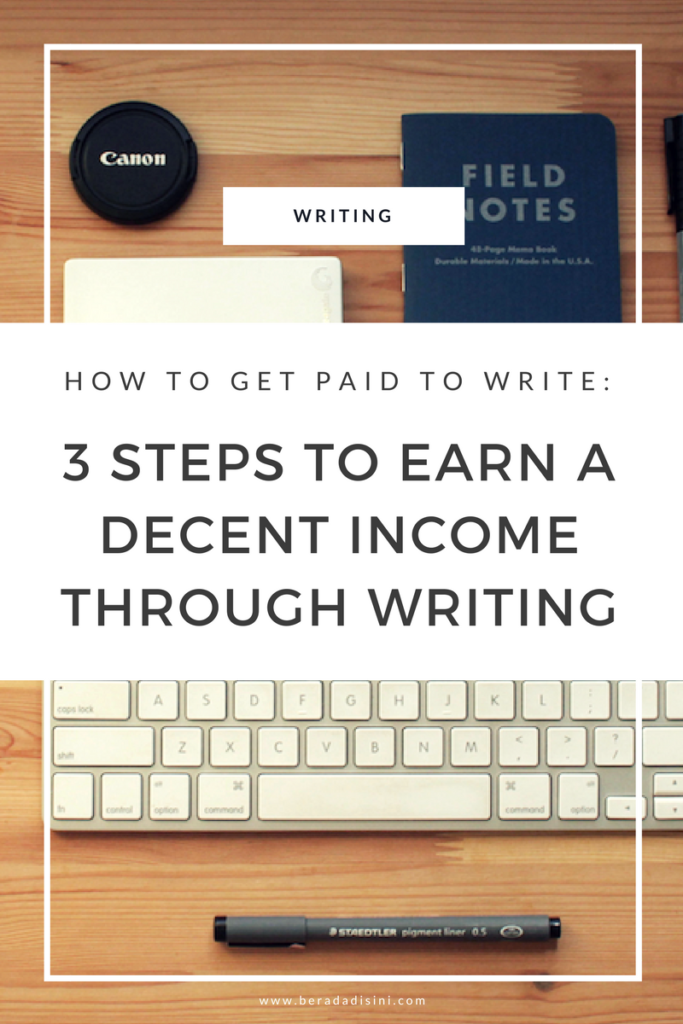
I didn’t expect this one to be such a long article (5,000+ words, so you better really want to know about this to read it!). So, in late December, I got some email questions from the blog’s readers, asking me what to do if they want to get paid to write.
get paid to write

I was thinking if I could also write about it in the blog, for everyone to read. So, I did.

This is my elaborate reply to those emails. Do you want to get paid to write? This is what I can sum up from my experience.

STEP 1.

Build Your Writing Muscle + Mentality


1. Stick to a habit of writing practice.

If you’d like to get paid to write, understand that you need to let go of writing solely as art. It has now also become a job, an occupation, a commitment. We are not allowed to use bad mood (or for writers maybe ‘good mood’) or writer’s block as an excuse not to write. Not wanting to write is not an excuse not to write. If you’d like to get paid to write, start by building a muscle and mentality for it; to start approaching writing the way you would approach any job: with an amount of determination, dedication, commitment, and passion.

With that being said, commit yourself to a block of time every single day, to do your writing practice. Writing practice is not journaling, although journaling is better than not writing at all. What I meant by writing practice here is having at least 15 minutes a day to improve your writing skills. Do you have any difficulties when it comes to writing non-fiction? Do you think you’re weak in grammar? Do you think you need to know more about how to describe a place?

Then set up a time to practice writing (not reading!) about it, improving your skills every single day. Is there a certain kind of writing job you’d like to have? Do you want to write an e-book? A culinary review? A magazine article? Viral content on user-generated content websites? Then start writing about them. Make them a part of your writing practice.

I have always wanted to learn writing about food-related essays, so I started practicing and came up with these two: instant noodles and coffee.

2. Read & learn more about what you want to can write.

I have more than 30+ books about writing on my Kindle, and probably around 50+ more in my computer; or lying around on the shelf next to my working desk. When I find an article I love on the Internet, I bookmark and save it and read it again, and again, trying to find out what makes this article so captivating. I study the way the writer structure the whole piece, and try to emulate it; only to find out how it might work.

At this point in time, when attention-span is getting shorter, writing short for the Internet could be something you’d like to learn more about. On the other hand, there are still great long essays and in-depth articles out there on the web, so writing long for the Internet could also be something you’re interested in. No matter what it is you’re interested in, learn more, and read more.

Do not limit yourself to learning only about what you want to write. Whenever you can, also learn more about the things you can write. If you want to get paid to write, having the ability to write an article, an e-book, a novel, an essay, a sales page, a short story, a wedding vow, and a 7-minute YouTube video script would give you a better competitive advantage than a writer who can only write a short story.

  • Can you get paid only for writing a short story? Of course, you can.
  • Can you get more job opportunities if you can write an article, an e-book, an essay, a sales page, a short story, a wedding vow, and a 7-minute YouTube video script? Of course, you can.

So do we really have to learn about what we can write instead of just learning about what we want to write? I would say that the answer is really up to you.

However, when I first started out, I did not limit myself to a certain kind of writing. I wanted to learn and experience many kinds of writing, as much as possible. Later on in life, when we’ve made a name for ourselves, we might finally have the luxury to say that we only want to choose a certain kind of writing or accept a certain writing job. When first starting out, though, I’d like to keep myself open.

Moreover, how do I know what I really want if I haven’t had the chance to see what’s available out there, right?

If you’re thinking about getting paid to write because you’d like to have the freedom of working from anywhere in the world, find out the recent trends for content creation on the Internet, and hone your skills to respond to that. Check out some sites like Trendwatching, Mashable (Creative), or CoSchedule blog for some sparks of inspiration about what kind of writing jobs might be needed, and how we can prepare ourselves for a writing job that might not yet exist (but soon, will).

3. Get a (healthy) reality check.

How do you know if you have written something good, or something bad?

From my previous experience, getting feedback from families and friends IS NOT the right way to go. Either they’d tell the things they thought you’d like to hear; or on the contrary, tell something that hurt your feelings, friends or families are just not the right people to give honest and objective feedback (I still love my friends and families, though!).

The first time I learned about writing short stories, I joined a local writer’s group called Kemudian.com, where we could publish our work and get stars, comments, and feedback from other writers.

From this group, I learned that writing ‘beautifully’ is not enough. When you’re writing a short story, readers are craving for plots, for action, for something that would propel the story forward. I got all this feedback and try to improve myself based on some comments or loopholes other writers found in my story. Joining a writer’s group gives me the opportunity of being vulnerable, by sending out my unfinished work to the world: to be judged.

For me, it was really a good exercise to expose my writings to be judged. When you get paid to write and get commissioned works, like it or not, you’ll receive judgments (in many forms) from your clients on the work you’ve done. And trust me, they are not always kind. Thus, if you want to get paid to write, you need to have thick skin to not take critics personally, and just get yourself used to it.

This is why joining a writer’s group is something I would recommend. However, please bear in mind these 2 things before joining any writer’s group:

1) DO NOT TAKE CRITICISM PERSONALLY. Just because your writing is bad, doesn’t mean you’re a bad writer. If your writing is bad, find ways to improve it. If someone said your character is weak, find some ideas on how to make it stronger. If someone said your first paragraph is boring, find some resources on how to make an attention-grabbing first paragraph. Criticism is not an attack on you as a person, nor as a writer. Learn how to see critics objectively. Learn how to separate your work from yourself, or else you’ll be doomed for many heartaches along the way.

2) ONLY TAKE CONSTRUCTIVE CRITICISM AND IGNORE THE HATERS. Some people criticized because they care, while some others are being critical simply because they do not care. Learn to know the difference. Ignore hate comments, and concentrate only on constructive criticism directly related to your work. Protect your energy from negative vibes.

How to find a writer’s group for you?

  1. Find a group by searching it online, if possible, find a specific group for the kind of writings you’d like to submit (poetry group, short story, etc.)
  2. Ask other fellow writers for any recommendation of an existing writer’s group in your area
  3. If there is none, create one. You can gather 3-4 writers, the exchange works via email, and give comments and feedback once a week.

4. Trust yourself and be a confident writer.

This could be the hardest thing to do. How do you tell people how to trust? I don’t really know how a non (or less) confident writer could build confidence. I think it’s something you need to work on personally.

If you’re not confident about your writings or about yourself as a writer, try to ask yourself when, or in which situation these doubts started to bubble up. Was it something someone told you many years ago when you were a teenager? Was it that time when your parents told you that being a writer could not sustain you? Was it that time when you submitted your work to a magazine and got rejected?

The thing is, to get paid to write, you need to offer your skills to those who would pay you to do the things you love: to write. How would you get someone to work with you and pay you to write if you do not believe in yourself? If you do not believe that you can do it? If you do not believe that you are good enough to get paid for what you wrote?

Read some of these articles from one of my favorite writers, James Altucher about building confidence


STEP 2.

Build Your Name + Portfolio


1. Show your work.

This is also the title of a book by Austin Kleon that happens to be one of my favorite non-fiction books of all time. And if you haven’t read it, I would strongly suggest you get it and start reading.

To build your name and portfolio as a writer, this is what you need to do: showcase your write-ups, as frequently as you can. Either posting articles on your personal blog, writing for user-generated content websites, a thoughtful Facebook note, a witty Twitter update, a thought-provoking LinkedIn post, an informative Instagram caption… whatever that may be, show your work!
If your friend is consistently posting a love poem every Friday evening for a year, you would think of that friend as ‘the love poet’. So, share and show your work, frequently, consistently, and confidently! Showing your work is also a way for you to get feedback, but most of all, it’s a way for you to just show up to work and to stop trying to be perfect.

If you do not show your work, nobody would know about it. If you keep your work only for yourself, nobody would get a chance to see it. To get paid to write, you need to show your work.

2. Build your portfolio.

The next thing you would need is a portfolio. Think of it as a catalog for your potential clients. Samples of write-ups in your blog, articles you’ve published in user-generated content websites, or viral reviews you’ve made somewhere else on the Internet… all these could be included in your portfolio.

However, most clients would ask whether you’ve been working with some other clients before; or not. Basically, they would want to know if you’ve gotten paid to write before. If you haven’t, they would think: 1) you’re not good enough, nobody wants to work with you; 2) you’re new and inexperienced.

So another good way to build a portfolio is by offering your services pro bono (or for a very friendly price) to a client.

Would you like to have a portfolio on writing about restaurants and culinary? Shoot out an email to as many restaurants as you can, and offer them a pro bono service to be included in your portfolio later on. Either it’s writing an article about their restaurants for a magazine, improving the copy of their website, editing some of their promotion materials… do some works related to the services you’ll be offering your future clients.

Take up 2-3 restaurants that received your offer, start working, and build your portfolio. Do not forget to state clearly that you would need this project to be included in your portfolio, and that the restaurant’s name or logo would be appearing as a client of yours on your website (if any) or in your promotion materials. Make sure they agree on this.

Another way to build your portfolio is to contact non-profit organizations in your area and ask them whether they need a hand for any writing-related project. Building your portfolio while doing good and volunteering your skills would be meaningful work!

Keep your work samples in one folder, and if possible, upload it online to a document-sharing app. The next time a client asks about your previous works, you can send them an email with links to your work samples!

Even if it’s an unpaid work, you are building your portfolio here, so make sure that you’re doing really good work! You’ll be using these works as samples of how good you are. It’s your showcase. And these non-paying (or low-paying) clients are your first few clients! Make sure they appreciate your work (and craving for more!).

If your pro bono client is happy with your work, ask for a testimonial. Ask for permission to use the testimonial in your website, or in any other promotional materials you have.

3. Take part in relevant communities & networking events.

If you’d like to write novels, attend networking events where you can meet with other novel writers, novel readers, and novel publishers. If you’d like to write for fashion brands, join their communities, attend their events, get to know the people in the industry, get to know the agencies they are working with. Surround yourself with these people: with your future competitors, future clients, future middlemen, future assistants, future consumers.

Once you’re there, what should you do?

Absorb as much knowledge as you can, find out any information or contacts you would need, get to know the latest trend and updates in the industry. Those who listen learn more than those who talk. Use this opportunity to learn the industry dynamics.

But, above all, be a good listener, and be helpful.

I would also like to say be entertaining, but not all of us are blessed with the skill to entertain others. So, be a good listener. It is entertaining to have a good listener in the crowd. Find out ways how you can help others. Does someone need to get in touch with someone you know? Get them introduced. Does someone need advice on where to go this weekend? Does someone need to know where the restroom is?

Be helpful. You’ll never know when these random faces and names would come to your assistance, but they would, someday. Someday, they would.

4. Find a mentor and be their ‘intern’.

I learned everything I need to know about writing business letters and documents from my ex-boss. He is my mentor when it comes to business writing.

As a former investigative journalist turned a communications consultant, he would sit with me for hours, correcting my grammar, style, structure, as well as a selection of words. He would ask me about my thinking process, about why I choose to write a certain thing following a certain flow, about what will happen if this paragraph is erased, about why the writing is not as witty as it should be.

From writing a pitch email to a full-fleshed proposal, from a report’s summary to a press release, I learned through him: by reading what he wrote, by listening to what he said, by improving through his criticisms, by exposing myself to voluntarily writing more documents. Only by doing this, I get more opportunities to be mentored: thus more opportunities to accelerate my growth!

At the time I was working there a few years ago, my boss’ professional fee would be something around US$1,200-1,700, per hour. When I volunteered myself to write more business documents, I got more time to be mentored, and I did not have to pay anything (on the contrary, he paid me my salary!).

They say you are the average of the 5 people you’re closest to. If you want to get paid to write, make sure that one of those people is your mentor.

How to find a mentor if you’re not working for one?

Find a writer you respect, someone you would want to ‘intern with’. Try to get in touch with the writer, either by attending events where he/she speaks, commenting on his/her blog posts, or writing an email complimenting his/her writings. Try to do this for some time, probably 1-2 months, before asking for any opportunity to be mentored. It is necessary to build a relationship and get the ‘potential mentor’ to notice you, and get warm to you. It is very opportunistic if the very first time you contact him/her is only when you’d like to get mentored.

If you have quite a decent amount of money you can spend to pay your mentor, feel free to ask his/her rate to become your writing mentor. I do believe in a healthy exchange of energy. Paying your mentor would not only show how much you respect his/her time and credibility, it would also make you feel more serious and committed in doing this mentorship.

If you do not have the money to pay a mentor (or if your mentor’s fee is just way too high than what you can afford to offer), offer your time and skills. Tell your mentor about some of your work experience and skills, and offer your help in assisting him/her in any writing projects he/she might have at the moment.

By working under their guidance and supervision, you can actually learn faster. You’re not only learning about the craft of writing itself, but you will also learn about how to approach writing as a daily job. Most of the time, if you perform well enough, your mentor could also be the one recommending you to take job offers he/she couldn’t handle.

5. Go out and teach what you know.

Knowledge is multiplied when shared. So, if you have time, go out and teach what you know about writing. I love teaching; because the more I teach, the more I know about what I didn’t know before. Teaching is another way of learning, of improving ourselves, of transferring our mind into someone else’s mind. It’s an interesting process. As you teach, you’ll learn a few skills you’ll need to deal with a client: empathy, patience, persuasion skills, and energy management.

How do you put yourself in the shoes of someone who doesn’t even know how to start writing? How can you explain things step by step, slowly, in a way that can be easily digested and understood? How would you keep them excited about learning more, about knowing more, about keep learning instead of giving up? How is it possible for you to stay positive and supportive after trying to explain the same thing over and over again, something you would deem ‘so easy’ but turn out to be ‘really difficult’ for others?

Thinking about taking a course in handling difficult clients? Try teaching a bunch of elementary school students.


STEP 3.

Find Work + Keep It


1. Decide on your starting price.

You’ll need to set-up a fee for your write-ups because it’s time for you to get a job and get paid for it. How much? It depends on how you value your work, but to get close to being objective, ask some of your ‘free clients‘:”If you have the budget and could pay me for what I did, how much money would you feel comfortable to spend on it?”

Then build your fee based on the answer.

When you’ve built your portfolio and have had some satisfied clients, you could always raise your fee accordingly.

2. Browse for jobs and commissioned works.

Now that you want to get paid to write, start looking for jobs and commissioned works. How? There are 2 ways to do this.

First, you can find many sites offering writing jobs online, only by typing the keyword on search engines. Although it’s quite comfortable to find commissioned work this way, the downside is this: you are competing with many writers. Some with many stars and reviews, and have worked for 50+ online clients before. If you’re just starting out, you might feel a bit overwhelmed by this. However, try signing up for this service to find a potential client in your area who might need your writing service.

The second way is more traditional, but I actually prefer this one. There’s a reason why you go to community or networking events and build relationships with those in your line of work. There’s a reason why you need to be a good listener and be helpful to them. Now, it’s time to tell them that you have ‘just finished a project’ and have the capacity to take up some writing jobs. Do they know anyone who might need help in writing a copy, a blog post, an article, an e-book?

I found this to be more effective than fishing jobs online, at least based on my experience. This is also one of the reasons why Build Your Name + Portfolio is in Step 2, something you should be doing before even trying to find commissioned works.

The thing is this: if you have built your name and portfolio well, the chance is you would have had some offers to do commissioned work already!

3. Accept the job!

I don’t really like to write about that. It’s not my kind of thing. It’s not paying as much as I hope it would. It’s a boring job. It’s not as prestigious. It’s just a small project. If you’re thinking this way and about to turn down an offer on a writing job, ask yourself this question: at this stage, can I afford to turn down this offer?

Now that writing is a job, or a source of decent income, or something that will put some food on the dining table, would you have the luxury to only receive commissioned works you like? Or would you do the commissioned works you have the capacity and capability to do?

There is no right or wrong answer to this. It’s a choice, and you are free to decide for yourself.

My background is as a communications consultant. I worked mostly with big brands and corporations before, so it would only natural that when I quit my consulting job and started offering my service as a writer, I got a big chunk of commissioned works related to writing business documents.

Would I choose to work on something else?
Of course. Give me scripts for wedding videos, human-interest articles, personal essays or e-book writing, even popular reports.
Do I accept the ‘business document’ job?
Yes.

Why?

Because I know I have the capacity and the capability of doing it. Because I can get a decent income from this work while traveling. Because I want to help them to get this work done. Because I want to keep practicing and sharpening my skills in writing business documents. Because it’s a job and I’m grateful for getting it.

How long would I keep doing this? As long as necessary. As long as I am not cramped with 100+ requests to write a wedding video script; to the point that I cannot take any offers for writing business documents. As long as I still want to have some traveling funds in my savings account.

The truth is this: no matter how passionate you are about what you do, when it becomes a job, at one point or another, you’ll just have to deal with things you’re not so comfortable with. I think this is where we got it wrong when it comes to the term do what you love, and we imagine this perfect day when we can only do the things we want to do. But what about seeing it this way: it is exactly because you REALLY LOVE what you do, you CAN put up with some uncomfortable things along the way, and DO IT anyway.

If you love it that much, you won’t just quit when things get hard.

4. Get to know your middlemen (or women).

Some of my commissioned works came not from the client directly, but from the client’s agents, partners, or even the client’s friends. Most of the works came in through referrals. It was someone-suggesting-me-to-someone-else situation. I found this to be the most convenient way of getting commissioned work.

If you want to get paid to write, get to know your middlemen. These are the people who can actually hand over some works to you. They might not be the client, but they have access to your potential clients. And they may need your service.

For instance, agencies (communication, advertising, content production) could be your middlemen if you’re thinking about writing for big brands. So get to know them. When you bump into any writing-related information they would find interesting, inform them about it.

Is there a new trend in website copywriting? Is there a new project about writing a novel via Twitter? Is there a groundbreaking formula to write sales pages that convert? Share this information with them. Let them start seeing you as an expert, as someone who is always updated to the latest trend, as someone who cares, as someone they would call whenever they have job opportunities.

How do you know who are your middlemen? By joining related communities and attending networking events. That’s why we need to do this as we’re building our name and portfolio.

5. Reach out + collaborate.

When you want to get paid to write, you can’t just write and be happy with that. You also need to sell your services.

Like it or not, you need to market yourself, promote your services, and close the deal with a client for a commissioned work.

I think most of us writers (including myself) are not that comfortable with selling. Most probably because we’ve been exposed to ‘hard selling’: the pushy, make-you-feel-guilty-and-annoyed type of thing. When we’re thinking about selling, we’re thinking about THAT kind of selling.

But let’s put it this way. You’re out there about to buy a new laptop. With so many options available, you really don’t know which one to buy. There are so many options with the budget you have and many different specs. Which one to choose?

How many of you would feel grateful to have a helpful, informative, and genuine salesperson trying to help you find the best laptop for you? How many of you would appreciate it when he said, “Oh, you want to use it for designing stuff? This is the best for design works because it has this and that and that… and it is actually voted the friendliest laptop for designers in this magazine…”

How many of you would appreciate THAT instead of a salesperson who just shrugs; and without listening to what you really need in a laptop, insists on offering you laptop A: the most expensive in the store?

If you’re a helpful, informative, and genuine salesperson, would you still feel bad about selling?

Or if we change the word selling into ‘helping’, would you be more comfortable in offering your services? If, instead of thinking what-can-I-sell-today, we think how-I-can-help-out-today, would you see selling in a better light?

When you’re about to reach out to a client offering your services, ask yourself first: what is the one thing I know I can really help him with?

Send this email. It is actually a sales email.

If you’re still not comfortable with this (or if at some point you want to reach more new clients), collaborate. Find a friend or a colleague who is really good in selling. Someone you’d like to talk to all day. Someone who is really good with people. Then, collaborate with him. Ask him if he would sell your services and get a commission for every deal being made.

We’re always stronger together, aren’t we?

6. Your ideal job and where to find them.

So, you’ve always wanted to write food-related articles for food-related clients?

Now that you’ve had enough commissioned works to sustain yourself, and you have made a name for yourself out there, start offering your specific service for a specific client during the weekends (or when you’re not busy working on other commissioned works).

Create an offer on some writing services you can do for restaurants; or for those who want to make recipe books, or to improve the copy of a restaurant’s websites. Show off your portfolio in this subject. Offer a competitive starting price or a discount to get more of your ‘ideal clients’ at this stage. Test the waters. See if you can get enough work from this niche alone in 3-6 months.

The day you get more ideal jobs than you could handle is the day when you can turn down jobs you do not really like; or the day when you can hand over those jobs to someone else. Maybe it’s time for you to branch out and hire other writers to work for you!

The idea here is to get paid to pursue your ideal job. If you have the luxury of starting out with enough savings; so you could exclusively pursue your ideal job, then you’re lucky! If you don’t, like most of us might be, work on other writing jobs while pursuing your ideal jobs.

7. Strive to be a kind person.

More than striving to be a good writer, strive to be a good person. Be kind. This is how you’ll keep the job. Always give more than you can take, always be a helping hand whenever you can, always hand in your best work, always show up in your best mood possible.

This is the thing: when someone gives you commissioned works, they don’t necessarily hire your services. They hire you. YOU are the reason why they give this job to you, and not to someone else. To be honest, we are not that unique. There are many people out there who can write business documents or wedding video scripts. There are many writers out there who can do what we do. A client chooses you because they want to work with you: as a writer, and as a person.

In reality, the more clients you work with, the more hard times you would probably experience. Maybe the clients are not satisfied with your work, maybe they are not treating you well, maybe the two of you are just not a match-made-in-heaven for this project, maybe they find someone who can perform the same work for a better price, maybe you’re feeling stuck working on this project and you wanted to drop it off…

Whatever it might be, when you have a hard time making decisions, when you have to turn down a deal, to send THAT scary email, to make THAT uncomfortable phone call, ask yourself: “If I am kind, what would I do in this situation?”

And just know: that in the long run, being kind wins over being right.
get paid to write

hanny
WANT TO SHARE WITH SOMEONE WHO NEED THIS?

Travel triggers a change in our outlook: from goal-directed to present-moment. It’s not literally the experience of novelty, but the way we open ourselves up when we’re traveling.

Travel is a state of mind. We leave our routine to observe, experiment, and come back with stories that we could tell. There is, of course, a variety of travel that involves box-ticking and taking selfies by the landmarks, but even that’s a starting point. Inevitably, we end up behaving a little differently for the duration of our little get-away.

On top of that, a natural, effortless present moment awareness that comes with having to deal with foreign-languages and strange hotel rooms leaves us open to not just learn about the external world, but allow the internal to bubble up to the surface.

I am traveling a lot at the moment.

This time, I traveled abroad to help my friend with a business launch. The flight times were awkward, the flights expensive, but I knew it was the right thing to do and didn’t even feel the friction. She is imminently going live with a career-defining project.

I asked myselfwhat is this week going to be like for me? The answer was a resoundingand curious“I have no idea.”

Usually, I take ownership of the projects. I do the tasks only I can do. I play to my strengths and drag other people with me. However, this time, that wasn’t what was I imagined would be required. I was needed to help with getting the post, answering emails, making strategic decisionsand taking out the rubbish. Being on call for whatever was neededa bit like a doctor would be. It could be a cardiac arrest or it could be something near inconsequential. I could be saving the day or getting coffee. I was implicitly called there for the sake of being thereas they say.

As I looked out onto the wing of the plane, I felt discomfort at this thought. Is this really what I want to do? My mindfulness exercises must be paying offbecause again, I didn’t know and, without any judgment, was curious to find out. That’s the thing about travelingit gives us the freedom to experiment. Leaving my normal MO for a week allows me to play a different rolejust temporarily. It’s less scary to try new roles that way. It’s not a big commitmentit’s just for a week.

Acknowledging my reluctance, I saidthat’s what I’ll do. I’ll let go of my own goals for a weekand just go with the flow.

Be reactive. Mindfulness is so hard to put in words.

One of the benefits is often phrased as “being less reactive.” It’s easy to misinterpret. In a way, it leads to being more reactiveonly appropriately so. Instead of being on autopilot and presuming things, we perceive the world more openly, more fullyand thus respond moreand more appropriately.

Traveling involves being ok with regular interruptions and allowing for deviations from the plan due to new circumstances inherent in the journey. It is a way to be in the present moment.

Travel makes us more aware of the world around us. In a way, our constant slipping into daydreams or anxieties is a product of routineand travel is the ultimate antidote.

Knowing that we have to be in the office by 9 a.m., go for our break at 11 a.m.and so on, tempts many into wanting to escape itif not literally, then mentallyby thinking of what we will have for dinner or whether the cute guy in accounting is single. Buddhists advocate disciplined routine as a way to be in the moment. For someone like me, it seems to backfire a lot: if I know what’s comingwhy would I pay attention?

The truth is, of course, I don’t know what’s coming.

It’s a bit like the placebo effectwe perceive what we expect. How does a restless millennial like me with a million addictive apps I use to not have to be right here – convince myself to be in the boring here? It is quite challenging to be really in tune with the present moment when it’s as you expect it. I believe “watching paint dry” is the appropriate metaphor. Incidentally, watching paint dry would be a great meditation.

A sense of novelty opens the senses to not only the sights and culturesbut what we otherwise deemed to be boring.

That’s why traveling is healingand a way to rediscover ourselves. Being on the rails of routine in a goal-directed way is a sure way to be miserable. In my opinion, this is a major contributor to the unhappiness of the many millennials who seem to passionately despise the 9 to 5not just because they don’t like what they are doingbut they are also allergic to how they are doing it.

The concept of a “gap year” is incredibly popular now.

In fact, for many of my friends, their gap year became the best year of their lives. The common assumption is that traveling widens our horizons by showing us all these cultures and ways of thinking in an organic way. I think it changes our state of mind. Instead of being in a goal-directed routine, we are in scout-mode: What is this? What does this mean? Not the usualhow do I get from A to B while optimizing for C? This scout-mentality spills over to how we view our feelings.

So what was this week of travel like?

It wasn’t just a change in geography. It was a change in mental state and purpose. What ended up happening was a surprise. I helped to codein a way, I had never done before and made batches and batches of coffee each day. Both felt incredibly satisfying because I knew they were needed. Instead of defining that I was only going to do x, y, and z, I did what seemed right in the moment.

An even bigger surprise was that I got a huge amount of “my own” work donethe stuff I had decided to shift into the background as I embarked on my escapade. It could be a coincidence, but things just happened more easilypeople got back, wanted to help, meet, and create. Or perhaps, I was expecting that nothing would progress that weekso when it did, it was that bit extra fascinating.

Letting go of goals and expectations is uncomfortable given the culture we live in. If the reader is debating whether he or she should try ittry it in experimental mode when you’re travelling. It may just work well for you.

………………
This guest post is brought to you by Martina: a medical doctor, blogger, and entrepreneur. She regularly blogs at thinkingclearly.co. Are you interested to do a guest post here? Just drop me a note.
hanny
WANT TO SHARE WITH SOMEONE WHO NEED THIS?

I think it’s fair to say that this one is not going to be a quick read, so if you’re in a hurry, you may want to revisit this post later on. But if you’re ready, let’s roll!

“So, what’s your New Year’s resolution?”

You might have heard this–or being exposed to this question. Especially now that we’ve gone through our first few weeks in the new year. You may scoffed at that question. Or you may simply be reminded of your own New Year’s resolution. The one you made on New Year’s Eve.

I was one of those people who did both (scoffed at the question, but actually wrote down my New Year’s resolution). I no longer scoff at that question now, but I still–to some extent, write down my New Year’s resolution in a slightly different manner (after reading The Desire Map by Danielle LaPorte).

But we’ll get back to that later.

My point is, I have written down my New Year’s resolution probably since I was 12. And I didn’t really feel like it was (ever) ‘working’–whatever ‘working’ is supposed to mean in this context. I was simply scribbling mine ecstatically; and in the following year realised that, hey, I didn’t achieve those thingsbut who cares?

So I forgot about it and moved on with life.
But that was when I didn’t know any better.

Now, before we continue…

Let’s do this experiment just for the fun of it. I want you to write 5 things you’d like to do, achieve, or have this year. In other words, your New Year’s resolution. You can write down whatever you like. If you can think of 10 or 30 things, just pick 5. If you can only think of 1 thing, try to add more until you get 5, just to stretch your mind a bit.

Probably you’ve written down stuff like getting healthier. Losing weight. Getting married. Having a new car. Traveling to exotic places. Quitting your job. Being fluent in Italian. Spending more time volunteering. Learning how to become a professional chef. Whatever they might be, just write them down freely now.

Done? OK. Keep that note with you for a while (it will come in handy later!)

In the mean time, I think these could be the 3 most plausible reasons on why my (or your) New Year’s resolution doesn’t work.

1. We don’t really want those things. We only think that we should want them.

Probably we don’t really want a new job. We don’t really want to pay a down payment for a house. Maybe we are not really into traveling, and actually prefer to stay at home, doing our hobbies or spending time with our families.

But we sometimes write down the things we don’t really want, simply because our circle of friends or families (or societies) believe that we should want those things. Because our parents think of those things as the epitome of success. Or because our friends told us that quitting our job to travel is the coolest thing to do–ever! Or because society believes that it’s indeed very respectable to climb the corporate ladder.

2. The things we desire may be fun to have, experienced, or achieved, but actually they are not really important for our lives.

When we created our New Year’s resolution, we may wrote down so many things we wanted to have, experience, or achieve. Now, from all those things, how many of them are truly important?  Or let me rephrase: if we can’t have, experience, or achieve them, how would our lives be affected?

If our lives would still be (relatively) fine even when we couldn’t get those things we want to have, experience, or achieve, it means those things are not that important to us. And it is exactly because we don’t think of them as that important, we don’t have enough drive, inspiration, or motivation to go for it.

3. We don’t really know why we want certain things.

There were times when I looked back to my previous New Year’s resolutions, and felt like I needed to pat myself kindly. Have we ever looked at our New Year’s resolution and asked ourselves why we actually want those things?

Why do we want to have a girlfriend? Or why do we want to get married this year? Or why do we want to quit our job? Or why do we want that new phone? Or why do we want to lose weight? Or why do we want to make more money?

When we are asking these questions–and be honest with ourselves while answering them, we will be able to understand what it is that we truly want. Why we want the things we want. Keep asking why until you’re lost for words.

For instance, if we’d like to lose weight, keep asking ourselves about why we actually want to lose weight.

  • Maybe it’s because we think we would feel more confident being in our skin
  • Maybe it’s because we want to feel lighter when we’re exercising, thus we can feel more comfortable doing it
  • Maybe it’s because we’ll be in a dangerous medical condition if we’re not losing weight, thus we are afraid that we’ll get seriously ill
  • Maybe it’s because we think losing weight will make us look more attractive, hence, we’ll have better possibilities of finding a romantic partner, and in the end we can finally feel loved and enough

The underlying reasons behind why we want the things we want could actually give us more clarity on the things we really desire.

Having a boyfriend, for instance, had made its appearance numerous times (if not every year) in my New Year’s resolutions (not this year, though!).

But why do I want to have a boyfriend?
Because it will make me feel

OK. Stop right there!

Now I want you to just go back to those 5 things in your New Year’s resolution you’ve prepared a while ago.

After asking yourself why you want each of the things you want, look closely at each one of them, and ask yourself, how would it make me feel if I actually achieved, experienced, or get these things I want?

  • Probably by owning a house, you would feel proud, powerful, or accomplished.
  • Probably by losing weight, you would feel confident, attractive, or healthy.
  • Probably by traveling around the world, you would feel excited, adventurous, or liberated.
  • Probably by quitting your job, you would feel courageous or spontaneous.
  • Probably by elevating your career, you would feel energetic or productive.
  • Probably by getting married you would feel secure or loved.

Anything.

Just explore the range of feelings you’d feel if you get all the things in your New Year’s resolution. You may have the same feeling keeps popping-up and repeating itself. For instance, having a house, getting married, and elevating your career… all three makes you feel secure. It’s okay.

Now I want you to examine all those feelings and group the similar feelings together. Choose 5 (or less) frequent or recurring feelings that appear on your note. At this stage, you should have a list of 5 or less feelings instead of 5 things on your New Year’s resolution.

A year ago (and up to this day), that’s how my New Year’s resolution looked like.

A list of feelings.

What I do next, is simply asking myself, what can I possibly do (in my everyday life) to give myself all those feelings?

Let’s say I want to feel ‘loved‘. For me, (as we’re all experiencing love in different ways), I could evoke the feeling (that more or less resembles the feeling of) ‘being loved‘ by:

  • sending a sweet text message to myself (really!),
  • gifting myself small gifts (a new notebook, a flower, a short weekend-getaway),
  • treating myself for a nice meal or a nice cup of coffee,
  • meeting my friends and laugh with them,
  • standing in front of a mirror, smile at myself and say, I-love-you or You’re-beautiful
  • hugging my dog…

and many more.

Just some small, simple, (and maybe kind of silly) things that I can do for myself to feel (or at least get close to) the feeling I want to feel.

And after that?

I started doing these things to other people, too. I send sweet text messages to my friends, gift a colleague small things, treat someone for a nice cup of coffee, say yes to my friend’s invitation to meet up, tell a friend that I love & appreciate her… and anything that comes to mind.

How does it change me?

I have to say that now I have more clarity in understanding the reason behind why I want the things that I want. I no longer stressing myself out or wasting my time to chase the shadows, because now I know the underlying motives on why I desire something.

I also started to be more in-the-now. I feel like I don’t have to wait for something big to happen before I could feel or experience what I want to feel. I feel much lighter knowing that I can achieve my New Year’s resolution–now that I design it that way.

I only need to do these little things every now and then and feel the feeling I want to feel!

Furthermore, I am not solely concentrating on myself or being totally absorbed in what I want to feel, but I also start thinking about how other people can feel the good things I want to feel.

In a nutshell, creating my New Year’s resolution this way feels like a better fit for me these days. I don’t know if this resonates with you, too–but feel free to try, and let me know if it (somehow) changes you!

Love,

*) on another note, I like this post Your Goals are Overrated (another take on New Year’s resolution issue) & 7 Strange Questions that Help You Find Your Life Purpose by Mark Manson. So maybe you want to read it next!
hanny
WANT TO SHARE WITH SOMEONE WHO NEED THIS?

What is the actual price of ‘happiness’?

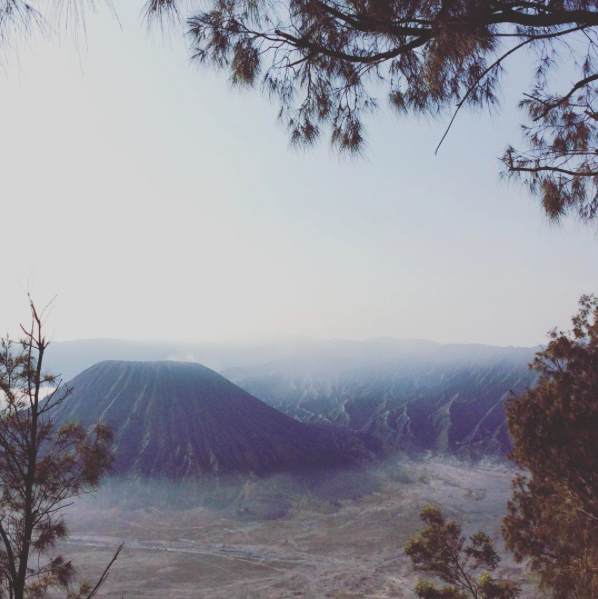
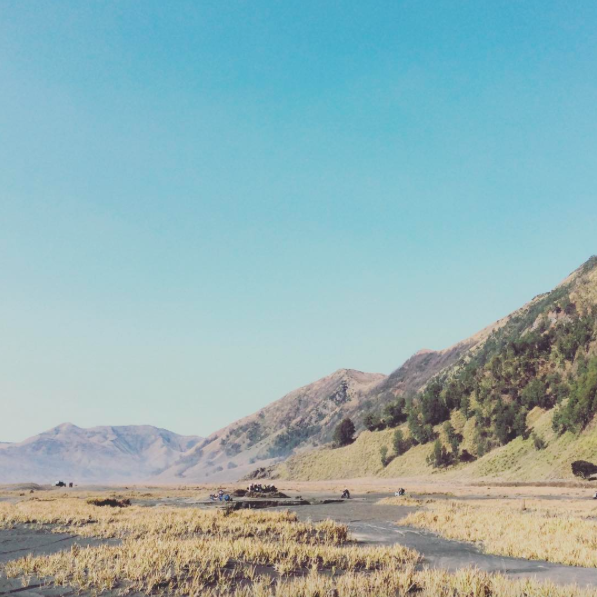
IT was 2.30 in the morning when I jumped into a red jeep heading to Mount Bromo. I was still a bit sleepy, but excited nonetheless. There is something about the mountains that never fails to envelope me in a certain sense of wonder and serenity. I had wrapped myself in thermal clothes, two layers of scarf, an overcoat, and an adopted brown ushanka–a thick and warm hat with earflaps that are normally used during winter (my friend decided to throw his ushanka away, and I decided to claim it as mine). The temperature in Bromo could drop to around 3°C – 5°C in early morning. Not to mention the wind!

Screen Shot 2015-11-18 at 6.44.20 AM

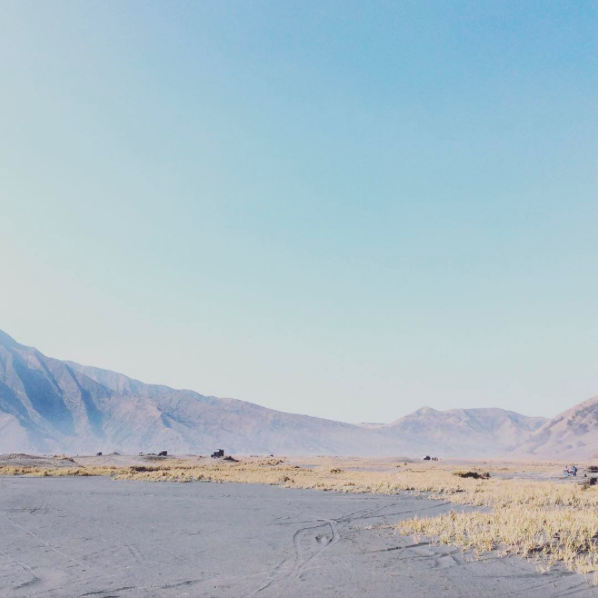
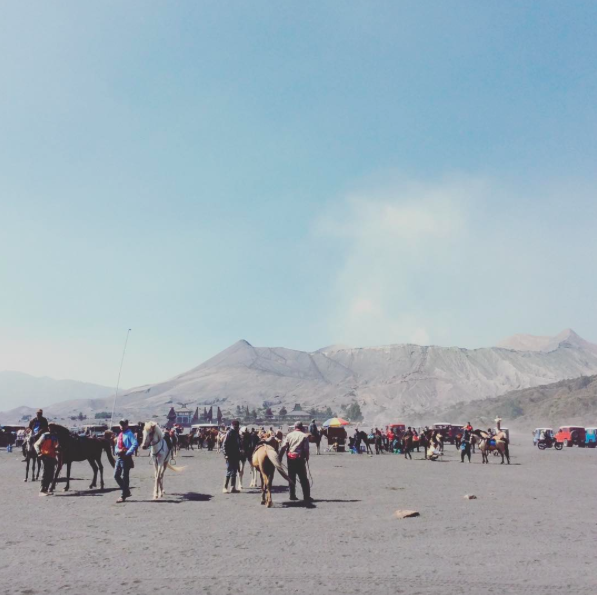
The entire top of Mount Bromo has been blown off in an eruption and the crater inside it is like a giant chimney that paints the sky with white sulphurous smoke. Today, the mountain sits majestically inside Bromo-Tengger-Semeru National Park, surrounded by a sea of volcanic sand and a ring of green valleys. In the dark of the morning, enveloped by the fog, hundreds of jeeps and motorbikes were racing along with the road’s rough twist and turns to reach the Sunrise Point, or Penanjakan, as the locals dubbed it. At around 4.30 – 5.00 am, everyone would gather around the viewing point with their cameras–ready to snap the breath-taking view of the first rays of sunshine bathing the mountaintops with golden lights.

Screen Shot 2015-11-18 at 6.46.54 AM

That morning was no exception. Plus, it was also a Sunday. The number of people who were trying to reach Sunrise Point was overwhelming. Old people, young people, little kids–they competitively shoved their way along the steep hill to occupy the front row at Sunrise Point, their cameras out and ready. I didn’t feel like joining the crowd; or pushing my way forward, so I just sat at the side of the road–next to the Tengger people selling chilis, onions, and Teddy Bear made out of dried flowers; enjoying the cool mountain breeze and the warmth of the rising sun on my face.

Screen Shot 2015-11-18 at 6.45.14 AM

***

“DID you see that?” a friend of mine who just got back from Sunrise Point shook her head in disbelief.

“See what?” I asked, a bit confused.

“You see that platform over there?” she pointed at a raised platform with a roof next to Sunrise Point. “That is actually a platform for prayers. People are not supposed to stand there; and definitely not with their dirty shoes on–but because the Sunrise Point is so full, the crowd just spilled onto the platform. Some tourists even stepped over a pile of clean praying mats, and a local guy was desperately trying to tell them to step off, but they were not listening!”

***

A FEW minutes later, I found myself in a small warung not far from Penanjakan, sipping tea while listening to the chatter around me–looking dreamily at the wave of tourists who were climbing down the hills cheerfully; now that the sun had risen. Some of them who traveled in groups were busy chatting and showing each other pictures from their cameras or smartphones, before taking more pictures along the way.

It was heart-warming to see their happy faces in the cold, however, I was also feeling a bit sad thinking about the incident at the praying platform. Some people might be too focused and too excited about getting their perfect sunrise shot that they couldn’t care less about anything else. They were so proud and happy to show their perfect sunrise shot later on, unconscious about how they might have hurt someone’s feelings during the process.

Screen Shot 2015-11-18 at 6.44.33 AM

I wondered, if I also did this as I went through life–sometimes unconsciously, some other times carelessly. What is the actual price of a perfect sunrise shot? What is the actual price of ‘happiness’? How many people and feelings I have ‘hurt’ so I can be ‘happy’?

***

I was reminded of a story told by a friend of mine one day–about him trying to climb up a mountain in East Nusa Tenggara with a group of friends and a local guide. “I wasn’t that fit to climb a mountain,” he told me, laughing. “So after a while, when everyone was still so energized, I told them that I might not be able to continue. I was so sad and disappointed in myself because really, I would love to get to the top and see the view from up there!”

Screen Shot 2015-11-18 at 6.47.09 AM

When my friend told the group and the local guide that he was going to ‘give up’ and just wait for the rest of them there, the local guide apparently saw the disappointment on his face. “Why were you so disturbed by this?” he asked.

“Because I want to see the view from the top! It must be really beautiful! But I couldn’t get there,” he replied, a bit pissed off with himself.

“Look around you,” said the local guide.

“Huh?” my friend looked at the local guide, confused.

“Look around you,” the local guide repeated what he was saying.

Screen Shot 2015-11-18 at 6.44.52 AM

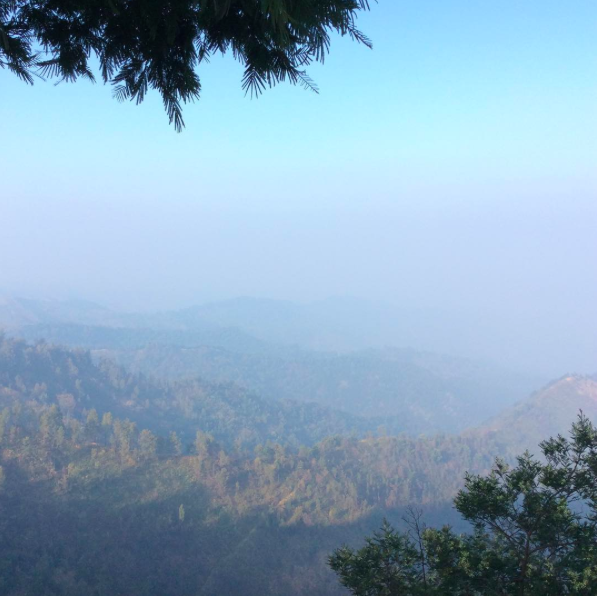
So my friend did just that. He looked around him. And only then he realized that he was seeing the lush green valleys, the view of the small town beneath, the swaying trees, the wild flowers dancing in the wind, the bright blue sky…

“Isn’t it beautiful?” the local guide smiled.

“It is…” my friend answered in amazement. “I didn’t realize how beautiful it is here, I was too busy climbing and watching my steps along the way!” he laughed.

Screen Shot 2015-11-19 at 11.04.44 AM

“Yes, sometimes we’re too busy thinking about getting to the top safely, so we watch our steps and we push ourselves, and we just ignore the beauty around us–because in our mind, we’re only thinking about enjoying the view from the top,” said the local guide. “But the view from here is beautiful, too, right? We have been surrounded by beautiful views from the point where we started.”

My friend told me later that it was one of the most eye-opening moments in his life.

***

MOUNTAINS will always have a special place in my heart.

Screen Shot 2015-11-18 at 6.45.48 AM

The town I live in is surrounded by mountains. To me, mountains represent reconciliation–something to mend what has been broken. When my parents got into a heated argument and didn’t talk to each other for a few days, one of them would say, “Let’s go to Puncak (the mountain area).” The pursued party would not say a thing, but if it was my mother, she would start packing some snacks and drinks for us to say ‘OK’–or if it was my father, he would start heating the engine of our red Chevrolet pick-up.

And off we go to the mountains.

I would sit in-between them. My father behind the wheels, my mother next to the passengers’ window. I didn’t really know what happens, but they usually started talking after a while, and when we got back home, they were already reconciled and started cooking dinner together or teasing each other in the kitchen, just like the good old days.

***

So what is the actual price of ‘happiness’?

I am always reminded of this question every time I think about Bromo. And it is, in itself, a reminder for myself every time I think about being ‘happy’. Or maybe I just need to redefine ‘happiness’ once more.

Screen Shot 2015-11-18 at 6.46.21 AM

Maybe happiness is not really about getting the perfect sunrise shot. Or about enjoying the beautiful view from a mountain top. Maybe it’s more about everything we hold dear in our hearts on our way there. Because maybe, the happiness we’re looking for is already here all along.

*) thank you to The Ministry of Tourism of the Republic of Indonesia for having me on your Wonderful Indonesia trip to Mount Bromo.
PHOTO BY NICO WIJAYA.
hanny
WANT TO SHARE WITH SOMEONE WHO NEED THIS?

It was late afternoon, and we were sitting at a nook in our Parisian hotel room, looking at a wall fully decorated with beautifully painted plates.

“I’m going to eat on that one,” I pointed at a plate with a painting of a cat on it. “Which one would you prefer?”

He looked at me as if I were crazy. “Well, I think I am going to choose that one,” he pointed at the one with the frog painting. “But, come on, you don’t eat on those plates!”

“Why not?”

“Because,” he shrugged, definitely thinking that any sane person would clearly know the reason why. “Because those are not eating plates. Those are, like, really beautiful plates. And not to mention that they are bloody expensive!”

“All the more reason to eat on them, don’t you think? In the end, they are what they are, right? They are plates. Why can’t I eat on beautiful and expensive plates?”

Yes. I can be stubborn at times.

***

About a year ago, I started using my beautiful plates.

Well, those were actually inherited plates–some China and vintage Delft Holland–passed on from generation to generation; usually only to be left gathering dust in the cabinet or to be hung proudly on the living room wall; not really sure about what kind of impression they should make. And we’re not only talking about plates. We’re also talking about flower vases, teapots, and teacups, as well as something like butter dishes.

One day, I simply washed them all (a serious washing involved due to more-than-a-decade excessive dust-gathering) and started using them.

I make garlic and cheese butter and place it on the beautiful butter dish to be used every morning as a spread on my bread. I boil my green tea inside the elegant tea pot and sip it slowly from the gorgeously decorated floral teacup. I use the blue and white ceramic vintage plate for my scrambled egg.

It does feel nice, to eat from beautiful plates or drink tea from beautiful teacups. And right now, I do feel alright (and happy) to use them up on a daily basis instead of storing them away or keeping them as decorative items. Yes, I have to admit that at first, I felt a bit guilty. And undeserving. And scared.

Am I supposed to do this? This is too good. Do I deserve this? This is too beautiful for me. What if I broke it? 

***

But where do we actually start getting the idea that something can be too good for us? Are we actually being taught to lower our expectations and not have too high of a hope or to have big dreams–simply because someone is trying to protect us from hurt, failure, or disappointment that may lurk behind us?

He’s-just-too-kind-for-me is something I heard from a lot of women (and I might be guilty of using this nonsense once or twice in my previous relationships years ago–when I didn’t know better). In that sense, what are we implying with those words? Are we thinking that we’re so undeserving to be treated kindly? How often do we lessen ourselves to the point where we decided that we’re okay settling for less and lowering our standards only to please others?

Other times, I guess we’re doing it to protect ourselves–our hearts, our dreams, our hopes, our memories. We’re thinking about storing them away in someplace safe or hanging them on the wall for everyone to see–but not to touch. We’re too afraid of making failures or breaking our hearts or humiliating ourselves or looking vulnerable because then we’re going to get hurt, and then we’re not going to be perfect anymore (not to say that we are/were, ever).

Maybe we’re afraid that we’re not going to be those beautiful decorative plates that are being admired by everyone anymore–because the fact is when we’re no longer becoming a decorative item in life–just like those plates; we’re going to break or decay or our colors may get washed out after some times.

***

I made some Italian spices butter this morning and stored them in the beautiful butter dish. Every time I see it as I’m about to spread it on my bread, it becomes a great reminder for me to be brave and to not settle for less. To know that I am deserving of wonderful things, great experiences, amazing life, and comforting love; to believe that nothing is too good or too beautiful for me, and nothing is too good or too beautiful for you, too.

You deserve it.

And starting tomorrow, I hope you’re having your meal on a beautiful plate.

*photo credit: Wicker Paradise via photopin cc
hanny
WANT TO SHARE WITH SOMEONE WHO NEED THIS?

Dear H,

On Friday, I met a dear friend, and I told her how good things seemed to flow into my direction very easily lately. I am thankful for that, of course, because a year ago (and the years before that), I found myself struggling to get the things that I want, working real hard to make my dreams come true. Everything came to me with lots of hard work, and at the end of the day I found myself drenched in tears and felt really tired. I told her that since last year, I have been feeling… really light.

Now, I can see myself, realizing that I am not working ‘hard’, not struggling, not fighting—yet things are coming my way, one by one: the things I’ve always wanted, the things I’ve always desired. These things flow into my direction as if someone’s swinging a magic wand. At times it feels effortless, without me even trying to grab them.

My friend told me that maybe that’s the rule of life. That you just have to let things flow and not fighting or struggling with it. The more you let things flow, the more you ‘surrender’ yourself to Life and accept things as they are, the easier life would feel and would be to you. I found this answer both calming and beautiful.

I remember that we said this all the time: if it’s meant to be, it will happen. And I can see how it echoes with the conversation I was having with my friend.

Later, when I got home, I opened my Taoism book and found a quote from Lao Tzu: “Life is a series of natural and spontaneous changes. Don’t resist them. That only creates sorrow. Let reality be reality. Let things flow naturally forward in whatever way they like.”

Somehow, with no particular reason, I looked up the word “Islam” and realized that the word itself (though it was derived from the word “salaam“: peace and safety), in Arabic, “Islam” itself means “surrender“. There are many ways in which people try to interpret the word “surrender”, but I found this one suits me best: (surrender to) abandon oneself entirely to (a powerful emotion or influence); give in to.

In Islam, I believe this could mean “abandon oneself entirely to God” or “give in to Allah“. From a more universal point of view, I see it as “abandoning oneself entirely to Love” and “giving in to Life“.

Tao and Islam. It’s amazing, our ability to find similarities when we’re looking for one, and our ability to spot differences when we’re aiming to spot one.

Love, #me.

hanny
WANT TO SHARE WITH SOMEONE WHO NEED THIS?
Hanny illustrator
Hi. I'm HANNY
I am an Indonesian writer/artist/illustrator and stationery web shop owner (Cafe Analog) based in Amsterdam, the Netherlands. I love facilitating writing/creative workshops and retreats, especially when they are tied to self-exploration and self-expression. In Indonesian, 'beradadisini' means being here. So, here I am, documenting life—one word at a time.

hanny

TAKE WHAT YOU NEED
VISIT THE SHOP