Setting boundaries and not letting other people completely drain your willpower, attention, hope, and energy: self-care. Communicating what you need or want clearly, in a calm manner, instead of repressing, denying, or being passive-aggressive about it: self-care. Stop making excuses and start making time to work on your dreams: self-care. Seeking (professional) help when it feels like you can’t keep yourself afloat anymore: self-care. Stop caring about what random people think of you and start caring about how you think about yourself: self-care.

Standing up for yourself when necessary: self-care. Closing or quitting a chapter in your life, career, or relationship that does not align with whom you want to be and how you want to live your life—then preparing yourself for a new journey: self-care. Feeling under the weather, not wanting to do anything, and not feeling guilty about it: self-care.

Moving on: also self-care.
Working on your issues: self-care.
Sorting out your finances: self-care.
Taking care of your health: self-care.
Not taking things too personally: self-care.
Forgiving yourself: self-care.

In the end, self-care is not always about doing the things that make us feel good or give us instant gratification. It’s also about doing the RIGHT thing: something that is good for us in the long run—even if it may feel hard at times.

love,

hanny
WANT TO SHARE WITH SOMEONE WHO NEED THIS?

Your journal is not messy.
It’s immediate and spontaneous. It captures your thoughts and feelings in the spur of the moment. It’s without hesitation. It’s flowing freely, quickly, and intuitively.

Your journal is not boring.
It’s practical and simple. It’s straightforward and minimal. It is what it is. It works for you and lets you organize your thoughts and feelings in a way that suits you best.

Your journal is not embarrassing.
It’s private, raw, and honest. It’s uncensored. It’s where you are brave enough to be vulnerable with yourself. It’s your safe space to open up, reflect, learn, and grow.

Your journal is not ugly.
It’s freeing and liberating. It’s full of things you need to let out and let in, full of memories you want to forget and memories you want to remember. It’s authentic and genuine.

Let’s not judge our journal harshly.
Know that it doesn’t need to look a certain way.
Stop determining the worth and preciousness of our journal by comparing it with others.
Our journal is worthy and precious because it is the archive of our thoughts and feelings through every stage of our lives—a mirror of how we’ve grown through thick and thin throughout the years.

It’s us, documented.

hanny
WANT TO SHARE WITH SOMEONE WHO NEED THIS?

I believe that we can have our own self-care rituals that can be done at home without having to spend a lot of money. Sure, self-care can sometimes be about treating ourselves (getting that manicure, going on that vacation, staying at that nice B&B); but this is not the only way. Self-care doesn’t have to be expensive. We have other options. It’s not only about ‘the treat’—but also about how we treat ourselves. I believe that self-care is not only about having fun. It also takes discipline and patience—just like how you would care for a plant.

So, here is a list of self-care activities you can do starting today:

1.

Take a long shower. While you are showering and lathering your body with soap, bless and thank all your body parts from head to toe.

2.

Eat when you are hungry. Drink when you are thirsty. Rest when you are tired. Cry when you feel the need to. Listen to your body.

3.

Say kind things to yourself throughout the day. Appreciate and compliment yourself.

4.

Massage your neck, shoulder, legs, upper arms, or other body parts that feel stiff with your favorite massage oil. Wish these body parts well while you massage yourself.

5.

Eat from your favorite plate. Drink from your favorite mug. Write with your favorite pen. Surround yourself with the things you love. Enjoy the nice things you have.

6.

Hug yourself in the morning, under the blanket. Smile when you see your reflection in the mirror as if you’re smiling at a good friend.

7.

Remember to breathe deeply and give your body a little stretch throughout your day.

8.

When you catch yourself comparing yourself to others or talking harshly to yourself, stop and do something else. Jump. Stretch. Do a silly dance. Listen to your favorite song. Go make yourself a cup of tea.

9.

Keep the promises you make to yourself. You deserve to be treated with respect by yourself.

10.

When you close your eyes, stop the temptation to replay past hurts or mistakes. Instead, imagine all the wonderful things you would like to experience in the future.


Wishing you a beautiful self-care moment,

hanny
WANT TO SHARE WITH SOMEONE WHO NEED THIS?

In August, I attended a friend’s ceramic and illustration exhibition and gasped at her beautiful work: a giant dog and smaller ones, tiny turtles, wonky tulips, green grasses and bushes, colorful snakes. Everything was so cheerful, so playful, so summery! Her exhibition started as her graduation project—where one of her teachers questioned her cute and joyful park. “Where are the drug dealers and the homeless?”

“How did you reply to that?” I asked her.
“Well,” she said. “I told them this is how I remember parks. These are the things I see when I walk on a summer day at the park.”
“It’s your park,” I nodded.

***

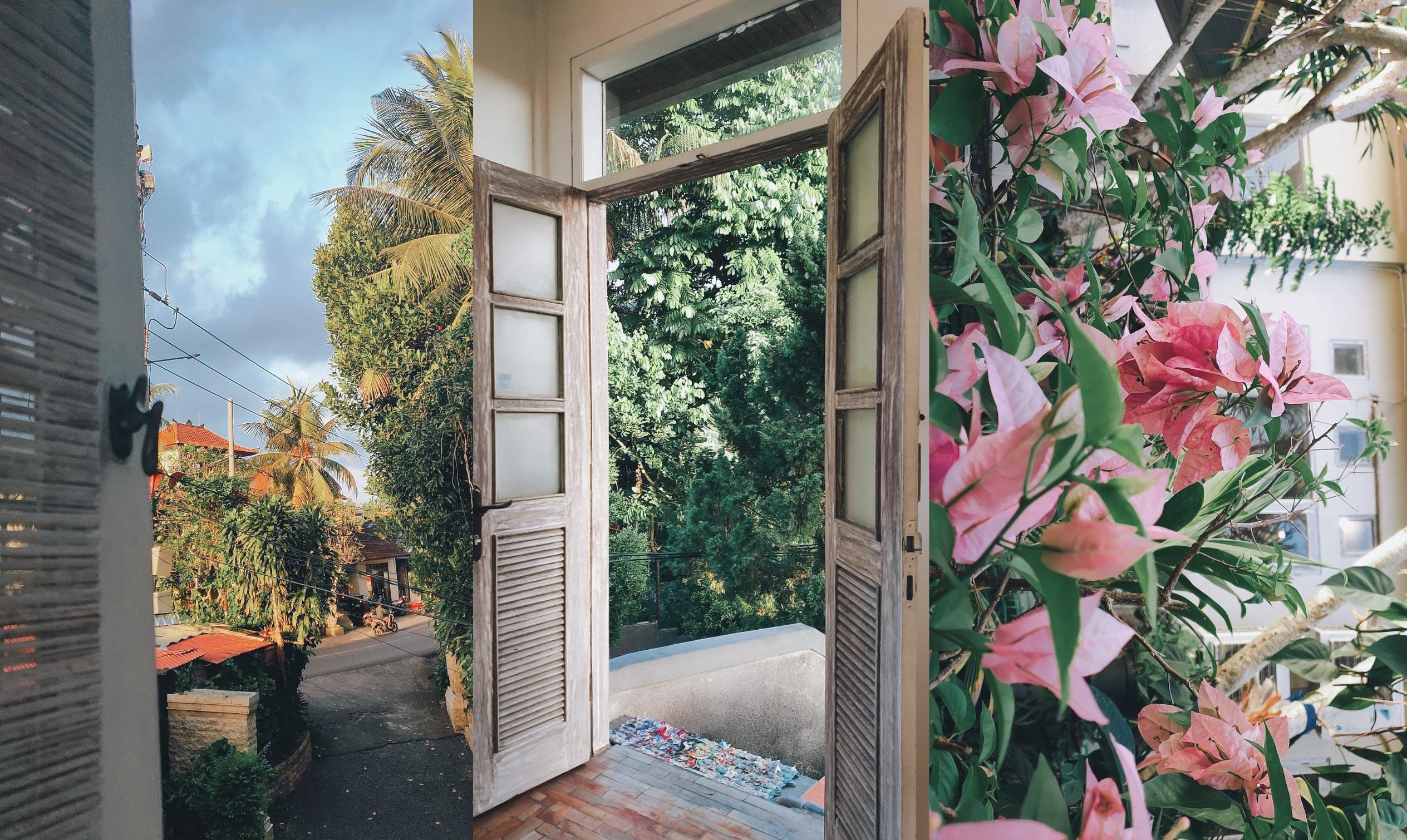
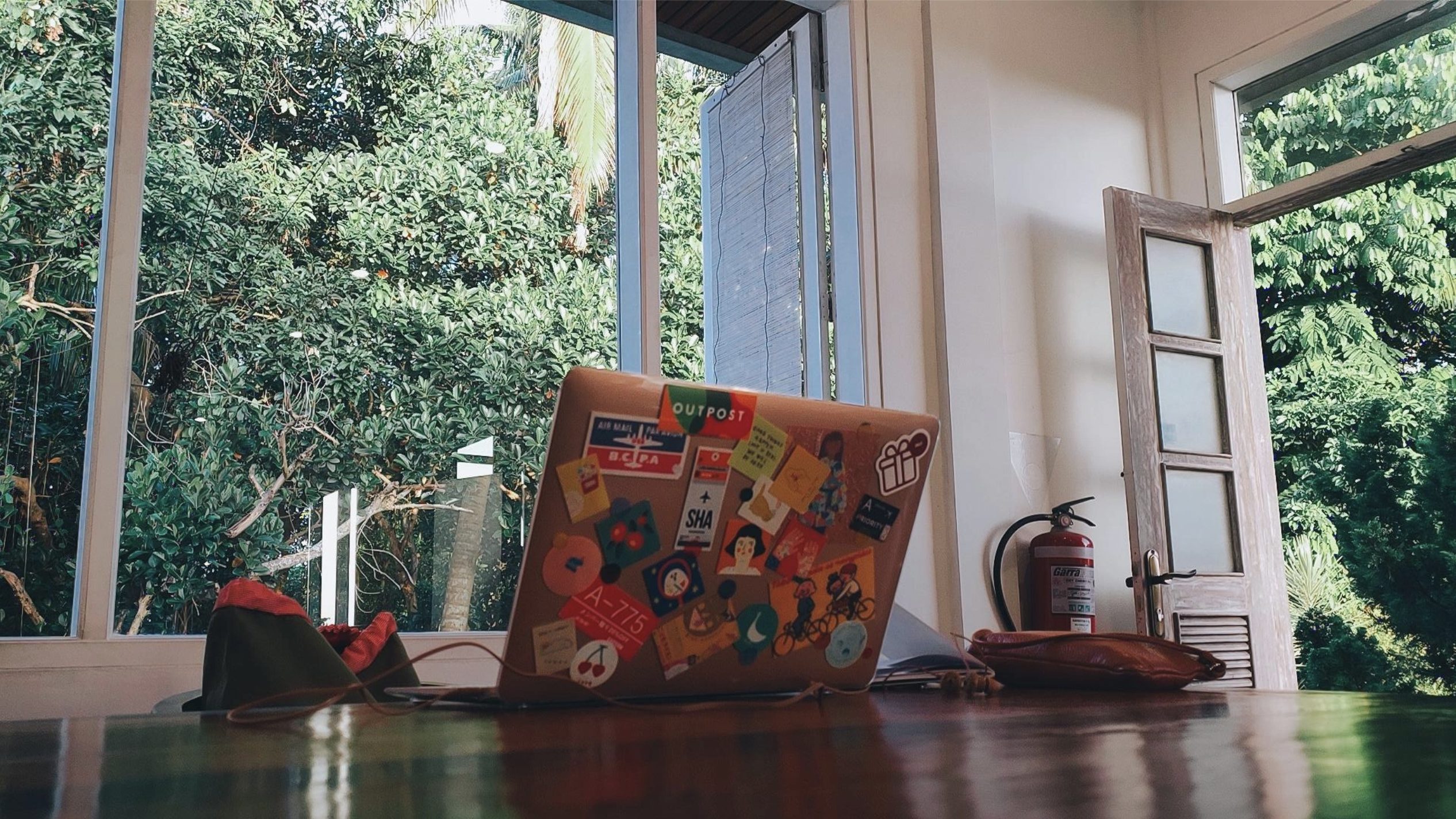
One afternoon, this conversation came to mind as I sat at my desk at one of Ubud’s co-working spots. We arrived a few weeks before, from the best Amsterdam summer in years: I was walking around with shorts and sleeveless tops all day, drinking cold water from the fridge and dragging our living room carpet to Vondelpark for a nap.

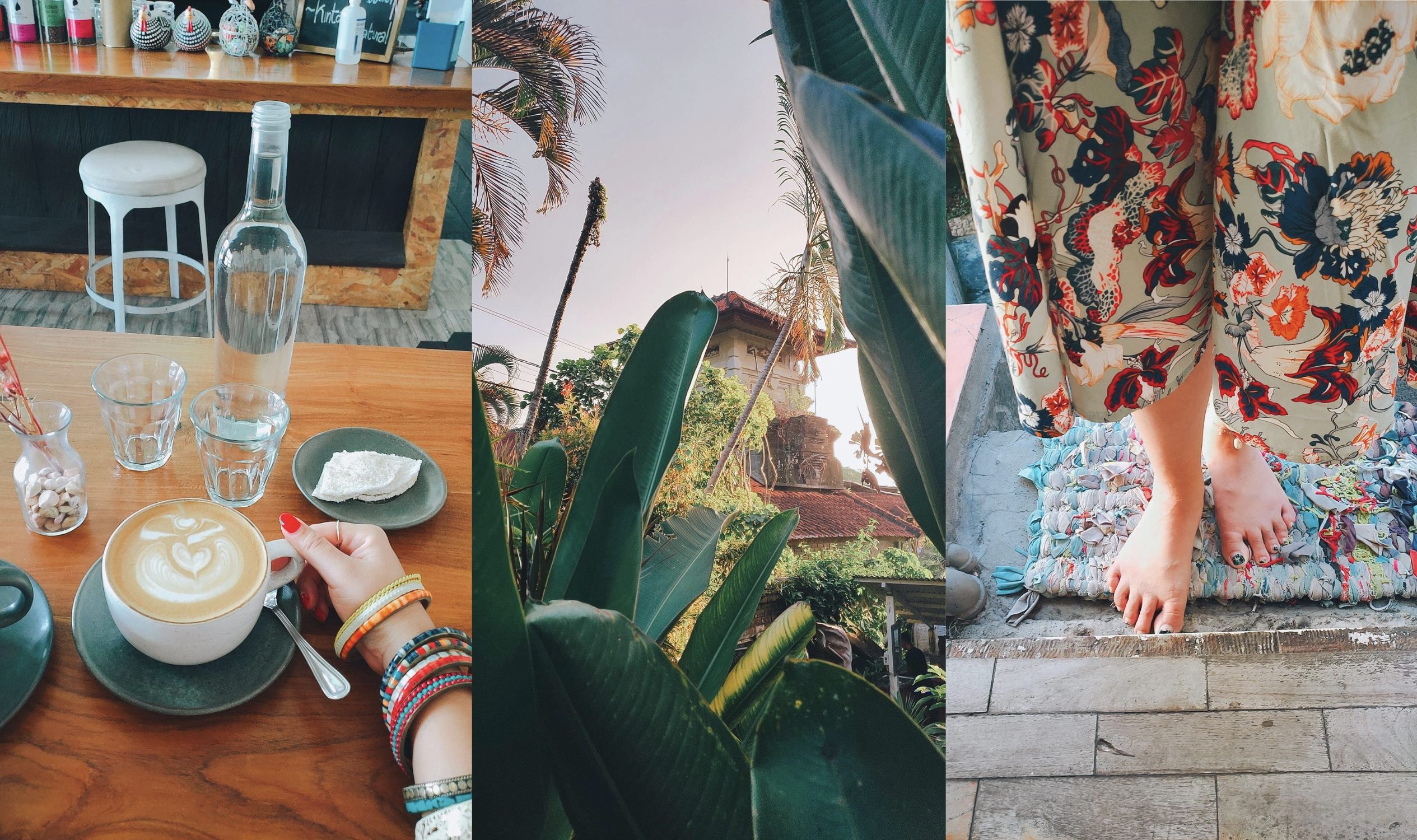
But the rainy season is coming to Ubud. I wake up to rain and inch out of bed only when the coffee has been served on the terrace, wrapped in a jacket and smelled of minyak telon. I don’t mind this kind of weather. It feels like home.

I haven’t been writing a lot these past two years. I haven’t been sharing a lot as well. I didn’t have the mental capacity to do so. Moving to Amsterdam during the pandemic—with lockdowns and curfews, far from friends and families, didn’t sit well with me. I was sad most of the time. Angry, other times. Small things triggered my insecurities. I wrote in my journals almost every day, and usually, I ended up crying or feeling empty.

So I didn’t write a lot, and I didn’t share a lot. Not because I only wanted to share happy things but because I hadn’t processed my sadness. It was still too raw to share, and sharing it felt irresponsible. I wanted to take it slow, to sit with the feeling until it peaks, transforms, or passes—without feeling like I had to hurry the process.

I read a lot.
I made art and learned how to paint with acrylics.
I filled up sketchbooks.
I even started running (thanks to my persistent and supportive husband).

I cooked daily because food is my comfort, medicine, and security blanket. The stove was busy with pans and pots, the four burners occupied. I made chicken porridge, eggplant rendang, stuffed tofu, Kalasan fried chicken, shrimp with salted egg, liver in sweet soy sauce and margarine, and vegetable dumplings. It was my way of bringing home (or the feeling of home) closer: everything that is nostalgic, familiar, and missed.

***

A few months after I moved to Amsterdam, an editor friend asked me to write a book about living there. When I arrived in Jakarta after two years, she asked me, “What happened with the book?” I said, “I couldn’t do it yet.” I tried many times, but everything I wrote came out angry, sad, and ugly—whereas Amsterdam was depicted as a cold, hostile, and menacing city (it’s NOT!). I was too wrapped up in my sadness that I couldn’t see things objectively, let alone write about it.

Another friend of mine, upon hearing this, told me, “Maybe you can start writing in Ubud. Maybe distance gives you perspective.”

That was when the ‘park’ conversation came to me.

***

Sure, there are many things in the park—and if we’re observant, we’ll see everything during our walks.

Sometimes we need to see things we don’t wish to see and sit with that. To think of what we can do or accept what we aren’t capable of doing (yet). But there are also times when we can choose to capture things that uplift us, things that will make us smile and feel hopeful.

Our mind is a park.
My mind is a park.

grounding at the park,
stepping barefoot on the grass,
look out for dog poo.

—my lousy attempt in haiku.

When my park is dark and stormy, I’d prefer not to have people walk around there. It’s not safe. The trees may fall, the storm may soak you wet, and the wind howls so loud you cannot hear anything. But when my park is lush and sunny, I’ll be happy to have people come over: to smell the flowers, nap under the tree, enjoy a picnic accompanied by the dogs, the ducks, and the birds, or play catch.

And I’ll share the stories about the dark and stormy nights on a warm, sunny day.

hanny
WANT TO SHARE WITH SOMEONE WHO NEED THIS?

Jackie Homan wrote an article for @taketinytrips, ‘Rest Is a Right, Not a Reward for Productivity’. I think it’s an excellent article to read, especially if you often find yourself feeling guilty about taking some time to rest or if you’re relaxing after a ‘productive’ day and think ‘aah-I-deserve-this.’

“We all need rest, not because it makes us more productive at our jobs, but because it makes us happier, healthier, more well-rounded people,” wrote Homan.

Naiylah Warren, a staff therapist, said that we could also reflect on our relationship with rest and leisure by asking ourselves:

“What was I taught about leisure and rest?”
“What am I being taught about it now?”

(Those questions could definitely be exciting journaling prompts)

For instance, I remembered being called lazy and useless when I was resting (lying in bed, reading novels, listening to the radio) after school/after studying as a child; of how I was told that if I had enough time to ‘rest’ I should’ve had time to help out with house chores or to continue studying other subjects.

I remembered how it filled me up with so much guilt like I only deserve rest when I no longer have the energy to do anything else.

I realized I internalized these words and thought that I should be (or look) busy, that having spare time was something alerting or… wrong.

At school, when we had a 1-hour exam and I had finished answering and checking all the questions in 20 minutes, I would pretend that I was still thinking or working on it until 5 minutes before the time was up, because, well… what would people say if I handed over my exam in 20 minutes and what should I do in the remaining 40 minutes?

Now I realize that this is ridiculous, but, yes, having ‘spare time’ used to stress me out.

However, as a staff therapist, Naiylah Warren said, “Just as we need food, water, or connection, we also need rest. Rest is not a hobby, it is a biological need, and when we embrace that perspective, it can help us release the guilt or shame we feel when we attempt to engage with it.”

Here are some journaling prompts if you’d like to spend some time writing about it:

  • How was/is my relationship to rest and leisure?
  • Do I feel guilty if I am resting, taking a break, or on vacation? Why?
  • How did my family or community view rest and leisure? What was my experience with rest and leisure back then? How was their approach influence mine?
  • How do rest and leisure contribute to my mood, well-being, and general contentment in life?
  • What kind of feelings and benefits would I like to have from a healthier approach to rest and leisure?
hanny
WANT TO SHARE WITH SOMEONE WHO NEED THIS?

I was watching Kimberley’s video the other day, where she mentioned our tendency to envision our future self (or even looking at our present self) based on ‘the library of our past’—and something clicks inside of me.

I tend to do this as well: referring to my past successes, failures, experiences; or even my family background or my upbringing—to define who I am today.

Sometimes, it feels like having an explanation on why I have certain triggers or behaviors. Other times, it feels like having the foundation to decide where to go next, and most of the time, more than I’d like to admit, it feels like having a perfect excuse not to change or not to face my fears.

But, in line with what Kimberley said in her video, what if one day we wake up with no memories or attachment towards our past? Who are we today if we are not the sum of our past? Who are we today if we start our journey onwards with a clean slate? What if we no longer refer to our past hurt, past trauma, past achievements… to live our lives today, or to shape our future? How are we going to think and behave differently? How are we going to live differently?

***

This idea reminds me of the concept of time as understood by the Aymara people—who inhabit some of the highest valleys in the Andes, northern Chile. While most of us think of the past as something that happens behind us and the future lies ahead of us, researchers found out that for the Aymara people, it’s the other way around.

The Aymara people see the past as something that lies ahead of us, and the future as something that lies behind us.

Notice how in our concept of time, we tend to see the future as the continuation of the past, how it seems like we are ‘stepping’ into the future from the past, or ‘carrying’ the past into our future.

The Aymara’s concept of time, on the other hand, invite us to see the past as something that lies in front of us: something visible to the ‘eyes’, something ‘known’—while the future is something behind our back: something unforeseen and unknown, representing potentials and possibilities.

To me, it’s like an invitation to step back (instead of stepping forward) into the future without ‘seeing’, without knowing where to go, without following a pre-made map. Sure, we can’t erase the past. It has happened already, and their traces are right there, right in front of us.

However, as we step back into the future, the past we see in front of us doesn’t particularly give us a clue on where we should go or where to step on next, as the ‘road’ behind our backs remains unknown.

The only way we can get a hint about where we’re going and where our steps are slowly taking us is by taking a leap of faith and walking that ‘moonwalk’: stepping further ‘back’ into the future.

***

I ask these questions often when I am working on my journal these days:

  • Who am I today if I am not defined by my past?
  • How can I live as who I am today, as who I want to be today–without referring to who I was yesterday, without referring to my past experiences or memories? What would I do today? How would I behave today? What would I believe in based only on everything I experience today?
  • How would I treat the people in my life today if I do not feel the need to adjust my approach based on my past experiences with them? How could I relate to them as my present self, instead of my past self?

_______

Photo by Lia Stepanova | Illustrations by Beradadisini
hanny
WANT TO SHARE WITH SOMEONE WHO NEED THIS?
Hanny illustrator
Hi. I'm HANNY
I am an Indonesian writer/artist/illustrator and stationery web shop owner (Cafe Analog) based in Amsterdam, the Netherlands. I love facilitating writing/creative workshops and retreats, especially when they are tied to self-exploration and self-expression. In Indonesian, 'beradadisini' means being here. So, here I am, documenting life—one word at a time.

hanny

TAKE WHAT YOU NEED
VISIT THE SHOP